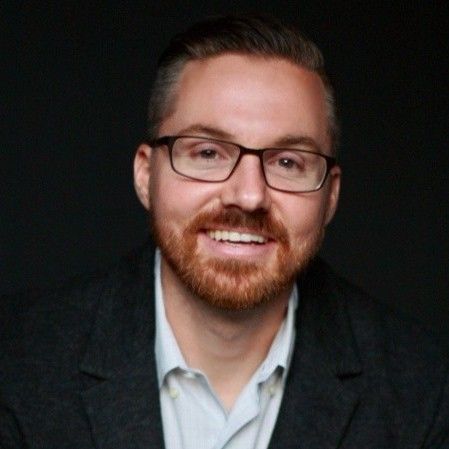
Milo Krastev has one of those resumes that Wall Street recruiters frame on the wall: investment banking at Bank of America Merrill Lynch, activist investing at ValueAct Capital, financial strategy at Palantir. It is a straight line pointed at a corner office and a hedge fund. He got off the line in 2010.
That year he co-founded a company called Zipongo with a doctor named Jason Langheier. The premise was almost embarrassingly plain: eating well shouldn't be complicated. The two of them set out to simplify wellness one bite at a time. Fifteen years later that odd little startup - now called Foodsmart - reaches more than three million members through health plans, providers and employers, and Krastev is still there.
His job, for most of that run, was the money. As CFO and Head of Growth he was the person who had to convince health plans, hospital systems and eventually one of the biggest names in impact investing that a dietitian and a grocery discount could be a line item worth paying for. Foodsmart calls the category "foodcare" - registered dietitians, personalized meal plans, food ordering, SNAP enrollment help and price comparison, bundled into something a Medicaid plan can actually reimburse.
"Diet-related diseases and food insecurity are estimated to cost the US over a trillion dollars a year."
- The Rise Fund, on why it backed Foodsmart
The pitch works because the math is brutal. When a chronic condition traces back to what somebody eats, the cheapest intervention on the board is often the food itself - not the third medication, not the fourth hospital visit. Krastev spent years turning that argument into contracts with Medicaid managed care, Medicare Advantage and commercial plans. Strategic investors followed: Advocate Health, Intermountain Health, Memorial Hermann - health systems that put their own money in.
The $200 million inflection
In July 2024 the argument paid off at scale. TPG's Rise Fund, the firm's impact arm, led a $200 million investment - the single biggest event in the company's history and a large chunk of the roughly $310 million it has raised. Krastev framed it the way a CFO frames everything, in terms of runway and leverage.
"This partnership allows us to scale because we have a bigger partner in order to continue the kind of growth and investment we've been pursuing."
- Milo Krastev, on the Rise Fund round
What is telling is what he said next: the existing backers, the health systems, were "continuing along" with the new lead. That is the quiet flex of a well-built cap table - nobody heading for the exit when a giant walks in. It is the kind of detail a person who came up through ValueAct notices and cares about.
The timing was not luck. For years, "food as medicine" was a phrase you heard at wellness conferences and nowhere near an actuarial table. Then the ground shifted. Medicaid programs started experimenting with nutrition benefits. Medicare Advantage plans looked for ways to keep members healthier and cheaper. The trillion-dollar annual price of diet-related disease and food insecurity stopped being a talking point and started being a budget problem that somebody had to own. A company that had spent a decade quietly wiring dietitians, food benefits and payer contracts together suddenly looked less like a bet and more like infrastructure. Krastev had been building for that moment before the market agreed it existed.
Firing himself from the CFO job
Then, in October 2025, Krastev did something finance founders almost never do. He gave up the CFO title. Foodsmart brought in Ned Schwartz as its new chief financial officer, added Alan Gao (formerly of PillPack by Amazon Pharmacy) as CTO and Jennifer McGuire as chief customer experience officer. Krastev didn't leave - he moved. He now runs strategy and business development full time, focused entirely on driving growth and expanding the platform's national footprint.
It is a rare move and a revealing one. Most founders who hold the purse strings hold them until someone pries them loose. Krastev handed off the ledger because the interesting problem had shifted. The company no longer needed him to guard the balance sheet; it needed him to go get the next three million members. CEO Kurt Knight put it in corporate terms - the new leaders "bring the expertise and vision needed to match the scale of the opportunity." Translated: the company got big enough that Krastev's real edge was no longer the spreadsheet. It was the room, the relationship, the deal.
The through-line
Look at the arc and it stops looking like a career pivot and starts looking like a single, patient thesis. Banking taught him how deals are priced. ValueAct taught him how value hides in plain sight when everyone else is looking at the wrong number. Palantir taught him what data can do at industrial scale. Foodsmart is all three aimed at a single, stubborn idea: that food is a medical intervention the healthcare system has been too slow to pay for.
The category he helped invent
Words matter here, and "foodcare" is a word Foodsmart had to build a market around. When Krastev started, there was no obvious budget line for what the company sells. A health plan understood how to pay a hospital, a pharmacy, a specialist. It did not have a code for "connect this member to a registered dietitian, help them enroll in SNAP, and give them a discount on groceries so they actually cook the meal plan." Making that legible to a payer - turning a good idea into an invoice - is unglamorous, patient work. It is exactly the sort of thing a former investment associate is trained to do: find the value that exists but has not yet been priced.
The platform itself is deliberately broad. Registered dietitians deliver telenutrition visits. Members get personalized meal plans and can order food, with SNAP and EBT integration folded in for those who qualify. Price comparison helps a household stretch a grocery budget. Enrollment support gets people signed up for benefits they were already entitled to but never claimed. Each piece looks small. Stacked together and sold to Medicaid managed care, Medicare Advantage and commercial plans, they become a business that a firm like TPG's Rise Fund is willing to value at nine figures.
The partnership with Dr. Jason Langheier is the spine of the whole thing. A physician and a financier is an unusual founding pair, and it is probably why the company survived long enough to matter. Langheier brought the clinical conviction that diet drives outcomes; Krastev brought the discipline to make that conviction pay for itself. Fifteen years is a long time for two co-founders to stay aligned. The fact that they did - through a rebrand, multiple funding rounds and a shift from consumer app to enterprise health platform - says something about both of them.
He does not appear to court the spotlight. There is no torrent of hot takes, no founder-influencer act. The public record is mostly deal announcements, a few measured quotes and a LinkedIn page that lists "co-founder" without a lot of noise attached. For a person who has helped move hundreds of millions of dollars toward the proposition that groceries can be healthcare, Milo Krastev is remarkably content to let the results do the talking.