
The Story
Where Patient Frustration Meets Founders' Fury
Adnan Iqbal runs one of the more quietly consequential companies in American healthcare. Not the flashiest name in the room, not the one with the celebrity investors - just the platform quietly powering 750+ healthcare organizations, connecting 100 million patients to their doctors faster than was previously thought possible.
He is a second-generation Pakistani-American who studied environmental biology at UC Berkeley, rowed at Sidney Sussex College in Cambridge, earned an MPhil in BioScience, spent time at Deloitte and Genentech, and then arrived at Stanford GSB - where a chance reunion with a college roommate changed the trajectory of his career and, for millions of patients, the speed at which they get care.
That roommate was Dr. Tashfeen Ekram, completing his radiology fellowship with a patient waitlist stretching six weeks into the future. The two sat down, ran the numbers, and discovered something the industry was treating as unremarkable: the average American waits between two and a half to twelve weeks for care, while clinics routinely carry 15 to 30% unused capacity. The gap wasn't a medical problem. It was a coordination problem. And coordination problems are solvable.
The origin is not abstract. Sophomore year at UC Berkeley, Iqbal tore his ACL playing soccer. His provider told him it would be three weeks before he could get an MRI. He called back. And called again. Ten calls over the course of a week, slotted between classes, until an appointment opened. He got the MRI weeks earlier. The system had the slot. It just didn't know how to find him. Luma Health is that phone call, automated at scale, for everyone who isn't persistent enough to call ten times.
If you aren't solving a problem that really annoys you, you won't have the wherewithal to get through those early days.- Adnan Iqbal
Fast Facts
- Co-founded Luma Health in 2015 with Dr. Tashfeen Ekram and Aditya Bansod
- Former roommates with Ekram at UC Berkeley; reunited at Stanford GSB
- Five years in management at Genentech across R&D, Finance, Operations
- Won two startup competitions on two continents with the same idea (AutoTB)
- Podcast episode about his journey titled "Getting Punched in the Face"
- Member of Sidney Sussex Boat Club at Cambridge University
- Zero pivots in nearly a decade of Luma Health's growth
- British Council Business & Innovation Award winner, 2024
The Company
Luma Health: The Platform Running Quietly Behind Your Doctor Visit
Luma Health is not a consumer app. Most patients never know they're using it. They just notice the reminder text that actually came at the right time, the scheduling link that worked on their phone, the intake form that didn't require a fax machine.
What Iqbal and his co-founders built is infrastructure - a Patient Success Platform that unifies the access, clinical, financial, and operational journeys that currently exist in separate, disconnected systems across most healthcare organizations. It integrates with 80+ electronic health record systems and talks to the scheduling, billing, and CRM tools that providers already use.
The company launched in September 2015, deployed machine learning across its platform in 2018, and has never needed to pivot. Iqbal points to that consistency with measured pride. "We've been fortunate because over nearly a decade of company growth, we've never had to pivot." The mission stayed constant while the platform expanded - from appointment scheduling outward into clinical reminders, insurance eligibility checks, self-service portals, multilingual patient messaging, and AI-powered intake and triage.
The moment that crystallized Luma's potential came in 2021: Cook County Health, one of the largest public health systems in the United States, used the platform to schedule over one million COVID-19 vaccination appointments. "It was really special to be part of that moment at an organization that is truly providing impactful, equitable access," Iqbal said. Three million vaccine appointments total. During a national emergency. On a platform built by a team that had never pivoted from its original problem.
Healthcare delivery organizations on platform
Unique providers served through the platform
For healthcare organization customers
The Builder
Three Degrees, Two Continents, One Recurring Idea
Before Luma Health, there was AutoTB - a medical device startup Iqbal co-founded while studying at Cambridge, designed to produce an inexpensive diagnostic test for tuberculosis and other infectious diseases. It won the Cambridge University Entrepreneurs competition in 2008 and the UC Berkeley Business Plan competition in 2009. Two competitions, two continents, one core instinct: use engineering to give people faster access to healthcare they need but can't easily reach.
AutoTB didn't scale to a company. But the instinct held. Iqbal moved through Deloitte Consulting and then spent five years at Genentech - rotating through R&D, Finance, Operations, and Market Analysis & Strategy. He arrived at Stanford GSB with a specific kind of operator's education: he'd seen how large healthcare institutions move, where their bottlenecks form, and why coordination failures persist even in well-resourced systems.
The Stanford years produced Luma Health's founding team through a coincidence that looks inevitable in hindsight. Iqbal and Tashfeen Ekram had been undergraduate roommates at Berkeley, lost touch, and reconnected nine years later on the same campus. Ekram was watching patients wait six weeks for radiology. Iqbal was fresh from watching Genentech navigate the infrastructure gaps Luma would eventually fill. They called Aditya Bansod, a technologist, and started building.
Tackle a problem you have experienced yourself. Building, breaking, iterating and trying again is the best method to create a viable working product.- Adnan Iqbal
2004
2007
2015
Career Timeline Highlights
- AutoTB (2008-2009) - Co-founded TB diagnostics startup; won CUE and UC Berkeley competitions
- Deloitte Consulting - Management consulting across healthcare clients
- Genentech (5 years) - Leadership across R&D, Finance, Operations, Market Strategy
- Stanford GSB (~2012-2015) - Reconnected with Tashfeen Ekram; began Luma
- Luma Health (2015-present) - Co-Founder & CEO
- StartX / Jumpstart Foundry - Advisor and mentor at Stanford-affiliated accelerators
Journey
The Long Road to Changing How Patients Get Care
Philosophy
In His Own Words: Casual Intensity
Iqbal runs Luma Health on a concept he absorbed at Genentech and made his own: "casual intensity." The phrase sounds like a contradiction until you watch him describe it. Employees show up as themselves. Authenticity is a requirement, not a perk. And then goals are taken completely seriously. It's the combination - not one or the other - that Iqbal believes builds teams that can actually serve a population as diverse as America's patients.
On data ethics, Iqbal draws a hard line: "We don't sell patient data or allow our product to be used to spam patients - that might bring in a lot of money, but it's just not who we are." In an industry where patient data has routinely been monetized without patient consent, that sentence is a business decision with teeth.
"We don't sell patient data or allow our product to be used to spam patients. That might bring in a lot of money, but it's just not who we are."
"I would have raised twice the amount of money in half the time if I was a white guy."
"It was really special to be part of that moment at an organization that is truly providing impactful, equitable access."
"I've seen a front-line Customer Success Manager grow to be the Head of Customer Success, with an even brighter future ahead."
"Needing healthcare is hard, but getting care shouldn't be."
"We've been fortunate because over nearly a decade of company growth, we've never had to pivot."
Perspective
The Details That Define an Operator
Iqbal is, by his own description, a biologist by training and a health operator by temperament. He does not come from software. He came to technology from biology, from clinical environments, from the management floors of one of the world's most respected biotech companies. That path produces a founder who thinks in systems, not features - who sees Luma Health as infrastructure rather than a product with a roadmap.
It also produces unusual candor. When FTV Capital's growth team sat down with Iqbal for a profile on product-led growth, he talked openly about a strategic mistake: moving toward enterprise customers before the company had the sales infrastructure to serve them. "We lacked infrastructure," he said directly. Once restructured with proper sales and customer support teams, Luma now serves 70 enterprise customers. The willingness to name the failure - not just the fix - is rare. Most founders bury the wrong turns in the footnotes of their success narratives.
He speaks with similar directness about race and venture capital. Navigating fundraising as a Pakistani-American founder with a Pakistani-American co-founder, he has acknowledged that the same credentials and traction generated different conversations depending on who was in the room. His response wasn't retreat - it was the $160 million outcome that came anyway, and a public statement that the barriers are real and should be named.
What Makes This Founder Different
- Three postgraduate degrees spanning the US, UK, and back - not common for a SaaS CEO
- Calls himself a biologist, not a technologist - sees healthcare through a systems lens
- No pivots in a decade - rare discipline in the face of investor pressure to expand quickly
- Built Luma's team culture around Genentech's "casual intensity" - unusually named and practiced
- Speaks openly about race in VC funding without softening the language
- Measures his company by days sooner care rather than user growth
Watch
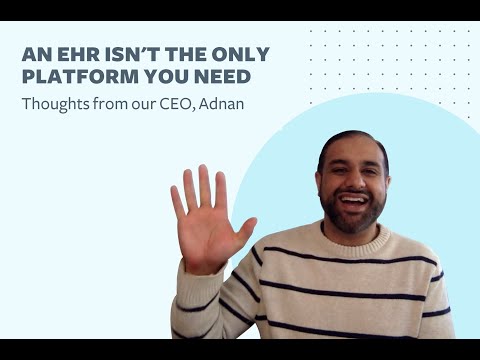
Adnan Iqbal, On Camera



Topics & Tags
Connections