bay-area
(64)
The Printer That Learned to Build the Room
A Menlo Park color lab survived the digital revolution by becoming something harder to replace: the crew that turns a designer’s file into a place people can actually navigate, touch, and remember.
The Stone Group Sells the Feeling Before the Floor Plan
For more than three decades, this Pleasanton agency has worked a stubborn idea: buyers remember a life they can picture more readily than a list of features. Its homebuilding campaigns show what full-service really looks like - from naming and identity to the eblast that creates urgency.

Ground Floor Public Affairs knows who else needs to be in the room
A Giants event, a tech coalition, a development approval: Ground Floor Public Affairs works where a business plan meets the people who can help it happen. Its San Francisco story is about the practical value - and limits - of relationships.

Winter goes looking for the people missing from the meeting
A Bay Area consultancy takes transportation planning to farmers markets, classrooms, and neighborhood conversations. Its work makes a practical argument: who gets asked helps determine what gets built.
Garnett Sign Studio and the business of being found
A $146,875 parking-sign bid opens a window into Garnett Sign Studio: a Bay Area fabricator whose work connects graphic design, tactile lettering and the everyday task of getting people where they need to go.

Brick Design knows where a brand comes apart
A logo can survive the boardroom and still unravel in a sales deck. Brick Design’s work for Mood, Qwilt and Localytics shows why a brand needs more than a good first impression.

Marketing Designs sells the house. And the agent’s next listing.
A Bay Area agency turns property details into brochures, websites and neighborhood reports. Its real specialty is keeping the agent in the picture after the house is sold.

Troo Wear and the social life of a T-shirt
A screen printer, a box of tees, and a reason to show up. Christopher C. Lee’s Bay Area label reveals how clothing becomes a calling card for a creative community.
Oakland had the talent. BRIDGEGOOD built the first assignment.
A furniture-store meeting became a nonprofit design studio with a practical answer to a familiar problem: how do you get experience when nobody has hired you yet?
Golden Gate Sign Company sells the part of branding that needs a crane
A logo is easy to move on a screen. Golden Gate Sign Company handles the harder journey: through city approvals, into metal and light, and onto the buildings of the Bay Area.

Signs Unlimited knows the small print matters
A San Jose sign maker finds the real work in the details: color-matched brackets, replaceable menu prices, and the last few feet between a brand and its building.

Civic Edge Consulting and the art of making government make sense
A dozen program names can leave a resident wondering what to do. Civic Edge helps public agencies turn institutional complexity into clear messages, useful conversations, and events people can actually navigate.

Caterman sells lunch. The real order is peace of mind.
From office lunches to wedding buffets, the San Jose caterer sells a practical promise: food shaped around the guests, and someone else watching the clock.

Colorprint puts a quarter of its profits back into the neighborhood
The Burlingame printer says it has given more than $307,000 to local charities. Behind that number is a family experience, a quarterly promise, and the everyday business of getting ink onto paper and mail out the door.
Prima Printing puts a local name behind your logo
Business cards, branded bottles and the occasional awkward assignment: the San Carlos printer sells the help that turns an idea into something you can hand over.
AIGA San Francisco Gets Designers Into the Room
A portfolio can show what you know. AIGA San Francisco helps you meet the people who can challenge it - through critiques, studio visits, mentoring and a design community built over four decades.
Overstreet Associates makes the brand survive the real world
A Bay Area agency puts the same identity on a sandwich bag, a hotel sign and a screen. Its specialty is the patient work of making all those pieces belong together.

The Shark Tank Is Becoming a $500 Million Bet on Hockey's Next Generation
San Jose is rebuilding more than an NHL roster. With a generational young star, a lease through 2051 and a sweeping arena overhaul, the Sharks are trying to turn a hockey club into the Bay Area's most durable live-entertainment habit.
Peet's Coffee
The Berkeley roaster taught America to expect more from a cup. Sixty years later, its harder trick is carrying that craft from a hand-roasted batch to grocery aisles, subscriptions and airplane trays without turning it into mere nostalgia.
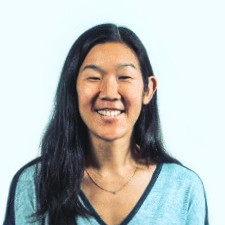
Noriko Morimoto
Noriko Morimoto is the Chief Marketing Officer of Title Nine, the Emeryville-based women's activewear brand founded in 1989. A Bay Area native who cut her teeth building brands at Burton Snowboards, Gap, Zipcar, NatureBox and Boosted Boards, she has spent a career pointing well-known consumer names in the direction of growth and turnaround. She pairs a UC Berkeley undergraduate degree with an MBA from Northwestern's Kellogg School of Management, and specializes in brand platform development, consumer acquisition and digital-plus-offline engagement.

Raju Datla
Raju Datla is a serial entrepreneur and CEO of Fabrix.ai (formerly CloudFabrix), an AI-native IT operations platform he founded in 2015. Before Fabrix.ai, he sold two companies to Cisco - Jahi Networks (~$16M, 2004) and Cloupia ($125M, 2012), the latter becoming the foundation of Cisco's UCS management suite. At Fabrix.ai, he is pioneering Agentic AI for enterprise IT operations through a Robotic Data Automation Fabric that unifies data ingestion, AI agent orchestration, and workflow automation at scale.

Firebrand Artisan Breads
Firebrand Artisan Breads is an Oakland-founded, Alameda-based wood-fired bakery that describes itself as a jobs program that happens to sell bread. Founded in 2008 by Matt Kreutz, it wholesales artisan breads and pastries to hundreds of Bay Area retailers - including Whole Foods - and runs a direct retail cafe. Its defining feature is an Open Hiring model that prioritizes people with high barriers to employment (formerly incarcerated, formerly homeless), paired with a perpetual purpose trust that locks the mission in permanently and shares profits with workers.

Millie
Millie is a San Francisco Bay Area maternity and women's health clinic built around a midwifery-led, tech-enabled model. Founded in 2022 by Anu Sharma after her own near-fatal birth experience, it pairs Certified Nurse Midwives and OB-GYN backup with a dedicated doula (a 'Millie Guide'), a proprietary app, remote monitoring, and virtual visits to cover pregnancy, postpartum, gynecology, and menopause. The company accepts most major insurance and has raised roughly $19 million to date, including a $12M Series A in February 2025 from an all-female roster of investors.

UMe Tea
UMe Tea is a California-based bubble tea chain founded in 2019 by former Silicon Valley engineer Jiachun 'Summer' Li. Built around fruit-forward, less-sugary recipes tuned to American palates, the brand pairs handcrafted drinks and snacks with viral marketing - most notably a surprise bunny plushie hidden in the bottom of its cups. Bootstrapped and profitable for its first four years, UMe grew to roughly 30 Bay Area stores before raising a $10M Series A led by Conductive Ventures in 2025 to fund team-building and regional expansion.

Samantha Malone
Samantha Malone is Chief of Staff to the CEO at Farther, the New York-based wealthtech that turned unicorn in early 2026 on the back of a $150M Series D led by General Atlantic. She joined roughly five months before the round closed - her first startup - after an MBA at Chicago Booth and stints at McKinsey, Skydio, GoDaddy, and Apple's global finance projects. A Bay Area kid who commuted through Santa Clara's business school a year early, she is the person building the deck, running the room, and stitching the operating rhythm as Farther scales past $23B in recruited assets.

Park Padel
Park Padel is a San Francisco-based padel club operator building Northern California's home for the fast-growing racket sport. Founded in 2023 by Jessica Talbert, Neil Chainani, and Katie Lampert after they discovered padel while traveling in Europe, the company runs three clubs - outdoor courts with Bay views at Embarcadero Plaza, a flagship indoor facility at Oyster Point in South San Francisco, and a location in West Sacramento. Park Padel blends court reservations, coaching, leagues, and social events with an app-first booking experience and a community-first approach, aiming to open 100 courts across the US over the next few years.
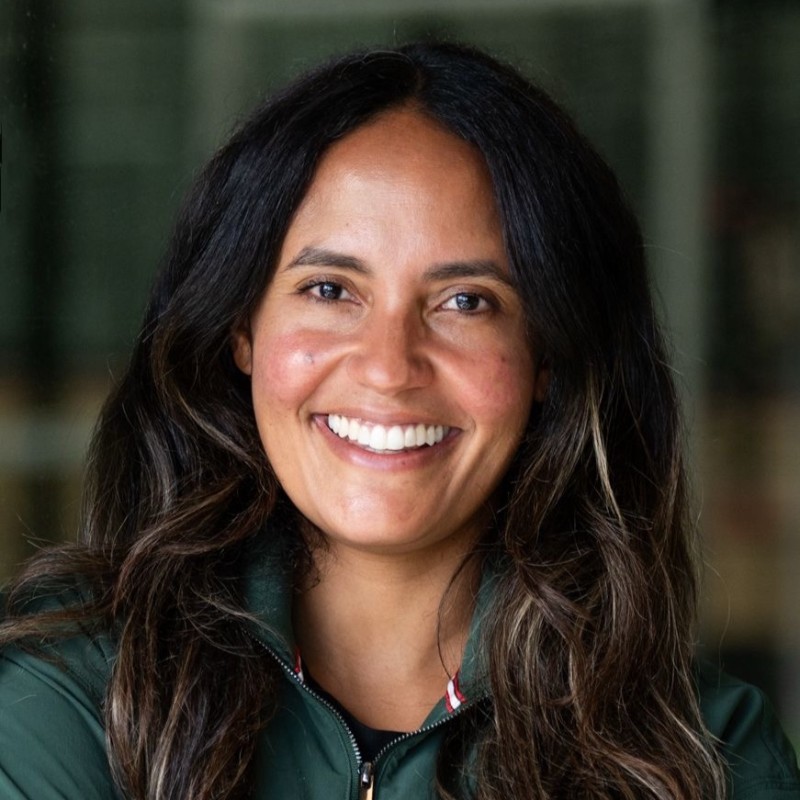
Jessica Talbert
Jessica Talbert is the co-founder and CEO of Park Padel, a San Francisco-based padel club operator she launched in 2022 after discovering the racket sport on a summer trip through Spain. A former strategic UX researcher with a decade in tech at Chime, Lyft and Stanford's Graduate School of Business, she traded user interviews for blue glass courts and now builds membership communities around one of the world's fastest-growing sports. Park Padel raised $5M in seed funding, opened the most visible courts in the US on the Embarcadero, expanded to a six-court flagship in South San Francisco and a club in West Sacramento, and aims to put 100 courts on the ground across Northern California.
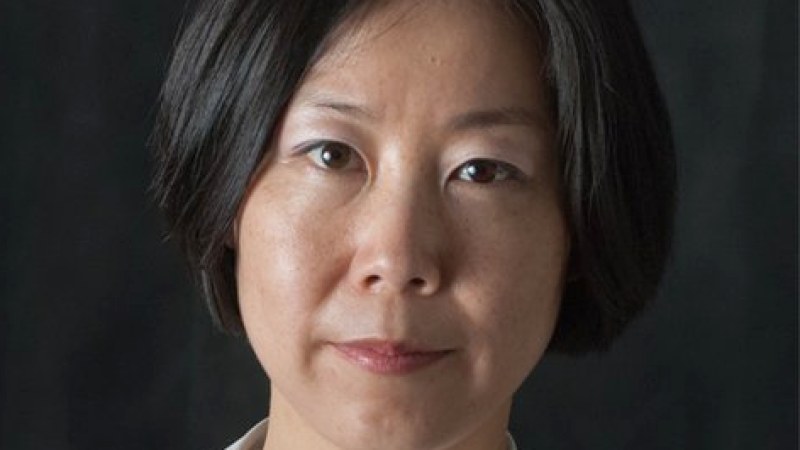
Jing Zhu
Jing Zhu is the Founder and CEO of Duet (Dashboard Story, Inc.), a B2B SaaS platform built for non-emergency medical transportation (NEMT) providers across the United States. A Cornell PhD-turned-Berkeley MBA, she spent a decade in corporate healthcare before founding Duet — first as a neighborhood carpooling app, then pivoting to a full-stack dispatching and billing platform that helps wheelchair, stretcher, and ambulatory transport operators run leaner and get paid faster. Based in San Francisco, Zhu leads a 12-person team and has raised $120K in seed funding.

Julie Nguyen
Julie Nguyen is the CEO and co-founder of Methodology, a Bay Area premium meal-delivery service that ships chef-cooked, ingredient-strict meals nationwide in reusable glass jars. A Stanford economics grad who jumped from J.P. Morgan to Lumosity to founder life, she bootstrapped the company in 2015 by emptying her 401(k) and has grown it to eight-figure annual revenue.
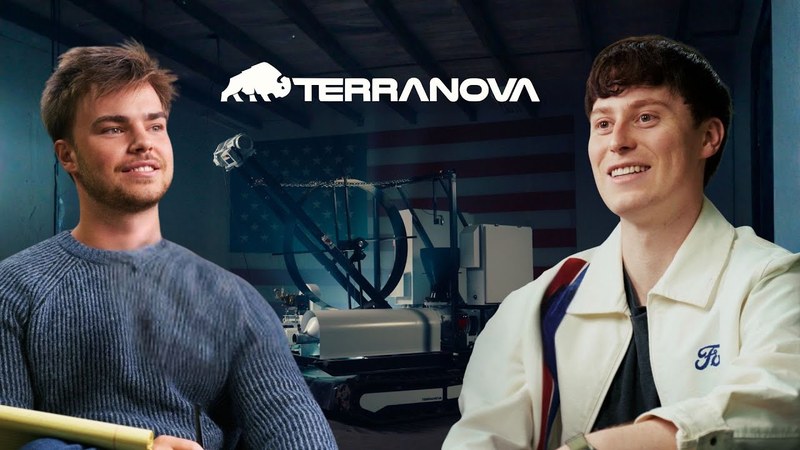
Laurence Allen
Laurence Allen, co-founder and CEO of Terranova, explains how his startup lifts land out of flood zones by injecting slurries of waste wood chips deep underground, an inexpensive, scalable alternative to seawalls, levees, and demolition. Drawing on a 1970s Venice mudjacking experiment and powered by autonomous robots and AI geology modeling, Terranova aims to be 'the anti-subsidence,' protecting whole communities and critical infrastructure. Allen also reflects on his formative internship at SpaceX, his maker upbringing, the intensity of deep-tech founding, and his vision for licensing the technology to contractors worldwide.