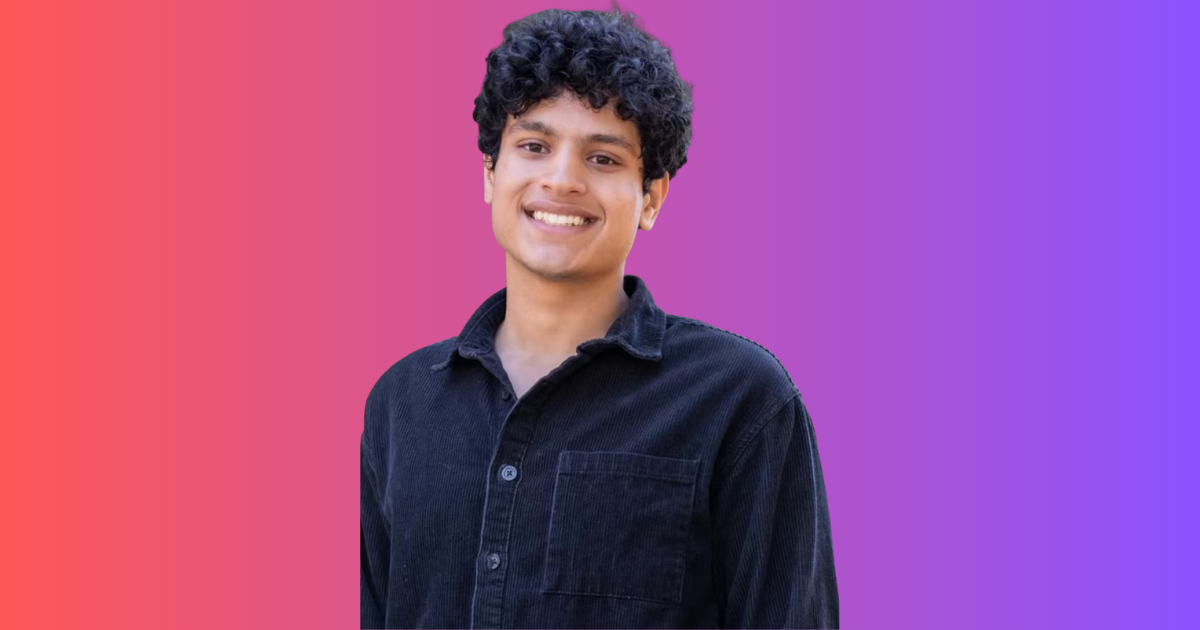
The Debate Nerd Who Built AI's Talent Infrastructure
Three high school debate teammates walk into a hackathon in São Paulo. They notice a gap that no one has thought to close: the engineers companies desperately need are scattered across the world, and no reliable system exists to find, vet, and pay them at scale. Nine months later, they have a $1 million revenue run rate. Two years after that, they are billionaires.
That's Adarsh Hiremath's founding story - except he'd bristle at the word "story." What he built with Brendan Foody and Surya Midha at Mercor isn't a company that connects people to jobs. It's infrastructure. Mercor now sits underneath the AI industry's model training pipeline, connecting 30,000+ domain experts - surgeons, securities lawyers, quantitative researchers, software engineers - to the AI labs that need human judgment to make their models better.
As CTO, Adarsh built the technical backbone of a platform that pays those experts more than $1.5 million every single day. Mercor crossed $500 million in annual revenue in late 2025. Zero enterprise churn. Profitable. Clients include OpenAI and Anthropic - the same frontier labs that are, technically, Adarsh's competition for attention in Silicon Valley.
I would still be in college if I hadn't founded this company.
- Adarsh HiremathThe numbers are staggering, but the detail that sticks is smaller: Adarsh and his co-founders still volunteer as debate coaches at Bellarmine College Preparatory in San Jose - the high school where all three met, competed, and, according to principal Rod Jemison, were "some of Bellarmine's top debaters in its history and captains." The billionaires still show up to judge rounds.
From National Debate Champion to Harvard Dropout
Adarsh grew up in California's Bay Area, the son of Indian-origin parents, and enrolled at Bellarmine College Preparatory in San Jose. The school's competitive debate program is where he met Brendan Foody and Surya Midha - two people who would become his co-founders and, eventually, fellow billionaires. The three didn't just debate - they dominated. In one year, Bellarmine's team won all three major national policy debate tournaments simultaneously. That's the kind of coordination and argument-mapping that, it turns out, transfers reasonably well to pitching investors.
After high school, Adarsh enrolled at Harvard in a concurrent bachelor's and master's program in computer science. The academic record was serious: research assistant in computer vision and machine learning, ML researcher at IBM, associate at the Harvard College Consulting Group, software developer at Stanford. He was not coasting. But the semester he was supposed to finish his sophomore year, he had other plans.
At a hackathon in São Paulo, the three friends landed on something simple and powerful: match companies with skilled engineers abroad, handle the logistics, take a small cut. Adarsh left Harvard. Foody and Midha left Georgetown. Within nine months, Mercor had a $1 million revenue run rate. The dropout bet paid off faster than any finals ever could.
All three met at Bellarmine College Preparatory's nationally ranked debate program in San Jose.
The Bet: Human Judgment at Scale
Mercor's central wager is this: AI still can't do the things that require hard-earned human expertise. The subtle reading of a medical image. The nuanced interpretation of contract language. The judgment call that separates a good software architecture decision from one that will cause pain three years from now. These are not tasks you can fake with synthetic data or a clever prompt.
So Mercor built the platform to source, vet, and pay those experts at scale. The contractors range from Harvard-trained lawyers to biotech researchers to quants who spent decades at hedge funds. They create evaluation rubrics, score model outputs, generate training datasets, and build the kind of judgment infrastructure that AI labs need to push their models further.
Since we founded Mercor almost three years ago, AI has advanced at an astonishing pace. But it still struggles with the subtleties that drive economically valuable work.
- Mercor founding teamThe pivot from freelance programmer marketplace to AI training platform was sharp, but the intuition was the same: human expertise has market value that intermediaries consistently underprice. Adarsh built the technology to capture that value and route it efficiently. The result is a platform that moves $1.5 million a day to contractors - and turns a margin doing it.
Bar widths are proportional. Investors include Felicis Ventures, Benchmark, General Catalyst, Robinhood Ventures.
How He Got Here
The Scoreboard
Among the world's youngest self-made billionaires - at 22, surpassing Zuckerberg's prior record of 23
Mercor's valuation after Series C in October 2025 - a 5x increase from the Series B just months earlier
Annual revenue run rate hit before the end of 2025 - profitable, with zero enterprise churn
Domain experts on the Mercor platform: doctors, lawyers, scientists, engineers, and researchers
Real-world professional tasks used in APEX, Mercor's AI benchmarking index for evaluating model performance
Forbes 30 Under 30 — AI category, alongside co-founders Foody and Midha
What Sets Him Apart
The culture at Mercor is not subtle about its demands. Six days a week, 9AM to 9PM. Adarsh built that intensity deliberately - not as performance, but as competitive necessity in a space where OpenAI, Anthropic, and Scale AI are all competing for the same ground. The work ethic is the product.
What's more interesting is the contrast: the Thiel Fellow who runs a $10B company still drives back to San Jose on weekends to help high school students get better at debate. No PR angle, no LinkedIn post about "giving back." Just habit. The same teammate who helped Bellarmine win three national championships showing up because the team matters.
Described by those around him as modest and avoiding stereotypical tech-founder flashiness, Adarsh's public presence is concentrated mostly through Mercor itself. He speaks about the company's thesis, not his own biography. The focus is on the gap Mercor fills - and on building the technology to fill it better.
Things Worth Knowing
- He and both co-founders are all 22 years old - the same age, from the same high school, in the same company, at the same valuation.
- The Mercor founding trio won all three major U.S. national policy debate championships in a single year while in high school.
- He was enrolled in a concurrent bachelor's and master's CS program at Harvard - meaning he walked away from two degrees when he founded Mercor.
- The same AI labs whose tools power Adarsh's own platform - OpenAI and Anthropic - are also Mercor clients. He builds with them. He also trains them.
- Mercor's APEX benchmark tests AI models against 200 real-world tasks in law, medicine, finance, and engineering - categories that happen to describe most of Mercor's contractor base.
- Adarsh, Foody, and Midha all received Thiel Fellowships - Peter Thiel's $100K grant for college dropouts. All three qualified independently.
- Despite hitting a $10B valuation, Adarsh still volunteers as a debate coach at Bellarmine College Preparatory, his San Jose high school.
Under the Hood
Mercor is built on a dense infrastructure stack spanning cloud, data, AI, and operations - reflecting Adarsh's engineering-first approach to scaling a marketplace at speed.