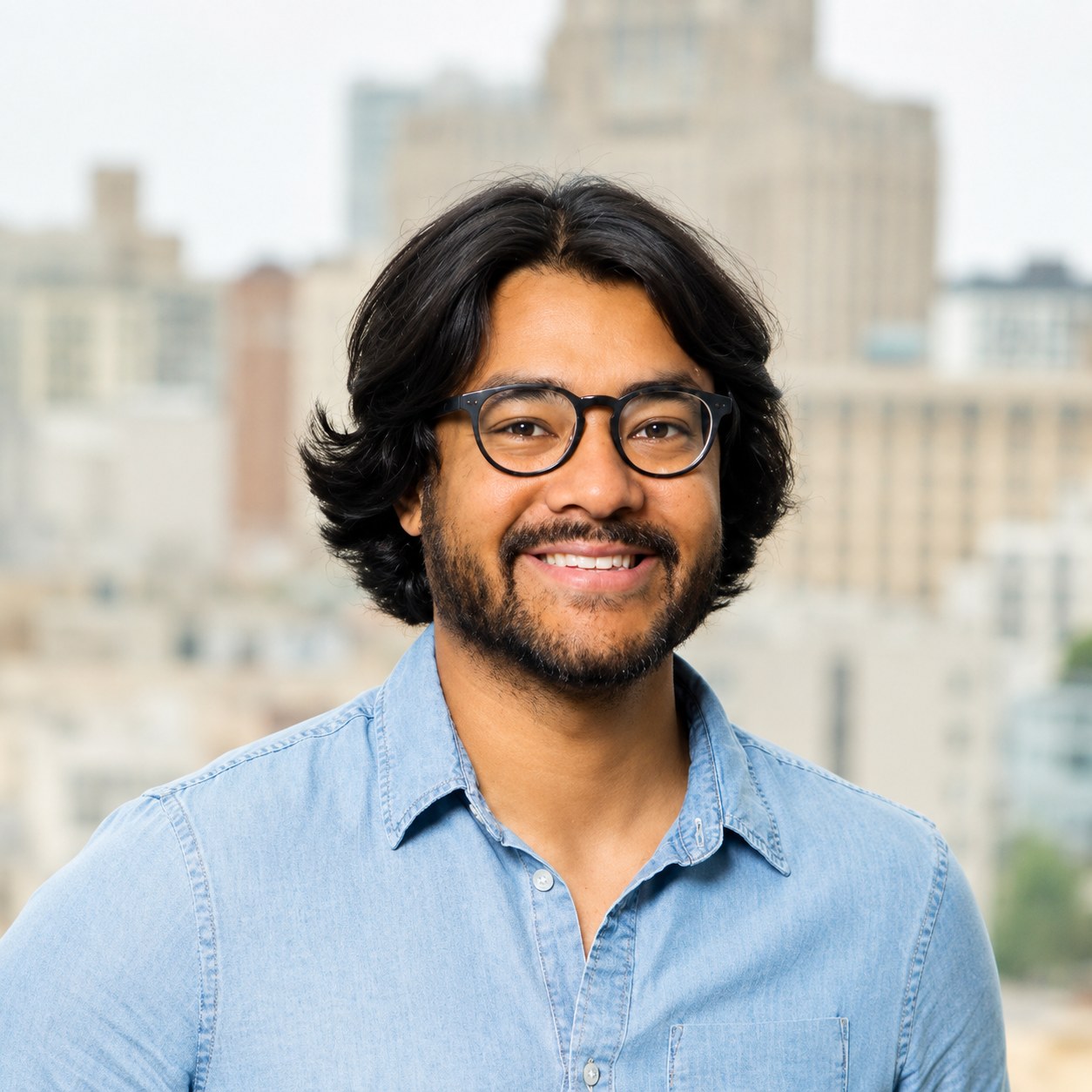
Alamin Uddin runs NexHealth from a building on Bush Street in San Francisco, but the company has always been pointed at a different address - a small clinic in the Bronx where he once worked the front desk. He took the job during pre-med, the way ambitious biochemistry majors at City College do, expecting it to be a line item on a medical school application. It became a thesis instead.
The thesis: software ate every consumer experience except the one that involves your body. You can summon a car, order dinner, refinance a mortgage and rent a film camera in a single afternoon, all from a phone. But making a dentist appointment still tends to require a phone call, a clipboard, and a fax machine somewhere in the chain. Uddin has been pulling that chain apart, link by link, since 2017.
"Consumers have frictionless digital experiences when doing virtually anything except visiting the doctor's office."— Alamin Uddin
He co-founded NexHealth with Waleed Asif, a fellow City College graduate, on a premise that sounds simple until you try to ship it: connect the real-time needs of modern healthcare to electronic records systems that were never designed to move that fast. The legacy EHR vendors built fortresses. Uddin and Asif built a key, then a workshop, then a city. Today that work has a name - the NexHealth Synchronizer - and a job description: keep schedules, charts, payments and patient messages in sync across roughly fifty different practice management systems, without anyone in the office having to think about it.
It is the kind of plumbing you can only appreciate by watching what happens when it breaks. The reason Uddin appreciates it is that he used to be the plumbing. He was the human who called labs and insurers and patients to keep the day from collapsing. The product is what he wishes he had had.
Pre-med, abandoned politely
Uddin earned a B.A.Sc. in Biochemistry from The City College of New York between 2011 and 2015. The plan, by every account he has given publicly, was medical school. The pivot moment came while he was shadowing a physician at a clinic in Brooklyn - a routine pre-med shadowing, in theory, that turned into a documentary of operational pain. He has described the experience as shocking, which is the word a polite person uses for "I cannot un-see this." He chose to fix the office rather than join it.
This is the rare founder origin story that does not start with privilege or pedigree. It starts with a clipboard. The Bronx clinic Uddin worked at the summer before medical school is the kind of small practice that does the bulk of American healthcare and gets the least attention from American software. He has built a company aimed at exactly that gap.
"NexHealth is here to change that, accelerating innovation in healthcare by connecting patients, doctors, and developers."— Uddin, on NexHealth's Series C announcement
The Synchronizer, and what it implies
The technical bet behind NexHealth is that healthcare needs a single, real-time data layer that any developer can build on. The Synchronizer is the plumbing under that bet. Where existing EHR APIs were slow, batchy and inconsistent, NexHealth wrote a system that reads and writes back to those records in real time and bidirectionally. The implication is large: anyone building patient-facing software - a scheduling app, a forms tool, a billing service, a telehealth product - can plug in once and reach the office, instead of negotiating bespoke integrations with each EHR.
If you have ever wondered why "book an appointment" online sometimes works and sometimes leaves you waiting twenty-four hours for a confirmation call, you have already encountered the problem NexHealth is solving. The fact that the platform now sits behind 25,000-plus providers and roughly 10 million patient records is the answer in scale.
Uddin's framing for this is developer-flavored, not clinician-flavored. He talks about NexHealth less like a SaaS pitch and more like a permission slip for innovation. The company sells software to practices and provides an API to developers, and the two halves reinforce each other - a flywheel that gets cheaper to run as it grows.
"The need is that developers don't have the tools they need to innovate in SMB healthcare."— Alamin Uddin
Recognition, capital, and a billion-dollar number
Forbes named Uddin and Asif to its 30 Under 30 list for Healthcare in 2018, a recognition that arrived a year after they started the company. The list usually shows up before the company does; here, it tracked something real. TechCrunch profiled the company in 2020, framing it correctly: a founder who went from a receptionist at a clinic in the Bronx to $12 million in funding. The early backers were specific - Naval Ravikant, Harry Stebbings, a roster more often associated with software primitives than clinical workflows.
In April 2022, NexHealth closed a $125 million Series C led by Buckley Ventures, lifting the company to a $1 billion valuation and bringing total funding to roughly $176 million. The American Hospital Association noted the round in its Market Scan, an unusual signal for a startup - the establishment was paying attention. The capital, Uddin said at the time, would go into talent and integrations. Five years in, NexHealth still hires for those two things first.
A founder who writes the changelog
Most CEOs at this stage hand off the product blog. Uddin still signs the release notes. The 2024 and 2025 seasonal releases on NexHealth's site list him as the author. It is a small detail, easy to miss, but it is the founder version of running the floor: stay close to what shipped, sign your name on it, and make sure customers can find you when something breaks. His Twitter handle - @alfromnexhealth - is constructed the same way. There is a brand voice and there is "Al from NexHealth," and Al from NexHealth is the one who answers.
If there is a personality signature in the public record, it is that one: a founder who would rather be useful than auteur. He shows up on podcasts aimed at dentists - Howard Farran's Dentistry Uncensored, Ortho Marketing, the Age of Miracles series with Packy McCormick - and he talks operations more than ideology. The closest he comes to a manifesto is the line about frictionless experiences. The rest is product.
What he is building toward
The arc is the part to watch. NexHealth started inside dentistry and orthodontics, expanded into dermatology and general medical practices, and is now positioning itself as the integration layer underneath an entire generation of digital health products. Uddin's aspiration, articulated in interviews and product launches, is fairly explicit - become to health records what Stripe became to payments. Make the hard thing boring. Boring, in software, is the highest compliment.
For now, the proof is on the wall in San Francisco: a company built by a receptionist who never went to medical school, used by tens of thousands of providers, funded into the billions, still run by the person who learned the problem at a front desk. The Bronx is a long way from Bush Street. The route, as Uddin tells it, was the simplest possible: pay attention, write the software, sign the release notes.