A customer wanted to triple the size of Veer Bhartiya’s company. For a young business, it was a rather agreeable problem. The customer liked the work. More work was available. Bhartiya and his co-founder, Shyam Salona, had only to accept an opportunity that would make their small operation considerably less small.
They turned it down. The allotted time would not let them deliver work to their standards. Salona later recalled that the customer respected the decision. There is no triumphant contract value attached to this episode, because the contract never happened. Its significance lies in the promise they declined to make.
Bhartiya’s career gives that refusal some weight. He was an engineer who became an immigrant entrepreneur, then the first chief executive of REI Systems. He helped build a company serving public agencies, where software sits between an administrative decision and the people waiting for it. An attractive deadline can look rather different from the receiving end.
Potential company size after one new project.
The founders passed on a deadline they could not meet to their standards.
A scholarship, then a second crossing
Bhartiya was born in Haryana, India, in 1948. His family remembered a mischievous child, one of seven siblings, with a talent for making the others laugh. The future executive’s early equipment included both academic ability and a willingness to puncture solemnity. Only one of those would appear on a university application.
He completed an engineering bachelor’s degree at Allahabad University in 1970. A Government of India scholarship followed in 1972, taking him to the Massachusetts Institute of Technology for graduate study in electrical engineering. His master’s degree was completed in 1975. The journey opened an American chapter, although he returned to India before making his permanent move.
His professional work began with the physical particulars of electronics: leading engineers and technicians who adapted connectors for defense applications. He later advised India’s Ministry of Information and Broadcasting on satellite communications testing and policy. Long before REI’s software business, his work involved making technologies function within the demands of public institutions.
In 1983, he moved to the United States. At EER Systems, he managed work on NASA’s Message Switching System. He settled in Virginia and became an American citizen in the late 1980s. These were years of accumulating experience across engineering, government and management, before the company that would occupy the next three decades.
- 1970Engineering degree
Allahabad University - 1972–75Scholarship & master’s
MIT, Massachusetts - 1983Move to the U.S.
NASA work at EER - 1989REI Systems
with Shyam Salona
The basement had room for two temperaments
REI began in 1989, in the basement of Salona’s townhouse. Its initials supplied a compact brief: Reliable, Effective and Innovative. The founders wanted small teams with the authority to make decisions, work they enjoyed and ambitions extending beyond themselves. A basement is an economical place to begin; preserving its informality after hiring hundreds of people is a more demanding undertaking.
The partnership joined complementary habits. Bhartiya brought decisiveness and inventive thinking. Salona brought an analytical approach and technical expertise. Their shared work offers a useful correction to the solitary-founder portrait: this company had two founders, and the pairing mattered. The decision to decline an oversized assignment belonged to both.
The early technical record is more specific than the familiar basement legend. A NASA research-award entry for 1990 names Bhartiya as principal investigator on a distributed object management system. The Phase I award was $49,875. A 1991 Phase II entry for the same project records $498,762.
The project addressed a stubborn information problem: bringing different kinds of material, including text, structured data and images, into a common framework. Existing systems were meant to remain usable. Under the imposing research title was a practical concern that would remain relevant to REI’s business: making information accessible across systems that were never conveniently identical.
By the late 1990s, Bhartiya described NASA’s small-business research program as the foundation for REI’s move into the Internet marketplace. Electronic handbooks and access controls gave the firm a basis for building paperless business systems. The progression was concrete: research supported a technical capability; that capability became useful to customers with paperwork to manage.
A CEO could still fix the desk
There was a domestic scale to Bhartiya’s idea of usefulness. In Boston, he welcomed newly arriving students into his apartment while they found their feet. Years later, as a chief executive, he could be found repairing a desk leg or moving office supplies. The tasks were ordinary. The willingness to do them survived the title.
His family’s recollections also allow him some comic timing. He arrived late to an introductory meeting with his future wife’s family, dressed in a lungi, and announced: “The candidate is here.” Purnima became his wife. It is an entrance unlikely to appear in a business-school module on managing first impressions.
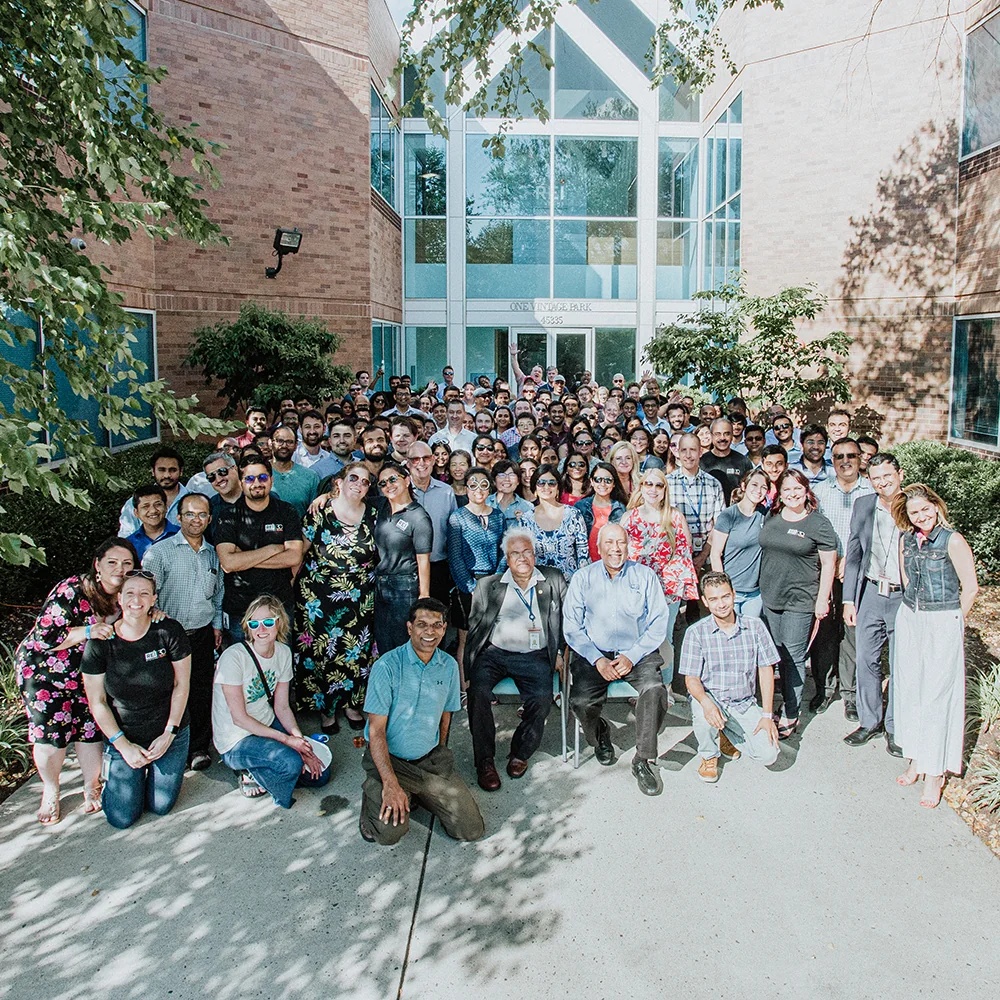
At REI, his governing preference was “employees first.” The reasoning was direct: unhappy employees would struggle to make customers happy. That placed the internal experience of work inside the business model. Respect, useful responsibility and room to grow became matters with consequences for delivery, rather than pleasant additions to an otherwise complete operation.
The company’s projects took that delivery ethic into less photogenic territory. REI expanded into the Justice Department’s Bulletproof Vest Partnership Program and automation for FEMA’s Assistance to Firefighters Grant Program. Neither subject lends itself to a glamorous software launch. Both make the administrative work consequential: applications, awards and records have to serve the people relying on them.
Bhartiya’s son Wagish remembered the same kindness in an office hallway, a customer meeting and at dinner. The comparison is revealing because it moves easily across settings. A founder can have a workplace persona. His son described a continuity of conduct, recognizable to people who met him under very different circumstances.
“Building a business was just as much a spiritual calling for him as it was a professional one.”
Wagish Bhartiya, remembering his father · 2022
Putting his name on somebody else’s work
Bhartiya eventually moved from the chief executive role to executive chairman, with Salona succeeding him as CEO. The succession was publicly announced in 2016. Retirement followed in 2019, thirty years after the company began. For an organization built on relationships, handing over daily responsibility was another test of whether its habits could outlast a founder’s immediate presence.
His chairman’s responsibilities included management development, succession planning, joint-venture pursuits and strategic guidance. They were subjects with longer horizons than a day’s operational decisions. The transition gave him a different relationship to a business he had helped establish. It also gave the next leader room to work. Succession asks a founder to trust colleagues with decisions whose results he may have approached differently, a practical extension of the authority the pair originally wanted small teams to have.
The award bearing his name had already supplied one answer. In March 2019, REI announced the first Veer Bhartiya Team Impact Award, recognizing work from the 2018 calendar year. It went to the team implementing UtahGrants for the Utah State Board of Education. A personal honor was attached to a collective accomplishment.
The improvement had an unusually legible measure. Accounting entries that had taken weeks could be processed in less than a day. The system supported more than 60,000 payments annually across over 120 grant programs. For staff, the gain meant less manual processing and more time available to support education agencies.
The judging process asked teams to demonstrate what their work changed. Seven projects were nominated for that first award, three became finalists, and independent judges heard presentations and demonstrations. It was a fitting way to keep an engineer’s name in circulation: present the problem, show the work, explain the effect.
The administrative setting matters here. A school grant system has several audiences: people applying for money, people checking budgets, people authorizing payments and people keeping the accounts. A faster step is useful when it leaves the next person with information they can trust. The Utah project linked the grants system to the state’s financial system, giving the award a practical example of connected work.
The promise keeps coming due
Bhartiya died on March 21, 2022. Colleagues remembered generosity, mentorship and an enjoyment of celebrations. Those memories leave room for a person whose business seriousness coexisted with considerable sociability. Reliability need not require a permanently grave expression. In his case, the laughter had been there well before the company.
The organization continued to change. In 2025, REI became entirely employee-owned. That development came after his lifetime, under the company’s later leadership. It gives the older employees-first principle a new institutional setting, while leaving the historical distinction intact: Bhartiya helped establish the culture; others have responsibility for its present form.
His award continued, too. The 2024 winner was the FEMA Data Exchange team. The following award cycle, announced in February 2026, recognized a case-management project that moved more than six million investigative records into a replacement system. His name now accompanies work delivered by teams facing their own technical constraints and obligations.
The 2026 recognition also made the scale of maintenance visible. Alongside the investigative records were 80,000 attachments and more than fifty workflows to digitize. Moving an old system means preserving years of accumulated work while making a new one usable. It calls for patience with details that rarely fit a celebration speech. An award can make that patience visible to the rest of a company.
The rejected contract remains a useful way into this life because it makes a principle expensive. Growth was available. The founders judged the deadline unacceptable and let the opportunity go. For Bhartiya, building a company included deciding which promises its people could reasonably be asked to keep. Somewhere between an engineering specification and a repaired desk leg, that became a recognizable way to lead.