A stranger in an Uber Pool became part of Wardah Inam’s startup story. She was trying to learn about a profession outside her own. The person beside her asked what she was doing. She explained. An introduction followed, and the dentist she met through that passenger supplied an early tranche of data for the business that became Overjet. The fare bought a ride; the conversation proved rather more useful.
Inam had no substantial network in the field when she began exploring it. One early connection was a dentist in her building. She talked to people, followed introductions, and spent time observing their work. It is an unglamorous beginning for a company that would later announce a valuation of $550 million. It also gives us a useful place to start: an engineer willing to be the person in the room who needed an explanation.
Before the software, a rescue robot
Her formal education had supplied plenty of evidence that she could learn. At the Ghulam Ishaq Khan Institute of Engineering Sciences and Technology in Pakistan, she studied electrical engineering and helped establish an Autonomous Robotics Lab. She recruited a team across computer science, electrical engineering, and mechanical engineering. Their work included a rescue robot and participation in the RoboCup World Championship.
A robot is an unforgiving group assignment. The mechanism can work, the software can run, and the machine can still fail to get where it needs to go. Combining disciplines forces everyone to deal with the awkward seams between their own expertise and somebody else’s. In that sense, the student project offers an early glimpse of the kind of work that would keep appearing in her career.
In 2010 she received three gold medals, becoming the institute’s first graduate to collect all three. They recognized departmental academic performance, university-wide academic standing, and overall performance. There are worse ways to leave university than requiring extra space for the medals. The next chapter, however, would ask her to take the work beyond the prize ceremony.
A grid that could start next door
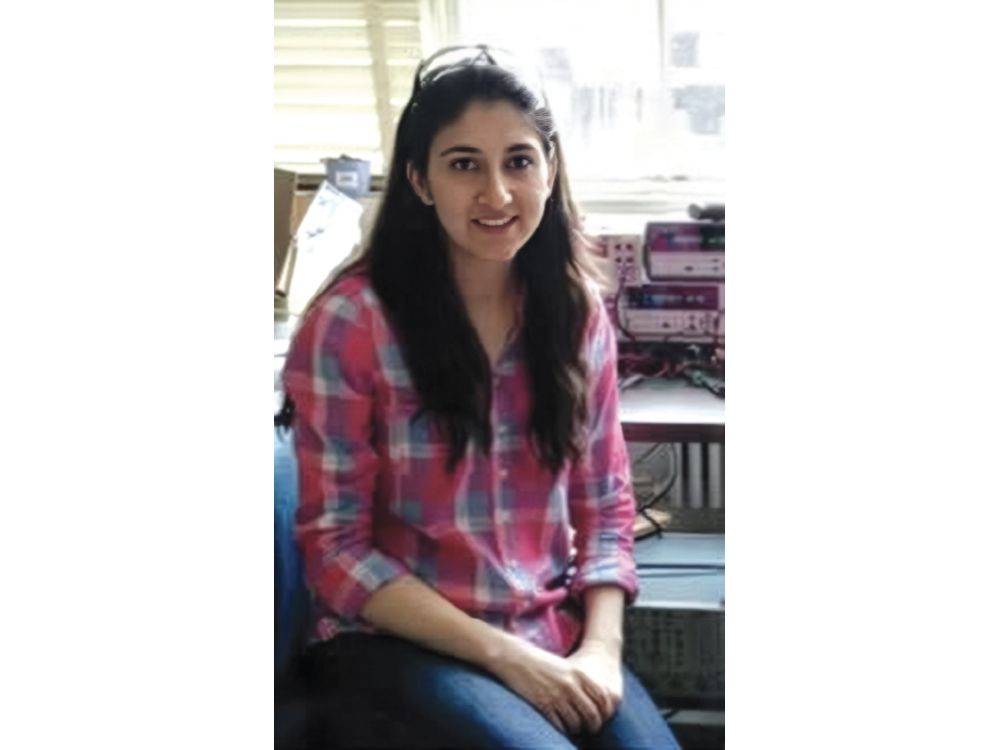
At MIT, Inam worked on autonomous microgrids. The proposition was appealingly concrete: a household with a solar panel could share electricity with nearby households. A network could grow as people added equipment and connections. Underneath that simple proposition lay difficult questions about control, cost, and how to keep a changing electrical system stable.
In 2014, uLink won the Infrastructure and Resources track at the MIT Clean Energy Prize. Inam described a network assembled from connected units: “It empowers users to build their own grid, from the ground up.” The language placed the user at the center of the construction. A grid could begin with the people who needed it.
The fieldwork made the design specific. In 2015, Inam and fellow doctoral student Daniel Strawser were preparing tests around Jamshedpur in India, working with professors Rajeev Ram and David Perreault. Earlier visits had involved conversations with residents and village leaders. The power-management device was smaller than a shoebox, handling electricity distribution and recording usage for billing.
That billing detail matters. Electricity must be generated and delivered, but someone must also know who used it and how payment works. A useful invention has to make sense at the point where engineering meets household arithmetic. The design allowed connections and equipment to change over time, leaving room for a community to decide how its network developed.
home→Power
management→Neighboring
homes
Share electricity. Record usage. Let the network grow.
Conceptual illustration of the microgrid approach, not a wiring diagram.
By 2016, MIT D-Lab listed her as a Scale-Ups Fellow and uLink’s CEO. The project brought together hardware, an operating system, and cloud management. Her doctoral work was also becoming a business problem: how to make the technology deployable, manageable, and affordable enough to be useful outside the place where it had been invented.
The habit of taking an idea outside
The electricity work had a precursor. A 2012 MIT Legatum Center announcement listed Inam and Faizan Rasool on KnowElectricity, a social enterprise focused on energy conservation in Pakistan through consumer engagement, education, and efficient products. The interest in what people actually do with technology was already visible. A better device would still need someone to choose it and use it.
Her personal portfolio contains other evidence of a restless engineering education: power converters, robotics, internships at GE and Apple, and Soft Rocker, solar-powered outdoor furniture that could charge a phone. The projects vary in scale and appearance. A chair that charges a device is a pleasing reminder that engineering occasionally gets to offer somewhere to sit.
She earned her master’s degree and doctorate at MIT, completed a postdoctoral fellowship at its Computer Science and Artificial Intelligence Laboratory, and moved into product leadership at Q Bio. Later, after eleven years in Boston, she moved to the Bay Area as Overjet grew. The geography changed alongside the work: research, product development, then responsibility for a company.
There is a tempting way to tell such a career as a sequence of inevitable steps. Each job conveniently prepares the next. In practice, moving between fields means returning to unfamiliar vocabulary, new collaborators, and questions whose answers other people take for granted. Inam’s route is more interesting when those stretches of learning remain in view.
“For me, the most exciting thing is when something I build actually gets utilized.”
Wardah Inam
The second education: people
One lesson at Q Bio came from being recruited herself. The founder flew out to meet her. She remembered the effort as an example of how seriously a leader should pursue someone important to the company. When she later discussed hiring at Overjet, she connected that experience to her own willingness to go out of her way for the right person.
It is a practical lesson because recruitment can look deceptively administrative. A vacancy appears, a description is written, and a process begins. The personal effort communicates something a description cannot: this particular person matters. For an engineer accustomed to choosing components carefully, the human equivalent brings a complication. People also have to choose you.
Overjet was founded in 2018. Its early years included incubation at Harvard Innovation Labs, which supplied workspace and access to support. Inam valued the emphasis on helping founders get their companies moving. A place to work can sound modest beside a grand theory of entrepreneurship. It becomes less modest when a small team needs somewhere to arrive tomorrow morning.
The number has a date
On March 5, 2024, Overjet announced a $53.2 million Series C led by March Capital. Participating investors included General Catalyst, Insight Partners, the MIT-affiliated E14 Fund, and the American Dental Association. The announcement put total funding at approximately $133 million and valued the company at $550 million.
Series C financing
A financing round records a particular agreement at a particular time. It buys the company room to build, recruit, and expand. The work then continues, with more people expecting an answer to what comes next. For the founder, a public milestone also enlarges the audience watching decisions that still have to be made one at a time.
Recognition followed several routes. Inc. included Inam in its 2022 Female Founders 100. In June 2025, EY named her among its Bay Area Entrepreneur Of The Year award winners. These distinctions give the career a public outline. The daily work of running a business remains less photogenic: deciding, explaining, revisiting, and deciding again.
The company becomes the system
By 2026, Inam was discussing an ambition she called Practice OS: a broader software system spanning the work of a dental business. She said the roadmap reached back to 2019 and 2020. Administrative automation, voice tools, and revenue-cycle work belonged to that longer view. The company’s direction extended beyond a single product.
A growing product range creates its own engineering problem. Each addition needs a clear purpose, a place in a customer’s routine, and a way for the team to tell whether it is being used. The more pieces a business offers, the more carefully it must explain how they fit together. A catalog can grow faster than understanding.
Inam’s account of the CEO role has become correspondingly organizational. She has described learning how much company culture shapes everyday behavior, and how much effort it takes to align experienced leaders around fewer priorities. Her attention moves toward the bottleneck that matters that week. Customer activation across multiple products was one recent example.
The shift is revealing. Earlier, the changing system was an electricity network. Now it includes teams with their own expertise, customers with existing routines, and products competing for attention. An organization cannot be controlled like a circuit. It can still benefit from someone who notices the connections, asks where the work gets stuck, and wants to see the whole arrangement function.
The stranger in the shared ride belongs in that picture. So do the student teammates, village residents, researchers, recruiters, and colleagues who appear across her career. Inam’s education has repeatedly continued through other people. Somewhere beyond a qualification or a funding announcement, there is another person who can explain how the thing is actually used. She has made a career of going to find them.
Follow the conversation
Work, interviews, and the engineering backstory.
- Inam’s personal research portfolio ↗
- Wardah Inam on LinkedIn ↗ · X ↗ · GitHub ↗
- Overjet ↗
- The Product Market Fit Show: her early founder years ↗
- The Dental Economist Show: the Practice OS roadmap ↗
- Watch the Mike Huffaker conversation on YouTube ↗
- Open Source CEO: running a multi-product company ↗
- The electricity-sharing project, in 2015 ↗
- Overjet’s March 2024 financing announcement ↗ · EY’s 2025 award announcement ↗
Archival photographs: Glidewell, Chairside, February 2026.