The college website looks lovely. Someone has chosen the photographs carefully. The buildings are handsome, the students appear delighted, and the invitation to apply is difficult to miss. Then comes the click into another system. For Ardis Kadiu, who worked on the institutional side of higher education before founding Element451, that change of scene contained a business problem. The student was taking one journey. The software kept behaving as though several unrelated journeys were under way.
It is an unglamorous place to begin a founder’s story. There is no shortage of stories about a person looking at the future. Kadiu’s becomes more interesting when he looks at an awkward transition: between a website and an application, between a message and an answer, between somebody’s plan and the person expected to carry it out. His career has given those transitions an unusually long audition.
By February 2026, Element451 had a new chief executive, James Novak. Kadiu, its founder and former CEO, remained on the board. Meanwhile, he was building again. The latest setting was family life, where schedules and school messages can produce a quantity of administrative work that would make a modest university feel understood.
A ticket to JFK, then three degrees
Kadiu grew up in a rural farm town in Albania. As a child, he made antennas and electrical circuits. His early ambition was pleasingly direct: to build things. The attraction preceded the job titles that would eventually describe it.
His parents placed a high value on education, having grown up with restrictions on their own opportunities under Albania’s communist system. When a chance came for their son to move to the United States at fourteen, they helped him take it. His destination was JFK. The familiar founder shorthand about leaving one’s comfort zone feels rather small beside an actual adolescent changing countries.
New York University became a substantial part of the next chapter. His studies covered computer engineering, integrated digital media and business, resulting in a bachelor’s degree, a master’s and an MBA. The combination matters because the products he would later build required several kinds of competence to coexist. A system could be technically sound and still leave its user wondering which button had swallowed the application.
He also taught at NYU, including user experience and development, and worked in web and media services. Education was therefore a place where he studied, taught and helped operate the machinery. His view of a university included both the invitation on its website and the people responsible for making the invitation work.
The handsome website and the awkward next click
Working near admissions brought the gaps into view. The public-facing experience could be polished while the process behind it remained difficult to navigate. Moving a student from interest to application meant moving information between systems, teams and moments in time. A website could do its job perfectly and still deliver somebody into confusion.
Kadiu’s response developed through marketing work as well as software. At Spark451, the higher-education agency he co-founded, recruitment was an ongoing operational problem rather than an abstract exercise in attracting attention. The agency worked with institutions trying to bring students through that process. Internal tools grew around the work.
His older creative portfolio adds another piece to this background. It lists Brooklyn Idea Foundry, creative direction, interaction design, motion graphics and visual effects. Before the current vocabulary of AI agents, there was already an interest in how a digital experience looked, moved and made sense. It is a useful corrective to a résumé read purely through the engineering degree.
The question running through these roles was practical: what does the person on the other side actually encounter? In college recruitment, a campaign might be only one small part of the answer. The student also needed a coherent next step. Attractive communication could raise expectations that the surrounding process then struggled to satisfy.
An application escapes the agency
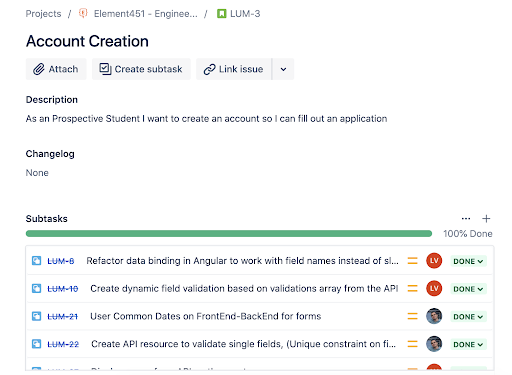
The product that became Element451 began inside Spark451 in 2015 as an application builder, initially called Luminous. An application sounds bounded. It has fields, a submission and an apparent end. Colleges, of course, also need to communicate, arrange events, make decisions and keep track of what has happened. Between 2016 and 2018, the team built out those surrounding capabilities.
In 2018, Element451 became an independent company. Kadiu’s recollection of the separation was succinct: “scary as hell.” An agency has clients making their needs known. A software company must turn that accumulated understanding into a product that can stand on its own.
He moved from New York to North Carolina with his family. Early backer Cofounders Capital became part of the company’s financing story. In 2021, Element451 announced a $3 million Series A led by Cultivation Capital, with Cofounders participating. The product was finding support from investors who could see a specific use for it in admissions offices.
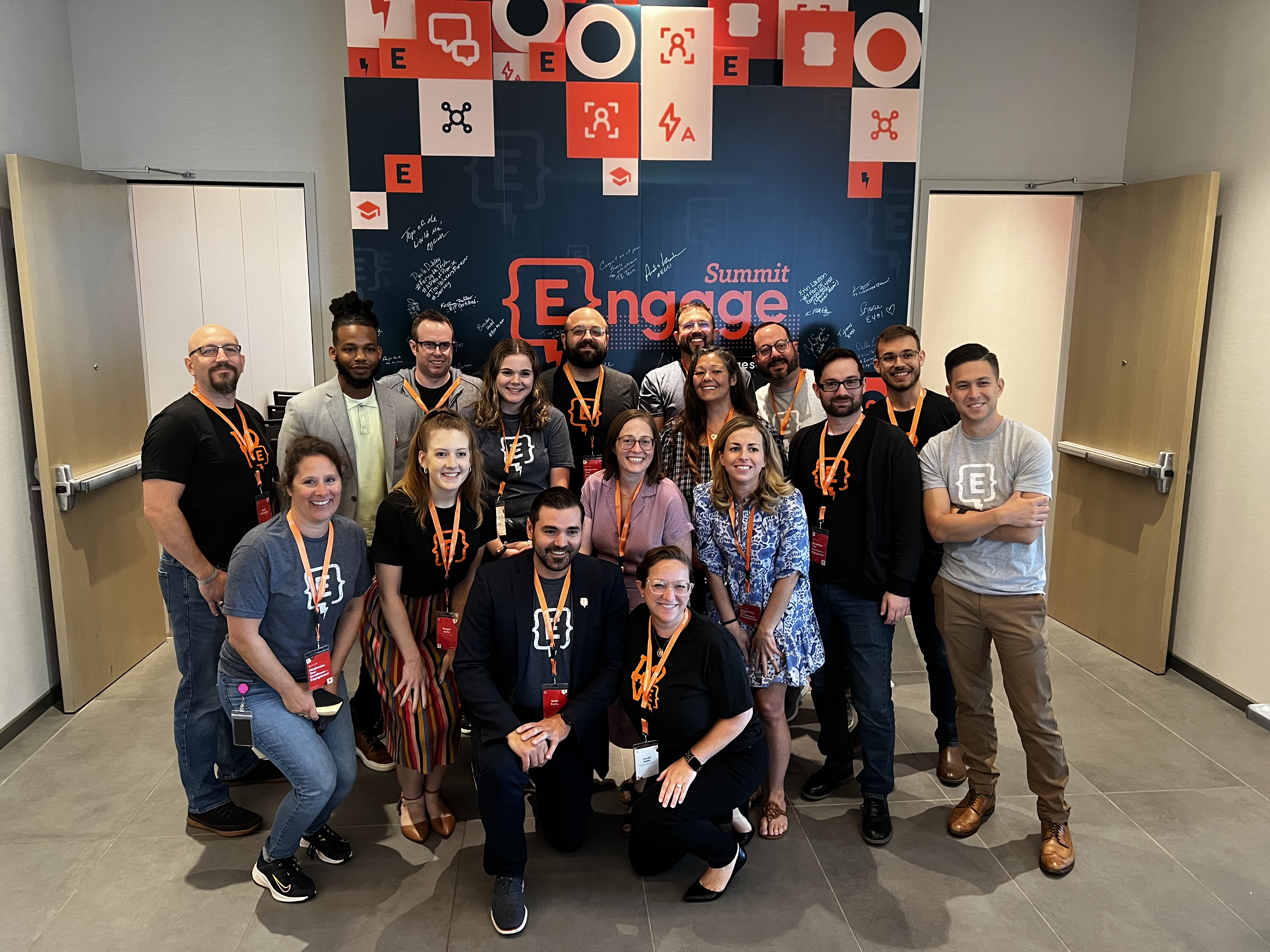
The early working conditions also belong in the picture. Kadiu has spoken about building in a small office in Dumbo, Brooklyn. The later company photographs show a much broader cast. Software histories tend to acquire a single face; the group shot is a helpful reminder of how much work eventually requires other people.
A novelist in the naming meeting
The name Element451 carries a literary reference: Ray Bradbury’s Fahrenheit 451. Kadiu has explained the number as a symbol of transformation from paper processes to digital ones. It is an unusual cultural companion for enrollment software. Admissions administration rarely receives a novelist in its naming meeting.
The reference also suits a career spanning different media. His account of technology combines analytical engineering with attention to how people use a product. In discussing personalized engagement, he has described the ambition as a “segment of one”: communication responsive to an individual’s needs and circumstances.
That ambition reaches beyond inserting a first name into an email. In conversations about student experience, he argues for institutions to consider the entire relationship and the value students receive. Speed and clarity count. So does understanding what somebody is trying to accomplish, rather than treating each contact as a fresh opportunity to deliver the same pitch.
“They understand the user experience.”
Kadiu on what successful institutions do well
His public work has included writing, conference appearances and the Generation AI podcast with JC Bonilla. In a 2022 Teaching Matters conversation, he discussed AI, digital transformation and privacy. In a 2023 article for higher-education marketers, he connected changing student expectations with the pressure on small communications teams. The recurring concern was how to make attention more personal when staff time was already limited.
One of his blunt observations in a later interview was that people already lacked enough time to do their jobs properly. That is a less theatrical starting point for automation than a prediction about the distant future. It puts the burden on a tool to help with a recognizable task.
The company grows, the job changes
In December 2024, PSG announced a $175 million strategic investment in Element451. At the time, the company said more than 250 higher-education institutions used its software. The investment was intended to support expansion and further AI development, including products for students and staff.
PSG’s investment in Element451
A company transaction, not a measure of personal wealth.Getting that transaction done introduced a different class of work. Kadiu has described wanting Element451 to retain its brand and continue growing, which helped steer the choice toward a financial sponsor. He brought in Vista Point Advisors after finding that handling investor interest alongside running the business required dedicated help. He valued a frank assessment of the possibilities over promises of a spectacular outcome.
There is something revealing in that preference. The deal had a large number attached to it. His account spends time on how conversations were conducted and who would manage the process. Even at that scale, coordination had a way of becoming the subject.
He later discussed stepping away to pursue a new venture. The company’s February 2026 announcement confirmed the division of responsibilities: Novak as CEO, Kadiu continuing on the board and supporting the longer-term direction. The founder’s relationship with the business continued, while the day-to-day executive job belonged to someone else.
- Application builder inside Spark451
- Element451 becomes independent
- PSG strategic investment
- Continuing board role; building Andi AI
The next admissions office is the kitchen
The new project is Andi.ai. Current biographies identify Kadiu as its CEO and co-founder, alongside his role at AI Idea Lab. He is a father of two, and the inspiration comes from a familiar kind of work at home.
In describing the venture, he pointed to his wife, Diana, and the coordination she carried: school emails, schedules, handoffs and reminders. He said he was building with Diana and Petar, now his co-founder. The observation is specific enough to give the idea some texture. A family’s information can arrive in fragments, while somebody is expected to remember the whole.
Andi presents itself as an AI assistant with an ongoing understanding of family context. Its website describes remembering details, helping make plans and taking care of reminders. Those are product ambitions and claims, rather than a guarantee that software has settled the question of who remembers to do everything.
The parallel with Kadiu’s earlier work is hard to miss. A student sees one journey where an institution sees several systems. A family lives one week while its information arrives through separate messages and schedules. In both cases, somebody has to join the pieces. It is a useful way to read the move between these two very different settings.
His own description of the return was simpler: “I’ve been coding every day again.” After the degrees, the agency, the company and the executive role, there is still something for him to make. The antennas have changed. The interest in getting a connection to work has lasted.