At NYU Silver School of Social Work, the software was making work. Staff downloaded thousands of documents, renamed them and uploaded them again. The placement system was roughly 20 years old. Even changing the department’s name on a form required the vendor’s involvement. Then the vendor announced that the portal would close.
Adaptavist helped replace it with monday.com, connected to the university’s student information system through ScriptRunner Connect. The school could change its own forms and automate routine transfers. Its customer story reports months of manual data entry eliminated. Crucially, conversations with community partners stayed human.
There is a whole category of technology spending hidden in that story: the work required to make an already purchased tool useful. Adaptavist occupies that territory. It sells advice, implementation, integrations, licences and ongoing support. Its customers may need a cloud migration or a better service desk. Sometimes they need somebody to ask why a member of staff is still renaming the same sort of file for the thousandth time.
“We were always reacting; now we can be proactive”
Meredith O’Boyle · NYU Silver
01 / THE BUSINESSA software shop with a consulting habit
Founded in 2005 by Alain Moran, Dan Hardiker and Guy Fraser, Adaptavist grew around Atlassian’s products. Its history includes the 2006 release of ThemeBuilder for Confluence and the acquisition of ScriptRunner in 2014. That background matters: the business learned to extend platforms as well as configure them.
Today, Adaptavist is the flagship consultancy within The Adaptavist Group. The wider family includes product brands whose apps automate and customise other companies’ software. ScriptRunner’s relationship to Adaptavist is therefore closer than an ordinary supplier relationship, but the brands should not be treated as interchangeable.
The distinction also matters for scale. The group describes a customer base of more than 22,000 organisations and more than 1,000 employees. Those figures cover the family. In January 2026, the parent reported £325 million of revenue for its 2025 financial year, up 7%, explicitly describing the results as preliminary and unaudited. That is group revenue, not the consultancy’s standalone sales.
For buyers, the appeal is access to both people who implement systems and people who build extensions for them. The commercial question is whether that combination solves a particular problem better than an internal team or another specialist.
02 / THE MOVEThree million tickets. Keep the lights on.
Kaizen Gaming illustrates the awkward end of cloud migration. Its on-premises Jira setup was suffering outages, cumbersome upgrades and plugin problems while the company expanded. Customer service and operations worked around the clock. A leisurely shutdown was not on the menu.
Adaptavist divided the migration into five phases, starting with the technically experienced teams and progressing towards more demanding operations. Scheduling considered time zones and busy periods. Where documentation was missing, the teams traced previous editors to reconstruct ownership. Early adopters helped colleagues learn the new environment.
The company’s case study reports three million tickets moved for one department in a weekend, near-zero downtime across global operations and approximately €350,000 saved through tool consolidation. That last number describes savings, not the consulting fee, and the published result does not specify an annual period. The next task was governance: permissions, administration and rules for the new setup.
Period not specified
03 / THE RESETSome baggage belongs in the archive
MRI Software faced a different problem. IT used ServiceNow while engineering worked in Atlassian tools. The separation made coordination harder. Adaptavist’s account describes high licensing costs and an operating model that needed rebuilding.
The resulting move to Jira Service Management included an unusually useful decision: keep historical ServiceNow data accessible for compliance, but do not import it into the new platform. Teams redesigned workflows, tested them with users and trained staff for their roles.
The first-week figures included a 4.9 out of 5 customer satisfaction score and 94.7% compliance with time-to-resolution service targets. The ITSM user count rose from 400 to 600. A 50% reduction in platform costs was a forecast, so it belongs in a different column from those early operating results.
The practical lesson is selective migration. History can remain available without every old process becoming a requirement for its replacement. That choice requires a clear retention and access plan; simply leaving records behind is not the same decision.
Customer satisfaction
Reduction in platform costs
04 / THE TOOLKITJira is the starting point, not the perimeter
Adaptavist’s current service menu spans cloud, service management, work management, DevOps and agile consulting, alongside custom development and user-experience work. Its named technology relationships include Atlassian, AWS, GitLab and monday.com. The problems range from an approval workflow to the infrastructure behind software delivery.
The wider group’s apps fill smaller gaps inside those systems. ScriptRunner extends automation and customisation; ScriptRunner Connect links applications and data. Other group brands, including Upscale, offer additional workplace apps. This creates several possible interventions: configure the existing product, add an extension, connect another system or commission development. A sensible engagement should establish which intervention is actually necessary.
Venue.sh reaches into the developer’s workday. Adaptavist describes it as a platform bringing together frameworks, tools, infrastructure, reporting and automation for cloud-native delivery, with integrations including AWS, Backstage, Jira and GitLab. The attraction is having development resources organised in a usable catalogue. The buyer still needs to decide who owns that catalogue and keeps it current.
The October 2025 acquisition of D|OPS Digital by the parent group expanded this engineering emphasis. Its integration into Adaptavist added developer-experience and DevSecOps consulting capabilities. The announcement also described a broader partner network, including HashiCorp, Harness and Datadog. That gives the consultancy more territory to cover inside an engineering organisation.
05 / THE UPKEEPThe bill for thirty missed steps
A UK publisher in another Adaptavist customer story had allowed both GitLab and its operating system to become unsupported. The environment sat behind a firewall, but that did not restore missing security patches. The team lacked the expertise to manage the upgrade sequence itself.
Adaptavist moved the environment into managed AWS infrastructure and worked through 30 GitLab upgrades over five months. The customer tested successive stages. An intermediate operating system provided a workable starting point before the eventual infrastructure refresh. The reported result was no data loss or unplanned disruption.
Then the project became an ongoing managed service. That is an important part of the business model: rescuing an installation can lead to maintaining it. Adaptavist Assist supplies administrative expertise, while Operate addresses the burden of running tools and infrastructure. The managed-services offering advertises round-the-clock support and a nominated service delivery manager.
For a buyer, the useful comparison is the full cost of responsibility. Who handles patches, backups, incidents and holiday cover? An organisation with capable administrators may prefer to keep that work in-house. One without that capacity needs a maintenance arrangement that will still exist after the project team leaves.
06 / THE ECONOMICSA rival can also sell your product
“We consider ourselves both a reseller and a vendor,” Simon Haighton-Williams told CRN in an interview looking ahead to 2025. He identified Valiantys, another Atlassian partner, as a substantial reseller of the company’s products. The market has competing consultants selling some of the same extensions.
The growth story also contains a pause. In the same CRN interview, Haighton-Williams said the business had examined acquisition targets during 2024 but chosen to consolidate internal systems instead, citing uncertainty and the risks of deals. The decision offers a useful counterweight to the expanding service menu: adding capability creates integration work for the consultancy, too. Its own organisation needs some of the attention it sells to customers.
Software licensing adds another layer. Adaptavist helps customers assess usage, choose licences and bring renewal dates together. Its enterprise agreement offering bundles Atlassian cloud services, licences and Marketplace apps under an agreement. The business can therefore participate in procurement as well as the technical work that follows.
Pricing is tied to the engagement. Its Atlassian DevOps migration listing on AWS Marketplace asks buyers to request a private offer based on their requirements. A useful budget should separate software subscriptions, implementation, migration and continuing operation. Savings from retiring tools should sit beside those costs, rather than stand in for them.
The same discipline applies to choosing a partner. Ask what can be delivered with native features, which extensions add recurring charges and how much internal expertise the design assumes. Adaptavist’s combination of resale, consulting and group software is convenient, but convenience is something a buyer should price and test.
07 / THE PEOPLESomeone has to live with the workflow
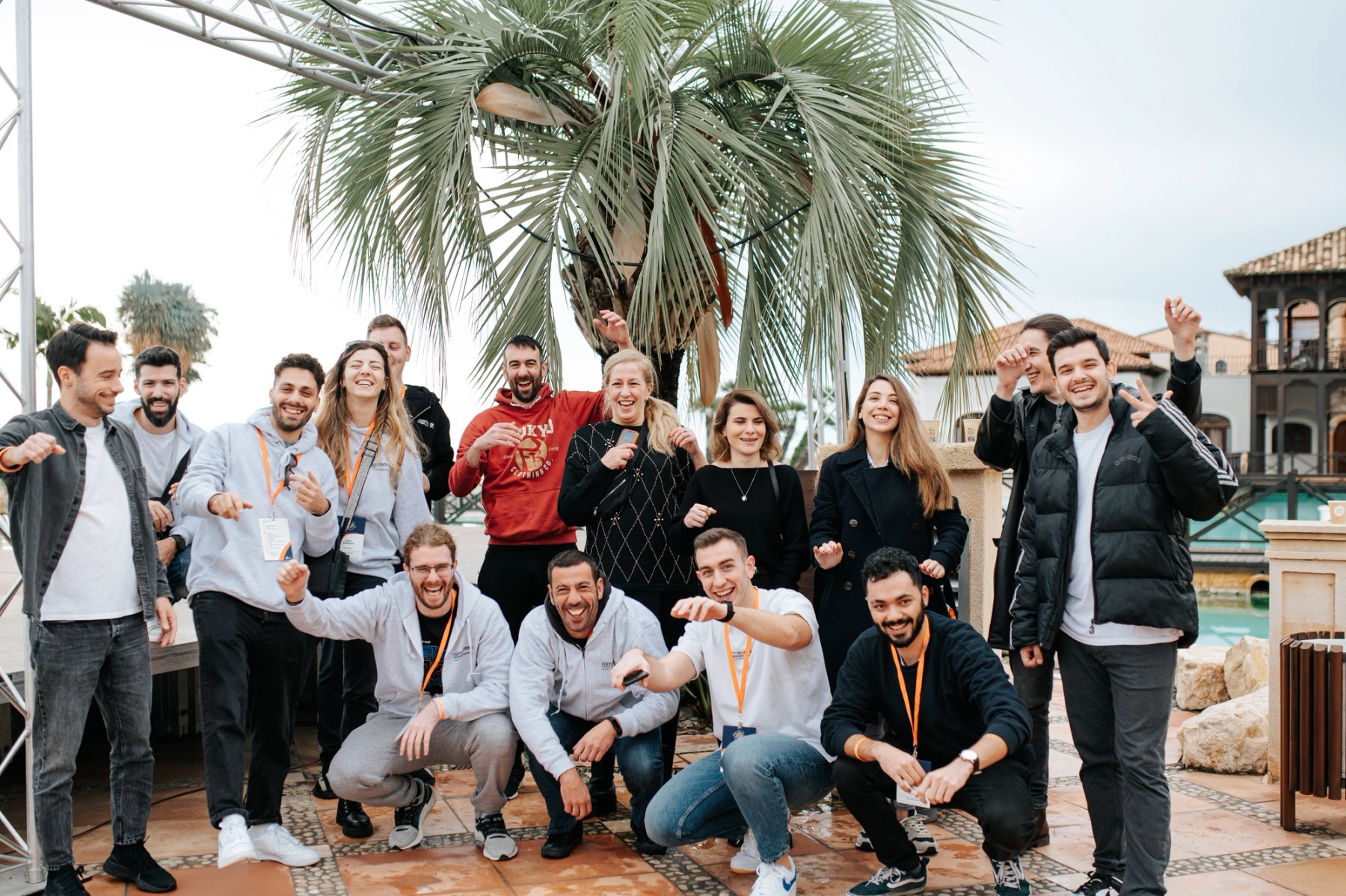
Adaptavist’s careers page describes flexible, remote-friendly work and trust over tightly prescribed schedules. Its employee profiles include a technical writer who previously worked as a teacher and church administrator. Those are company-selected portraits, but they give the culture more texture than a list of engineering tools.
The company’s cloud migration guidance is similarly concerned with what happens around the technical move: establishing objectives, preparing data, testing, writing a runbook and supporting users afterwards. The transferable idea is to give those activities names, owners and time in the schedule. A successful upload cannot answer every question about how work should change.
In May 2026, Adaptavist announced Atlassian Partner of the Year awards for Co-Selling Excellence and Cloud Transformation Services. Such recognition helps establish its position in the partner market. A prospective customer still needs evidence that matches the problem at hand: similar integrations, operating constraints and staff capabilities.
These projects also suggest limits. Automation will struggle to rescue a process whose owners disagree about the desired outcome. A migration designed around flexible scheduling is a poor fit if teams cannot provide testing time or approve staged changes. Buyers should make those constraints explicit before selecting a tool or a delivery partner.
The useful way to approach Adaptavist is with an observable problem. A queue that never clears. An upgrade nobody owns. A report assembled by hand every Friday. Establish the cost of that problem, decide what improvement would count and check that the proposed solution can be maintained. The software will have plenty of features. The test is whether the people using it get their time back.