The Company That Maps the Machines Nobody Remembers Buying
Raj Jalan spent most of every IT migration just figuring out what his clients actually owned. So he built the tool that does it automatically - and sold it to Freshworks for $230 million.
Ask a big company's IT department a simple question - how many servers do you run, and what talks to what? - and you will usually get a pause, a spreadsheet that is six months stale, and a shrug. This is not incompetence. It is the natural state of infrastructure that has grown by acquisition, migration and improvisation for twenty years. Device42 was built on the wager that this gap is not a nuisance but a market.
The company makes software that automatically discovers a company's entire IT estate - physical servers, virtual machines, cloud instances, IP addresses, installed software and the invisible web of dependencies between applications - and keeps that inventory current without anyone maintaining a list by hand. It does this agentlessly, meaning it does not require software to be installed on the machines it inventories. The output is a CMDB, a configuration management database, that acts as a single source of truth.
In June 2024, Freshworks completed its acquisition of Device42 for approximately $230 million. It was the first acquisition Freshworks had made since going public in 2021, and it is a useful reminder that some of the most valuable software solves problems nobody enjoys talking about.
01 - OriginA problem the founder felt personally
Raj Jalan did not set out to build a category. He grew up in Punjab, India, studied engineering, worked at Wipro, and moved to the United States, where he ended up consulting on IT infrastructure projects. On those projects he kept hitting the same wall. Before he could migrate or optimize anything, he had to figure out what the client actually owned and how it was wired together. By his own account, that discovery work ate 60 to 70 percent of a project's time.
When he went looking for a tool to do the discovery for him, what he found was expensive, fragmented and disappointing - point solutions that did one slice of the job and did not talk to each other. So he built his own, and Device42 started in West Haven, Connecticut, well outside the usual Silicon Valley orbit.
That framing matters. Device42 is a case study in building from a pain you have felt yourself rather than a market you have read about. The problem was unglamorous, which is exactly why it stayed unsolved long enough to be worth solving.

02 - What it doesThe alphabet soup, decoded
Device42 is really a bundle of capabilities that IT people refer to by acronym. Each one is a discipline unto itself; the pitch is that owning them in one place, fed by the same discovery engine, beats stitching together separate tools.
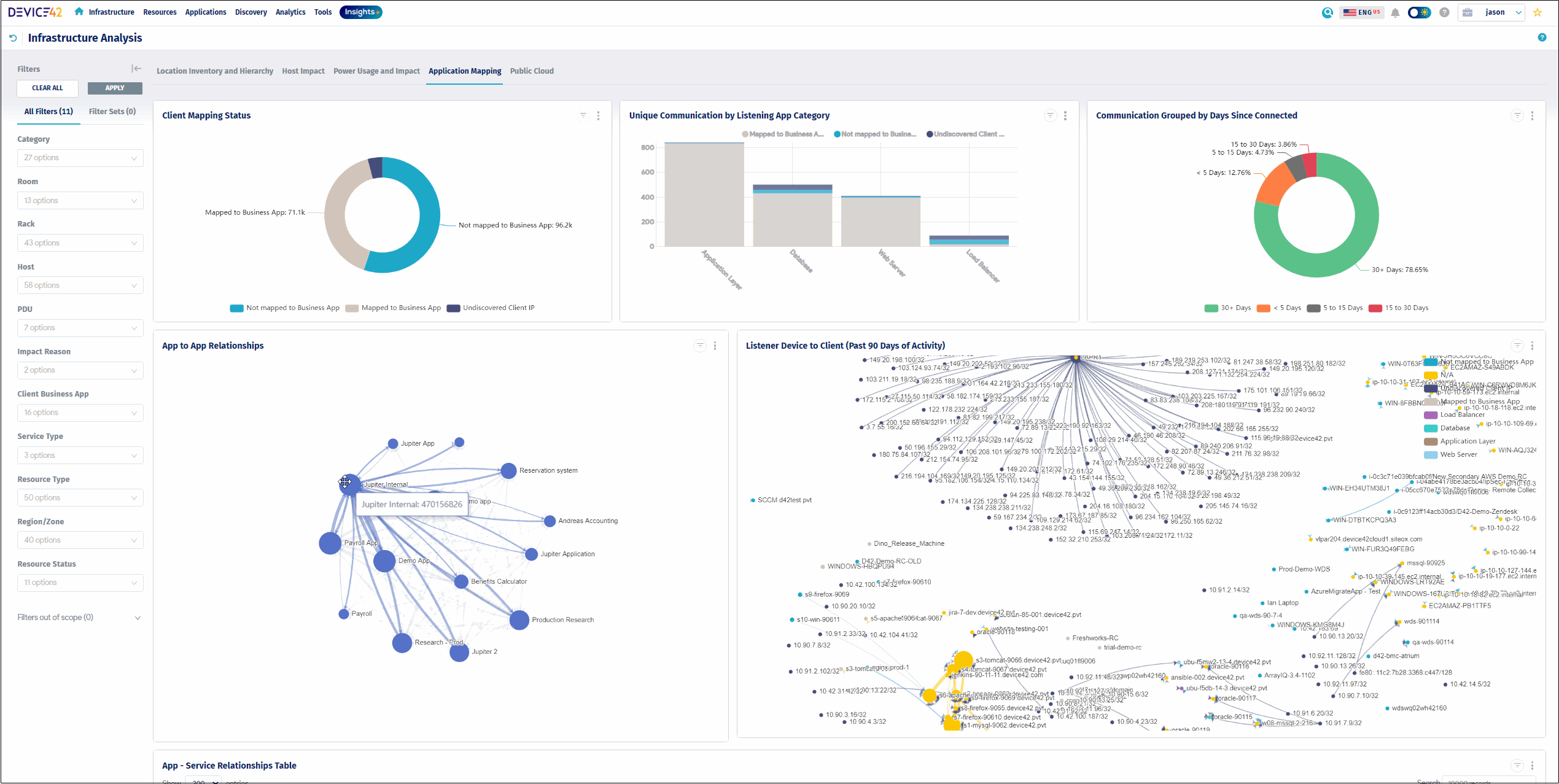
The practical payoff shows up at the worst moments. When something breaks, dependency mapping tells you what else is about to break. When auditors arrive, the inventory is already there. When finance asks why the cloud bill is so high, resource data points at the idle instances. Device42 markets ROI figures around these moments - roughly 10x faster incident recovery, 85 percent faster audit readiness, and meaningful data center cost reduction. Treat vendor numbers as directional, but the shape of the value is real.
Figures are vendor-reported and approximate; shown to illustrate where value concentrates.
03 - Who uses itThe mid-market and the enterprise
Device42 sells to IT organizations that are big enough to have lost track of their own infrastructure - mid-market companies, large enterprises, managed service providers and systems integrators. Early customers included names like Cisco, Avaya and Fujitsu. By the time Freshworks bought it, the base had grown past 800 customers spread across more than 70 countries.
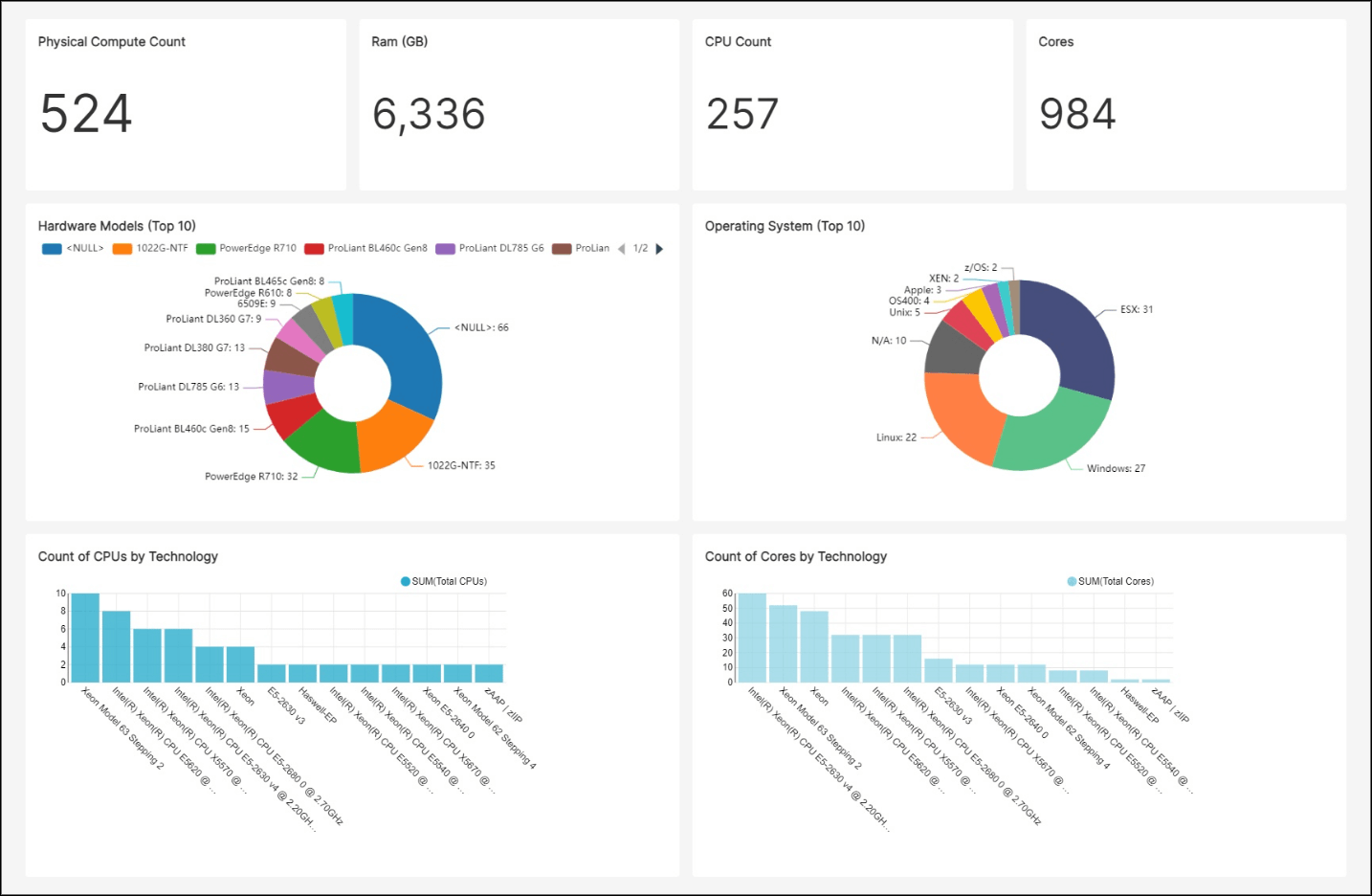
The common thread among these buyers is a project that cannot start without accurate discovery: a data center consolidation, a cloud migration, a security audit, a merger where two IT estates have to be reconciled. Discovery is the unglamorous first step, and it is where most of these projects quietly stall.
04 - The competitionFeeding the giants, and fighting them
The obvious rival is ServiceNow, whose Discovery and CMDB products sit inside a much larger IT service management empire. But Device42's position is subtler than head-to-head combat. It often plays the specialist that does deep, accurate discovery and then feeds that clean data into ServiceNow's CMDB through an integration. Other names in the field include Lansweeper, ScienceLogic, Faddom, Virima, BMC Helix Discovery, Nlyte and Sunbird.
The differentiator Device42 leans on is breadth with depth: one agentless engine that reaches from a decades-old mainframe to a Kubernetes container, and covers CMDB, DCIM, IPAM and dependency mapping without asking the customer to buy four products. Where bigger suites are broad and shallow on discovery, Device42 is narrow and deep - and that depth is what makes its data worth feeding into everyone else's tools.

05 - The moneyLean in, nine figures out
Device42's capital story is refreshingly ordinary by SaaS standards. Public records show a modest seed round of roughly $3.5 million in 2014, backed by Connecticut Innovations, Elm Street Ventures and a group of angels, followed by a $34 million recapitalization in 2019 involving Charlesbank Capital Partners. That is on the order of $37 million in equity across a decade - not the blitz-scaled war chest the headlines usually celebrate.
Then came the exit. Freshworks agreed to buy Device42 in the spring of 2024 and closed the deal for about $230 million, structured largely as cash with an equity rollover from Jalan and his affiliates. The acquisition landed alongside a leadership change at the parent company: founder Girish Mathrubootham moved to executive chairman and Dennis Woodside, formerly of Motorola Mobility, became Freshworks CEO.
06 - After the dealThe engine inside Freshservice
Since the acquisition, Device42's discovery, CMDB and dependency-mapping capabilities have been folded into Freshworks' Freshservice ITSM platform, marketed as advanced IT asset management. Freshworks reported that a major Device42-Freshservice integration shipped within roughly five months of the close, and that the combined offering drove record net-new revenue in the following quarter.
The product itself keeps moving. In 2025, Device42 added SaaS discovery to its software license module, extending the same instinct - find what you actually have - from servers and licenses into the sprawl of cloud subscriptions that every company now struggles to track.
07 - The takeawayWhat you can copy
The reusable lesson from Device42 is not a growth hack. It is a posture. Pick a problem so tedious that nobody else wants to touch it, one you have felt in your own work. Solve it completely rather than partially. Sell it to buyers who feel the pain acutely - the ones for whom your product is a painkiller, not a vitamin. Stay lean on capital so the outcome does not need to be a unicorn to be a win. Then let the results, not the adjectives, do the talking.
Where would this playbook not work? A problem this dull only pays off if it is genuinely hard and genuinely widespread. If discovery had been easy, a free tool would have commoditized it years ago. Device42's moat is the messy, heterogeneous reality of enterprise IT - and that same messiness is why the work is never quite finished.