The most revealing moment in an artificial-intelligence project may be the one after the applause. The model has behaved. The sample data has been scrubbed. Someone has made a chart bend upward. Then the pilot leaves the friendly climate of the demonstration and meets the company: old systems, rival dashboards, security reviews, budgets, regulations and people whose jobs do not reorganize themselves because a slide says “transformation.”
Muhammad Haq has built his current argument around that awkward encounter. The co-founder and chief executive of OnStak does not dismiss AI capability. His company sells the engineering needed to put it to work. But he insists that the capability is arriving faster than the institution around it can change. Models improve; organizations absorb. Those are different clocks.
It is a thesis born from plumbing. Haq co-founded OnStak in California in 2013, when enterprise technology conversations were crowded with cloud migrations, software-defined networking and data-center architecture. Over the following decade, the company worked across applications, data, observability and infrastructure. OnStak became a long-running Cisco engineering partner and collected Cisco partner recognition along the way, including Application Experience Partner of the Year for the Americas in 2022 and 2023.
Infrastructure has a useful disciplinary effect. It refuses to be impressed by a prototype. It asks whether the thing stays up, whether another system can talk to it, whether a team can operate it at 2 a.m., and whether the bill still makes sense when the traffic arrives. Haq has carried those questions into the generative-AI era.
“There is a moment in every technology cycle when the rules change and nobody sends a memo.”Muhammad Haq, 2026
A founder shaped by the stack
The public outline of Haq's life is spare, but the shape of his professional thinking is visible in what he repeats. His profile describes him as an “outcome-driven entrepreneur.” OnStak's leadership page calls out his ability to bridge concept and success, then make the result repeatable. In his own writing, the favored nouns are less romantic: operating model, architecture, governance, evidence, accountability.
This is founder language with the showroom lighting turned down. Haq is interested in the gap between what technology permits and what a business can responsibly sustain. In a recent reflection, he compared the present moment with the financial crisis of 2008. Financial instruments had advanced faster than the institutions meant to govern them, he argued, leaving other people to pay when capability outran control. The analogy is deliberately uncomfortable. It turns AI adoption from a shopping question into a question of institutional design.
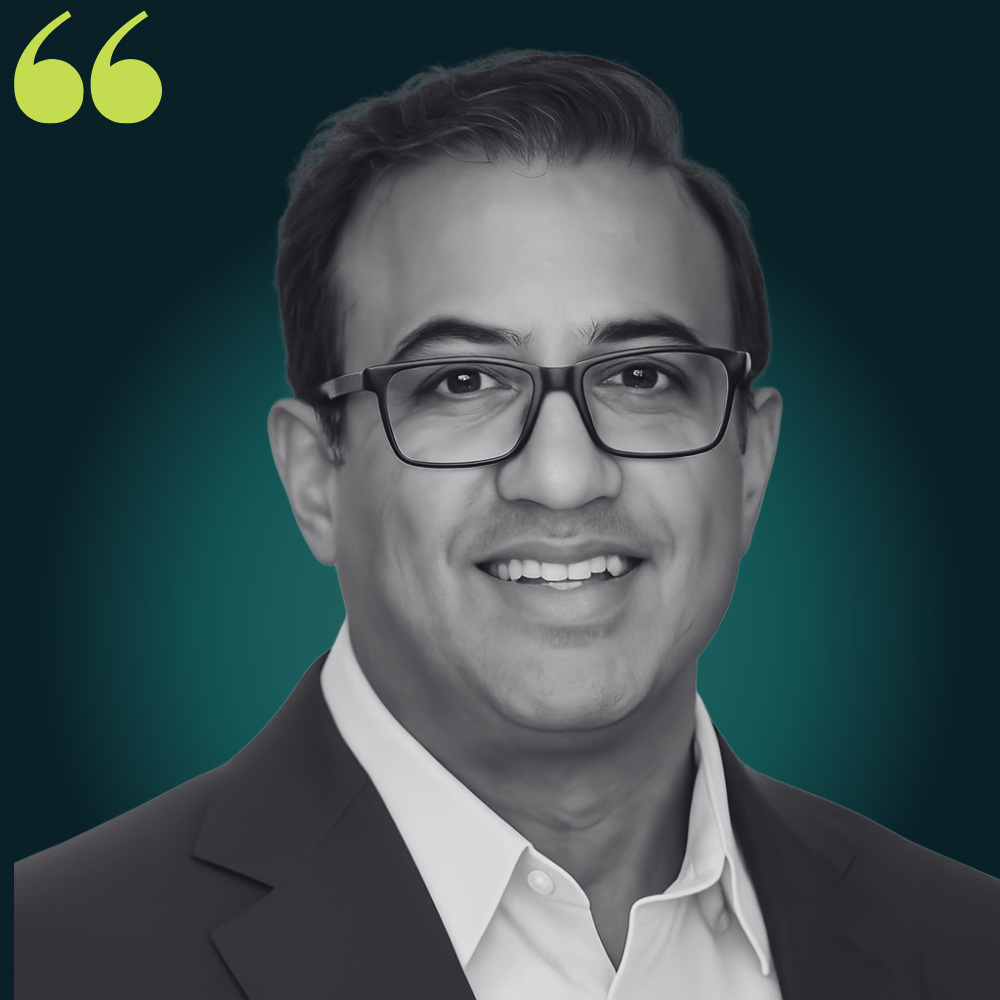
Haq says the questions he hears from leaders have changed. Eighteen months ago, they asked whether AI worked. Today they ask whether their people can absorb it. Tomorrow's question, in his formulation, is who paid the price for how the transition happened. The progression is useful because it widens the frame one step at a time: from technical possibility, to organizational readiness, to consequence.
The company between the layers
OnStak now describes its task as moving AI from pilot to production, supported by application and data modernization. Its reported deployments span five industries, including finance, the public sector, manufacturing and retail. The company works with Cisco, NVIDIA, AWS and Splunk, and says three quarters of its workforce consists of AI architects and certified engineers. Those facts help explain the strategic posture. It is easier to argue for integration when most of the payroll knows where systems fail to meet.
In May 2026, OnStak presented an AI portfolio built around three capabilities: Video AI Analytics, AI Assurance and an AI Correlation Fabric that sits beneath its AIOps work. The last is the most revealing. It is designed as an overlay on infrastructure a customer already owns, correlating information across silos before a model acts on it. OnStak says the approach can reduce token use in its initial AIOps case by 15 to 20 times per decision. The point is not simply thrift. A model given a coherent picture has fewer opportunities to invent a bridge between disconnected facts.
The other significant word is assurance. For Haq, security leaders are not the people who block AI. They are the people who make it safe enough to trust. That changes the role of governance. It cannot remain a document assembled at the end, when a project is already waiting at the door. Evidence has to be produced as the system operates: what the AI did, why it did it, which policy applied and who was responsible.
This is the less photogenic side of innovation. Audit trails do not attract queues at conference booths. Data lineage rarely becomes a dinner-table anecdote. Yet a system without them can spend months in review after its technical team has declared victory. Haq's wager is that assurance can become part of the architecture, allowing trust to be constructed continuously rather than performed in a meeting.
Listening before the roadmap
There is a personable detail inside this systems thinking. Haq wrote that he had spent more of 2026 listening than talking: in coffee shops, during travel, over lunches and dinners, in boardrooms, customer rooms and regulatory briefings. The list has the rhythm of a founder's calendar, but it also describes a method. Listen until the question changes.
That method appeared again when Fabio Gori joined OnStak in May as chief product and marketing officer. Gori came from Cisco after 26 years, including leadership across engineering alliances, transformation and product marketing. Haq said their first conversation was not about a roadmap. It was about a gap, the recurring space between AI that runs in a pilot and AI that runs the business.
Hiring Gori made the organizational thesis concrete. OnStak had technical depth and years of enterprise delivery. It now needed to turn that knowledge into a product and market language that executives could act upon. A founder's personnel decisions are often strategy with a biography attached. In Gori, Haq recruited someone who had seen technology from the ecosystem side and the enterprise side, then asked him to help make the bridge repeatable.
“The technology was never the bottleneck - the operating model around it was.”Muhammad Haq, on OnStak's 2026 AI portfolio
The same preference for useful conversation surfaces in OnStak's event writing. Its recap of Cisco gatherings lingers on hallway exchanges where acquaintances skip introductions and get directly to what failed. The company's invitation, “Coffee? No slides,” could serve as a small manifesto. Slides describe the desired state. Coffee has a way of revealing the current one.
The eighteen-month window
Haq calls the present an eighteen-month crossroads for enterprise leaders. He believes the decisions made now will separate organizations that rewire themselves around AI from those that continue accumulating pilots. The claim is also his company's commercial case, and it deserves to be read as both diagnosis and pitch. Founders do not merely find problems. They choose the problems around which to organize a business.
Still, the distinction he draws is portable beyond OnStak. A company can buy capability faster than it can establish responsibility. It can connect a model before it connects its data. It can announce transformation before it redesigns a single role. The resulting delay is then blamed on the technology, even when the technology performed exactly as demonstrated.
The lesson to steal is almost stubbornly practical. Before asking whether an AI system can produce an answer, ask which data it will see and who can challenge it. Before estimating inference cost, map the integration work hidden between databases. Before celebrating a pilot, invite the security lead, the auditor and the person who will operate it on an ordinary Tuesday. The difficult questions are cheaper when asked early.
There is a second lesson in the time horizon. Haq is not promising that one procurement cycle will remake an enterprise. His use of the word “cohort” suggests compounding: small architectural and organizational choices accumulating until two companies that began with similar tools end up with very different abilities. One has a collection of proofs. The other has learned how to place a system under real responsibility. The difference may be invisible for months, which is precisely why it is easy to postpone. By the time it appears in operating results, the patient work has already been done.
Haq's aspiration is visible in the partner he says OnStak wants to become: one that helps enterprises choose the cohort doing the structural work. This is less a promise of instant transformation than an argument for sequencing. Establish relationships among the data. Build governance into the process. Make accountability legible. Then let the capability scale.
AI's public face may remain the model that writes, draws or reasons on command. Its private life will be stranger and more administrative: permissions, controls, service levels, incident reviews and people learning where their judgment belongs. Muhammad Haq has chosen that private life as his company's terrain. It is the boring part only from a distance. Up close, it is where the business either changes or does not.