A bank can have an impressive AI model and still spend the morning reconciling two versions of the same customer record. A hospital can identify a patient who needs follow-up and still leave the appointment unscheduled. There is a rather inconvenient distance between knowing something and getting it done. Scalable Systems has arranged much of its business around that distance.
- The work: connect enterprise data, modernize old systems, and build AI into operating workflows.
- The buyers: enterprise teams, with a particular emphasis on financial services and healthcare.
- The offer: custom engineering, managed cloud and data platforms, and healthcare software.
- The useful idea: treat integration, governance, and maintenance as part of the AI purchase.
Founded in 2005 by Sam Biswal, the privately held company describes itself as a data, AI, and digital transformation business. Those words occupy an overcrowded shelf. The more revealing evidence is in the details: validating migrated records, extracting rules from legacy code, watching compute usage, and deciding which actions an AI agent may take. It is a catalogue of the work that an elegant demonstration can politely omit.
Scalable’s market position is therefore best understood through the customer’s unfinished task. A business may already own its cloud platform. It may already employ capable analysts. What it buys from Scalable is engineering capacity and operational expertise to make those ingredients function together.
The record must survive the journey
Start with migration. Scalable’s data-engineering offer addresses old schemas, slow batch processing, fragmented sources, and the fear of losing or corrupting records during a move. These are specific obstacles. Moving information to a modern platform does little good if its meaning gets left at the departure gate.
The company packages its approach in SMART, a five-part migration framework. Schema evolution accommodates structural changes. Modernization ETL wrappers standardize streams. Automated validation checks migrated data against the source. Rationalized logic decoupling extracts business rules from old code. Targeted delta load scoring synchronizes changed records rather than repeatedly moving everything.
- SSchema evolutionKeep structural changes manageable
- MModernization ETL wrappersStandardize incoming streams
- AAutomated validationCheck the destination against the source
- RRationalized logic decouplingSeparate business rules from old code
- TTargeted delta load scoringSynchronize the records that changed
The interesting letter is R. A legacy application contains decisions as well as data. Its code may embody years of business practice. A sensible migration has to preserve the rules the organization still needs while creating room to change them. That is an engineering problem with a business owner attached.
A fast platform can still run up a slow disaster
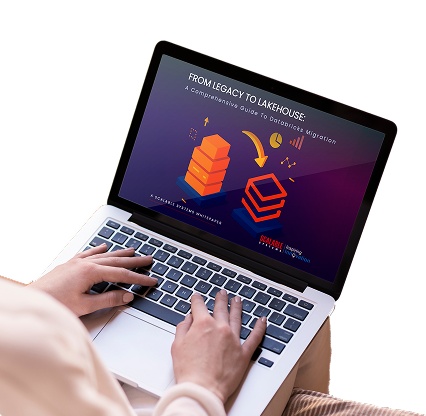
Scalable’s Databricks and Snowflake services begin with a useful concession: owning a capable platform does not settle how it should operate. Its Databricks offering covers migration, streaming pipelines, deployment automation, access controls, and model operations. Unity Catalog appears in the governance work; MLflow appears in the model lifecycle. These are named implementation tools rather than a vague promise to add intelligence.
Snowflake services take a similar route through platform setup, ELT development, ingestion, query profiling, and resource tuning. The offer includes spend dashboards, lineage, access history, and support for audit reporting. The company is selling the day after deployment as well as deployment itself.
“Full platform ownership always remains with you”
Scalable’s Databricks managed-services offer
That sentence deserves attention in a buying conversation. Scalable advertises round-the-clock support, training, and handover options while saying the client retains platform ownership. A buyer can ask how that translates into access, documentation, internal skills, and an eventual exit. Ownership becomes more useful when somebody knows how to exercise it.
Cost enters the story through workload design. Scalable’s Snowflake page identifies inefficient queries and unpredictable usage as operating problems; its services include tuning and forecasting. The practical question is what a completed business task consumes: engineering effort, platform resources, and support. A speedy query with an extravagant appetite is still an expense.
An agent needs a job description
The company’s agentic AI offer addresses four obstacles: isolated use cases, disconnected systems, incomplete reasoning flows, and operational readiness gaps. Its proposed work includes connecting applications and APIs, assessing readiness, choosing workflows, and aligning business and technical teams.
One particularly useful item is authority and oversight. An agent that can act requires more than information. It needs permission to use a system, limits on its actions, and a route for review. Scalable describes governance, workflow design, and orchestration as parts of deployment. The implication for buyers is clear: specify the task, its owner, and its boundaries before celebrating autonomy.
Editorial view of the company’s integration and agent-development proposition.
This is where Scalable fits between a technology vendor and an enterprise’s own team. It works on the connections that make a chosen technology useful. An internal engineering group may perform the same work; a large systems integrator may also take it on. Scalable’s stated distinction is industry focus, reusable assets, and flexible delivery. Those are propositions a customer should test against its particular workflow.
Healthcare gives the abstraction a pulse
The healthcare division makes the industry argument tangible. Scalable Health markets IntelliHeal, a cloud-based intelligence platform, alongside IntelliProvider, IntelliPayer, IntelliPharma, and Intellekt Lake. The names describe different seats around the same complicated table.
IntelliProvider addresses clinical, patient, and operational information, including population health and revenue-cycle work. IntelliPayer focuses on health-plan operations such as claims, member engagement, and risk stratification. IntelliPharma covers clinical trials and real-world evidence. Intellekt Lake supplies a data-repository proposition with prebuilt healthcare connectors and metadata management.
There is a commercial distinction here too. Scalable sells enterprise services through consulting, project delivery, staffing, and managed operations. Its healthcare products also advertise cloud subscriptions with customization and collaborative working models. A customer can be buying engineering work, a continuing service, software access, or a combination.
In a June 17, 2026 article, Scalable Health uses a readmission-risk example to explain agentic workflows. A conventional alert waits for someone to arrange follow-up. Its proposed agent workflow carries the task into scheduling, a discharge checklist, and a record update. The article also calls for human review of high-stakes decisions. Read this as an illustration of the intended workflow, rather than a reported customer outcome.
The distinction matters because the appealing part is the closed loop. A warning becomes useful when the right person receives it and the next step happens. The difficult part is making each handoff dependable. Healthcare gives Scalable’s integration thesis a human consequence without making the engineering any simpler.
The working day is part of the architecture
Scalable’s delivery menu adds a different kind of integration: people. Its Costa Rica nearshore offering emphasizes collaboration during overlapping working hours, dedicated teams, application development, and managed services. For a US client, the advantage is the possibility of resolving a question while both teams are at their desks. Costa Rica’s clock does not match every US location year-round, but the working-day overlap is the point.
Onshore engagements include dedicated teams, project-based outsourcing, and staff augmentation. SWAT, the company’s rapid workforce offering, advertises a 48-hour delivery guarantee. That is a company promise about access to professionals. Buyers still need to define skills, availability, system access, and what productive onboarding means.
SEAL, the Scalable Extended AI Lab, completes this mix with reusable assets, domain expertise, training, and platform services. Reuse is a sensible ambition: nobody should have to rediscover every connector and migration pattern. The buyer’s question is which parts already fit, which need adaptation, and who maintains the result.
The copyable lesson is a sequence. Choose a business task. Inspect its source records. Agree on the rules. Connect the systems. Validate what moves. Set authority and review points. Keep an eye on performance and spend. This approach depends on accessible systems and accountable owners; without them, additional engineering capacity has little room to work.
Scalable’s most interesting proposition is that useful intelligence requires a great deal of ordinary competence. The model may get the invitation to the boardroom. Somebody still has to make sure the records arrive, the permissions work, and the appointment gets booked.
Follow the work
Explore Scalable Systems, its LinkedIn updates, the SEAL offering, and the Legacy to Lakehouse whitepaper.
For the healthcare division: Scalable Health, its blog, LinkedIn, X, and its YouTube channel.