Profile · Health Technology
Bruno Lempernesse
A quarter century spent making healthcare's most guarded resource - its data - actually usable. Now he runs MDClone.
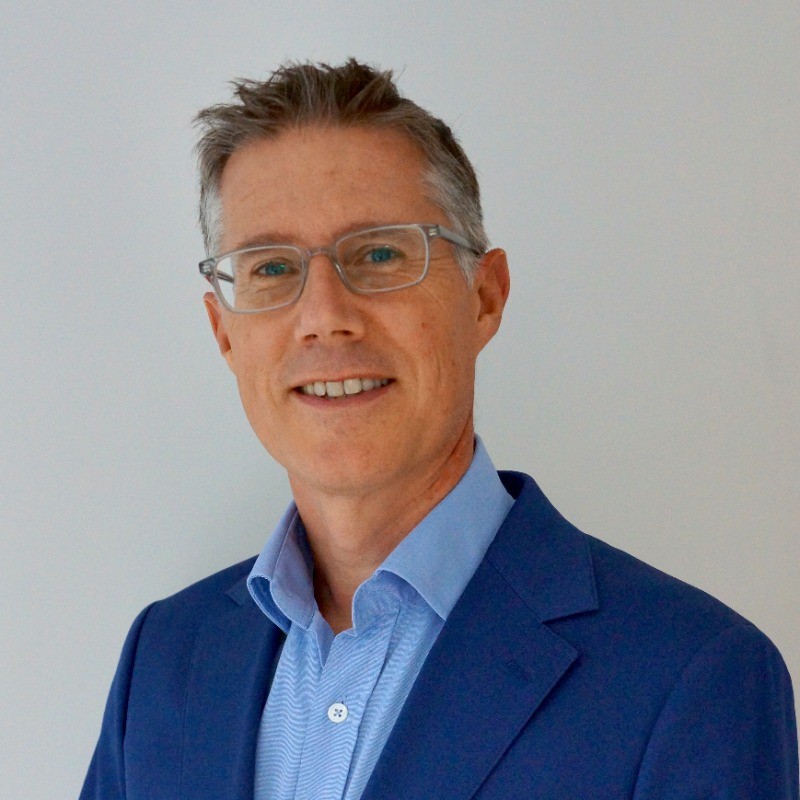
Bruno Lempernesse, Chief Executive Officer, MDClone
A quarter century spent making healthcare's most guarded resource - its data - actually usable. Now he runs MDClone.
Bruno Lempernesse, Chief Executive Officer, MDClone
Ask most people what makes modern medicine work and they will point to doctors, drugs, and machines. Bruno Lempernesse would point somewhere less glamorous: the data underneath all of it. For 25 years he has worked on the unglamorous but decisive problem of turning locked-up health information into something researchers and clinicians can actually use. It has taken him across two continents and through six companies, and it now has him running MDClone, an Israeli-founded platform built around one of the field's more radical ideas - synthetic data that behaves like real patient records without exposing a single real patient.
The arc is unusually coherent for a career that has touched startups, scale-ups, and a two-decade stint inside one large company. Lempernesse studied marketing, entrepreneurship, and international business at Novancia Business School in Paris in the early 1990s. From there he joined Cegedim, the French health-data group, where he stayed for roughly 20 years and grew its Data and Research division - eventually running its business across the US and Canada and serving as a global chief operating officer. It was there, working with longitudinal patient data pulled from electronic medical records in Europe and the US, that he became an early practitioner of what the industry would later brand real-world evidence.
“In a landscape dominated by data-driven challenges, I'm eager to collaborate with our distinguished partners to shift the paradigm from reactive improvement to proactive advancement, unlocking groundbreaking discoveries.”
After Cegedim, Lempernesse moved into a run of leadership roles that kept circling the same theme. He was Senior Vice President and General Manager at SHYFT Analytics, then led the commercial data solutions division at Acorn AI, a Medidata company. He also served as CEO of Inflexxion, a software company working on clinical assessment tools and predictive analytics. Each stop was a different angle on the same question: how do you take messy, sensitive, siloed health data and make it do useful work?
In February 2021 he took the top job at Carevive Systems, a health-technology company focused on the cancer patient experience. His brief was to expand its digital cancer-care platform and build up its real-world-studies business. “With a committed team, board and co-founder,” he said at the time, “Carevive will reshape the way cancer care is delivered, and make treatments and therapies more personalized.” The work paid off in the clearest way a startup can measure it: in May 2024, Carevive was acquired by Health Catalyst.
Rather than coast after a successful exit, Lempernesse took a harder seat. In September 2024 he joined MDClone as President of North America. MDClone's pitch is distinctive - instead of moving sensitive records around, it lets healthcare organizations generate synthetic data that preserves the statistical shape of the original while protecting individual privacy, so that hospitals, researchers, and life-sciences teams can explore and share findings without the usual legal gridlock. It is a company headquartered in Be'er Sheva, Israel, with a growing footprint in the United States, and it had raised a Series C round on the way to scaling that idea.
Ziv Ofek, MDClone's co-founder and then-CEO, framed the hire simply: “Bruno's extensive expertise and deep industry knowledge make him an invaluable addition to our team.” Within about a year, that addition became the company's chief executive. The promotion from President of North America to CEO says something about both the company's ambitions in the US market and Lempernesse's fit for the mission he has effectively been rehearsing for his entire career.
“Carevive will reshape the way cancer care is delivered, and make treatments and therapies more personalized.”
What ties the whole story together is a refusal to treat data access as a solved problem. Reactive healthcare, in Lempernesse's telling, waits for something to go wrong and then responds. Proactive healthcare uses data to see the problem coming. That is the paradigm shift he keeps describing, and synthetic data is the current tool he is betting on to get there - a way to lower the barriers around health information without lowering the wall that protects patients. He works out of the Boston area, speaks English, French, and Spanish, and has spent his career at the boring, load-bearing layer of health tech that rarely trends but quietly decides what is possible on top of it.
It is a track record built by compounding rather than flash. Long tenures, a clean exit, and a mission that has barely changed shape since the 1990s. As MDClone tries to convince more of American healthcare that its data can be both open and safe, it has handed the wheel to someone who has spent 25 years arguing exactly that.
“Shift the paradigm from reactive improvement to proactive advancement.”
Grew and led Cegedim's Data & Research division across roughly two decades and multiple markets.
Early pioneer of longitudinal patient data drawn from electronic medical records in Europe and the US.
As CEO of Carevive, expanded its cancer-care platform and real-world-studies business to a 2024 acquisition by Health Catalyst.
Rose from President of North America to CEO of MDClone in about a year.
He is trilingual, working in English, French, and Spanish - a reflection of a career spent across European and American markets.
He runs a company headquartered in Be'er Sheva, Israel, from the Boston area - a genuinely transatlantic operating job.
He was working on real-world health data in the 1990s, long before “real-world evidence” became an industry buzzword.