synthetic-data
(35)
The Survey Tollbooth That Learned to Spot a Liar
PureSpectrum built a pay-per-complete marketplace for the least glamorous, most consequential part of research: finding real people and keeping bogus answers out. Now it is turning that quality layer into infrastructure for surveys, synthetic panels and AI-native fieldwork.

Ian Coe Is Making Fake Data Useful - and Real Data Less Dangerous
After Palantir and Tableau, Ian Coe built Tonic.ai around a stubborn idea: developers should get realistic data without getting the secrets inside it.
The Startup Teaching Cameras to Catch What Tired Human Eyes Miss on the Assembly Line
Akridata spent years fixing AI's boring, expensive data problem - then pointed the same tools at factory defects and got acquired by DIMAAG in 2026.

Mahesh Sathiamoorthy Is Building the Practice Worlds AI Agents Need
After a decade improving the systems behind YouTube recommendations, Mahesh Sathiamoorthy left Google DeepMind to work on a new bottleneck: the data, tests and realistic environments that teach AI agents how to finish the job.
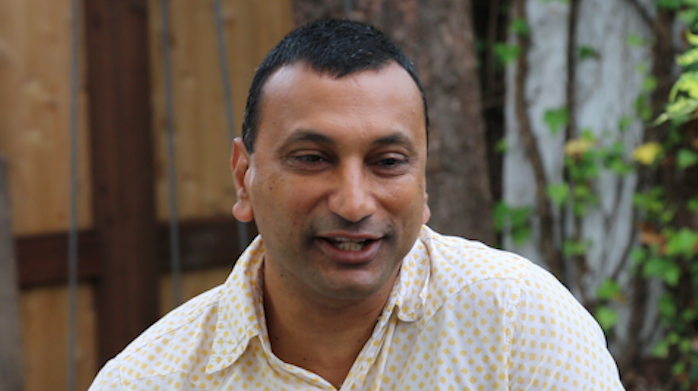
Apurva Shah Builds Worlds Where Robots Can Fail First
After two decades making digital worlds believable, the former Pixar technical leader is using simulation to make machines more dependable in the real one.
Automaton AI Infosystem Pvt. Ltd.
Automaton AI is betting that enterprise AI will be won in the unglamorous stretch between a promising model and a system that survives production. Its answer is ADVIT Studio - a self-hosted workspace built to keep data, training, deployment and oversight under one roof.

Steve Xie
Steve Xie is the founder and CEO of Lightwheel, a physical AI infrastructure company building simulation and synthetic data systems that teach robots to learn and operate in the real world. A physicist by training with a Columbia PhD, he led autonomous driving simulation at Cruise, NVIDIA, and NIO before starting Lightwheel in 2023. The company supplies SimReady 3D assets, egocentric human data, and robot evaluation tools to labs including NVIDIA, Google DeepMind, and Figure, and raised roughly $137.5 million in 2026 to expand its data and evaluation infrastructure.

Bruno Lempernesse
Bruno Lempernesse is the CEO of MDClone, an Israeli-founded healthcare data platform that lets organizations explore and share sensitive patient data using synthetic data that preserves privacy. A 25-year veteran of healthcare technology, data science, and life sciences, he joined MDClone as President of North America in September 2024 and stepped up to Chief Executive Officer in 2025. Before MDClone he was CEO of Carevive, a cancer-care and real-world-studies company acquired by Health Catalyst in 2024, and earlier spent two decades at Cegedim building its data and research business, plus leadership roles at SHYFT Analytics and Acorn AI (a Medidata company). He is an early pioneer of longitudinal patient data drawn from electronic medical records across Europe and the United States.

The Data Was Locked in a Vault. Subsalt Found a Way to Share It Without Opening the Door.
This Microsoft customer story details how healthcare technology startup Subsalt built a HIPAA-compliant synthetic data sandbox on Microsoft Azure and Microsoft Fabric to help medical researchers and students at UT Southwestern Medical Center access real-quality clinical data in days instead of months, accelerating research outcomes while safeguarding patient privacy.

MDClone
MDClone is a healthcare data company that lets clinicians, researchers, and analysts explore patient data without touching real patient records. Its ADAMS platform ingests structured and unstructured health-system data into a longitudinal database, then generates statistically faithful synthetic data that carries no risk to patient privacy. That combination turns months-long, IRB-heavy data requests into self-service exploration, letting front-line staff ask their own questions, run analyses, and share results across organizations. Founded in Israel in 2016 and used across the U.S., Canada, and 100% of the Israeli healthcare market, MDClone has raised roughly $112M to expand data-driven discovery in health systems, government, payers, and life sciences.
Oxipital AI
Oxipital AI is a Bedford, Massachusetts company building AI-enabled machine vision systems for food processing, agriculture and consumer-goods manufacturing. Emerging in 2024 from the rebrand of Soft Robotics after that company sold its gripper hardware line to Schmalz, Oxipital AI now centers on its V-CORTX vision platform and VX2 hardware, which use synthetic data and computer vision to handle quality inspection, foreign-object detection, yield optimization and vision-guided robotic picking in high-variability production lines.

Synthesized
Synthesized is a London- and New York-based enterprise software company that automates the creation of production-realistic test data. Its AI-driven platform generates, masks, and subsets data from sensitive systems so teams can validate software, database migrations, and AI agents before they reach production - all while preserving privacy and meeting regulations such as GDPR. Founded in 2020 by Cambridge machine-learning PhD Nicolai Baldin, the company counts Deutsche Bank and UBS among its customers and raised a $20M Series A in September 2025.

K2view
K2view is an enterprise data company founded in 2009 and headquartered in Yokneam, Israel, with US operations in Texas. Its patented Data Product Platform is built on a proprietary micro-database technology that organizes fragmented enterprise data by business entity - a customer, order, product or loan - so each entity's data lives in its own encrypted, real-time, individually managed database. The approach powers data integration, test data management, data masking, synthetic data generation and, increasingly, AI-ready data pipelines that ground large language models and AI agents. K2view serves large enterprises in telecom, banking, healthcare, insurance and retail, including AT&T, Verizon, Vodafone and BBVA, and has raised roughly $43 million in funding.

Bespoke Labs
Bespoke Labs is a Mountain View AI research lab that builds tools and datasets for training more reliable AI models and agents, starting with synthetic data curation and hallucination detection and expanding into realistic reinforcement-learning environments for long-horizon agentic AI. Its open-source projects, including Bespoke Curator, Bespoke-MiniCheck, OpenThoughts, Terminal-Bench, and GEPA, are widely used across the AI research community, and the company raised $40M in seed and Series A funding by mid-2026 from investors including Wing Venture Capital, 8VC, and Mayfield.

Duality AI
Duality AI is a San Mateo-based simulation software company behind Falcon, a digital twin platform built on Unreal Engine. Falcon lets engineers create photorealistic, physics-accurate virtual replicas of robots, sensors, and environments, then generate the labeled synthetic data used to train and validate AI vision and autonomy models - closing the gap between simulation and the real world. Founded in 2018 by Pixar graphics veteran Apurva Shah and robotics pioneer Mike Taylor, Duality serves customers including DARPA, the U.S. Army, Honeywell, and P&G.

Lightwheel
Lightwheel is a Physical AI infrastructure company building the data layer that teaches robots to work in the real world. It produces physically accurate SimReady 3D assets, egocentric human demonstration data, and evaluation platforms so robots can learn safely and cheaply in simulation before they are deployed. Founded in 2023 by former autonomous-driving-simulation lead Steve Xie, Lightwheel partners with NVIDIA and supplies simulation assets and synthetic datasets to leading robotics teams.
Superb AI
Superb AI is a computer vision AI company that builds an end-to-end MLOps and DataOps platform, letting teams label, curate, train, and deploy vision models on images, video, and 3D LiDAR data. Founded in 2018 and a Y Combinator alum, it uses AI-assisted automation to shrink the slow, manual work of preparing training data, and serves enterprise customers across autonomous driving, manufacturing, security, and public sector from offices in San Mateo and Seoul.

Tonic.ai
Tonic.ai builds synthetic data infrastructure that lets engineering and AI teams work with realistic, privacy-safe stand-ins for production data. Its platform de-identifies, masks, subsets, and synthesizes both structured databases and unstructured text so developers can test software, train models, and feed LLM and RAG pipelines without exposing sensitive information. Founded in 2018 by a team out of Palantir and Tableau, the San Francisco company serves enterprises across finance, healthcare, and technology and has raised roughly $56M in venture funding.
Mark Chiappetta
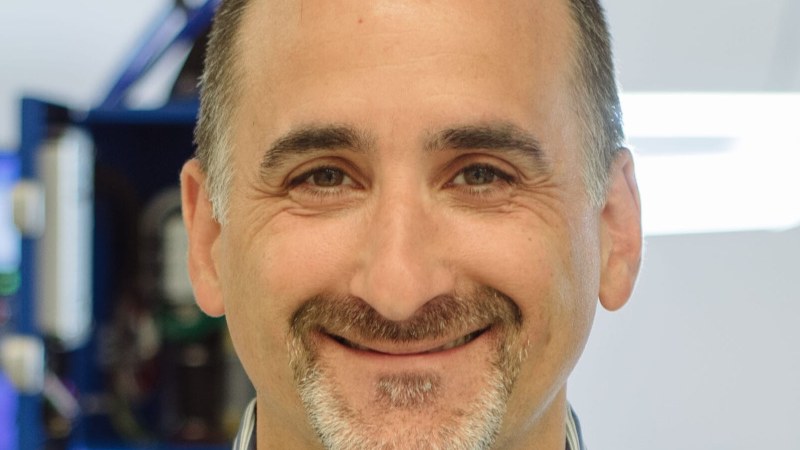
Mark Chiappetta is the president and CEO of Oxipital AI, a Bedford, Massachusetts company that builds AI-driven machine vision for factory lines that pick, count, and inspect food. He is an electrical engineer who spent 30-plus years in robotics, including a run as a corporate VP at iRobot and eight years growing Soft Robotics from an early gripper startup. In 2024 he took the top job at Soft Robotics, then engineered the pivot that spun the company's 3D vision and AI software into Oxipital AI while the gripper hardware business was sold off. His pitch is that food processors will not rip out human lines for robots overnight, so Oxipital sells the eyes and brains first and the hands later.
Nicolai Baldin
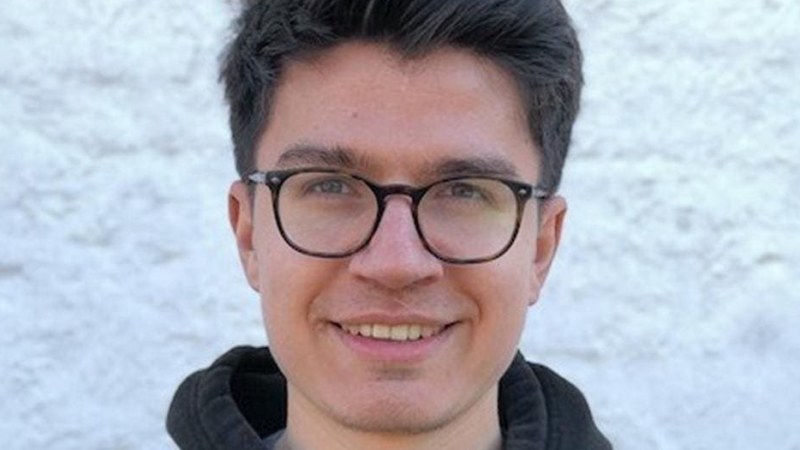
Nicolai Baldin is the co-founder and CEO of Synthesized, a London and New York-based DataOps and AI-powered test data automation platform he launched after a PhD in machine learning and statistics at the University of Cambridge. Synthesized generates synthetic, compliant, production-like data that enterprises use to test software, train models, and share information across regulatory boundaries. In September 2025 the company raised a $20M Series A led by Redalpine to expand into automated software testing for the age of 'vibe coding.'

Native AI
Native AI is a New York-based market intelligence platform that uses generative AI to build 'Digital Twins' - AI-powered proxies of real consumers assembled from reviews, interviews, surveys and other first- and third-party data. Brands, agencies and market research firms use the platform to chat with clones of their target audience, track products and competitors across the web, and forecast consumer reactions in real time, compressing research timelines that once took weeks into minutes. Founded in 2019 by Frank Pica and Sarah Sanders, the company raised a $3.5M seed round in 2023 and says clients have generated over 275 million Digital Twins to date.

P-1 AI
P-1 AI is a deep-tech startup building engineering AGI for the physical world. Its product, an anthropomorphized AI engineer agent named Archie, is trained on proprietary semi-synthetic, physics-based datasets to reason across multiphysics design problems and use the same complex engineering tools human engineers use. Currently operating at the level of a junior mechanical and electrical engineer, Archie is already working with design partners on data center cooling and critical power systems, with expansion planned into automotive, aerospace, and defense. Founded by former Airbus and United Technologies CTO Paul Eremenko alongside Google DeepMind and Airbus veterans, the company raised a $23M seed round in 2025 led by Radical Ventures.
Jerry Wu
Jerry Wu is the co-founder and CEO of Halluminate (YC S25), a San Francisco startup building synthetic, fully-simulated versions of the internet so AI agents can learn to use computers and browsers reliably. A Cornell computer science and economics graduate who once researched model quantization, he previously led product and research at Capital One Labs, where he shipped one of the first AI agents in financial services and co-authored three patents. With longtime collaborator Wyatt Marshall, he is building what the pair call Westworld: a catalog of realistic sandboxes and expert-annotated evaluations that AI labs use to train and test computer-use agents at scale.
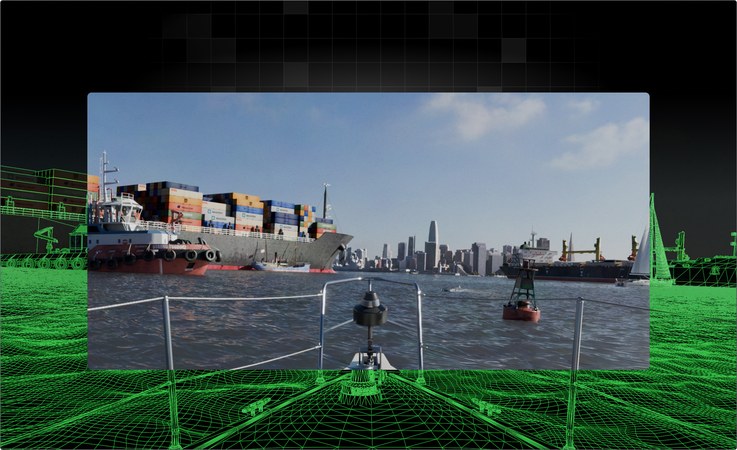
Bifrost AI
Bifrost AI builds simulation and evaluation infrastructure for physical AI. Its platform generates photorealistic 3D synthetic data and stress-tests robotics and computer-vision systems across thousands of simulated scenarios - weather, sensor noise, rare edge cases - so teams can train and validate models in minutes instead of months. Used across maritime, geospatial, aerial, off-road, industrial, and off-world domains, with collaborators including NASA JPL and the U.S. Air Force. Founded in 2020 and backed by an $8M Series A led by Carbide Ventures with participation from Airbus Ventures and Peak XV's Surge.
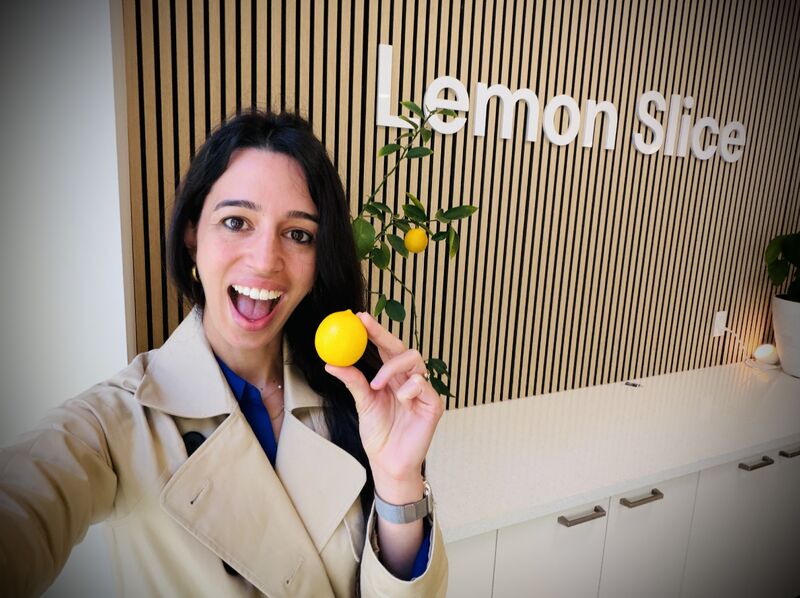
Lina Colucci
Lina Colucci is the co-founder and CEO of LemonSlice, a frontier AI lab building the world's first real-time interactive talking video models - tech that turns a single photo into a face you can hold a live conversation with. A former professional ballerina with a Harvard-MIT PhD in medical engineering, she has founded three companies, holds patents in biosensing, and raised $10.5M from Matrix Partners, Y Combinator, Dropbox's Arash Ferdowsi, Twitch's Emmett Shear, and The Chainsmokers. She bets that all video is heading toward being interactive and personalized to whoever is watching.
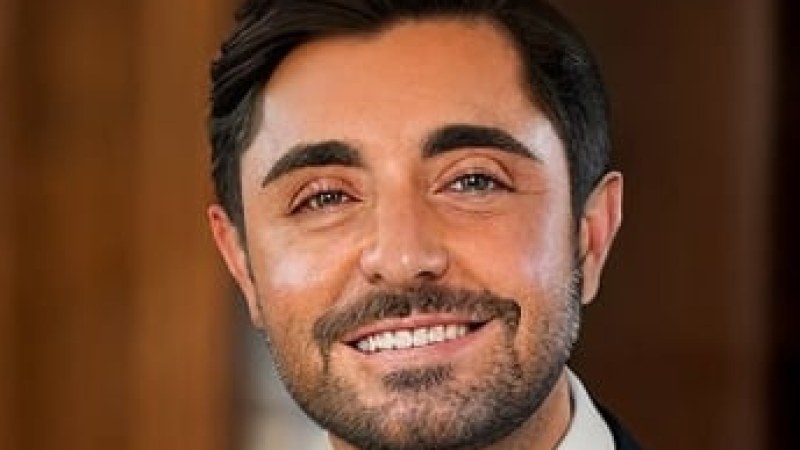
Frank Pica
Frank Pica is the CEO and co-founder of Native AI, a New York market-intelligence platform that builds AI-powered digital twins - synthetic consumer personas drawn from billions of real data points - so brands can interrogate their customers in real time instead of waiting weeks for surveys and panels. A repeat operator who helped scale Decide from three people to over a hundred and launched Adyoulike in North America, Pica is betting that consumer research is going through a renaissance, and that generative AI is leading it.
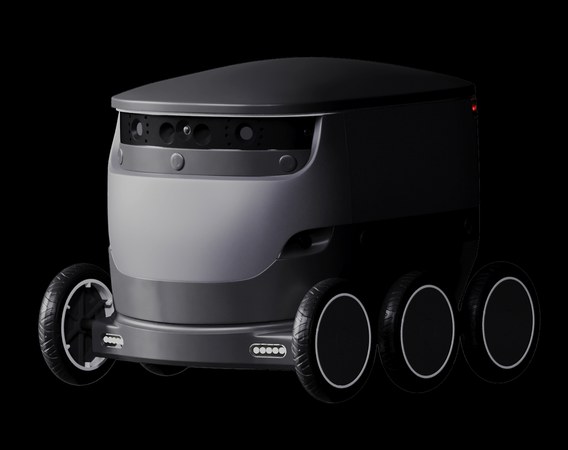
Zeromatter
Zeromatter builds the simulation infrastructure that autonomous-systems companies use to develop, test and validate their products before they ever touch the real world. Founded by former Tesla Autopilot simulation lead Ian Glow, its platform combines high-fidelity sensor simulation, automatic environment generation, multi-agent co-simulation frameworks, execution infrastructure and developer tooling into one system - aimed at making simulation a default tool for autonomy, aerospace, automotive, agriculture, drones and green energy.

Labelbox
Labelbox is a San Francisco-based AI data factory that helps frontier AI labs and enterprises generate, label, and evaluate the high-quality training data their models need. Its platform combines annotation tools, model-assisted automation, and a global expert network (Alignerr) to power post-training, RLHF, and multimodal reasoning workloads.

DatologyAI
DatologyAI builds an automated data curation platform that helps companies train better AI models faster, smaller, and cheaper. Founded in 2023 by former Meta AI, DeepMind and MosaicML researchers, the Redwood City startup has raised $57.6M to industrialize the messy art of preparing petabyte-scale training data.

UnitX
UnitX builds AI-powered visual inspection systems for manufacturers who can't afford to ship defective products. Their flagship platform - combining OptiX (software-defined imaging), CorteX (AI edge computing), GenX (synthetic defect generation), and FleX (the full integrated system) - cuts defect escape rates by 9x and deploys in about a week. With 820+ systems running across 170+ factories globally, UnitX has inspected over $6.1 billion worth of goods and counts five of the world's top ten automotive tier-1 suppliers among its customers.