Breaking
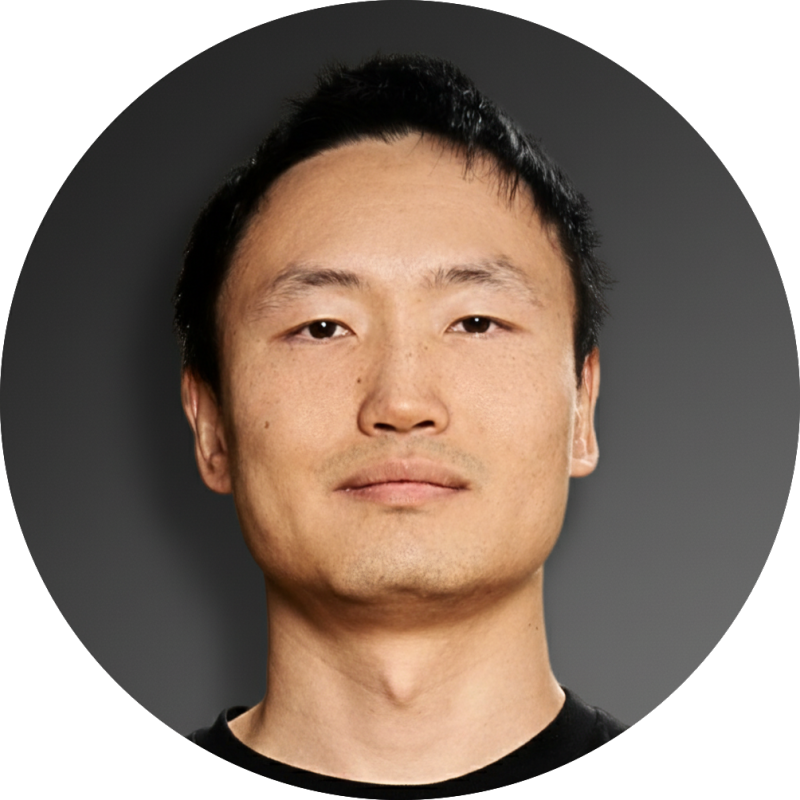
Keven Wang - Co-Founder and CEO of UnitX
YesPress Profile  /  Founder & Executive

Keven
Wang

The engineer who taught machines to see what humans miss - one factory floor at a time

Co-Founder & CEO of UnitX. Stanford-trained AI engineer turned industrial automation builder. He has walked 135+ factory floors and turned those conversations into a robotics company with 820+ deployed systems that inspect $6.1B in products annually.

Co-Founder & CEO UnitX AI Vision Industrial Automation Stanford CS Series B
$92M
Total Raised
820+
Systems Deployed
$6.1B
Products Inspected/yr
190+
Customers
9x
Fewer Escapes
135+
Factories Visited

The Factory Floor Philosopher Building the Self-Driving Assembly Line

There is a particular kind of defect - a hairline crack in a lithium-ion battery cell, a microscopic void on a connector pin, a surface pit barely 40 microns wide on an automotive part - that a human inspector will miss on the 200th look of a long shift but that will cascade into a recall costing tens of millions. Keven Wang has built his career on that gap.

Wang is the Co-Founder and CEO of UnitX, a Santa Clara-based AI robotics company rewriting the quality control playbook for the factories that make EVs, batteries, and electronics. His systems do not merely detect defects. They do so at production speed, with 9x fewer false passes than a trained human inspector, and they can be taught a new defect category using three sample images and a generative AI pipeline that Wang's team built from scratch.

The company has raised $92 million in total funding, runs 820+ systems on production lines in 135+ factories across the globe, and inspects $6.1 billion in manufactured products every year. The top-two EV manufacturers in the world are customers. So are the top-ten automotive Tier 1 suppliers.

"Deployment of AI in the physical world will improve quality, productivity, and abundance to a level we've never seen before in human history."

- Keven Wang, Co-Founder & CEO, UnitX

From Chrome Extensions to Factory Floors

The path from Keven Wang's University of Michigan engineering degree to running a robotics company is less surprising than it looks. He graduated in 2013 with a 3.71 GPA in Computer Science and joined SalesforceIQ - the CRM startup Salesforce would acquire - where he shipped more than 25 product features in three years, including the Chrome Extension and Outlook Add-in that hundreds of thousands of sales professionals used daily. Fast iteration, customer obsession, measurable impact. These habits are now in UnitX's DNA.

In 2014, he enrolled in Stanford's Master of Science program in Computer Science with a concentration in artificial intelligence, finishing in 2018. That same year, with co-founders Adam Yang and Weixiong Zheng - engineers with roots spanning Stanford, MIT, and Google - Wang founded UnitX. The founding thesis was precise: deep learning had crossed a threshold where it could outperform human vision at repetitive inspection tasks, but nobody had packaged it into something a factory operations team could actually deploy and maintain.

What separated Wang from the parade of machine-vision startups that came before UnitX was the commitment to understanding the physical world on its own terms. He personally visited more than 135 manufacturing facilities worldwide - walking production lines, talking to quality engineers, watching where human inspectors hesitate - before deciding what product to build.

Keven Wang describes a four-stage path from AI inspection to fully autonomous manufacturing - what he calls the "self-driving factory."

01
End-of-Line
AI visual inspection at the final checkpoint before shipment
02
In-Process
Upstream checkpoints catch defects before they compound
03
Data-Driven
Inspection data generates process insights and root-cause signals
04
Self-Driving
Closed-loop autonomous optimization - the factory runs itself

Hardware Meets Generative AI - The UnitX Stack

Wang insists UnitX is not a software company. He calls it a Robotics 2.0 company - one that integrates proprietary AI models, a patented software-defined imaging system, and edge compute hardware into a single deployable unit. That distinction matters on the factory floor. A pure-software approach inherits whatever optics the customer already owns. UnitX's OptiX system can generate up to 232 distinct lighting patterns, adapting dynamically to different part geometries and surface textures.

The company's latest platform, FleX, launched in December 2025, and its performance numbers are striking: 9x lower escape rates on subtle defects compared to traditional methods, deployment in under one week, and a return on investment timeline under 12 months with an average of $1.3 million returned per production line.

The technical moat, though, lives in GenX. Training AI inspection models historically required hundreds or thousands of defect images - images that can take months to collect on low-defect-rate production lines. GenX creates photorealistic synthetic defect images from as few as three real samples, using a generative AI pipeline that Wang's team developed specifically for industrial vision. A leading EV battery supplier using GenX cut model training time by 80%.

OptiX
Software-Defined Imaging
Generates up to 232 lighting patterns. Adapts to any part geometry or surface texture for maximum defect contrast.
CorteX
Edge AI Platform
Runs inspection AI models at production speed directly on the factory floor. Supports 20+ industrial protocols including PLC integration.
GenX
Generative AI for Defects
Trains accurate defect detection models from just 3 sample images using synthetic defect generation. Cuts model training time by 80%.

"The era of error-prone quality control is over. With FleX, we achieve optimal accuracy with the easiest deployment tools."

- Keven Wang, on the FleX platform launch, December 2025

The Human Factor

Spend any time reading Wang's interviews and one observation keeps surfacing: the thing blocking AI adoption in factories is not the AI. It is the people. "The greatest challenge in AI adoption isn't technical but human," he has said - specifically: aligning teams, establishing shared goals, and helping production staff become comfortable with a system that occasionally disagrees with their seasoned judgment.

Wang brings something unusual to that conversation: three languages (English, Chinese, and German) and the personal credibility of having stood on 135 production floors. He is not pitching AI in the abstract. He is talking to a quality supervisor in Shenzhen, a battery engineer in Stuttgart, and a Tier 1 supplier in Detroit, and he has walked their lines.

His philosophy - "automate everything and maximize human intellect" - is deliberately not "replace the humans." The framing is that repetitive visual inspection is a poor use of human attention. Free that attention and you get better engineers focusing on harder problems.

For operators, Wang recommends deploying AI when production reaches sufficient volume with dedicated lines, and validating with representative samples rather than exhaustive testing. Prove ROI fast. Productize serviceability from day one. The advice reads like someone who has seen too many pilots stall.

Wang's Deployment Principles

  • Deploy when production reaches sufficient volume with dedicated lines
  • Validate using representative samples, not exhaustive test sets
  • Design for deployment speed and reliability from the start
  • Prove ROI fast - under 12 months is the target benchmark
  • Productize serviceability from day one - factory teams need to own the system
  • Address the human challenge first: align teams before rolling out AI
Escape Rate Reduction vs. Human Inspector 9x better
Scrap Rate Reduction up to 50%
Model Training Time Reduction (GenX) 80%
ROI Timeline vs. Industry Average <12 months

Keven Wang's 4-Step Journey to AI-Powered Quality Control - a podcast interview with cross-functional manufacturing experts:

How AI is Revolutionizing Quality Inspection in Manufacturing:

Things That Make Keven Wang, Keven Wang

🌐

Speaks three languages: English, Chinese, and German. Useful when your customers are in Detroit, Shenzhen, and Stuttgart.

🏭

Has personally visited more than 135 manufacturing facilities worldwide - an unusual practice for a software-era CEO.

🔬

His AI can be trained on a new defect type using just 3 sample images. For context, some traditional systems need thousands.

UnitX systems have collectively run 5.7 million+ hours on active production lines without stopping the line.

🎓

Graduated University of Michigan with a 3.71 GPA, then earned a Stanford CS master's focused entirely on AI.

🔧

His first engineering job was programming C-language data comparators at Intrepid Control Systems - embedded hardware, 2011.

2009
Enrolled at University of Michigan, BSE Computer Science
2011
Embedded Electrical Engineering Intern, Intrepid Control Systems - programmed data comparators in C
2012
Internships at Citadel Investment Group and ALGOPIA LLC in financial technology
2013
Graduated University of Michigan (GPA 3.71); joined SalesforceIQ as Member of Technical Staff
2013-2017
Rose to Lead Member of Technical Staff at SalesforceIQ; launched Chrome Extension and Outlook Add-in; shipped 25+ features in 3 years
2014
Enrolled in Stanford University MS Computer Science (AI concentration)
2018
Co-founded UnitX with Adam Yang and Weixiong Zheng - began building AI-powered visual inspection for manufacturing
2023
UnitX raised $5M from SE Ventures (Schneider Electric); exceeded 160 customers; Series B funding underway
2024
UnitX closed $46M Series B led by UP Partners (total: $92M); launched GenX generative AI platform
2025
Launched FleX - the world's most accurate AI visual inspection system; 190+ customers; 820+ deployed systems; $6.1B inspected annually
ai-inspection industrial-automation computer-vision manufacturing deep-learning series-b stanford defect-detection generative-ai quality-control ev-battery automotive robotics-2.0 synthetic-data

Share This Profile