defect-detection
(22)
The Startup Teaching Cameras to Catch What Tired Human Eyes Miss on the Assembly Line
Akridata spent years fixing AI's boring, expensive data problem - then pointed the same tools at factory defects and got acquired by DIMAAG in 2026.
H3 Zoom
H3 Zoom is a Singapore-based deep-tech company that turns drone, robotics, 360-degree and existing visual data into regulator-defensible building and infrastructure inspection reports. Its AI platform automates facade and interior condition assessments - detecting, grading and mapping defects - to cut inspection time and cost while improving worker safety. Spun out of aerospace group H3 Dynamics and founded in 2016, the company has completed more than 10,000 inspections across seven countries and closed an oversubscribed USD $3.6 million Series A in 2026 to scale across Asia.

ProfilePrint - AI-driven Ingredient Quality Platform
ProfilePrint is a Singapore-based B2B platform that turns the molecular signature of a food ingredient into a digital fingerprint and uses AI to predict its identity, origin and quality within seconds. Built on patented digital food Identity-as-a-Service (IDaaS) technology, it pairs proprietary near-infrared hardware with custom machine-learning models so agribusinesses can grade coffee, cocoa, tea, dairy, oils and other ingredients without slow, subjective lab work. Founded in 2017 by Alan Lai, the company is deployed across roughly 50-60 locations on six continents and counts industry giants such as Cargill, Olam, Louis Dreyfus and Sucafina as investors and customers.

EthonAI
EthonAI (now branded Ethon) is a Zurich-based industrial AI company, spun out of ETH Zurich in 2021, that builds a Manufacturing Analytics System for factories. Its no-code platform layers on top of existing factory data sources to detect visual defects, monitor processes and run autonomous root cause analysis, using causal AI to explain what drives production variation. Customers including Siemens, Lindt & Sprüngli, Bosch and Roche use it to cut quality losses by up to 50% and raise productivity while keeping engineers in the decision loop.
Oxipital AI
Oxipital AI is a Bedford, Massachusetts company building AI-enabled machine vision systems for food processing, agriculture and consumer-goods manufacturing. Emerging in 2024 from the rebrand of Soft Robotics after that company sold its gripper hardware line to Schmalz, Oxipital AI now centers on its V-CORTX vision platform and VX2 hardware, which use synthetic data and computer vision to handle quality inspection, foreign-object detection, yield optimization and vision-guided robotic picking in high-variability production lines.

Cogniac Corporation
Cogniac Corporation is a Silicon Valley company building an enterprise-grade, no-code computer vision platform that lets non-experts train and deploy AI models on visual data. Founded in 2015 by Ruckus Wireless veteran Bill Kish and Amy Wang, Cogniac turns cameras and images into operational insight - inspecting products, detecting defects, monitoring safety, and automating document handling across manufacturing, transportation, automotive, government, and logistics. Backed by roughly $46M from investors including National Grid Partners, Cisco Investments, and Autotech Ventures, it counts BNSF Railway, Ford, Georgia-Pacific, Doosan Bobcat, and Trimac among its customers.

SixSense
SixSense is a Singapore-based deep tech company building an AI platform that helps semiconductor manufacturers spot, classify and predict chip defects in real time. Founded in 2018 by Akanksha Jagwani and Avni Agarwal, its no-code software lets process engineers train and deploy computer-vision models on their own fab data in under two days - automating visual inspection, lot disposition and root-cause analysis. Used by chipmakers including GlobalFoundries and JCET, the platform has analyzed more than 100 million chips and raised roughly $12M to date, including an $8.5M Series A in 2025.
Mark Chiappetta
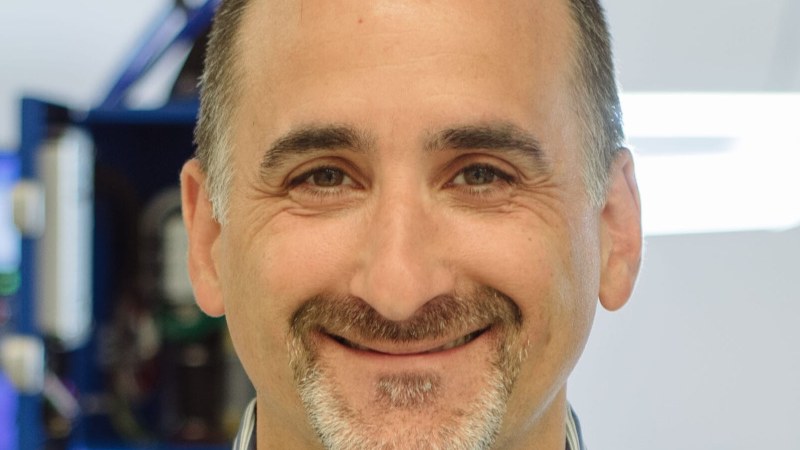
Mark Chiappetta is the president and CEO of Oxipital AI, a Bedford, Massachusetts company that builds AI-driven machine vision for factory lines that pick, count, and inspect food. He is an electrical engineer who spent 30-plus years in robotics, including a run as a corporate VP at iRobot and eight years growing Soft Robotics from an early gripper startup. In 2024 he took the top job at Soft Robotics, then engineered the pivot that spun the company's 3D vision and AI software into Oxipital AI while the gripper hardware business was sold off. His pitch is that food processors will not rip out human lines for robots overnight, so Oxipital sells the eyes and brains first and the hands later.
Averroes.ai
Averroes.ai is a San Mateo-based startup building a no-code AI visual inspection platform that helps manufacturers automatically detect, classify, segment and monitor defects on their production lines. Founded in 2021 by Tareq Aljaber and Omar Altamimi, the company targets semiconductor, electronics, pharmaceutical, food and beverage, and oil and gas producers, promising 99%+ inspection accuracy, deployment in under five days, and models trained on as few as 20-40 images per defect class without writing code or buying new hardware.

PRENAV
PRENAV digitizes the world's critical infrastructure with drones, LiDAR, 3D analytics, and deep learning. Its web-based platform, PRENAV.XYZ, combines photogrammetry with AI to turn drone imagery into detailed 3D digital twins, then scans them for cracks, corrosion, and structural damage - resolving surface features smaller than 0.2mm. Founded in 2013 in Redwood City, the company replaces dangerous rope-and-scaffold inspections of cell towers, wind turbines, bridges, dams, and even nuclear reactors with automated, precise, GPS-independent drone flights.
Tristar AI
Tristar AI puts a pair of eyes on the factory floor that never blink. The Boston-based company builds AI-powered smart cameras and enterprise software that watch production lines in real time, recognize what human workers are doing, and flag defects or skipped steps the instant they happen - before a bad part ships or a machine goes down. Founded in 2022 by a team out of MIT, Harvard, and UT Austin, Tristar serves precision manufacturers in plastics, automotive, and chemicals, promising 95-99% defect-detection accuracy and deployment in about two weeks.

Salem Karani
Salem Karani is the co-founder, CEO and CTO of Tristar AI, a Boston-based startup building an AI-native computer vision platform for real-time quality monitoring and human-machine interaction on factory floors. Raised inside his family's plastic film manufacturing business, he turned a childhood spent around production lines into a company that helps manufacturers cut scrap, reduce waste, and improve uptime. Tristar's models read human motion at a kinematic level, letting them drop into new factories without retraining. The company raised a $3.15M seed in June 2024 led by Las Olas Venture Capital and TenOneTen Ventures.
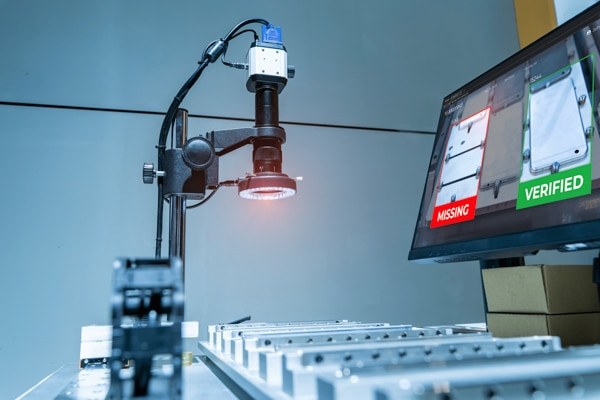
Matroid
Matroid is a Palo Alto computer vision company that lets anyone build, train, and deploy custom object detectors without writing code. Founded in 2016 by Stanford professor and former Databricks founding-team member Reza Zadeh, its platform turns ordinary camera feeds into searchable, alert-generating systems that spot objects, people, defects, events, and safety violations in real time, across cloud, on-premise, and edge deployments. Matroid is used across manufacturing, aerospace, automotive, electronics, and video security to automate quality inspection and monitoring.
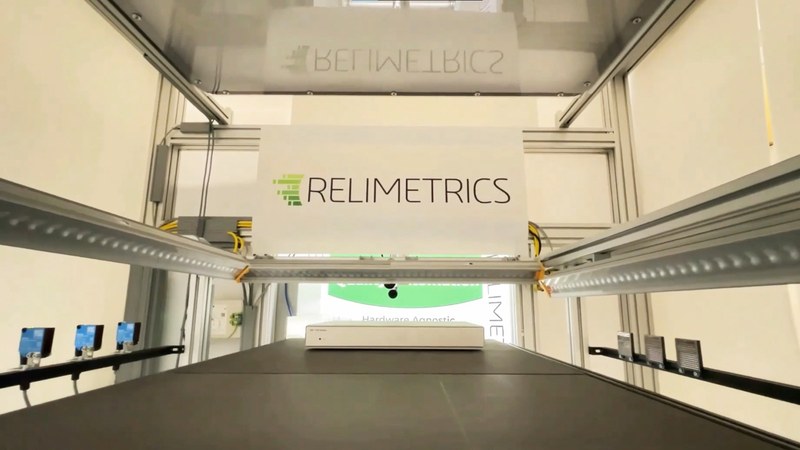
Relimetrics, Inc.
Relimetrics is an AI software company building ReliVision, a no-code visual inspection platform that lets manufacturers digitize quality assurance on the factory floor. Hardware-agnostic and self-installable, it puts model training, retraining and defect detection in the hands of plant engineers instead of data scientists - and its accuracy is unusual enough that reinsurer Munich Re will underwrite it. Founded in 2015 with offices in Silicon Valley and Berlin, the company counts HPE, Lockheed Martin, Foxconn and Siemens Gamesa among its users.
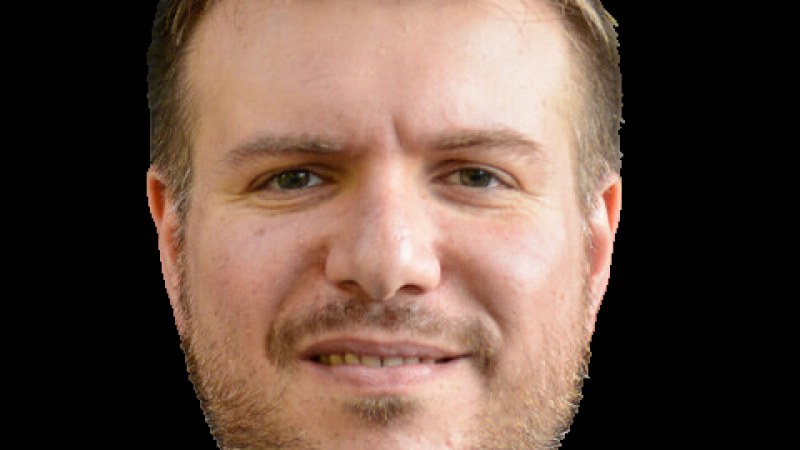
Kemal Levi
Kemal Levi is the founder and CEO of Relimetrics, an industrial AI company splitting its headquarters between Sunnyvale and Berlin. A Stanford-trained materials scientist who once measured how skin behaves under stress for the cosmetics industry, he now builds ReliVision, a no-code, GenAI-powered platform that lets factories teach machines to spot their own defects. He has spent more than fifteen years turning non-destructive testing and computer vision into shop-floor software, and counts NVIDIA's Inception program among Relimetrics' backers.
Titan Advanced Energy Solutions
Titan Advanced Energy Solutions is a Salem, Massachusetts battery-tech company that uses non-destructive ultrasound and industrial AI to inspect lithium-ion cells at production speed. Its IonSight Digital Teardown platform images the inside of every cell on a manufacturing line - catching layer misalignment, contamination, dry zones, and other hidden defects that CT sampling and electrical tests miss - to improve battery quality, safety, and yield for EVs, grid storage, and consumer electronics.
Instrumental Inc.
Instrumental is a manufacturing AI and data platform that helps brands like Meta, NVIDIA, Cisco, and Bose catch defects on the factory floor by aggregating images and signals from production lines and running discovery-driven machine learning on them. Founded by ex-Apple engineers, the company turns the noisy, siloed world of high-mix electronics assembly into a searchable, controllable dataset.

Overview AI
Overview AI builds AI vision sensors and edge-deployed software that catch manufacturing defects traditional rule-based vision systems miss. Founded by ex-Tesla engineers, the San Francisco company combines custom smart cameras, on-device deep learning, and fleet management software used by manufacturers including Toyota, Honda, Mitsubishi, Tyson, and Clorox.

UnitX
UnitX builds AI-powered visual inspection systems for manufacturers who can't afford to ship defective products. Their flagship platform - combining OptiX (software-defined imaging), CorteX (AI edge computing), GenX (synthetic defect generation), and FleX (the full integrated system) - cuts defect escape rates by 9x and deploys in about a week. With 820+ systems running across 170+ factories globally, UnitX has inspected over $6.1 billion worth of goods and counts five of the world's top ten automotive tier-1 suppliers among its customers.

Chris Dyke
Christopher Van Dyke is the Co-Founder and CEO of Overview AI, a San Francisco-based industrial machine vision company using deep learning to catch manufacturing defects before they cost factories millions. A Stanford-educated mechanical engineer who spent eight-plus years at Tesla launching the Supercharger network and scaling the Model 3 battery program, Van Dyke founded Overview in 2018 with a simple premise: manual inspection costs manufacturers an estimated $300 billion a year, and AI can fix that. Overview's smart cameras - running NVIDIA GPUs at the edge - now serve over 100 manufacturers across 15 countries, including Toyota, Honda, and Tyson Foods, typically delivering ROI within three to six months.
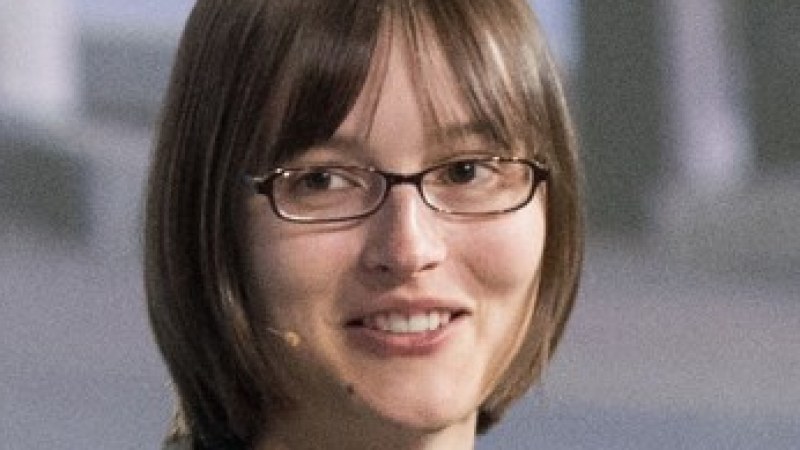
Anna-Katrina Shedletsky
Anna-Katrina Shedletsky is the CEO and co-founder of Instrumental Inc., a Palo Alto-based AI manufacturing software company she founded in 2015 after six years at Apple—where she spent 300+ days in Chinese factories debugging manufacturing issues for the iPod and led product design for the original Apple Watch. At Instrumental, she is converting those factory-floor battle scars into software that uses AI and cameras to find defects and eliminate waste on electronics assembly lines, with customers including Cisco, Honeywell, Bose, Meta, and Lenovo. The company has raised $80.3M in total funding and was named Fast Company's #2 Most Innovative Manufacturing Company in 2021. She also founded the Women in STEM Mentorship Program (WISMP) at Stanford in 2013, which now spans multiple universities.
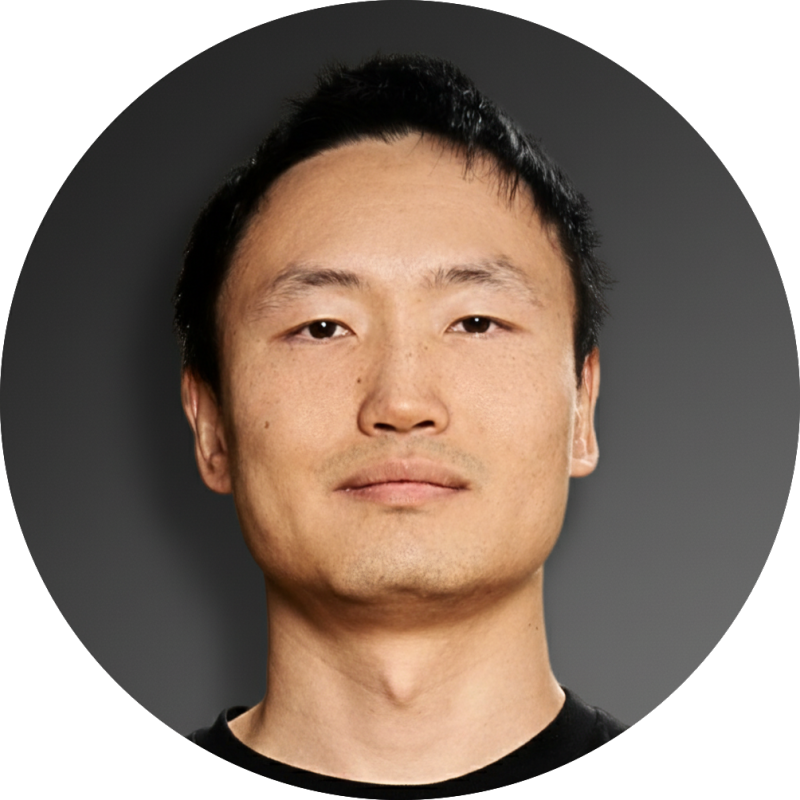
Keven Wang
Keven Wang is the Co-Founder and CEO of UnitX, a Santa Clara-based AI robotics company transforming industrial quality control through machine vision. A Stanford computer science alumnus with roots in SalesforceIQ engineering, Wang founded UnitX in 2018 alongside Adam Yang and Weixiong Zheng. The company has since deployed 820+ AI inspection systems across 135+ factories worldwide - inspecting $6.1B worth of products annually - and raised $92M in total funding. UnitX's flagship platforms (FleX, GenX, OptiX) help automotive, EV battery, and electronics manufacturers cut defect escapes by 9x and reduce scrap rates by up to 50%, with a philosophy Wang distills as: 'automate everything and maximize human intellect.'