By the Newsroom
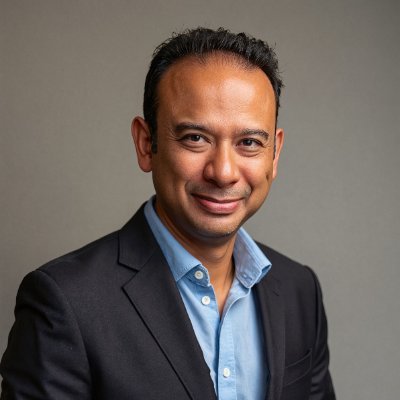
Ché Wijesinghe did not write the code that Cape runs on. He will tell you that himself. When the board of a small privacy-focused startup went looking for a chief executive in 2020, they skipped the usual instinct to promote a technical founder. Instead they picked a salesman - though that word undersells him. Wijesinghe had spent more than two decades learning a harder skill than engineering: how to take deeply technical products, the kind most buyers struggle to even describe, and turn them into something a bank or an insurer will actually pay for.
That is the thread running through his whole career. Long before "AI" was a headline, Wijesinghe was selling data. He trained as a design engineer at London South Bank University, then moved into the enterprise software industry and never really left. His resume reads like a map of where corporate data has traveled over 25 years - integration, analytics, machine learning, and now generative AI.
From Cisco floors to the corner office
The stops are substantial. He was Executive Vice President of Worldwide Field Operations at Composite Software, a data virtualization company that Cisco acquired in 2013. He stayed on to run global sales for Cisco's Data and Analytics group. He became Senior Vice President of Global Field Operations at OmniSci, the GPU-accelerated analytics company now known as HEAVY.ai. He served as President and COO at Neokami, which was acquired by Relayr and Munich Re, and as Chief Revenue Officer at Datalogue. Four of the companies he helped build were bought by larger players.
Each stop reinforced the same conviction: data is only valuable if you can use it, and most of the world's most valuable data is locked away precisely because using it feels risky. Financial records. Medical files. Contracts. The reports and filings that pile up unread because no one can safely mine them at scale.
Financial institutions are realizing that they need external partners to unlock dark data.Ché Wijesinghe, CEO of Cape.ai
The bet on privacy by design
Cape - originally Cape Privacy - was founded in 2018 by Gavin Uhma, Ben DeCoste and Morten Dahl. Its original pitch was "encrypted learning": a way for machine learning models to train on sensitive information they never directly see. It was ambitious, cryptography-heavy research, the sort of thing that dazzles engineers but confuses buyers. That gap is exactly why the board wanted Wijesinghe.
Under his leadership the company sharpened its message. Privacy stopped being a research curiosity and became the product's foundation. Trust, in his framing, is not a feature you bolt on at the end. It is an architecture you commit to at the start.
Cape guarantees trust and security through privacy by design.Ché Wijesinghe
In April 2021 the company raised a $20 million Series A, part of roughly $27 million in total funding from a notable roster of investors including Evolution Equity Partners, Tiger Global Management, boldstart ventures, Version One Ventures and Radical Ventures. The money bought time to keep evolving.
The quiet pivot to applied AI
As large language models reshaped the software landscape, Cape moved with them. What began as a privacy-preserving machine learning platform became Cape.ai, focused on applying private AI to the grind of regulated industries: document validation, fraud detection, enhanced due diligence, and regulatory reporting. The technology now processes unstructured documents - PDFs, filings, reports - and can be deployed on-premise or in the cloud, so the most sensitive data never has to leave a customer's walls.
It is a natural destination for someone who has spent a career at the intersection of data value and data risk. Wijesinghe still splits the company's story across two hubs: New York for commercial reach, and Halifax, Nova Scotia, for engineering talent. It is a deliberately unglamorous, two-city build - the opposite of a single-founder mythology.
Encrypted learning has the potential to help solve some of the world's hardest data problems.Ché Wijesinghe
Ask what motivates him and the answer is not a moonshot. It is a stubborn, practical belief that AI's real obstacle is rarely the math. It is trust. Get the trust right, and the trillion-dollar problem of dark data starts to look solvable. That belief has carried Wijesinghe from a London engineering classroom through Silicon Valley sales floors to a chief executive's chair in New York - and it is the whole reason a board decided the right leader for a deep-tech company did not need to be the person who built it.