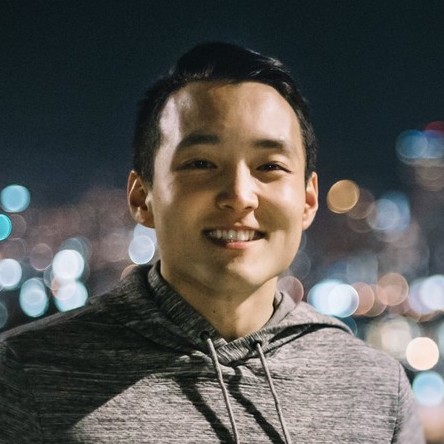
There is a specific moment Wonjun Jeong keeps returning to. He was moving apartments, again, and a mover reached the last sheet of a paper contract. To record the payment, the man took Jeong's credit card and scratched the number into the page with his finger. "One time, on the last sheet of the paper, they took my credit card and literally scratched it in with their finger to remember the card number," Jeong recalls. It was a small thing. It was also, to a software engineer, an unmistakable signal that an entire industry had been left behind.
By then Jeong had moved a lot. In his own accounting, 21 times. Each move carried the same private hope and the same private dread. "There's no way it can be as bad as last time," he would think. Each time it was. The truck's location was a mystery. "I never knew where my truck was. The movers didn't try to contact me," he says. To get an update, you called an office. To pay, you handed over paper.
Jeong had the background to notice how strange this was. He studied computer science at the University of California, Berkeley, where he also led Blueprint, a student group that built technology for nonprofits, rising from project leader to president. After graduating he wrote software at Facebook in 2014, then joined Pinterest in 2015 as a senior engineer working on Buyable Pins and ads ranking, the kind of revenue-critical systems that get measured to the decimal. He knew what modern software teams could do. He had also, in 2018, tried his hand at an earlier startup as a technical co-founder.
The short drive that became a company
The idea for Supermove did not arrive as a grand thesis. It arrived as a hunch that Jeong and his co-founder, Mark Miyashita, decided to test on foot. They drove out to visit moving companies around the Bay Area and found something almost hard to believe given the zip code: stacks of paperwork, typewriters, and next to no technology, all a short drive from the center of the software world.
So they built the smallest useful thing. "We spent a few nights and weekends building a quick prototype, an initial bill of lading product," Jeong has said. A digital version of the single most paper-bound document in the business. Their first client loved it and told other movers. The product spread the way good tools spread in tight-knit trades, by word of mouth, one operator vouching for the next.
That prototype grew into Supermove, founded in 2019. The pitch is deceptively broad: one platform to run a moving company end to end. Sales and lead follow-up at the front, then dispatch, scheduling, virtual surveys, customer signatures, payments, and finally the unglamorous back office of accounting and payroll. The paper contract and the bill of lading, the typewriter and the office phone call for a truck's location, all replaced by software.
People move because they're chasing something better. It's one of the clearest symbols of hope and reinvention we have.
Wonjun Jeong
Why the boring bet was the smart one
Investors eventually agreed. In January 2022, Supermove raised an $18 million Series A led by Andreessen Horowitz, with participation from Founders Fund and angels who had built DoorDash, Pilot, Scale and Slack. David Ulevitch of a16z joined the board. By that point the company had partnered with more than 100 moving, storage and logistics firms and helped facilitate over $150 million in moves for hundreds of thousands of customers. The early team pulled engineers from Facebook, Google, Procore and Uber, plus the nonprofit-software roots Jeong had cultivated at Berkeley.
Jeong is clear-eyed about why this is hard, and it is not the code. The hard part is convincing an industry that its habits are worth changing. "Paper works, why do I need to change?" is the objection he hears, and he treats it as reasonable rather than foolish. Supermove's answer is to invest heavily in customer success and phased onboarding instead of dropping software on a busy dispatcher and walking away. In his telling, change management is the real product.
Trust as the default
There is a moral edge to how Jeong talks about the work, which is unusual for back-office SaaS. He frames a move not as a logistics problem but as one of life's hinge moments. "We've accepted a system where the first step in a new life starts in fear," he wrote in a 2025 founder essay. "That's not just bad business. It's wrong." The alternative he describes is almost a mission statement: "We believe in a new future where trust is the default, not the exception."
That framing now points at Jeong's next chapter. In 2025 Supermove launched a roadshow called How We Move Now, taking AI and automation tools directly to movers. "The moving industry is at a pivotal moment," Jeong said. "Movers are ready to embrace tools like AI and automation to grow their businesses, and this tour is our way of bringing those solutions directly to them." The line he keeps coming back to about the company's purpose is plainer, and it is about the people doing the lifting: the team is "only satisfied when we make sure our hard-working, heavy-lifting customers can have a lighter day the next day."
It is a long way from a fingernail dragged across a credit card. But the through-line is simple. Jeong kept moving, kept being disappointed, and eventually decided the disappointment was a specification. Supermove is his attempt to build to it.