Somewhere right now, a phone is streaming YouTube on a cell network that is quietly buckling under the weight of it. Video is roughly 80% of the data crossing wireless networks, and the number keeps climbing. Carriers have two blunt options: pour money into more spectrum and towers, or throttle the customer and hope they don't notice. Sky Peak Technologies, an 11-person company in Grand Junction, Colorado, thinks both answers are wrong.
Its product, CORA AI, does something narrower and stranger. It sits on the device - your phone, or a fixed-wireless router - and "right-sizes" streaming video before it ever hits the network. The stream still plays. The picture, the company says, still looks like the picture. But the number of bits required to get it there drops. In the company's own acceptance tests that's a 20-30% cut without a visible change in quality; its marketing points to reductions of up to 88% in the resources needed to move the heaviest content. The pitch is almost dull in its practicality: same Netflix, less data, more subscribers per tower.
That flatness is the point. In a telecom industry addicted to the word "5G," Sky Peak is selling the unglamorous middle - efficiency - and it has spent five years building patents, an app, and a partner list to prove the idea holds up.
01 / What it actually doesOptimization, not throttling
CORA stands for Content Optimization and Routing Algorithm, and it is the name on the company's US patent, #11,956,158. The mechanics are deliberately conservative. CORA AI uses the phone's own native VPN interface locally - not a remote server farm - to route only video traffic through its on-device libraries. Everything else on the phone bypasses it. There's no deep packet inspection, no change to the content source, and no surgery on the operator's core network. The company is emphatic that CORA is not a Wi-Fi offloader and not a browser-based compressor.
Why does that architecture matter? Because the traditional way to save video data - inspecting and transcoding traffic inside the network - means peering into streams that are increasingly encrypted, and bolting expensive gear into the core. Sky Peak moves the decision to the edge, to the device that already knows what screen it has and what network it's on. An operator can push CORA out through a phone maker at the factory, through mobile-device management, over the air, or as a white-label app sent by a text message and a QR code.
"Video traffic is the number one source of network congestion, and throttling is no longer a viable long-term strategy."
Cat McIntosh, CEO & Co-founder02 / The product lineOne algorithm, many edges
The same CORA libraries power a small family of products. CORA AI (formerly CORA Mobile Edge) is the on-device version for handsets. CORA AI for Mobile Core plugs into an operator's network through REST APIs and, the company claims, can be operational in as little as 20 working hours. In April 2025 Sky Peak added CORA AI for Fixed Wireless Access - the same trick applied to the home routers that carriers increasingly use to sell "home internet" over their cellular networks. There is also an Enterprise Console, a cloud dashboard that lets operators watch deployments, set optimization levels, and read anonymized data on how their subscribers actually stream.
The FWA move is the tell for where this is going. Fixed wireless is one of the fastest-growing ways to sell broadband in rural and edge-of-network America, and every router that streams 4K is a small crisis for a tower. Sky Peak's numbers there are more modest and more concrete: 20% or more data saved, more subscribers served per tower without buying new spectrum, and - because the processing is lightweight and on-device - a real, if quiet, energy story.
03 / Who buys itThe MVNO's margin problem
Sky Peak's clearest customers are the underdogs of wireless: mobile virtual network operators (MVNOs) and the enablers behind them (MVNEs), plus cable and fiber operators reselling mobile, and enterprise or satellite users who pay dearly for every byte on a ship or an oil site. These players rent wholesale capacity from the big networks, which means every gigabyte a subscriber streams comes straight off their margin. They can't out-spend Verizon on spectrum. They can, however, make each gigabyte go further.
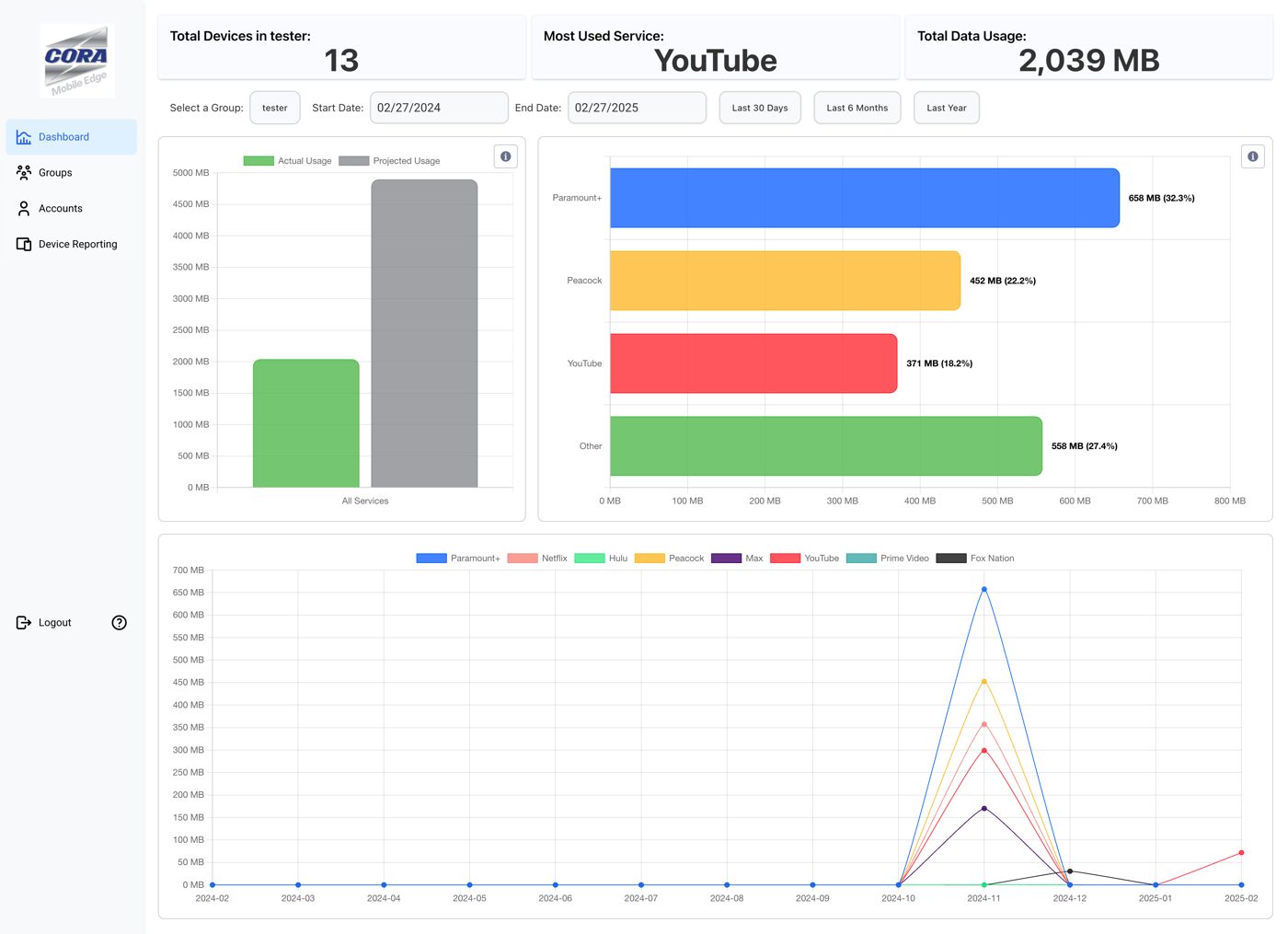
Where the data goes on a test group
Share of streaming data by service, from a CORA Enterprise Console sample - video dominates.
That is why the partnerships read like a tour of the wholesale world rather than the consumer one. In September 2023 Sky Peak teamed with Colorado-based Mobility Network to push optimized video to MVNOs worldwide. In August 2024 it signed a marketing and sales agreement with the Associated Carriers Group, a buying group whose president called CORA "the innovative, cost-saving technology that ACG member carriers need to compete." Add a strategic tie with Capital Growth Partners and an early reseller deal with Open Sky, and the shape is clear: sell through the aggregators who already have the carriers' attention.
"Today's MVNOs need all the tools they can get to manage data consumption and therefore profit margins."
Jim Cannon, CEO, Mobility Network04 / The foundersA company you run from home
Sky Peak is, literally, a family business. Cat McIntosh, the CEO, spent a career in marketing, sales, and business development across startups and Fortune 100 firms. Don McIntosh, the CTO, has been building and selling technical companies since the late 1980s. A third co-founder, Kushal Mishra, brings the deep telecom engineering - embedded systems, radio access networks, and the video and image codecs that make on-device optimization possible. The team fills out with engineers, several recruited straight from nearby Colorado Mesa University, and an advisory bench that includes Startup Weekend co-founder Marc Nager.

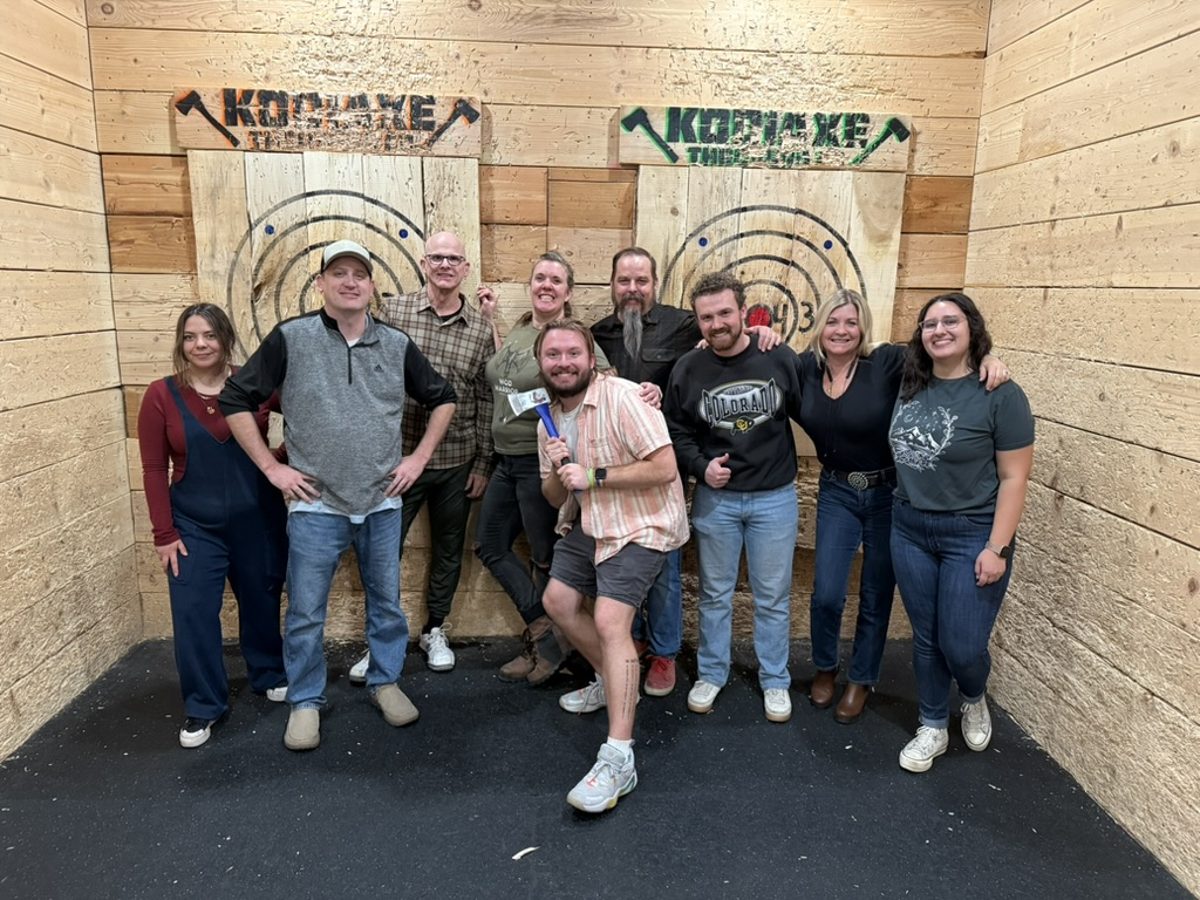
The location is not incidental. Building a telecom deep-tech company in a town of roughly 65,000 people, hundreds of miles from a coastal venture hub, is a bet in itself. Sky Peak leaned on Colorado's Rural Jump-Start program - which zeroes out state income and sales taxes for qualifying rural high-tech startups - and a state STEP grant that paid for the flights to MVNO World Congress in Amsterdam. The culture the company advertises fits the geography: a self-described "pirate mentality," free thinkers, ski days at Powderhorn, and team axe-throwing.
05 / The moneySmall rounds, non-dilutive fuel
Sky Peak has raised the way rural startups often must: in careful tranches, topped up with grants. It began with $140,000 of friends-and-family money when it incorporated in 2020, then won a statewide pitch competition tied to the Greater Colorado Venture Fund for a $734,000 seed in 2021. A series of bridge rounds followed - a $350,000 tranche, a $400,000 tranche, and a third that closed in March 2024 - alongside the tax relief and export grants. Public aggregators peg total funding anywhere from a few hundred thousand to just under a million; the company's own timeline points higher. What's clear is that this is lean-startup capital, not a coastal mega-round.
06 / The proofA patent and a trophy
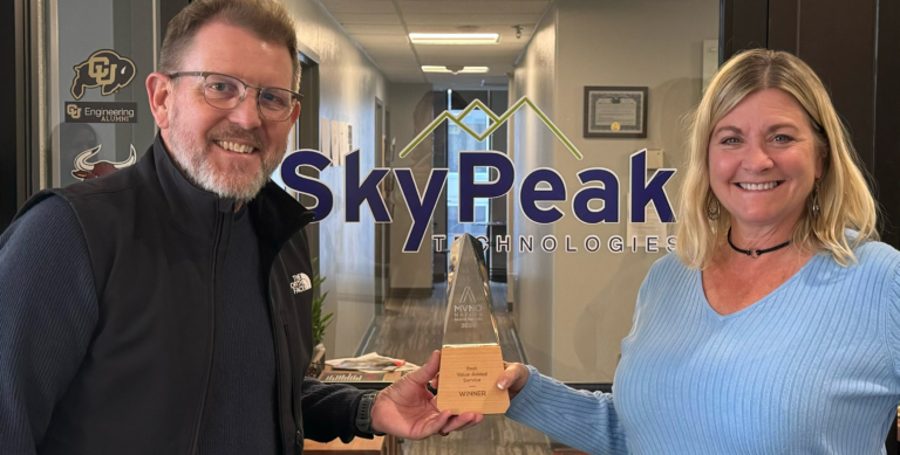
Two milestones give the story spine. In late 2023 the company was granted US Patent #11,956,158, putting a legal fence around the CORA algorithm. Then in November 2024, at MVNO Nation in Valencia, Spain, Sky Peak won Best Value-Added Service - a category award that matters precisely because value-added services are how MVNOs differentiate when they can't compete on network. A patent says the idea is defensible. An industry award says buyers in the room believe it.
Vision ignited in Boulder
The founders spot a widening gap: streaming video is overwhelming wireless networks, and operators lack good tools to manage it.
The company incorporates
Sky Peak forms as a Colorado C-corporation with $140,000 in friends-and-family funding.
Landing in Grand Junction
HQ relocates to the Western Slope; a statewide pitch win brings a $734,000 seed and Rural Jump-Start approval.
First operator, first partners
A first mobile-operator deployment, the Mobility Network partnership, a STEP grant, and a trip to MVNO World Congress.
Patent and award
US Patent #11,956,158 is granted; Best Value-Added Service at MVNO Nation in Valencia.
CORA AI and fixed wireless
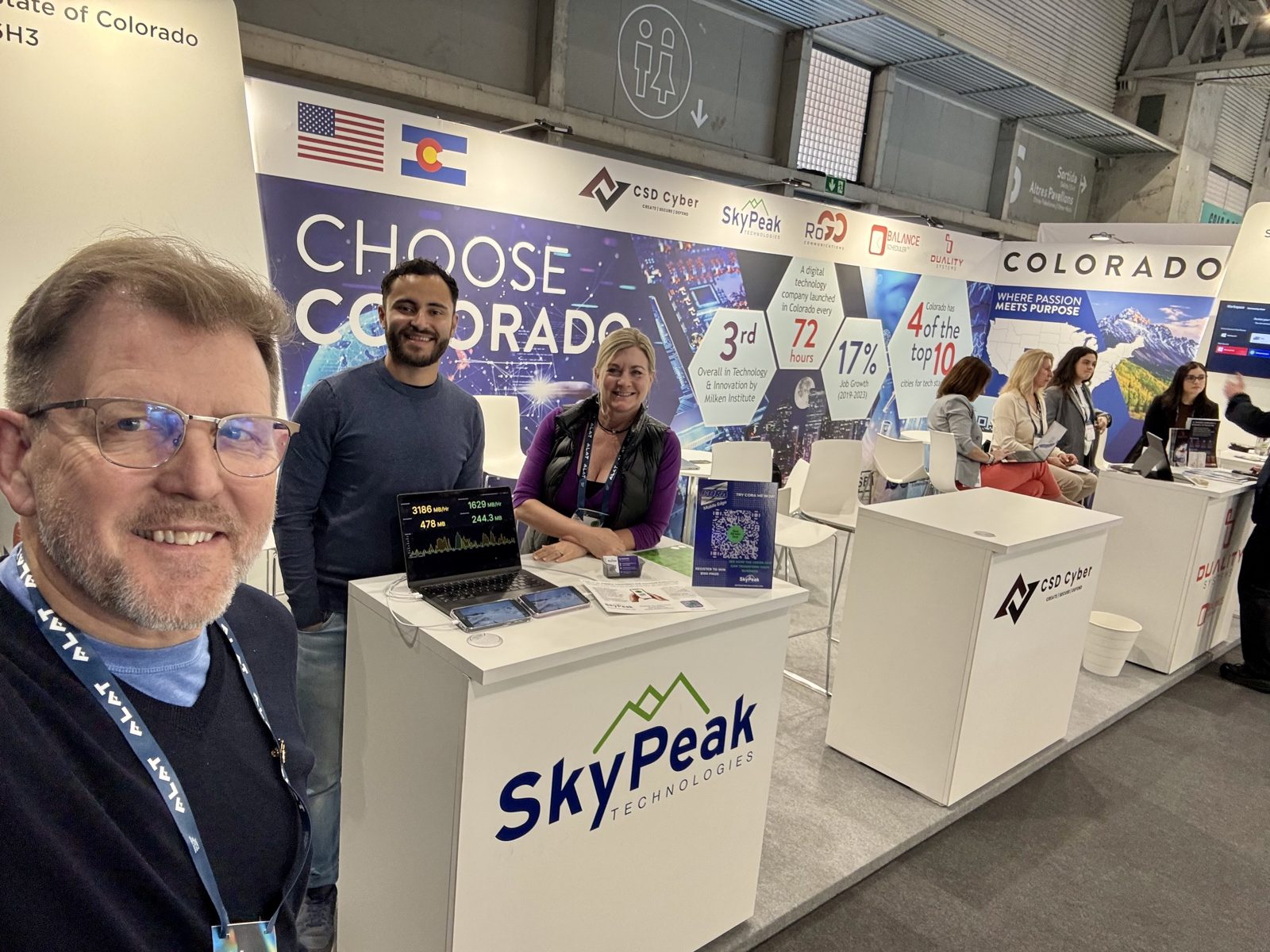
CORA Mobile Edge is rebranded CORA AI and extended to FWA routers; the team exhibits at MWC Barcelona.
07 / The honest caveatsWhere the story could wobble
A profile owes its reader the fine print. Sky Peak is early-stage and small; the eye-catching "88%" is a peak figure for the heaviest content, while the everyday number the company reports is closer to 20-30%. Public funding data conflicts across sources. And the market it's chasing has incumbents - network-based optimization vendors and DPI-driven traffic shapers - plus the ever-present temptation for carriers to just keep throttling. The on-device, no-DPI approach is the differentiator; whether it scales from proof-of-concept trials to millions of live subscribers is the question the next few years answer.
"Every unnecessary bit has a cost. Data waste isn't free - it's just hidden."
Sky Peak TechnologiesStrip away the telecom jargon and Sky Peak is selling a single, portable idea: the greenest, cheapest byte is the one you never send. If that idea is right, the company doesn't need to beat the big carriers - it just needs to make everyone else's network go a little further. And it wants to do it from a corner of Colorado where the nearest venture office is a plane ride away and the team building it can, on a good day, go throw axes after work.

Explore Sky Peak Technologies
- Website ↗
- LinkedIn ↗
- Facebook ↗
- Cat McIntosh, CEO ↗
- Don McIntosh, CTO ↗
- CORA AI on the App Store ↗
- CORA AI on Google Play ↗
- Contact Sky Peak ↗
Watch & listen
Figures such as data-savings percentages are company-reported and approximate.