At the 2024 Democratic National Convention in Chicago, a television camera had a problem familiar to anyone who has tried sending a photograph from a crowded event. Everybody else wanted the network, too. For broadcasters, though, a delayed upload is more than a small indignity. Video has to reach production facilities while the event is happening. A room full of connected spectators is a difficult place to leave that to chance.
- Baicells sells the radios, receivers and software used to build cellular networks.
- Customers include wireless ISPs, mobile operators and enterprises needing their own capacity.
- Its appeal is a manageable entry point; spectrum, backhaul and operating discipline still matter.
A camera gets its own lane
Baicells and Pente Networks supplied a private LTE network for broadcasters at the convention. Baicells provided Nova430i radios using CBRS spectrum. Pente supplied the cellular core and orchestration platform. LiveU backpack equipment connected through SIMs and transported video over the private network. The package separated production traffic from the venue’s shared connectivity.
There is something pleasingly literal about bringing a network to an event. Usually, connectivity is treated as a property of a place, like its lighting. Here it became equipment that could travel with the work. Baicells described the arrangement as a “Network in a Box.” The box mattered because the broadcaster could control the capacity inside it.
The tower gets smaller. The job stays large.
Founded in 2014, Baicells makes cellular infrastructure for customers whose needs do not always resemble a national mobile operator’s. Chairman and CEO Lixin Sun founded the company; its leadership page identifies Wei Bai as co-founder and senior vice president. Qualcomm Ventures is an investor. The proposition is economic as much as technical: make cellular equipment accessible to organizations with smaller footprints.

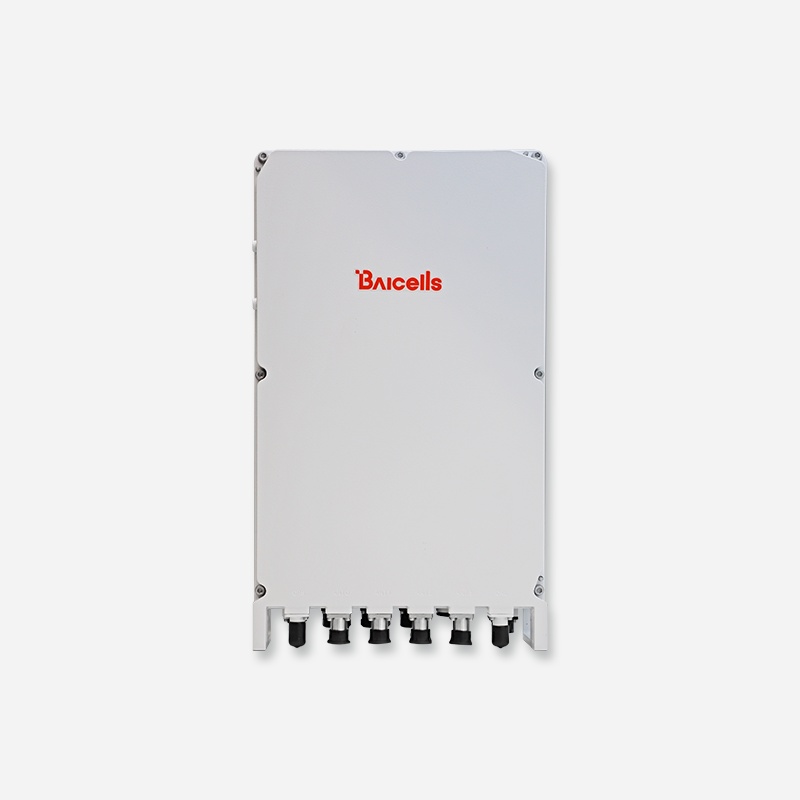
The catalog supplies several pieces of the network. Nova products are LTE base stations; Aurora products serve 5G. Neutrino covers indoor small-cell applications. Atom and Photon customer-premises equipment, or CPE, connects subscribers at the receiving end. The celestial naming scheme is more entertaining than the usual equipment catalog. It also makes an important distinction: a base station and a household receiver have different jobs.
CloudCore handles another layer. Hosted on Microsoft Azure, it combines cellular core functions with the Operations Management Console for network equipment and BOSS for subscriber management. An operator can organize devices across sites and manage subscribers and service plans. Local core options and partner cores provide other configurations, as the convention deployment demonstrates.
The company also offers RF planning, propagation modelling, network assessment and customer training. These services reveal where the expertise sits: translating a building or a landscape into a workable radio plan, then supporting it after installation. Its recruiting pages seek engineers for live-network troubleshooting and field delivery across several countries.
This puts Baicells among suppliers serving wireless internet providers, private campuses and mobile coverage projects. Airspan, Celona, JMA Wireless and Mavenir inhabit parts of that market, too. Baicells’ particular pitch combines access hardware and management software with lower entry costs. Buyers still need to compare the complete installation: compatible devices, spectrum, integration and support can matter more than the radio’s sticker price.
Seventy-two villages, one practical detour
The Tohono O’odham Utility Authority case study offers a less theatrical example. Its territory includes 72 villages, with remote communities, difficult terrain and fiber construction still underway. TOUA used fiber backhaul with Baicells fixed wireless equipment. Most wireless connections used 2.5 GHz; CBRS served several northern villages beyond the 2.5 GHz license area.
Baicells reports 50 base stations and average speeds of about 60 Mbps downstream and 15 Mbps upstream. These are results from that deployment, not a promise for every landscape. The useful detail is that brief training allowed the existing utility team to install equipment. Fiber supplied the foundation; radio extended the reach. The people who already served the community acquired another way to serve it.
That distinction helps explain fixed wireless as a buying choice. The utility was addressing difficult last-mile access while construction continued. Radio and fiber performed complementary jobs in the same design. A prospective customer can copy the sequence of decisions, but the reported speeds and distances belong to TOUA’s particular network.
In Japan, a different constraint led to private LTE. Baicells’ Ryoden case study describes replacing aging PHS communications at a hospital campus. Four buildings of twelve floors each, more than 1,000 staff smartphones and a relocation deadline shaped the design. Distributed hubs fed compact access points using Japan’s sXGP spectrum arrangements. The company reports installation and service activation within two weeks.
The subscription behind the signal
Baicells earns money from equipment and network solutions, with recurring charges for its hosted platform. In an announced policy effective August 1, 2025, CloudCore rose from $1 to $2.50 per device per month. At that stated rate, 100 billable devices imply $250 monthly for CloudCore alone. Installation, receivers, backhaul, power and site access belong elsewhere in the budget.
“Keep it simple to start with and tweak settings after the system is live.”Baicells community getting-started guide
Convenience also has a dependency. A September 2025 maintenance notice warned that cloud-core radios could lose their core connections during downtime. HaloB-enabled radios retained local RAN operation, but SAS-enabled radios would mute transmission while the cloud management connection was down. The lesson is precise: resilience depends on the actual configuration, including spectrum authorization, rather than the reassuring word “local.”
Start with the traffic that matters
Technical scrutiny belongs in the buying decision. In January 2025, Reuters reported US Commerce Department and FBI investigations into possible security risks. Sun said Baicells would cooperate with government inquiries. Those reports describe investigations, not findings of wrongdoing. In July 2026, Baicells reaffirmed that its North American operation remained active and committed to customer support.
For a prospective operator, the copyable idea is to start with a task: a camera feed, a household connection, a staff call. Map where it must work, which devices will use it, and how traffic gets beyond the radio. Test a small working installation before tuning it. Without adequate backhaul, suitable spectrum and competent maintenance, a compact base station merely makes an unfinished network easier to carry.