A baby monitor started this. Not a phone, not a blockchain, not a grand theory of telecommunications: a baby monitor. In the early 2010s, a friend of Helium co-founder Amir Haleem wanted a small device that could travel beyond Bluetooth’s modest range without devouring its battery. Haleem and Shawn Fanning, who had already made Napster famous, began asking why small connected things had no dependable network of their own. Sean Carey joined them in founding Helium in 2013. The question sounded innocent. It turned out to require an entirely different way to build a network.
- What it does: Helium connects phones and sensors through coverage supplied by independent hotspot hosts and businesses.
- Who pays: carriers pay to route data; participating deployers earn rewards for carrying it.
- What changed: Noble Mobile bought Helium’s consumer carrier in June 2026. Helium now sells the network and HeliumOS software to other operators.
- The wager: a useful wireless network can be assembled from places and bandwidth its owner did not buy.
The first bridge had too many radios
The earliest Helium device, Haleem later recalled, was a complicated bridge with five or six radios. The company built hardware, software kits, and server infrastructure around a low-power sensor network. There was a flaw so plain that it took years to solve: why would anyone outside the device business install one? A restaurant might want a sensor. A stranger had no reason to become the restaurant’s network provider for free.
Helium then tried selling complete solutions to hospitals, restaurants, and hotels. That brought a different problem. Each customer needed a tailored deployment, while the founders wanted an open network anyone could use. Haleem described the vertical strategy as a failure of execution and fit. The company’s deeper economic puzzle remained: it cost money to place radios, secure sites, provide power, and maintain coverage, while a sensor might pay only cents or dollars a year to connect. Build the infrastructure yourself and the arithmetic becomes unkind.
“There was no reason for a random participant to put one of these bridges up.”Amir Haleem, on Helium’s first network design
The founders’ answer was an incentive. A host would buy or install a hotspot, contribute real coverage, and receive network tokens. Helium launched its public IoT hotspot network in 2019. The tokens solved one problem - recruiting people to build before enough paying traffic existed - while introducing another: rewards and hardware demand could get ahead of actual network use. It was a powerful distribution method, but distribution alone was not a business.
The phone plan was a test in public
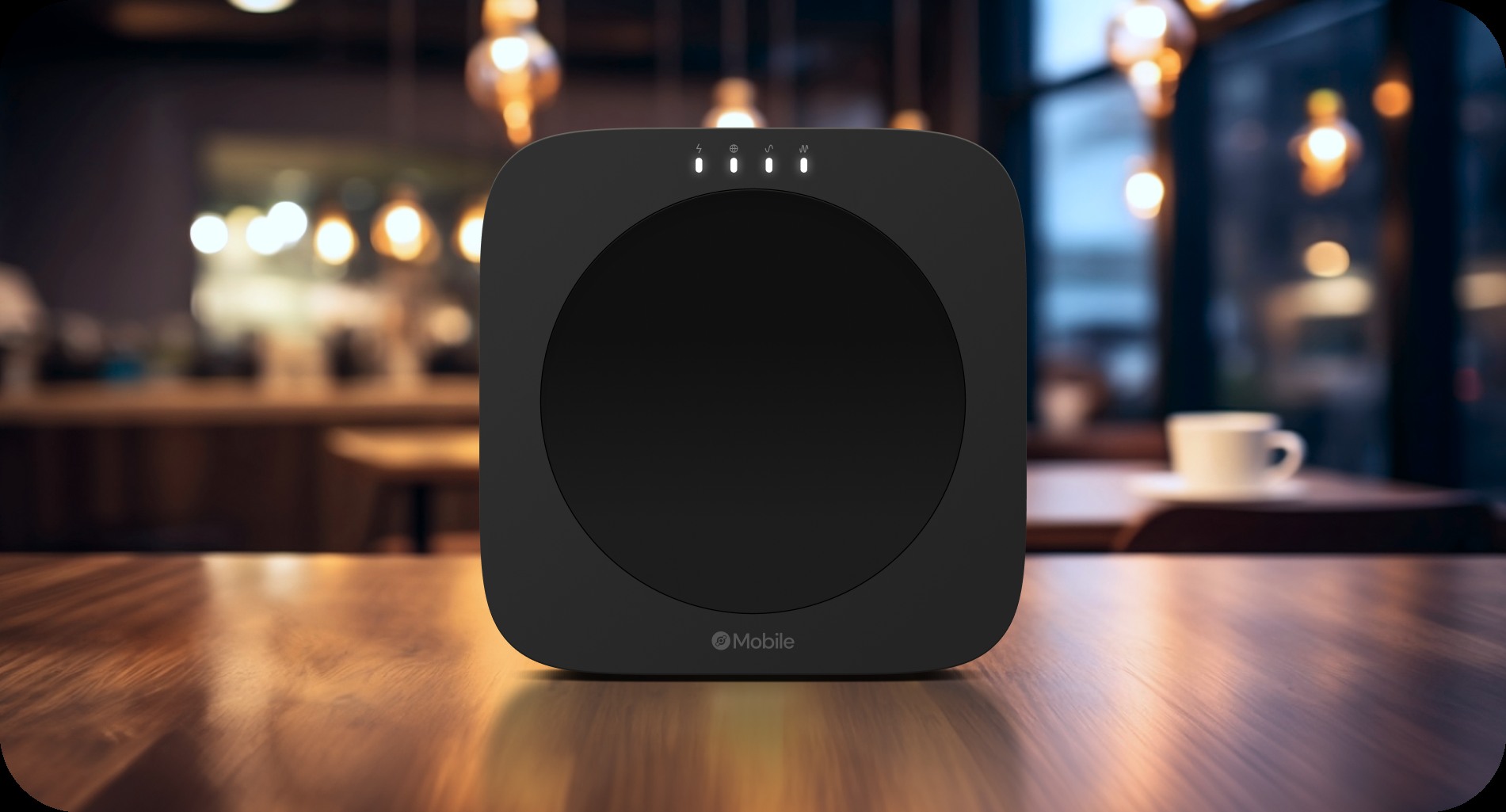
Helium’s second act moved from low-power sensors to hungry smartphones. The Helium Mobile carrier, launched in 2023, paired nationwide cellular coverage from a major partner with the community hotspot network. Consumers bought a phone plan; their devices could use Helium Wi-Fi where it was available. Hosts supplied local capacity. The app made the bargain visible through mapping and rewards. For a customer, the appeal was a relatively inexpensive mobile plan. For Helium, each call and data session tested whether the people-built network could carry ordinary traffic.
Traditional carriers can buy spectrum, build towers, and negotiate rights to buildings. Helium’s specialty is the awkward last stretch: inside a restaurant, hotel, pier, or shopping center where a tower’s signal fades. It works with carrier offload, moving eligible mobile data onto participating Wi-Fi. The phone user need not know whose access point helped. If the connection is good, invisibility is the product.
The economics depend on real traffic, reliable Wi-Fi, and a carrier willing to offload.
Helium spent heavily to pursue this. In 2022, the company - renamed Nova Labs - announced a $200 million Series D led by Tiger Global and Andreessen Horowitz, at a reported $1.2 billion valuation. That capital bought runway for hardware, software, carrier integration, and the time needed to make a network worth joining. It did not make every claim along the way trustworthy. In 2025, the U.S. Securities and Exchange Commission obtained a consent judgment over misrepresentations to equity investors about whether Lime, Nestlé, and Salesforce used the network. Nova Labs neither admitted nor denied the allegations and agreed to a $200,000 civil penalty; the SEC dismissed its other claims. The episode is a reminder to ask for traffic and paying customers, rather than count dots on a map.
Then the customer became someone else
The evidence Helium now emphasizes comes from other operators. In 2025, AT&T announced access to Helium’s community Wi-Fi. Telefónica’s Movistar began bringing more than two million Mexican subscribers to the network. Venue owners gained a new route in too: Helium Plus lets compatible existing Wi-Fi join the network without a new hotspot purchase. That matters in a hotel that has already paid to put access points on every floor.
Ocean Properties offers a concrete example. Three of its Bar Harbor hotels carried 20.4 terabytes of mobile traffic in July 2026 through Wi-Fi already on the walls, according to Helium’s own network data. The number is specific, seasonal, and useful. It is more revealing than a boast about theoretical coverage: guests actually moved data. Redondo Beach made a similar move at its pier, where a local partner enabled carrier offload on existing municipal Wi-Fi. Helium says the waterfront connection now serves more than 2,000 daily users.
In June 2026, Noble Mobile acquired the consumer Helium Mobile carrier. Helium’s new chief executive, Mario Di Dio, said the company would focus on the network platform, with co-founder Haleem moving to chairman. The move looks odd only if the phone plan was the destination. As a demonstration customer, the carrier could prove that the network worked on real phones; as an owned retail business, it also demanded marketing, support, and pricing decisions far removed from selling infrastructure to other carriers.
Software for the people who run carriers
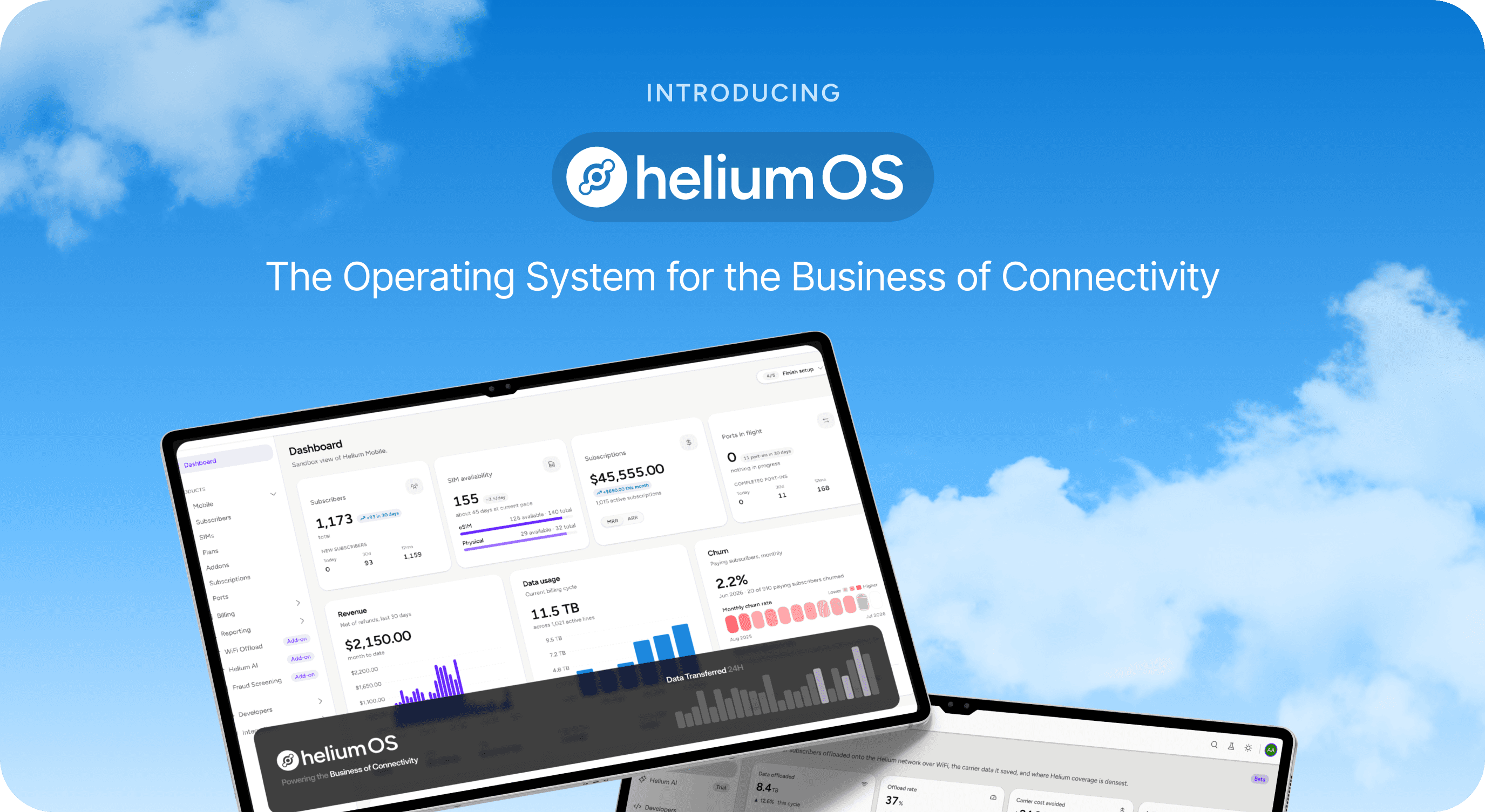
September brought HeliumOS, a software platform for carriers, mobile virtual network operators, and large venues. It combines subscriber management, billing, SIM activation, analytics, Wi-Fi offload controls, and access to the Helium Network. Its first named customer was Affiniti Ventures, the company behind Noble Mobile and Helium Mobile. Here the business model becomes clearer: Helium can sell network capacity and operating software while other brands own the subscriber relationship.
There is a practical lesson in the sequence. Helium did not begin by asking established carriers to accept an untested community network. It built one for sensors, then used its own consumer carrier as a demanding proving ground, then sold access to carriers and venues with measurable traffic. The next stage is to make deployment easier. In August 2026 it waived Helium Plus connection and onboarding fees until further notice, and its protocol adopted a target minimum of five cents per gigabyte for deployers. Helium itself says that minimum can lag when token prices fall quickly. Rewards remain a business calculation, never a promise that every hotspot will pay for itself.
The hard condition is geography. An access point in an empty room does little for a carrier. A busy hotel with weak indoor signal is more interesting. A venue also needs compatible Wi-Fi, control over its network, and enough capacity to carry guests without spoiling its own service. Carrier adoption matters just as much. In August, Di Dio disclosed that a pilot through a third-party integrator would disconnect and lower Helium’s daily active user count. Infrastructure businesses grow through contracts, and contracts can end.
What remains is a rather elegant inversion. The old telecom instinct is to own the network and sell the plan. Helium owned the plan long enough to make the network credible, then let someone else sell it. Its future rests on a less glamorous but more durable question: when a phone struggles inside a building, can the Wi-Fi already there carry the load, and can everyone involved see enough value to say yes?