The first thing to know about Hologram is that it has nothing to do with shimmering pop stars or dead rappers projected onstage. The Chicago company sells cellular connections to machines. Refrigerators, security systems, farm equipment, solar installations and medical devices use its SIM cards to send small but valuable parcels of data. When a machine travels, gets installed behind a concrete wall or wakes up in another country, Hologram tries to find it a network.
Chief executive Benjamin Forgan has the tidy description: “phone plans for things that aren't phones.” The phrase works because it makes a messy telecom stack sound domestic. Yet Hologram's actual customer is not the gadget. It is the exhausted engineer or operations manager who would otherwise negotiate with carriers, stock different SIMs for different countries, watch bills in separate portals and send a human to rescue a device that has chosen the wrong network.
A restaurant problem wearing a telecom costume
The founding insight arrived far from a cell tower laboratory. Before Hologram, Forgan helped run Foodpanda in Singapore. The delivery business needed point-of-sale hardware that worked across countries and networks. The available options forced his team to stitch together a solution. It functioned, but only in the way a suitcase closes when someone sits on it.
Back in the United States in 2013, Forgan started Konekt, the company that would become Hologram. Patrick Wilbur joined as the technical cofounder. Their ambition was familiar to software founders: do for cellular connectivity what Stripe had done for payments. Give developers a simple interface and bury the institutional plumbing.
What failed first
Almost everything about the first minimum viable product, by Forgan's later account. It did not persuade large customers. It did not persuade small ones either. The founders also believed they could avoid hardware. That assumption broke next. Cellular problems crossed the entire stack, from towers and carrier relationships to modems, firmware and power use. A clean software wrapper could not wish the physical layer away.
The reversal was useful. Konekt built the Dash, a cellular development board, ran a Kickstarter and discovered that large companies wanted quantities of both hardware and SIMs. Hardware shortened a developer's path to a working prototype. It also forced the team to understand the failure modes customers would face after launch. In 2016 Konekt became Hologram, a better name for a platform intended to make one network appear through many carriers.
What Hologram actually sells
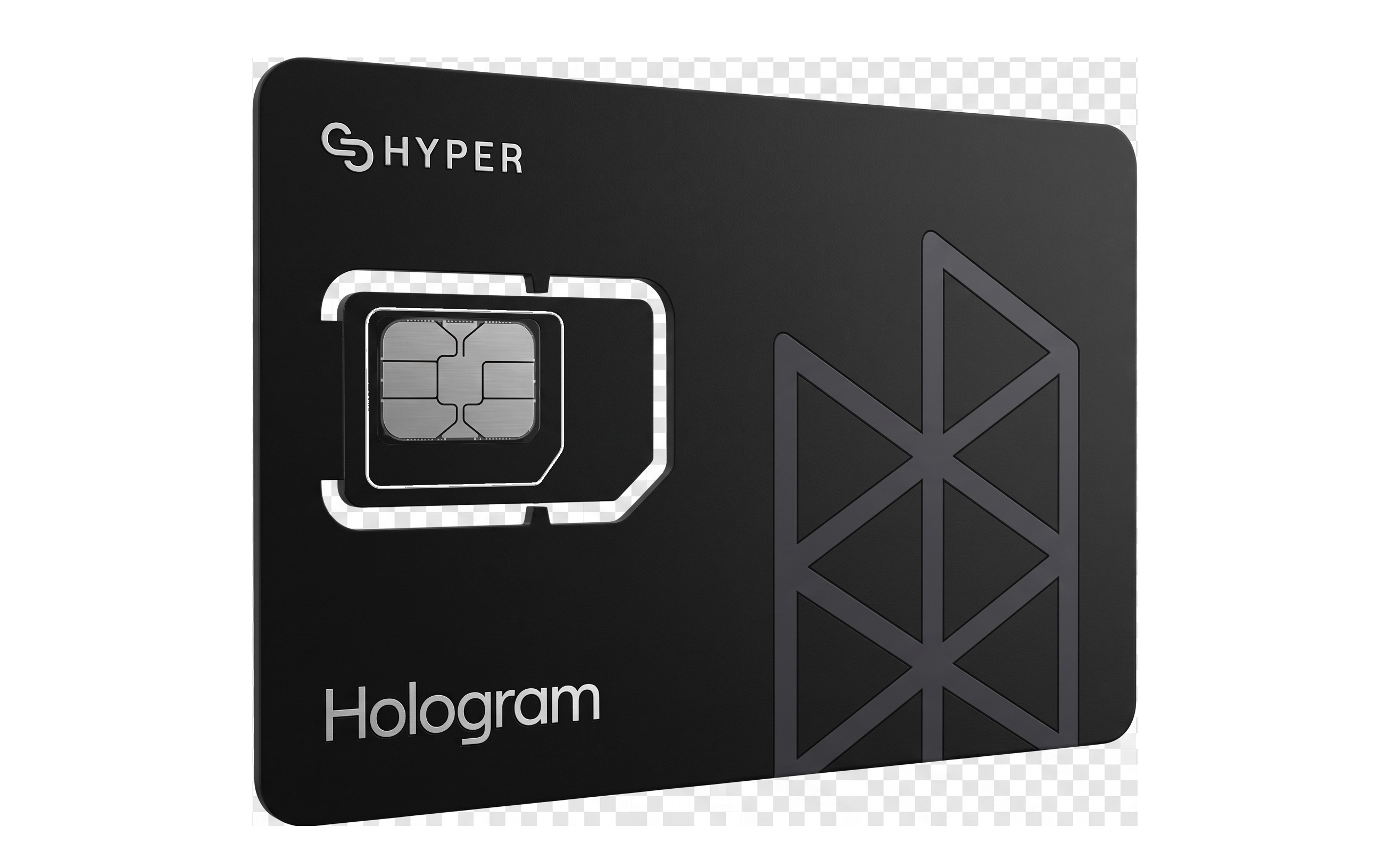
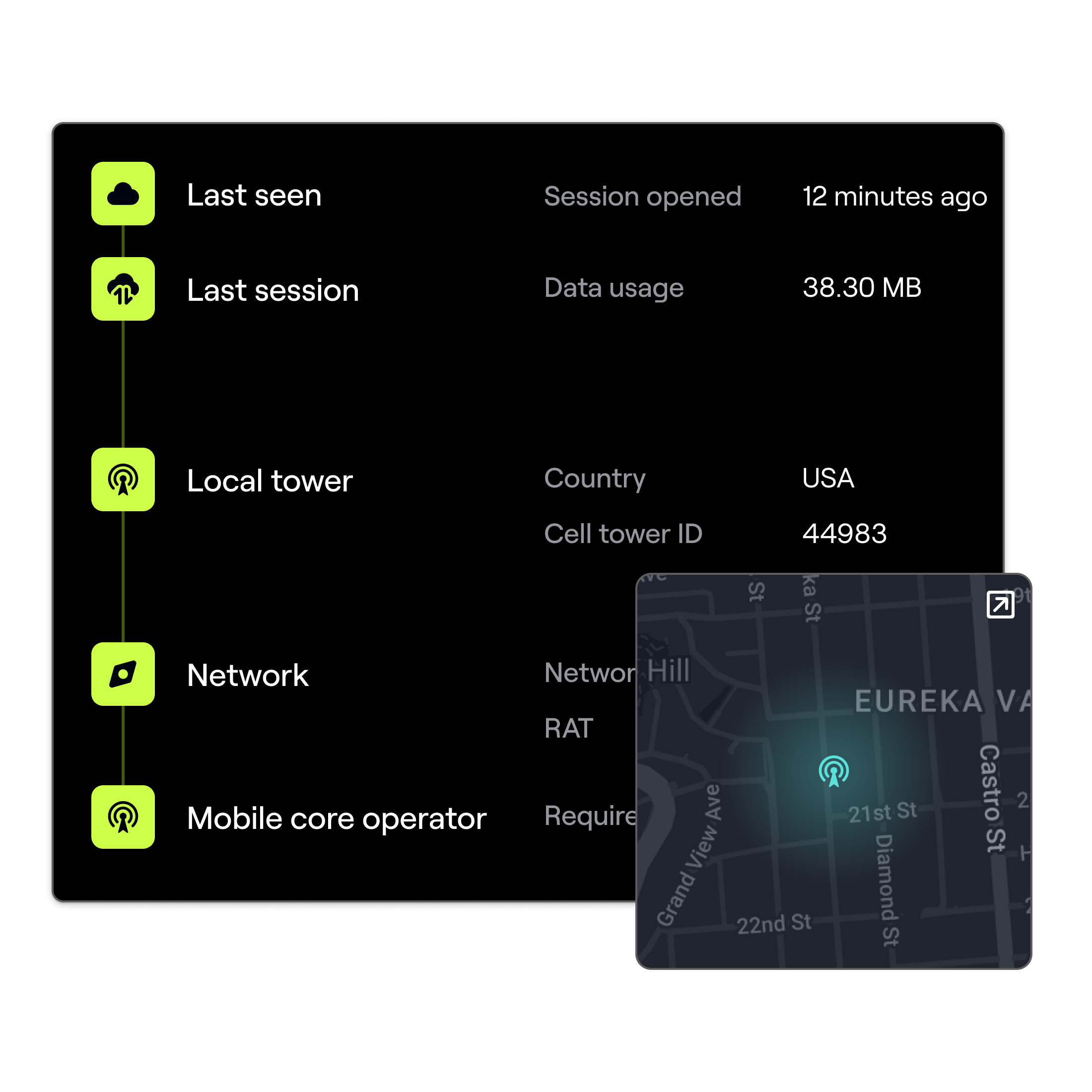
The wedge is a SIM. The product is a control plane. Hologram's physical and embedded Hyper SIMs use eUICC technology, which allows connectivity profiles to be changed over the air. Its network relationships provide advertised access to more than 550 networks in more than 190 countries and territories. The Dashboard gives teams a common view of activation, data use, cost, device status and coverage. A REST API lets them wire those controls into their own systems.
Test Mode addresses the expensive awkwardness before deployment. A manufacturer can validate a unit with free test data, then have it activate automatically when it is ready. Outage Protection addresses the expensive awkwardness after deployment. Its SIMs carry two mobile cores and can fall back to the second if the primary fails. Hologram advertises a contractually guaranteed 99.95 percent uptime for that product. The distinction matters: a SIM that can see several radio networks is not fully redundant if all traffic still depends on one core.
Conductor, announced in alpha in April 2026, pushes the same logic further. It exposes fleet-wide provisioning, profile switching and automatic failover rules. Hologram says the tool grew from internal systems that completed tens of millions of eSIM operations. The timing follows SGP.32, the GSMA standard designed for remotely managing eSIM profiles in headless IoT devices. Broader Conductor availability and fuller API support were planned for summer 2026, so buyers should check the current rollout stage rather than treating every announced feature as generally available.
A business model with a visible front door
Hologram's self-service pricing is unusually legible for telecom. At publication, a SIM card cost $3, an active SIM cost $1 a month, data cost $0.03 per megabyte and outbound SMS messages cost $0.19 each. That is the front door. Larger deployments negotiate volume rates, pooled data, zero-data pricing, custom network configurations, support and add-ons.
+ $0.03 / MB
+ $0.19 / outbound SMS
= a cheap pilot, then recurring fleet revenue
The ladder is clever. A developer can start with a card instead of a procurement process. As the fleet grows, connectivity becomes operationally important, switching costs rise and the customer has reasons to buy more software, reliability and help. Hologram collects recurring per-device charges and usage revenue without manufacturing the customer's end product.
Its named users explain the market better than any IoT forecast. Farmer's Fridge operates connected food kiosks and says moving to Hologram cut its IoT bills in half. Fieldin put telematics devices on more than 5,000 farm vehicles. Verkada uses cellular connections in physical-security equipment and has cited Hologram's flexibility during major carrier outages. Other public customer names include Generac, Cowboy, Level, Everactive, Briggs & Stratton, GlacierGrid and Sunday Power.
Different by abstraction, not magic
A direct mobile carrier can sell an IoT plan. So can specialist platforms such as 1NCE, EMnify, Soracom, KORE, Aeris, Wireless Logic, FloLIVE and Monogoto. Hologram's argument is that teams should buy an abstraction above carriers: one inventory item, one dashboard, one API and the option to change profiles after devices leave the warehouse.
That is not magic coverage. Local radio conditions still win arguments. A supported carrier may be weak inside a basement, a modem may lack the right band and a roaming rule may change. Hologram's advantage is optionality and operational tooling. A customer can test before shipping, observe what happens, then change a profile or core without touching the device. The company competes on how little carrier complexity reaches the customer.
The bits worth stealing
Hologram offers a useful playbook for founders working in other stubborn industries. It did not merely digitize a form. It combined a physical wedge, aggregation, software controls and a pricing path that begins with experimentation and expands with risk.
- Start at the ugly interface. Forgan found the idea where his own team was cobbling together cross-border connectivity.
- Let the failed MVP correct the philosophy. The company wanted to be software-only, then built hardware because customers needed a faster route to proof.
- Aggregate fragmentation. One SIM and one contract are valuable because the underlying market has many networks, rules and portals.
- Price the experiment cheaply. A $3 card creates a low-friction test. Reliability, support and fleet operations create the larger contract later.
- Productize internal toil. Conductor emerged from tools Hologram says it had already used for millions of profile operations.
When this model does not work
Hologram is less compelling when devices never leave reliable Wi-Fi, when a local fleet already has an excellent direct-carrier contract, when data volumes make cellular economics unattractive, or when the installation sits beyond terrestrial coverage and needs satellite. It also cannot repair bad antennas, incompatible radios or careless device security. The transferable condition is fragmentation plus costly failure. Remove either, and the abstraction loses value.
Hologram has raised substantial capital to pursue that value, including a $1.3 million early round led by NextView Ventures, $4.8 million announced with the rebrand and a $65 million Series B led by Tiger Global in 2021. It has not publicly disclosed a valuation or current revenue. The harder evidence is operational: the company reports millions of devices, more than 5,000 customers and 99 percent retention.
The company sits in a productive middle. It is not a carrier laying towers and not an IoT manufacturer designing the fridge. It is the connective tissue between hardware, networks and the customer's cloud. That position is valuable precisely because nobody wakes up excited to manage SIM profiles. They wake up wanting the fridge, tractor, camera or solar array to work.
Hologram's early mistake was believing the telecom mess could be hidden with software alone. Its lasting insight was that the mess could still be hidden - but only after touching enough of it. The little black SIM is a receipt for all the complexity the customer did not have to own.