A cow is an awkward place to put a mobile device. It gets wet, wanders away and offers little cooperation when something needs replacing. For livestock-technology company 701x, conventional SIM cards added bulk and mechanical headaches to its early tracking tags. The eventual redesign used Kigen’s integrated SIM technology. Cellular identity moved into the silicon, leaving fewer parts to accommodate on an animal’s ear.
That is a useful introduction to Kigen, a company selling something most people will never inspect. Its software helps connected products identify themselves to mobile networks, receive subscriptions and change connectivity over time. The visible product might be a cattle tag, a meter or an industrial router. Kigen supplies some of the machinery that makes the connection possible.

A smaller SIM, a longer job
The familiar removable SIM holds the identity and credentials that let a device authenticate to a cellular network. An eSIM makes subscription profiles remotely manageable. An integrated SIM, or iSIM, puts SIM functionality inside a secure part of a compatible chip. Those changes affect how a device is assembled, how subscriptions arrive and what can be changed after shipment.
Kigen works across these formats. Its portfolio includes SIM operating systems, eSIMs, iSIM software, remote provisioning, personalization data and engineering services. Its SIM OS page reports more than 2.5 billion SIMs enabled cumulatively. That figure describes the reach of its operating-system technology; a household-name consumer brand is not required to build a substantial component business.
The distinction matters for buyers. A manufacturer needs suitable hardware and radio support as well as a subscription. It must also decide who controls the profiles and who manages the device later. Kigen’s role crosses several of those decisions, connecting embedded software with the systems used to administer fleets.
*A common eSIM implementation. Remote provisioning can also be supported in removable formats. Diagram not to scale.
The factory gets a vote
Consider a manufacturer shipping the same connected product into several countries. Tying each batch to a particular operator early can leave the factory juggling connectivity-specific stock. Kigen’s In-Factory Profile Provisioning loads subscription profiles during production, allowing network choices to reflect a device’s destination. The company supports secure workflows in factories without public internet access.
The commercial logic is straightforward: postpone a variable decision until the information is better. A common hardware design can become different connected products through provisioning. Manufacturers still have to check radio bands, certification and commercial coverage, but they can reduce the inventory complications created specifically by SIM profiles.
It also moves work away from battery-powered devices already in the field. Loading the initial profile on the production line can avoid a later over-the-air download. For equipment intended to operate for years, commissioning belongs in the power budget alongside everyday reporting. A successful first connection is only one item on that budget.
What the pasture changed
The 701x case study describes another constraint: LTE alone left substantial gaps in its ranchland trials. That finding drove the use of cellular and satellite connectivity together. Kigen supplied iSIM technology; 701x’s design combined it with a module, network profiles, solar charging and its own switching logic. The resulting xTpro tag weighed 51.5 grams.
“Our ranching customers cannot work with 50% of the data missing”Cole Mehring · Head of Electronic Design, 701x
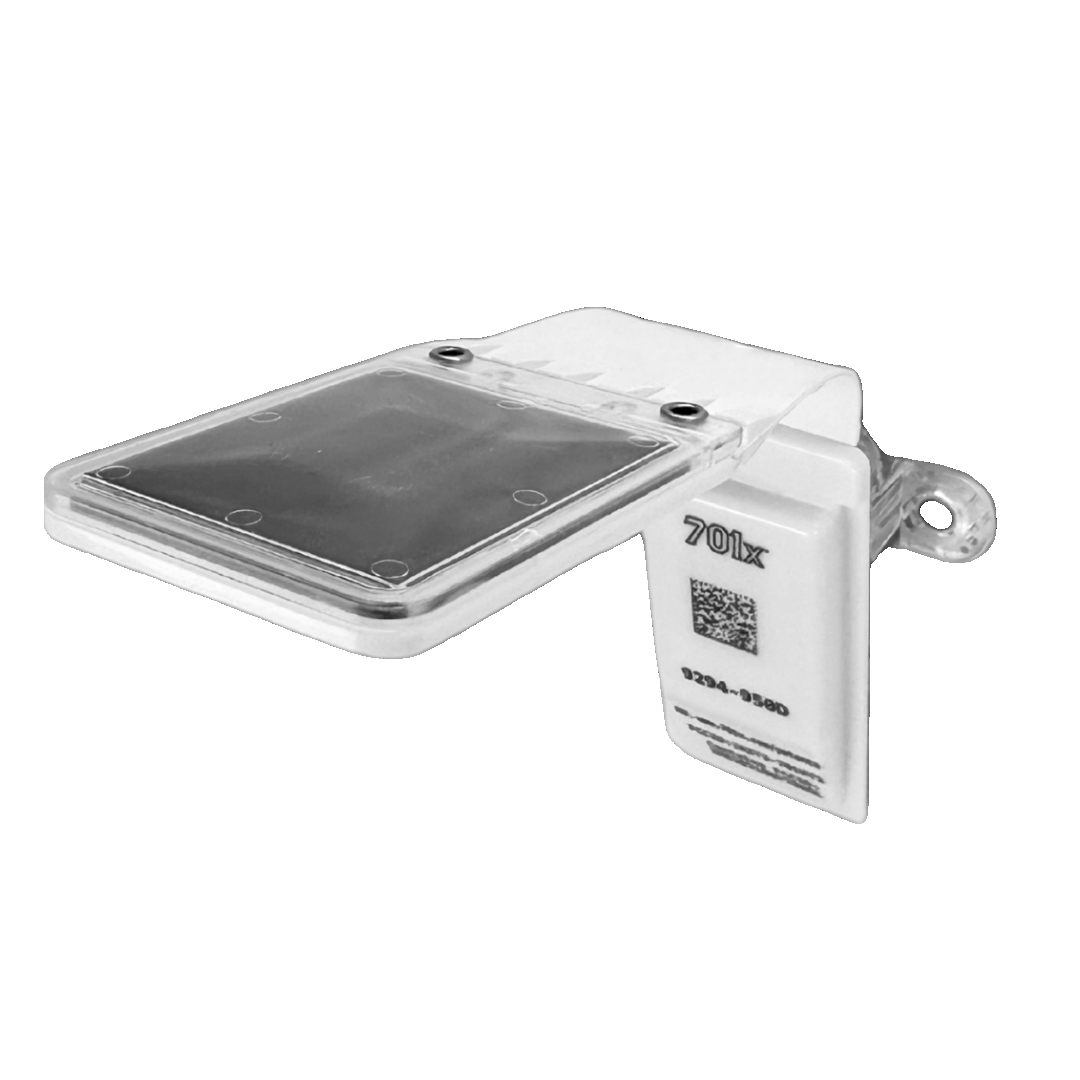
The lesson for another product team is to test the whole connection in the intended setting. A better SIM cannot manufacture a radio signal. Network selection, antenna design, battery behaviour and recovery after a failed connection all belong in the same evaluation. Buying those pieces separately does not make their interactions disappear.
A grid needs a route back
Evergy provides a different view of the same problem. In November 2025, Kigen announced that the Kansas and Missouri utility had selected its eSIM OS and eSIM IoT Manager, or eIM. The aim was to automate switching between private LTE and public networks. The announcement described an existing LTE network spanning 100 sites and supporting thousands of connected devices.
Here, the important feature is a set of operating rules. Kigen’s network rescue and recovery applet supports failover, while its Pulse platform provides central control by location, asset type or site. The desired result is continued telemetry when a preferred network becomes unavailable. Network redundancy, in this setting, becomes something an operator can administer across a fleet.
For a utility buyer, that makes a useful distinction between installing a connected asset and keeping it observable. A dashboard full of equipment is valuable only while its readings arrive. The choice of SIM architecture therefore reaches into routine operations and recovery planning, well beyond the original purchasing decision.
Conceptual failover path. Profiles, device compatibility, coverage and configured policies determine actual behaviour.
Arm’s inheritance, sold across the industry
Kigen’s corporate birthday conceals a longer history. Simulity Labs was incorporated in 2009. Arm acquired it in 2017 and formed the Kigen product group; Kigen separated in 2020 and became a SoftBank Vision Fund company in 2021. Chief executive Vincent Korstanje leads a business with roots in both telecommunications software and the chip industry.
That background helps explain its distribution. Kigen sells into an interconnected supply chain: SIM vendors license software, module and chipset companies integrate it, operators provide subscriptions, and manufacturers assemble products. Vodafone Business IoT, for example, has put its connectivity into Kigen’s iSIM Secure Package on supported chipsets and modules. Procurement and technical integration meet in the same offer.
There are sizeable alternatives. Counterpoint’s February 2025 eSIM enablement assessment placed Giesecke+Devrient, Thales and IDEMIA in its Pacesetter group, with Kigen among its Leaders. The research singled out Kigen’s IoT work and SGP.31/.32 offerings. Kigen’s positioning rests on embedded IoT expertise, licensing and integration across partners, in a market where broader digital-security suppliers also compete.
Its own account of working life is similarly practical: distributed teams, flexible working and values chosen with employees. One is “Be excellent to all!” The unusually cheerful wording sits beside a more familiar emphasis on customer success. For a supplier whose software must work with other companies’ hardware and networks, collaboration has a direct commercial purpose.
The bill extends beyond the chip
Salica Investments announced £10 million in growth debt for Kigen on April 30, 2026. That followed the June 2025 announcement that Japan’s SBI Group had joined an equity round alongside Arm and SoftBank Vision Fund 2. The debt backs expansion in the UK, Europe and the United States.
Salica also described a business increasingly delivered through usage-based SaaS, covering operating-system licensing, management tools and professional services. That is an important clue to the economics. Kigen earns from enabling and administering connectivity, with services extending the relationship beyond a component’s initial design-in.
For customers, the sensible comparison is a lifecycle budget: integration work, compatible hardware, subscriptions, profile operations and ongoing support. Any avoided service visits or reduced inventory need to be weighed against those costs. Remote provisioning offers a way to change the economics, but savings depend on the fleet, the deployment geography and how often intervention would otherwise be needed.
Price the years, not just the part.
Hardware + integration + provisioning
Connectivity + management + support
Inventory exposure + field visits + downtime
A security promise meets a security report
The uncomfortable part of the story arrived in 2025. Security Explorations reported compromising a Kigen eUICC and extracting sensitive material. The researchers said Kigen paid a $30,000 reward. They also challenged aspects of the company’s assessment of the vulnerabilities and its patch-verification process.
Kigen’s July 9 bulletin described a vulnerability involving the GSMA TS.48 test profile and published a two-part response: an operating-system patch and safer test profiles. It said patches had been distributed to all customers, with updated software blocking applet installation through test profiles. The company’s account stressed specific access conditions; the researchers argued that the underlying Java Card problems deserved broader treatment.
Those competing accounts make operational questions unavoidable. A buyer should establish which software version is deployed, how updates reach it and how successful installation is confirmed. Certification matters, but the ability to maintain a device matters too. In February 2026, Kigen announced commercially available eSA-certified eSIMs with security patching among the stated capabilities.
Start with ten, then test the awkward bit
Kigen’s IoT eSIM Starter Kit gives qualifying businesses ten eSIMs, access to eIM and Pulse, device-side tools and three months to evaluate the environment. It is a concrete entry point for testing activation, profile changes and management before committing a product line.
For the team running that pilot, the useful evidence is a record of what happened when an operation failed. Did the old profile remain usable? Could an administrator identify the affected device? Did the next attempt require a technician? These are suggested acceptance tests, rather than claims about every Kigen configuration. They turn an attractive demonstration into a purchasing decision that operations staff can assess.
A fleet that never changes operator and is easy to service may place less value on these capabilities. A sealed, widely dispersed fleet has a different calculation. The case for remote management strengthens as physical access becomes inconvenient, but it still depends on compatible devices, available networks and support arrangements that survive beyond the pilot.
The next partnerships broaden that operating layer. KORE and Kigen announced a new SGP.32 connectivity portfolio in April 2026, with commercial availability planned for later that year. In May, Kigen joined OneLayer’s technology alliance to simplify provisioning into private cellular networks. Both announcements concern what organizations do with connectivity after selecting the hardware.
For a manufacturer, the useful first experiment is deliberately unglamorous: activate a device, change its profile, interrupt its preferred connection and observe recovery. Repeat under the power and coverage constraints of the intended deployment. Kigen’s proposition becomes persuasive when those operations work reliably. The SIM can disappear from view. Someone still has to make sure the device comes back online.