A bottle of Coke is a small purchase. A gigabyte is an invisible one. Put them together and something curious happens: a convenience store starts behaving like a mobile operator. In Circle K Mexico’s OXIO case study, buying the drink can earn a customer 1GB of data. The retailer has found another reason for someone to come back.
- OXIO gives brands the software and network access to run mobile services.
- Customers use connectivity to reward shoppers, support payments and bundle services.
- A proposed Movistar Mexico acquisition puts the model on a much larger stage.
01 The operator at the checkout
Circle K’s private-label service is called Mi Contigo. The commercial idea is wonderfully ordinary: people already visit the stores and buy mobile top-ups there. A retailer with that traffic has a distribution channel before it has a phone plan. OXIO supplies the telecom machinery. Store purchases become data rewards; the service becomes part of the shopping relationship.
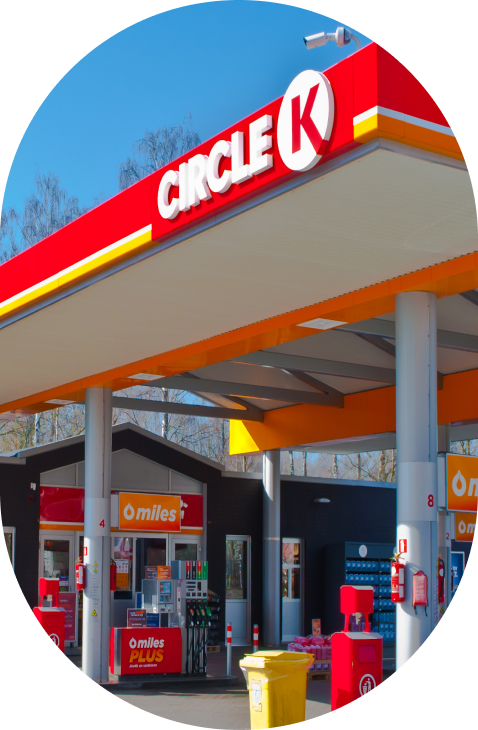
This is the attraction of embedded connectivity. A conventional operator earns money from the connection. A retailer can also benefit when that connection encourages another visit. That gives mobile data a second job. It can be sold, subsidized or awarded, depending on what the surrounding business needs. The reward has to be useful enough to change behavior.
02 A career spent asking who pays
OXIO’s founder and CEO, Nicolas Girard, had been circling this question for years. His earlier company, Aquto, worked with carriers and brands on sponsored data and rewards. Mavenir acquired it in 2018. Girard began OXIO shortly afterward. FinTech Collective identifies fellow founder Jason Evans as a former Fastly executive. Telecom experience met experience delivering internet infrastructure.
The original ambition was broader than branded plans: make mobile connectivity easier to trade and recombine. Investor Multicoin Capital’s 2020 account described almost 10,000 subscribers across eight brands in Mexico. That was an early deployment snapshot, not a promise about today’s customer count. Mexico gave the company a market in which connectivity and access to digital services were closely linked.
Building the machinery required capital. A $12 million Series A in November 2020 preceded a $40 million Series B announced in March 2022, led by ParaFi Capital. OXIO said cumulative financing then reached $65 million. Those figures describe the cost of financing the company, not the price a retailer pays to launch a service.
03 The control room becomes software
A mobile network has two useful parts to distinguish. The radio network reaches the phone. The core handles the rules behind the service. OXIO operates a cloud-native core and connects it to carrier infrastructure. Its December 2024 AT&T agreement extended that approach in the United States. It builds on existing radio access rather than requiring each customer to assemble it.
The carrier supplies radio access. OXIO supplies programmable service controls. The brand supplies the customer relationship.
BrandVNO is the operating interface: custom plans, shared data pools, SIM management and customer-service controls. Developers can use REST APIs and a sandbox to connect provisioning, billing and rewards to existing applications. A purchase can trigger a data bonus. A device can receive a different plan. The useful change is how much routine work can happen without another manual handoff.
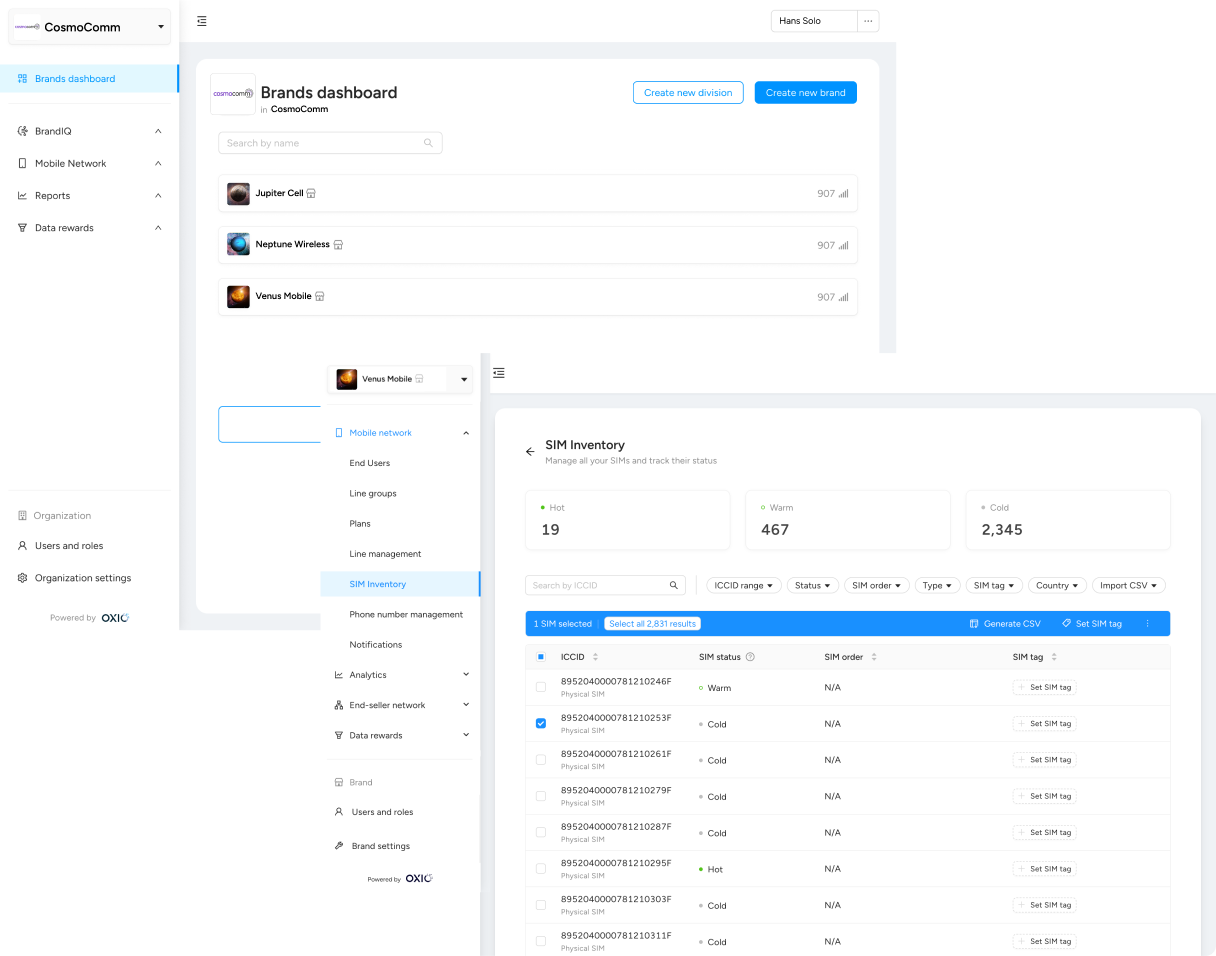
BrandIQ adds subscriber and network insights. OXIO describes a consent-led approach and says network data is processed exclusively for the customer. That is a proposition brands must evaluate carefully: useful personalization depends on what subscribers understand and agree to. The business case is stronger when the information leads to a service people value, rather than merely another marketing message.
OXIO sells to businesses that then serve subscribers or operate devices. Its offering combines wholesale connectivity, software and managed operations. The alternative is a direct carrier agreement, a conventional mobile-network enabler, or assembling the work internally. OXIO’s argument is that combining the controls and intelligence makes more ambitious products practical. A buyer should judge that claim against the particular service it intends to run, including its support burden and geographic requirements.
04 The sale that needs a signal
For payment company Billpocket, the problem was more immediate. A single connectivity provider left terminals with inconsistent coverage and inadequate visibility into SIM consumption. OXIO’s case study reports that its multi-carrier service helped increase POS transactions by 15%. That is a customer-reported result. The mechanism is easy to grasp: a terminal cannot finish a digital payment without a dependable connection.
OXIO announcement · July 2025
Cumulative activations, not current active subscribers
Other customers bring different distribution advantages. OXIO names Grupo Coppel, Rappi and Mercado Pago among Mexican brands on its platform. Its September 2025 Comtrend partnership targets rural broadband providers that want to add mobile service. Those providers already have local relationships; a bundled offering gives them another way to serve households without building an independent mobile operation.
05 Control before the phone rings
The deeper distinction from simple resale is control inside the core. In June 2026, OXIO launched Advanced Core Routing, which sends mobile voice and SMS through an enterprise’s systems before delivery. A commercial deployment with Umony targets financial-services communications compliance. Fraud screening and routing become network functions, without requiring subscribers to install another application. The capability concerns communications passing through that service.
“For the first time, connectivity is being productized like software”
Nicolas Girard · January 2026
It still takes partners. Mavenir supplies core, IMS and messaging technology; AWS provides cloud infrastructure; MATRIXX brings digital monetization. OXIO’s expertise lies in operating and exposing that stack as a usable service. Its careers page emphasizes openness, diversity and impact, alongside offices in three cities. The organization must span software development and the less glamorous work of keeping telecom running.
06 A $450 million examination
In April 2026, a consortium led by OXIO and Newfoundland Capital Management agreed to acquire Movistar Mexico. Telefónica’s filing put the business’s firm value at approximately $450 million. The announced plan retains the Movistar brand and management while transitioning operations toward OXIO’s platform. With more than 20 million subscribers at announcement, the target is a different scale of undertaking.
On October 2, El Economista reported competition approval with an initial six-month completion window and a possible extension. That approval does not establish closing or settle other required authorizations. The distinction matters: an acquisition agreement describes an intended future. Integrating a working operator is the practical examination of that future.
The lesson others can copy is smaller than an acquisition. Start where a customer relationship already exists. Find a connectivity problem worth paying to solve. Measure completed transactions, repeat purchases or retention before expanding. The economics become doubtful if a brand lacks distribution, cannot support subscribers, or subsidizes data without earning anything back. Software can simplify telecom operations. It cannot supply a commercial reason to own them.