Breaking: When you dial 911 from the 30th floor, Polaris Wireless knows it's the 30th floor 90+ patents in mobile location 50+ deployments worldwide Founded 1999 - Silicon Valley Z-axis accuracy beats the FCC's 3-meter bar Qualcomm collaboration brings vertical E911 to the chip 24 US carrier networks run on it quietly Software, not satellites
Company Dossier • Location Technology

Polaris Wireless

The Silicon Valley company that answers the question GPS keeps fumbling: not just where you are, but which floor.

Santa Clara, CA Est. 1999 ~82 People 3D / Z-Axis Location
Polaris Wireless 3D mobile location
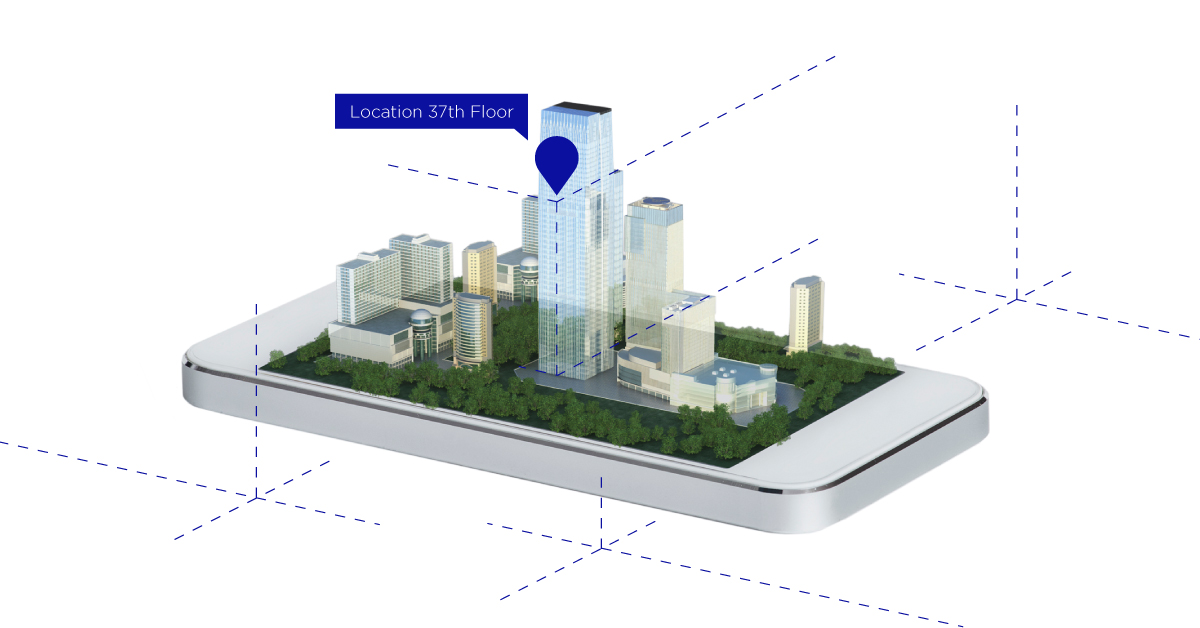
EXHIBIT A. A phone, a building, and the third dimension nobody else could nail. Polaris built a company in that vertical inch.
The Profile

A company built in the space between floors

Somewhere right now, a phone is ringing into a 911 center. The caller is panicked, the address is a tower, and the tower has forty floors. The map says the building. The map has always said the building. For decades, that was the end of the sentence - help arriving at a lobby while the emergency waited three hundred feet up. Polaris Wireless exists to finish the sentence.

The company doesn't sell phones, run a network, or launch satellites. It sells certainty about a coordinate - specifically the one everyone else skipped. Street address is easy. Latitude and longitude are solved. The z-axis, the floor, the altitude inside a building where GPS goes blind - that is the stubborn, unglamorous problem Polaris turned into a business.

"Global leader in software-based wireless location solutions since 2001."

Founded in 1999 in the heart of Silicon Valley, Polaris had a contrarian idea: you don't need new hardware bolted onto cell towers to find a phone. You need math. The company invented Wireless Location Signatures (WLS) - a way to fingerprint the messy radio environment around a device and match it, in real time, against a calibrated map of signatures. Radio noise that everyone else treated as a problem became, for Polaris, the answer.

That first patent landed in 2001. The first real customer - SunCom, which later became T-Mobile USA - signed in 2003. From there the work was quiet and cumulative: regional carriers, then national ones, then a portfolio that grew past 90 patents and a footprint past 50 deployments worldwide. It is the kind of company most people have never heard of and most people have, at some point, depended on.

The technology evolved from clever to comprehensive. Today the platform is a hybrid - a fusion engine that merges cellular signal strength, OTDOA and timing measurements, GPS, Wi-Fi, Bluetooth, barometric pressure and the small army of sensors inside a modern smartphone. Each source is weak alone. Stitched together, they produce a location that holds up indoors, in dense cities, and crucially, in three dimensions.

Why the floor matters more than the map

In 2013, Polaris did something that sounds like a magic trick: it demonstrated vertical location to the FCC, proving a phone's floor could be pinned from the network side. Regulators were paying attention because the math is grim - in a high-rise, the difference between the right floor and the wrong one is minutes, and minutes are the entire game in an emergency. The FCC eventually set a 3-meter z-axis accuracy requirement. Polaris built to beat it.

Then came the partner that mattered. In 2021, Polaris announced a collaboration with Qualcomm to deliver its vertical location through the Qualcomm Location Suite - moving the capability from a network feature toward something baked into the silicon itself. By 2022 the company had signed commercial license agreements with device makers, and its z-axis solution shipped nationwide. Not only in flagship phones, either: it landed in a Schok flip feature phone you could buy at Walmart. High-accuracy 911 location, in a budget phone, on a retail shelf. That detail says more about the mission than any brochure.

GPS got you to the building. Polaris Wireless gets you to the right floor.

The reach is wider than emergencies. The same engine powers location-based services, IoT and smart-city deployments, and enterprise use cases across healthcare and hospitality - anywhere knowing precisely where, in 3D, has value. Polaris has run on roughly two dozen US carrier networks and exported the work abroad, from Globe Telecom in the Philippines to a first deployment in sub-Saharan Africa, collaborating along the way with researchers at Stanford, Carnegie Mellon and MIT.

For all the engineering, the throughline is human. The founder, Manlio Allegra, did not arrive from telecom. He arrived from video games - the man who once helped grow Sega's European sales from under $10 million to over a billion before pivoting to the unsexy, life-or-death problem of where a phone actually is. There's a kind of Silicon Valley honesty in that: the same instinct for finding people where they are, redirected from entertainment to emergency.
By The Numbers

Receipts

1999
Founded
90+
Patents
50+
Deployments
24
US Carrier Networks
What They Build

The toolkit for the third dimension

Platform

3D Location Platform

A carrier-independent engine that fuses cellular, GPS, Wi-Fi, Bluetooth, barometric pressure and sensor data into one precise location - z-axis included.

Flagship

OmniLocate

The high-accuracy location platform built on WLS and the Hybrid Location Engine, serving E911, public safety and commercial location services.

Public Safety

E911 Z-Axis Location

FCC-compliant vertical location that exceeds the 3-meter requirement - telling responders which floor a 911 caller is on.

Core IP

Wireless Location Signatures

The patented RF pattern-matching technique that finds a device by matching live radio measurements to a calibrated signature database - no extra tower hardware.

Commercial

LBS / IoT Location

Location-based services and IoT / smart-city solutions for enterprises across healthcare, hospitality and connected devices.

Method

Hybrid Location Engine

Software-first location with no dependence on a single signal source - resilient indoors, in dense cities, and where GPS simply can't see.

The Long Arc

From a Silicon Valley idea to the silicon itself

1999
Founded in Silicon Valley with a contrarian bet: locate phones with software, not new tower hardware.
2001
First Wireless Location Signatures (WLS) patent awarded; the global leadership in software-based location begins.
2003
First major carrier deployment with SunCom (later T-Mobile USA).
2011 & 2013
Frost & Sullivan Location-Based Services Enabling Technology Award.
2012
Named to the Inc. 5000 list of fastest-growing private companies.
2013
Demonstrated vertical (z-axis) location to the FCC; closed a Series C round.
2017
Mobility Award for Mobile Software Indoor Positioning at CES.
2019
Launched the industry's first high-accuracy carrier-independent 3D location platform.
2021
Collaboration with Qualcomm to deliver vertical E911 location through the Qualcomm Location Suite.
2022
Z-axis solution goes commercial nationwide - including in Schok flip feature phones sold at Walmart.
"Software, not satellites - finding the floor nobody else could find."
- The Polaris Wireless thesis, since 2001
The Founder

Manlio Allegra

MA

Co-Founder, President & CEO. Three decades in international business, two of them in wireless location. An MBA from Stanford's Graduate School of Business and an electrical engineering degree from Milan's Politecnico.

Before location, there were games: Allegra founded video-game publisher TecMagik and, as a principal of International Development Group, engineered Sega's entry into Europe - growing its sales there from under $10 million to over $1 billion. He brought that same instinct for reaching people where they are to the harder, quieter problem of pinpointing exactly where that is.

Allies

Who they work with

Qualcomm

Collaboration to deliver Polaris vertical (z-axis) location through the Qualcomm Location Suite for E911 - moving the capability toward the chip.

Nokia

Channel partner behind contract wins, including an early cloud container-based hybrid location solution.

Globe Telecom

Philippines carrier that selected Polaris for commercial location-based services.

Schok

Device maker whose nationwide flip feature phones - sold at retailers including Walmart - ship Polaris E911 z-axis location.

Footnotes Worth Keeping

Things that amuse and inform

Spread The Word

Share this dossier