The whole transmission
- Kodiak made phones and rugged devices behave like centrally managed two-way radios.
- Mobile carriers sold the platform to field teams, enterprises and public-safety users.
- Its edge was network integration: priority, dispatch, encryption and links to existing radio fleets.
- Motorola Solutions bought the company in 2017 for a gross purchase price of $225 million.
There is an awkward moment in every action movie when someone produces a walkie-talkie. The prop is chunky, the audio crackles and every sentence ends in “over.” Yet the character presses one button and an entire group hears the same thing. Meanwhile, the modern smartphone owner is still unlocking a screen, finding an app, locating a contact and hoping everyone checks the notification. Kodiak Networks built a business around this small embarrassment of progress: the old radio had a better social instinct than the new phone.
Founded in 2001, shortly after 9/11, Kodiak began with instant group communication as its problem. Its early “Connected Portfolio” was broader - conferencing, messaging, presence and contact management ran on a carrier platform - but push-to-talk became the durable center. The company was not trying to make radio nostalgic. It was trying to preserve the useful ritual of radio while moving the machinery underneath it onto 3G, LTE and Wi-Fi.
The product was a button only in the way an elevator is a button: all the costly intelligence lived behind the press.Kodiak's hidden work was provisioning, priority, encryption and interoperability
A radio habit, rebuilt as software
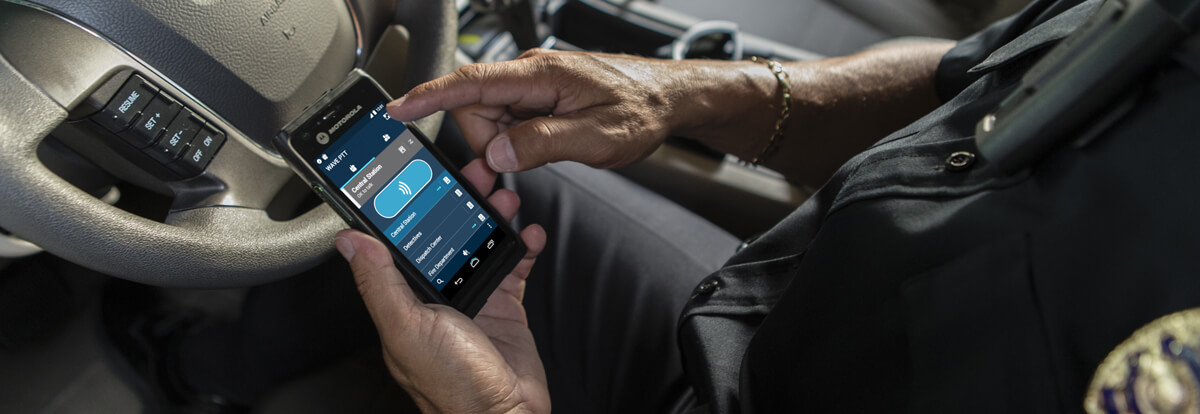
To the worker, Kodiak Broadband PTT was immediate: choose a person or group, press, talk. To an employer, it was a control system. A web administrator could provision subscribers, push contact lists over the air, assemble talkgroups and assign priority. The documented platform could hold 1,300 contacts, 130 groups and broadcast groups of as many as 500 members. Dispatchers could join the conversation from a console. AES-256 encryption and FIPS validation addressed the people who reasonably objected to broadcasting operational chatter into the ether.
One press, three worlds
Rugged devices
Tablets
Carrier network
Groups + priority
Dispatch consoles
Supervisors
The bridge to land-mobile radio mattered. Companies had already paid for towers, handsets and dispatch systems. A clean-sheet replacement would turn a communications upgrade into a capital project and a political fight. Kodiak let a warehouse radio, a supervisor's smartphone and a dispatcher inhabit the same operational conversation. A seasonal employee could use a phone. A firefighter could keep the purpose-built radio. The organization did not have to pretend those jobs were identical.
The first thing to break was the boundary
Traditional push-to-talk worked beautifully inside its own fenced garden. The trouble arrived at the edge: outside radio coverage, across incompatible systems, or when a manager needed both broadband data and group voice without carrying two devices. Cellular networks were spreading, smartphones were improving, and dedicated PTT networks were aging. The old assumption - that instant group voice required its own network and special handset - stopped looking inevitable.
Kodiak's answer was not merely an app download. It integrated with mobile operators. In 2012, AT&T announced a trial of enhanced PTT powered by Kodiak technology; Bell launched next-generation PTT across its high-speed network. Verizon, KPN and Telefónica also appeared in Kodiak's deployment roster. By selling through carriers, Kodiak gained access to network quality-of-service, device certification, subscriber provisioning and large enterprise sales channels. It also accepted the long integrations and institutional dependence that come with carriers. This is the trade: a consumer app can launch on Tuesday; carrier-grade behavior may take years to earn.
What made Motorola change its mind
Motorola Solutions already owned radio expertise and the WAVE push-to-talk portfolio. Kodiak looked less like an overlapping app than a missing route to market: it was carrier-integrated, established with large mobile operators and oriented toward commercial customers. Motorola said the deal would expand its software suite and recurring revenue, while adding a carrier version beside WAVE's flexible broadband options.
The price makes the logic tangible. The acquisition announcement said terms were not disclosed, but Motorola's quarterly filing later recorded a gross purchase price of $225 million, including $205 million in cash payments. This was not the price of a clever microphone icon. It was the price of integrations, operator relationships, deployed infrastructure, management software and the right to sit between the mobile network and the customer's daily habit.
Craig Farrill and co-founders set out to create instant group communications over wireless networks.
The company reported wireless-operator launches on four continents as John Vice took over as CEO.
AT&T trialled Kodiak-powered service and Bell launched broadband PTT for business users.
An Avtec integration connected Kodiak users with Scout dispatch consoles and radio systems.
The $225 million acquisition folded Kodiak into a larger communications and collaboration portfolio.
Motorola described continued Kodiak work around interoperable voice, video and data standards.
The business hid inside other businesses
Kodiak was a B2B2B company before the abbreviation became fashionable. It sold a platform to mobile operators; the operator branded and sold the service; an enterprise administrator configured it; a driver, hotel engineer, construction foreman or public-safety worker pressed the button. Revenue could come from platform software, managed services and recurring subscribers. The user might know AT&T Enhanced Push-to-Talk or Verizon Push to Talk Plus and never know the name Kodiak.
That invisibility was useful. Carriers already had billing, support, coverage and sales relationships. Kodiak supplied the specialized layer they did not want to build from scratch. Competitors took other routes: over-the-top services such as Zello and ESChat prized carrier independence; traditional radio vendors sold purpose-built systems; Motorola's WAVE emphasized cross-network flexibility. Kodiak occupied the carrier-integrated middle, where network priority and managed provisioning could matter more than frictionless signup.
A construction crew does not need another feed to follow. It needs the right twelve people to hear the same six seconds.The product lesson behind push-to-talk
The copyable part is subtraction
Kodiak's lesson is not “add voice.” It is to find the action that users repeat under pressure and remove every step around it. Package the complicated administration for the supervisor, not the worker. Integrate with the expensive system the customer already owns. Choose distribution that supplies a capability your product cannot fake - in Kodiak's case, carrier-level network behavior. And let the customer's workflow, not the device category, determine the product. A phone and a radio can be different objects and still belong to one talkgroup.
Where the model works
Large, mobile teams; seconds-sensitive coordination; established carrier coverage; mixed radio and smartphone fleets; administrators who need controlled groups, priority and auditability.
Where it loses its edge
Small casual teams; unreliable cellular coverage; offline or off-grid operations; buyers who need instant self-service; organizations unwilling to accept carrier dependence or integration time.
There is a gentle irony to Kodiak's outcome. The company spent years proving that professional voice could escape proprietary radio networks, then became part of the company most associated with professional radios. But the acquisition did not reverse the argument. It completed it. Today, Motorola describes a safety ecosystem in which radio, broadband, dispatch, video and data are connected. The device matters less than whether the right person can be heard now.