An aircraft is flying toward the wrong place. Its navigation system is quite sure of itself. The world knows better. In MAK’s VR-Forces software, those two accounts can coexist: the vehicle’s actual position and its “perceived location.” A simulated aircraft can act on a mistaken understanding of where it is. For an instructor interested in spoofed navigation, that discrepancy is the point of the exercise.
- The work: software for building, connecting and running simulated worlds.
- The buyers: defense organizations, system integrators and researchers.
- The distinction: a modular platform with open standards and APIs, designed to admit other companies’ systems.
- The useful question: can your rehearsal reproduce the errors that matter?
It is a wonderfully awkward way to sell realism: make the machine less certain. Much software promises to remove error. A training system sometimes needs to introduce it deliberately. Otherwise, people may practise in a world where information arrives too cleanly, equipment behaves too politely and the enemy has apparently agreed to leave the navigation signals alone.
The feature, introduced for air entities in VR-Forces 5.2, offers a good entrance into MAK Technologies. The company makes commercial modeling and simulation tools. Its customers use them for training, mission rehearsal, experimentation and virtual prototyping. The visual world matters, but so do the rules underneath it: what entities do, what they detect, what information they exchange and what an instructor can change.
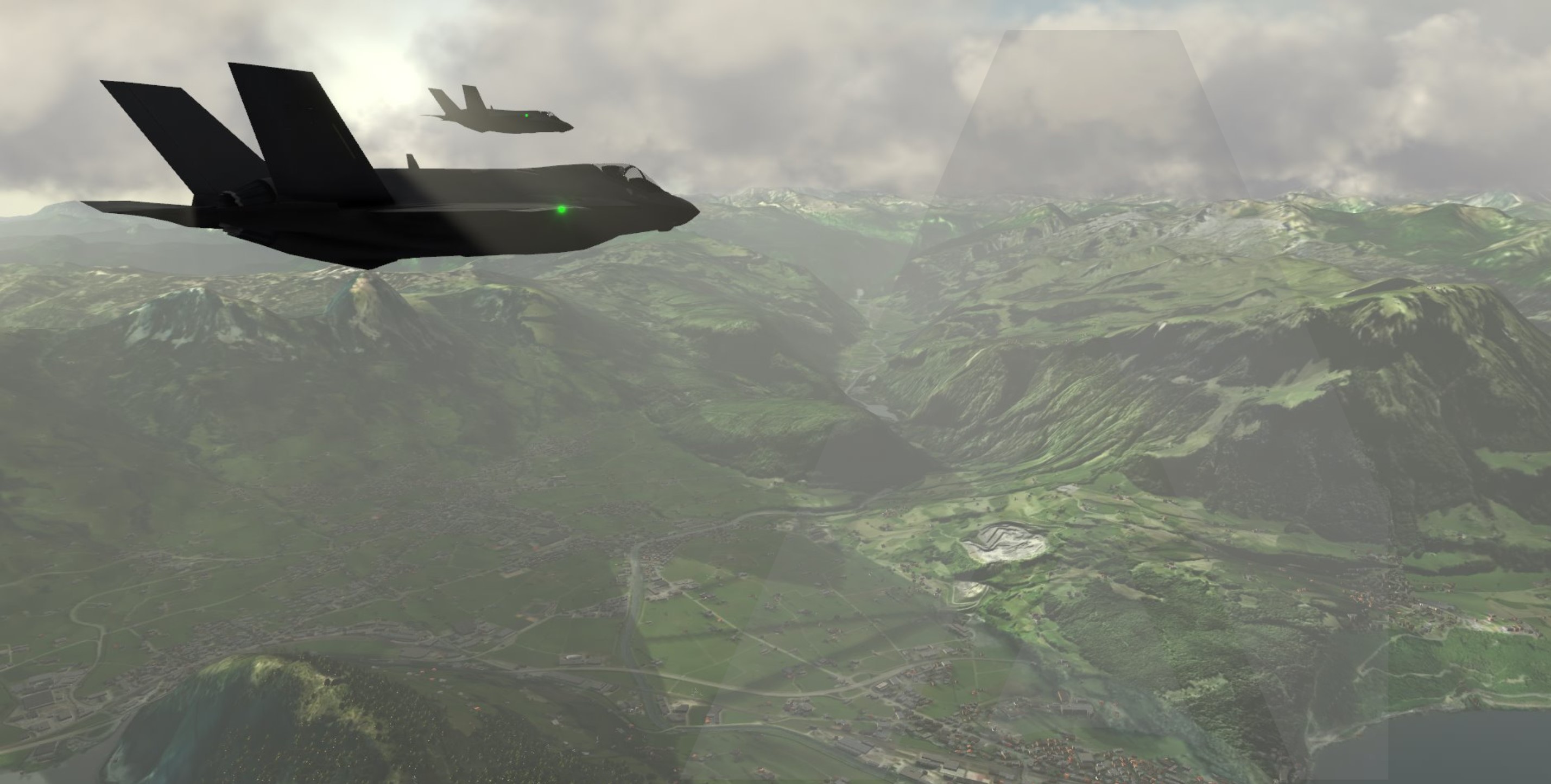
The aircraft that believes its own mistake
MAK’s account of perceived location explains a particular difficulty. A vehicle may locate itself through satellite navigation, inertial systems or terrain matching. Those inputs can drift or be manipulated. An extension can change the perceived position, and the simulated aircraft then navigates using that information. The environment can preserve the true position while showing the consequences of the false one.
The engineering principle is useful well beyond aviation: distinguish the state of the world from the information available to the actor. A convincing landscape tells you little about whether that distinction exists. When evaluating a simulator, ask what its participants can misunderstand. That question is more revealing than counting the trees.
A common world has several jobs
MAK ONE, the company’s platform, divides the work into components. VR-Forces supplies computer-generated forces and the tools to create and control scenarios. VR-Vantage renders the environment. VR-Engage lets a human take a role within it. That separation gives an integrator different ways to assemble a training system without making every participant use the same interface.
- 01 / PopulateVR-ForcesCreate forces and behavior
- 02 / SeeVR-VantageRender the shared world
- 03 / ParticipateVR-EngagePut a person in a role
- 04 / ConnectNetworking toolsExchange simulation data
- 05 / ReviewMAK Data LoggerRecord and replay activity
The infrastructure does less photogenic work. VR-Link gives developers a networking interface for standards including Distributed Interactive Simulation, or DIS, and High Level Architecture, or HLA. MAK RTI supplies HLA run-time infrastructure. VR-Exchange bridges systems using different protocols or data models, with diagnostic tools to inspect the traffic. A simulator is a rather lonely investment if the rest of the exercise cannot understand it.
Terrain arrives through tools including VR-TheWorld. Specialized sensing gets its own attention: RFView for MAK ONE, developed with Information Systems Laboratories, generates physics-based synthetic aperture radar imagery. MAK Data Logger records simulation messages and supports replay. That last job gives an exercise an afterlife: instructors can return to events instead of relying entirely on recollection.
The NASA problem was reliability, then room to grow
One historical customer account is unusually plain about what failed. NASA Langley’s air-traffic research team initially tried an open-source HLA implementation. Glover Barker, quoted by MAK, says its reliability and quality were inadequate. The team moved to MAK RTI; the account dates use of its libraries to 2005.
“the quality and reliability were not adequate”
Glover Barker, NASA Langley Research Center, in MAK’s customer account
The project eventually involved more than 400 networked aircraft-simulator workstations. Growth brought another problem: licensing. MAK describes arranging a custom model so expansion would be practical. This is a vendor-published account, but its lesson is concrete. Software procurement has to consider both whether a system works and whether its commercial terms permit it to keep working at a larger scale.
A rehearsal the RAF could connect
The Royal Air Force opened Gladiator at RAF Waddington in February 2023. Its purpose is to connect training devices through a central hub, allowing participants across operational environments to train together. MAK identifies MAK ONE as part of the program, with Boeing Defence UK serving as prime contractor and ST Engineering Antycip participating in delivery.
The RAF’s explanation of the need is refreshingly practical. Live training faces constraints in airspace, cost, environmental impact and operational security. A connected synthetic environment provides another place to practise complex activity. The RAF explicitly says Gladiator complements live flying. That boundary matters: useful rehearsal depends on choosing which skills belong in which environment.
MAK occupies several positions in this market. It can sell a component to an integrator, supply a common software platform or undertake engineering work for a training solution. Alternatives therefore depend on the job. Bohemia Interactive Simulations’ VBS4 overlaps in tactical virtual training; another RTI can compete for networking work. An organization’s own simulation software may be the incumbent.
Buy the exercise, then price its growth
MAK sells individual products and configurations of the suite. Its published licensing menu includes subscription, public and private cloud, site, program, enterprise, university and national arrangements. Engineering, customization, training and support sit alongside the software. The buyer is usually an organization with a particular exercise or system to deliver.
That makes the shopping list more demanding than “one virtual battlefield, please.” How many people participate? Which existing simulators must join? What needs customization? Where will the software run? What happens when another site is added? Each answer can change the work and the commercial arrangement. The lesson from NASA is to test the expansion plan while discussing the initial purchase.
Open standards can make those conversations more productive, but they do not finish the integration. Protocols, data models, hardware and mission-specific behavior still need to fit together. Treat the polished demonstration as an invitation to inspect the interfaces. Ask the vendor to connect something you already own.
The engineers behind the interfaces
John Morrison and Warren Katz founded MAK in 1990. The company’s history describes their dissatisfaction with closed, one-off simulators and their work on open standards. Today MAK belongs to ST Engineering North America. Its engineering culture still advertises the same preference: flexible software interfaces and support that helps customers assemble working systems.
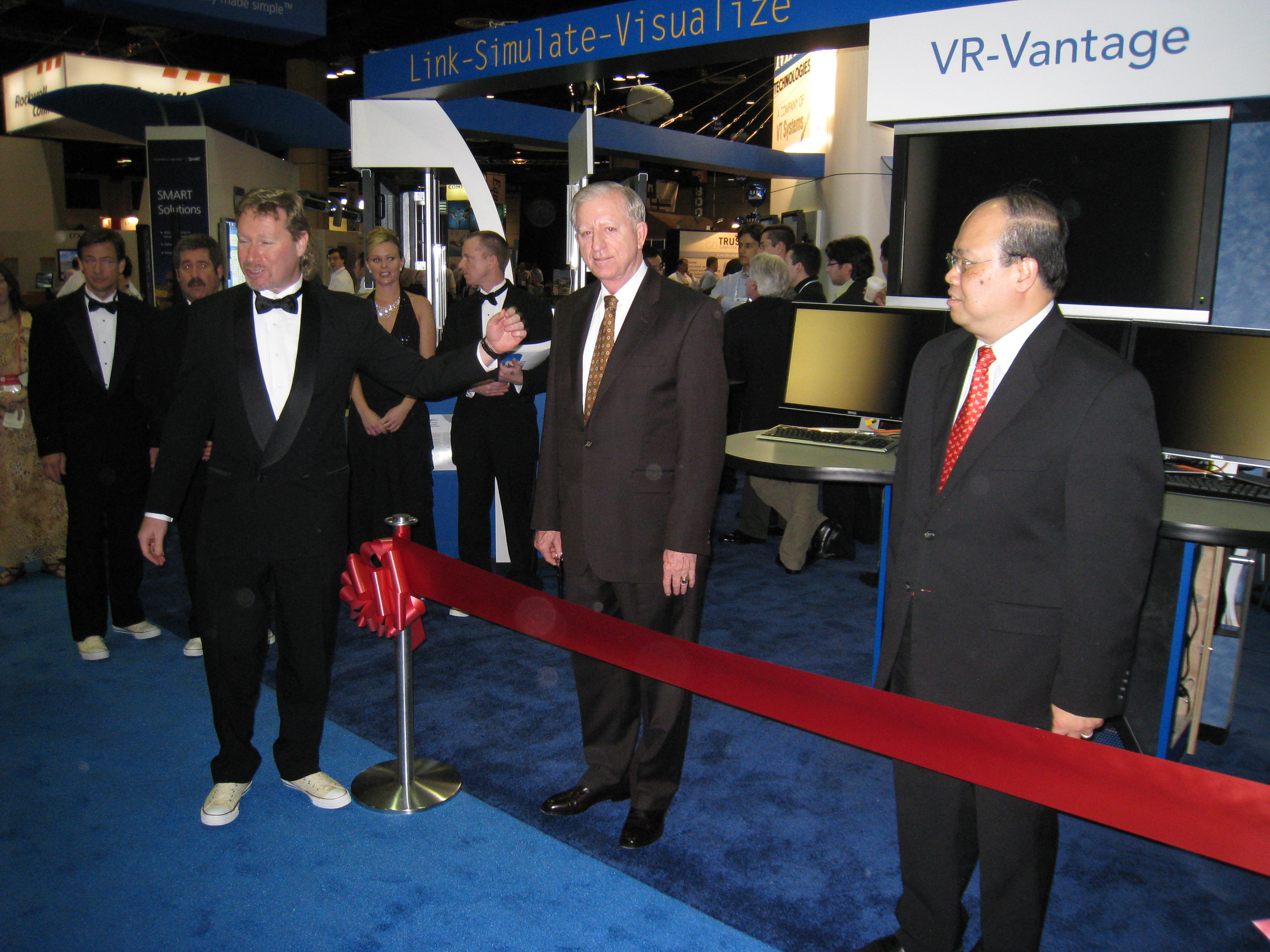
MAK describes its support philosophy as having an engineer down the hall. Its careers page recruits across software and engineering disciplines, while the company also highlights military experience within its team. For a customer combining operational requirements with code, those are relevant forms of expertise. A simulation can be technically sound and still represent the wrong problem.
AI meets the scenario-writing chore
NICO AI addresses the work of creating exercises. MAK describes natural-language input for generating VR-Forces scenarios and mission plans, along with AI agents that can interact with trainees. The appealing proposition is specific: reduce the manual work between a written plan and a runnable exercise. Whether the generated behavior serves the training objective remains a question for the people responsible for the scenario.
The company’s other recent work stays close to that delivery problem. On September 30, 2026, MAK announced completion of the first phase of the U.S. Marine Corps Amphibious Combat Vehicle crew-gunnery trainer, including final user evaluation and prototype delivery. It reported a six-month prototype effort and a second-phase award. User feedback will inform further development.
What to borrow before buying a virtual world
There is a purchasing habit here that readers can copy. Start with the decision or skill the rehearsal must exercise. Then identify the information, errors and interactions that make it difficult. Require a demonstration of those conditions, a way to inspect what happened and a licensing arrangement that accommodates the intended growth.
A small stand-alone exercise may not need MAK’s full collection of networking tools. A specialized research model may require substantial extension. A training task that depends on physical sensations still needs an appropriate physical setting. MAK’s modular approach provides choices; selecting and validating them remains real work. The aircraft can believe the wrong coordinates. The buyer should be rather less willing to do so.
Explore MAK’s website, company news and engineering blog. Follow LinkedIn, X or Facebook. Developers can inspect the Python HLA examples.
▶ VR-Forces product video▶ VR-Vantage product video▶ Product tutorials