Imagine a naval ship with an impressive radar and an unimpressive problem: the person repairing it needs an answer buried somewhere in a pile of technical information. At WEST 2026, Navy leaders discussed an AI Sidekick that helps sailors find radar information even without a connection. It is a modestly glamorous use for artificial intelligence. No robot admiral. Just a sailor trying to get something working.
That is a useful doorway into FTI Defense. The company supplies software and technical services for military decisions: understanding equipment health, combining data, testing plans and assessing cyber risks. Its customers include the U.S. Department of Defense, the Intelligence Community and federal agencies. The work lives in the expensive space between buying equipment and being able to use it.
- The job: connect scattered military data to readiness, planning and operational decisions.
- The tools: analytics, predictive maintenance, wargaming, AI assistance and defensive cyber.
- The proposition: adapt existing technology to a mission while customers keep their data.
- The lesson: start with the decision someone needs to make, then build the data connections.
Build once. Adapt again.
FTI began in 1985 with Lavon F. Jordan and Joseph S. Hashem in Santa Barbara, California. An early Dayton office served the Air Force aircraft community. Today its headquarters is in Beavercreek, Ohio. The geography helps explain the business: close enough to aviation’s practical problems to acquire a taste for solving them.
The company used the federal Small Business Innovation Research and Small Business Technology Transfer programs to develop decision tools. An SBA case study describes the commercial logic: earlier government research paid for a core capability; a later customer could invest in adapting it. Software developed for one problem became a starting point for another. The second customer did not need to finance the entire invention again.
Consider the Air Force’s Logistics Composite Model. A DoD account describes a model dating to the 1960s whose core remained useful while its interface and setup became outdated. FTI received an SBIR contract to evolve it into an assessment toolkit. The repair was at the point where people met the model. In enterprise technology, useful mathematics can outlive the machinery that makes it usable.
This history suggests a business habit worth copying: keep an inventory of what already works. A new customer may need a different interface, different inputs or a different deployment environment. Those changes are substantial. They still leave room to reuse the hard-won parts underneath.
A fleet is a collection of dependencies
A ship’s condition is not a single number. A weapon depends on sensors, command systems, components, maintenance and supplies. A fleet adds more ships and more dependencies. Readiness becomes a question about relationships: which fault matters, which task it threatens and what must happen next?
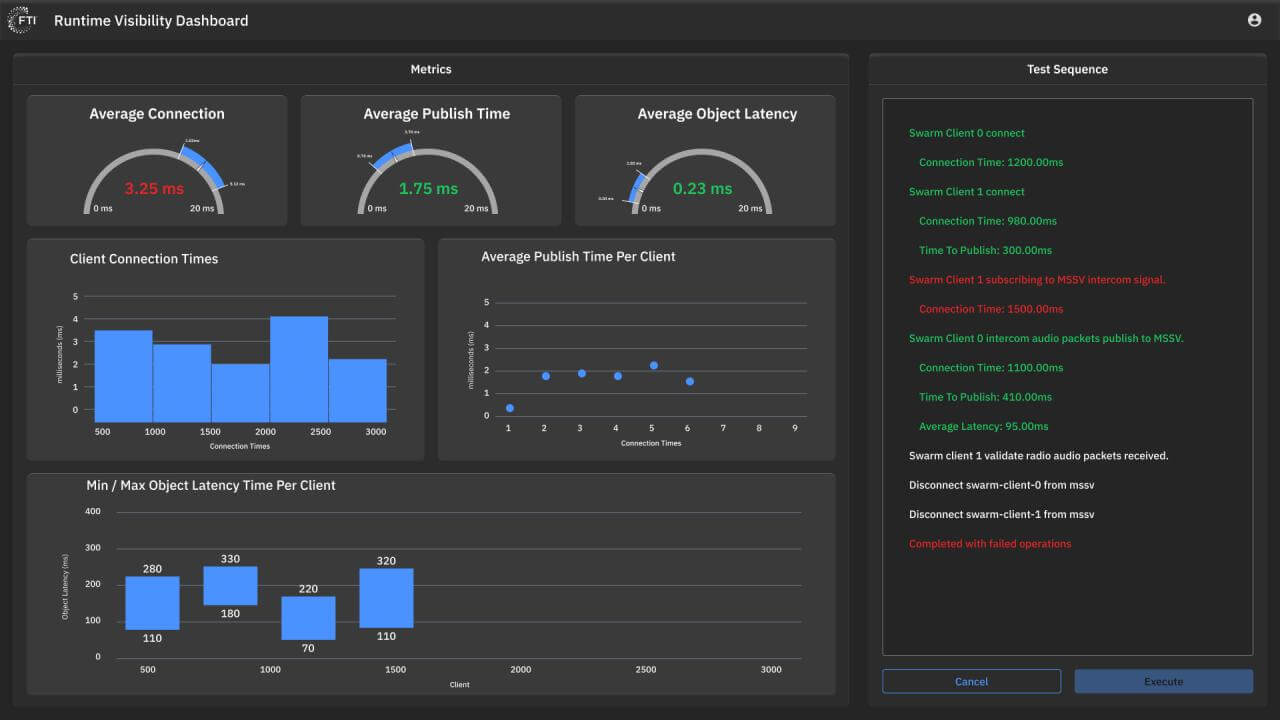
FTI’s Mission Effectiveness Readiness Management platform, MERM, is built for that question. It brings equipment status into a visual picture and supplies predictive fault information to support Navy maintenance and supply decisions. The attraction is the chance to see an operational consequence before it becomes an operational surprise.
Its usefulness depends on what follows the display. A maintainer needs a repair action. A supply planner needs a part. A leader needs to understand the effect on a mission. A dashboard that leaves each of those people guessing has merely made uncertainty more attractive.
The software learns to travel
Cortex and Nevi occupy the integration and analytics part of FTI’s portfolio. Their job is to process data, orchestrate analysis and present results through visualizations. FTI describes them as extensible applications that work alongside existing technology. Its wider mission platform connects analytics, simulation and decision support across workflows.
For a buyer, the appealing promise is continuity. Existing systems can hold years of investment and institutional knowledge. Replacing them creates a project of its own. FTI positions its products as additions to that environment, with customers retaining ownership of their data. That gives it a particular place in the defense software market: an integration and mission expertise supplier as well as an application vendor.
In 2024, the purchase options changed. Cortex and MERM, previously available within technology-enabled services, became available through SaaS and perpetual licensing. Subscriptions use a throughput-based approach tied to data volume and ingestion needs. On-premise licenses offer another route, with support and integration services available.
That is a meaningful change in the sales proposition. A customer can buy software separately from the people helping implement it. It also turns the choice of deployment environment into a business-model question. FTI says implementations can take weeks or months rather than years; buyers should treat that as the company’s claim and define the actual scope before building a schedule around it.
Rehearsing the consequences
Readiness asks what can work now. Wargaming asks what might happen next. FTI’s WOPR combines modeling and simulation with analytics and collaboration across military domains. The name expands to War. Operation. Plan. Response. The company reports supporting wargaming since 2016 and helping design, execute and adjudicate more than 70 games.
FTI’s reported experience in game design, execution and adjudication. A measure of activity, rather than a score for prediction accuracy.
The distinction matters. A simulation gives planners a disciplined way to examine assumptions and consequences. Its output still reflects what the model includes. The valuable question is whether it reveals dependencies a team would otherwise miss. Cyber, space and logistics make that question unusually interesting because a change in one can alter choices in another.
Avya handles another kind of rehearsal: testing software, workflows and models. FTI describes customizable performance metrics, synthetic data and integration with automated testing processes. AI Sidekick, meanwhile, is designed for operational assistance in classified, degraded or disconnected settings. Together these tools point toward a practical sequence: integrate the information, test the system, then make it usable where the decision happens.
The useful subtraction
In September 2025, FTI sold its commercial IT subsidiary, FTI Services, to the subsidiary’s executives. That business handled local network management, cabling, security management and general IT work for commercial customers. FTI identified it as non-core, with limited overlap with its national defense strategy.
This decision puts an edge on an otherwise broad company description. Plenty of businesses can call themselves technology providers. FTI chose to concentrate on government and intelligence missions. The sale suggests that customer context, rather than the mere presence of computers, determines which work belongs together.
Jose Hidalgo became CEO in February 2025, succeeding Ron Shroder, who remained chairman. In January 2026, the company announced a place on the Missile Defense Agency’s SHIELD contract vehicle. Its $151 billion ceiling covers the vehicle; it is neither a payment to FTI nor guaranteed revenue. In August 2026, FTI announced CMMC Level 2 certification, relevant to federal work involving controlled unclassified information.
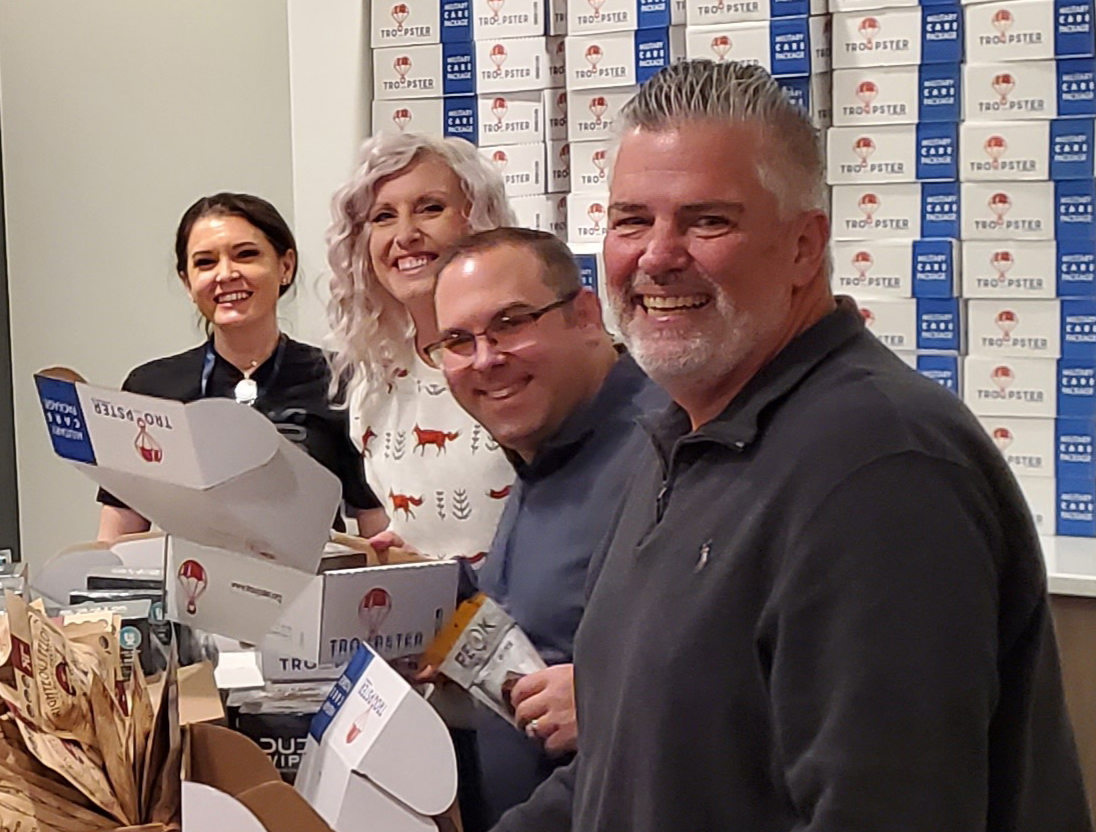
The people behind this work matter too. FTI’s careers material describes SkillBridge transition opportunities and community activities, including packing Troopster boxes for deployed service members. Technical expertise and familiarity with military work appear side by side. That pairing is sensible: understanding a dataset includes understanding why someone collected it and what they need to do next.
The shelf still needs the part
At WEST 2026, Vice Adm. Brendan McLane offered a pleasantly concrete account of resilience: having the parts available before deployment. Software can help expose the need. People, procurement and physical inventory have to finish the job.
“For me, the resiliency really is starting with having all the parts on our shelf before we roll out.”Vice Adm. Brendan McLane / WEST 2026, reported by SIGNAL
That is the condition beneath FTI’s proposition. Connected data must be trustworthy. Models must be checked against the mission. Users need permission and resources to act. Better information cannot conjure a spare component, and a forecast cannot repair equipment by itself.
For someone evaluating the company, the useful starting point is a specific decision: which maintenance action, which logistics risk, which planning assumption? Ask how the software changes that decision, how its inputs are validated and how it fits the existing environment. FTI’s story rewards that kind of specificity. The interesting thing about keeping things running is how many separate things have to cooperate.