space-domain-awareness
(13)
Melanie Stricklan Knows Why Space Is Getting Small
A West Texas childhood led Melanie Stricklan to surveillance aircraft, a space startup, and the crowded business of keeping satellites apart. Now the Slingshot Aerospace co-founder is bringing that experience to national security programs at Vast.
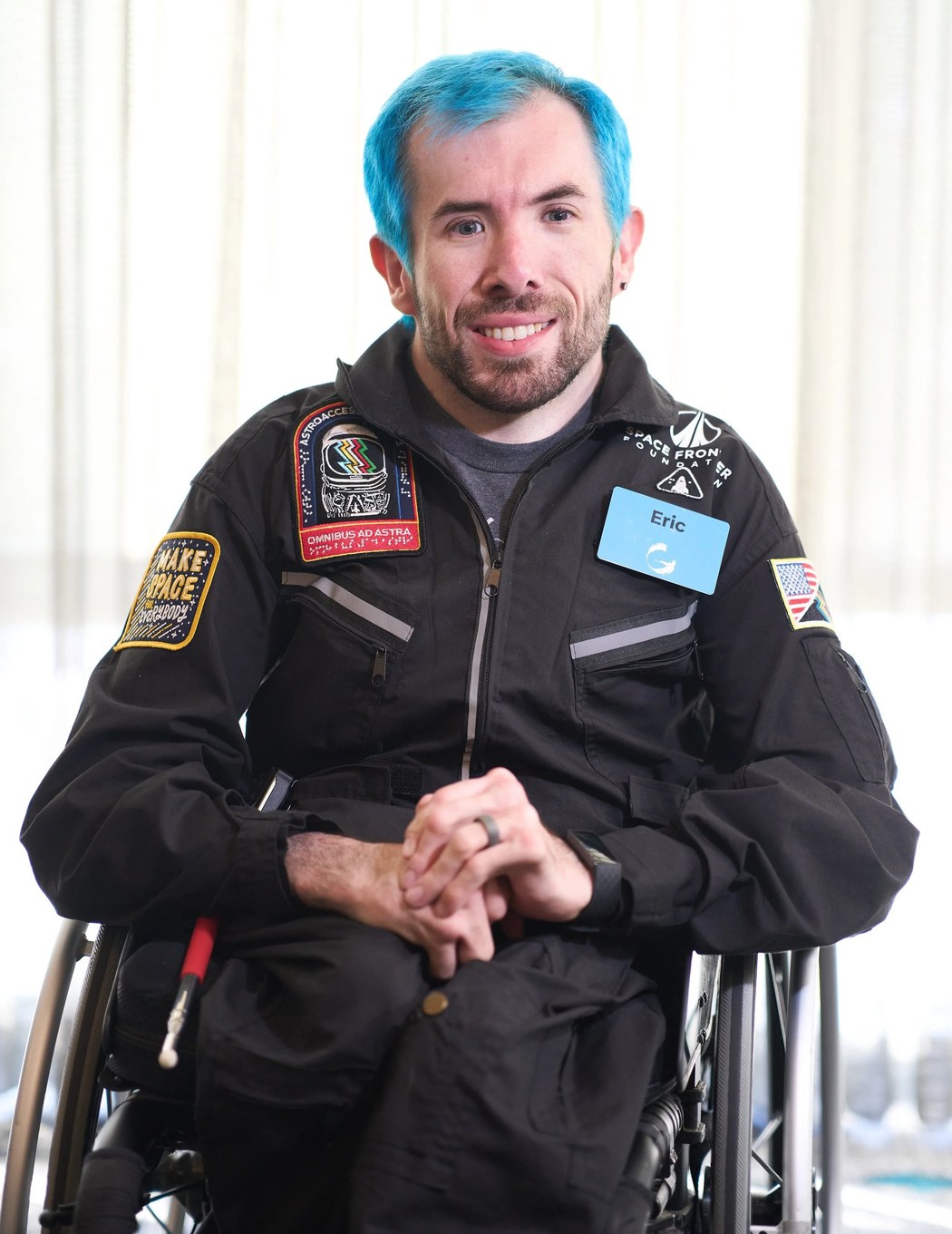
Eric Ingram and the useful art of getting out of the way
Eric Ingram built Scout Space to help spacecraft understand their surroundings. After five years as CEO, he began a different kind of navigation: finding the right moment to hand over the controls.

FTI Defense and the Art of Keeping Things Running
A radar, a repair crew, a mountain of incompatible data. FTI Defense has built a business around the awkward space between owning military equipment and knowing whether it will work.

Kelli Furrer Is Selling the Story That Makes Space Make Sense
After fifteen years at Dell and a founder turn in public-sector AI, Kelli Furrer took on a stranger brief: make the crowded space above us understandable, useful, and worth acting on.

Slingshot Quit Watching Earth to Build Air Traffic Control for Space
The Austin-born startup cast too wide a net, killed its original geospatial business, then bought the eyes and memory needed to make orbit legible. Now its software helps satellite operators dodge debris and Space Force Guardians rehearse a conflict that has not happened yet.

Diffraqtion
Diffraqtion is a Somerville, Massachusetts deeptech company building what it calls the first quantum camera for satellites and telescopes. Spun out of research at MIT and the University of Maryland, its photon-counting sensors paired with AI aim to extract far more information from incoming light than conventional CMOS or CCD sensors, letting smaller, cheaper optics see beyond the diffraction limit. The company targets space domain awareness, defense, and Earth observation, and raised $4.2M in pre-seed funding in January 2026 alongside a DARPA SBIR contract.

RBC Signals
RBC Signals is a Seattle-area space communications company that runs a global Ground Station as a Service (GSaaS) network, moving data between satellites and Earth for commercial, government, and research operators. Built on a sharing-economy model, it stitches together company-owned antennas and unused capacity from partner-owned ground stations into a single on-demand network of more than 80 antennas across 60-plus locations. Alongside downlink and telemetry, tracking and command (TT&C) services, the company has expanded into dynamic and fractional spectrum leasing through its STORM platform, giving satellite operators flexible, pay-for-what-you-use access to the ground and spectrum they need.

Josiah Gruber
Josiah Gruber is the CEO of Scout Space, a Reston, Virginia company building sensors and software to detect, track and characterize objects in orbit. An optical and RF remote-sensing engineer with more than 15 years of hands-on experience, he joined Scout in 2023 as an engineer, rose to VP of Engineering and then CTO, and took the top job in late 2025. Under his leadership Scout raised an $18M Series A in May 2026 and is putting its Owl optical payload on the inaugural flight of Blue Origin's Blue Ring spacecraft.
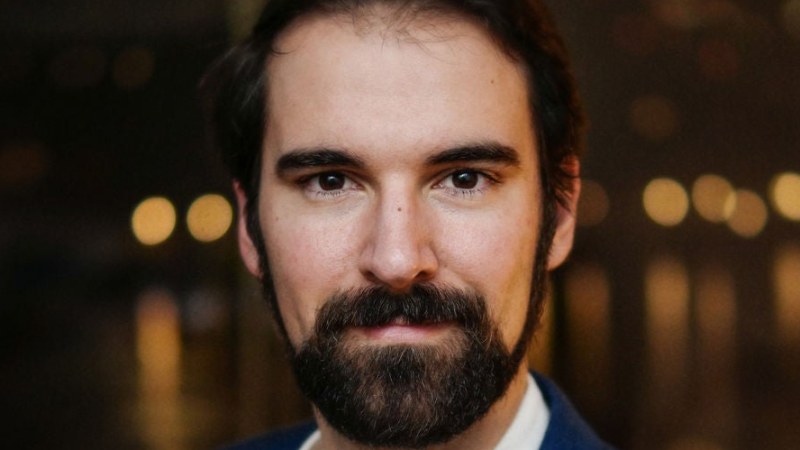
Johannes Galatsanos
Johannes Galatsanos is Co-Founder and CEO of Diffraqtion, a Boston-based quantum imaging startup that has built a quantum camera capable of recovering 95% of photon information lost by conventional sensors - translating to 20x higher resolution and 1,000x faster image processing than any existing optical system. A multilingual MIT and Oxford graduate with Greek-German roots, Galatsanos pivoted from leading AI and data transformation at Novartis to commercializing a decade of DARPA- and NASA-backed quantum photonics research. Diffraqtion won first prize at SLUSH 2025, secured a $4.2M pre-seed round in January 2026, and is targeting satellite launches for space domain awareness and Earth observation by 2028-2029.

Ron Faith
Ron Faith is the President and CEO of RBC Signals, a Redmond, Washington company that runs a global ground station network letting satellite operators downlink data on demand instead of building their own dishes. A serial entrepreneur who launched Apple's first standalone internet product in the mid-1990s, ran mobile commerce at Qpass, and led cloud data-protection startup Datacastle to an acquisition by Carbonite, he returned to his aerospace roots in 2019 and took the top job in January 2024. He pairs a Dartmouth engineering-and-philosophy double major with a University of Washington master's spent researching frequency selective surfaces for Boeing.

Even Rogers
Even 'Jolly' Rogers is the co-founder and CEO of True Anomaly, the first company built exclusively around space superiority for U.S. national security. A former Air Force space operations officer and Weapons School graduate who helped write the U.S. military's foundational space doctrine, he left uniform and 12 days later started building autonomous spacecraft and mission software for combat in orbit. Under his leadership True Anomaly raised a $650M Series D in April 2026 at a $2.2B valuation, crossing $1B in total funding.
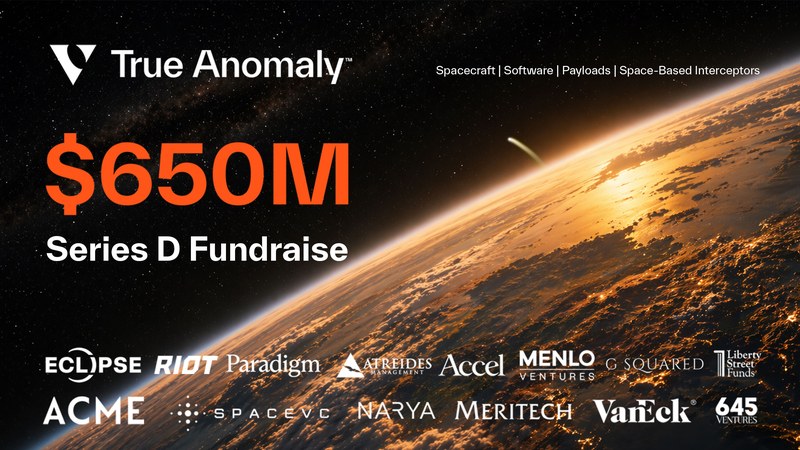
True Anomaly
True Anomaly is a Colorado-based space defense company building the hardware and software to operate, defend, and win in contested orbit. Its flagship Jackal autonomous orbital vehicle - a highly maneuverable, refrigerator-sized spacecraft - is paired with Mosaic, a full-stack mission autonomy and command-and-control platform. Founded in 2022 by Air Force and Space Force veterans, the company sells primarily to the U.S. Space Force and Department of the Air Force, has raised more than $1 billion across four rounds, and is valued at $2.2 billion after its April 2026 Series D.

Scout Space
Scout Space is a Reston, Virginia defense and space company building the sensing layer for orbit. It develops electro-optical and infrared sensors (Owl and Sparrow), onboard autonomy software co-developed with the U.S. Space Force, and edge-processing and mission-design platforms that let spacecraft detect, track, and characterize objects in orbit - even without ground contact. Scout's pitch: a proliferated network of in-space sensors is fundamental to operating safely in an increasingly crowded and contested orbital environment.