The envelopes arrived from NASA. For a girl in rural West Texas, this was a rather satisfying answer to the problem of living a long way from the space program. Melanie Stricklan had gone to the library, recruited a librarian to help find addresses, and written to NASA centers. Back came pictures and technical material. Her bedroom walls acquired a space program of their own.
Outside, the education continued. Her father explained how to distinguish an airplane from a satellite moving across the night sky. The Milky Way was visible on clear nights. She checked out books about space and covered her walls with what the mail brought. Before she had a job in aerospace, she had developed the habit of asking people inside it to let her see more.
In 1986, a visit to McDonald Observatory brought a look at Halley’s Comet. She also followed the shuttle program, drawn to Christa McAuliffe’s planned flight as a teacher aboard Challenger. The loss of that mission gave her early fascination a harder edge: flight involved obligations, and people accepted real risks to attempt it.
There is an appealing continuity between those letters and the work that followed. Stricklan has spent much of her career getting useful information across a distance. The distance is sometimes orbital. Often, the harder part is getting institutions to answer one another.
02A seat in the back of the aircraft
She joined the U.S. Air Force in 1996, beginning as an enlisted airman. She studied on nights and weekends before moving through officer training into the space program. The route demanded patience of a fairly unromantic kind: classes fitted around service, qualifications accumulated while the day job continued. Wanting to fly and work in space still left a considerable amount of homework.
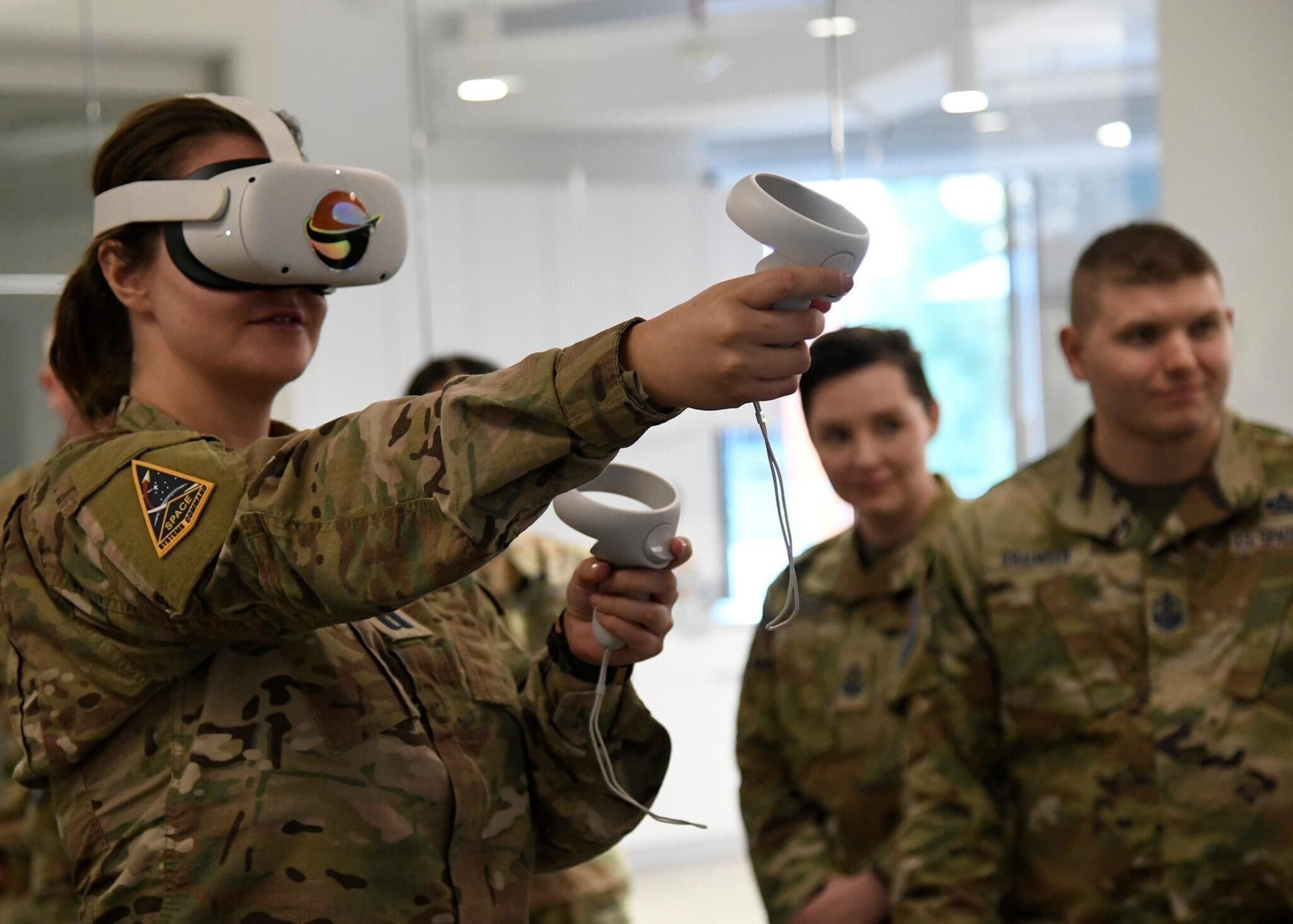
Her service included more than 1,500 flight hours aboard ground-surveillance aircraft. On the E-8C JSTARS platform, radar and other information had to become a usable picture for people making decisions on the ground. The value of an observation depended partly on when its meaning became clear. A beautifully analyzed answer could be an expensive souvenir if it arrived after the decision.
She went on to command experimental spacecraft missions and help develop space-control technologies for the Department of Defense. Her academic training included a bachelor’s degree in aeronautics from Embry-Riddle and a master’s in space operations management from Webster, with an emphasis in space systems engineering.
By her retirement in 2017, she had spent 21 years inside an organization that builds, buys, tests and operates complicated equipment. That background gave her a close view of the distance between collecting data and knowing what to do next.
1996 to 2017
surveillance aircraft
03The useful art of leaving things out
Stricklan co-founded Slingshot Aerospace with fellow Air Force veteran Thomas Ashman and entrepreneur David Godwin in 2017. Its early ambitions ranged across Earth observation and space. The basic problem was familiar from surveillance work: large amounts of information, drawn from different instruments, needed to become decisions while they were still useful.
Her 2018 TEDxManhattanBeach talk, “How images from space help us protect the earth,” captured that early breadth. It connected imagery and analysis to disaster response, defense and natural-resource monitoring. Space data could matter to people who would never buy a rocket ticket or learn an orbital equation.
Breadth also created a management problem. When Stricklan became CEO in 2021, Slingshot dropped its geospatial work and concentrated on space situational awareness. Customers, expertise and the team’s interests were pointing in the same direction. Following them required giving up part of the original plan.
Founders are usually encouraged to describe everything their company could become. Stricklan’s more useful admission concerned how much it had tried to become already. A smaller agenda gave the company a clearer job: help operators understand what was happening around their spacecraft and act on it.
“We cast way too wide of a net.”
Melanie Stricklan, on Slingshot’s early scope
04Satellites need introductions, too
Slingshot Beacon launched in 2021 with pilot participants including OneWeb, Spire Global and Orbit Fab. Its premise had a decidedly human component. Satellite operators needed ways to exchange information, communicate securely and coordinate when their spacecraft might pass dangerously close. A warning about a possible encounter leaves plenty of work for the people receiving it.
The platform brought collision information and communication into the same working environment. That combination matters because a satellite has an owner, an operating plan and constraints that another operator may not understand. Knowing where two objects might meet is only part of arranging what happens next.
Stricklan learned that even the description of the service could obstruct a conversation. Language about managing or controlling space traffic made commercial operators wary of surrendering authority. The company shifted its emphasis toward helping them coordinate while keeping control of their own operations. An orbital-safety product, it turned out, needed reasonably good manners.
The distinction fits her approach to customers. In a 2022 interview, she argued for product managers, designers and engineers speaking directly with customers early and repeatedly. Evidence could challenge an attractive internal idea before the team built too much around it. For software intended to support consequential decisions, a founder’s enthusiasm was a poor substitute for understanding the user’s actual problem.
- 1See the encounterBring orbital observations and collision information together.
- 2Reach the other operatorExchange context across company boundaries.
- 3Coordinate a responseLet operators make informed decisions about their spacecraft.
Conceptual illustration of the problem Beacon addresses.
05Hollywood gets an orbital assignment
The education problem had already become part of Slingshot’s product work. Slingshot Laboratory used interactive simulation to teach astrodynamics, giving students and working professionals a visual way into orbital mechanics. Space is difficult to understand from a flat page. A moving model offers another way to ask why a spacecraft behaves as it does.
For the visualizations, Slingshot worked with THE THIRD FLOOR, a Hollywood visualization studio. It was a useful pairing of mathematical requirements and experience making complicated scenes legible. The resulting tool was designed for learning and training, including exploration of spaceflight and orbital scenarios.
Stricklan described a practical hiring constraint at its commercial launch in September 2021: a growing industry needed people who had not necessarily been trained in fundamental spaceflight astrodynamics. Making the subject more approachable could help companies train recruits and allow younger students to investigate it. The people problem was present inside the software business long before it became her next job.
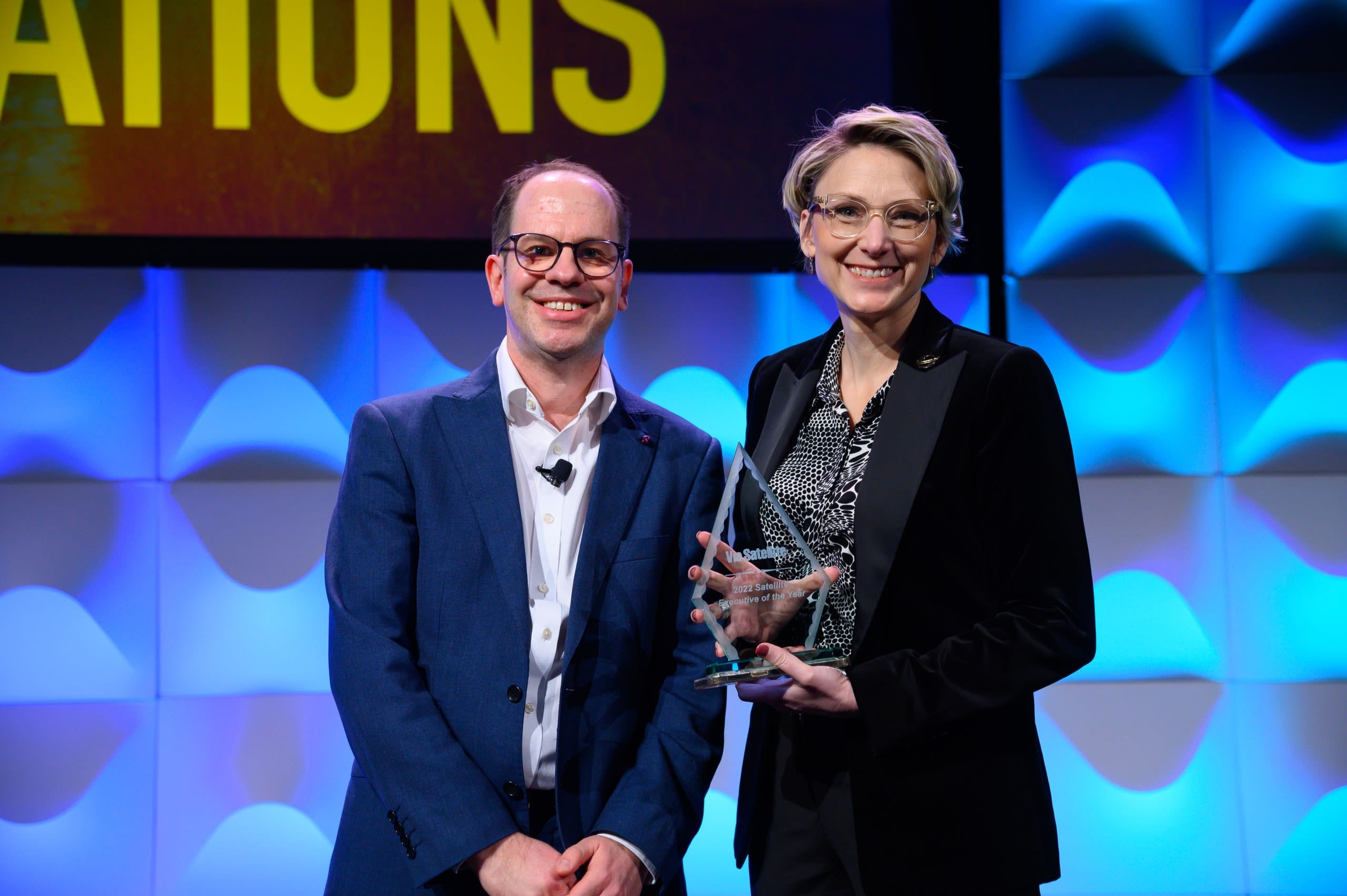
Recognition followed her work at Slingshot. Inc. included her in its 2019 Female Founders 100. She received the 2022 Satellite Executive of the Year award, presented in 2023. Her public-service work also extended to the National Space Council’s Users Advisory Group and the FAA’s Commercial Space Transportation Advisory Committee.
06After the founder’s desk
In August 2023, Stricklan resigned from Slingshot. Her public note later that year thanked the advisers, colleagues and friends who had supported the company, expressed confidence in its technology, and pointed toward another initiative. She left a company she had helped create; her interest in the space industry continued well beyond its boundaries.
In March 2024, she became the first executive director of Space Workforce 2030, in a partnership between Space Foundation and The Aerospace Corporation. The initiative, subsequently known as Space Workforce for Tomorrow, brought companies together around the work of inspiring, preparing and employing space professionals. She later served as Space Foundation’s chief innovation and advancement officer.
The coalition had mechanisms more concrete than a recruiting slogan. Member companies shared workforce data, with aggregate findings made public. Its National Space Intern program connected students and employers. Plans for National Space Day combined in-person activity with streaming, extending the invitation beyond students already within easy reach of a space employer.
She could recognize the audience. She had been a child with an interest in space and few nearby opportunities to pursue it. Reaching more children in places like that linked a personal experience to an industry’s recruitment needs. Her route through enlisted service, further study and officer training also gave her an example of a career built in stages.
Her accounts of leadership leave room for candor. She has urged leaders to admit difficulties and recruit people with strengths beyond their own. Helping a team succeed includes giving it resources, developing its people and making demanding personnel decisions. The generosity comes with expectations. Someone still has to do the work.
“Keep looking up.”
Stricklan’s advice to her younger self
07The next assignment is at Vast
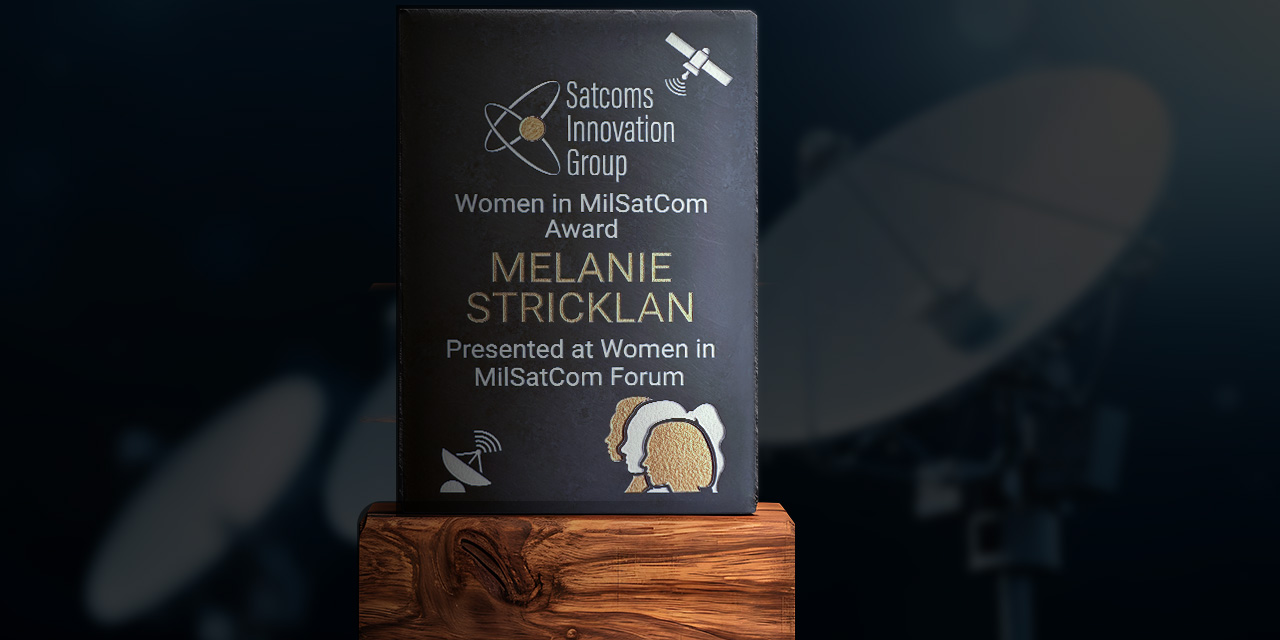
In November 2025, the Satcoms Innovation Group and SAE Media Group named Stricklan the winner of their Women in MilSatCom Innovation Award. Presented in London, it recognized contributions connecting military operational experience with commercial space capabilities. The recognition arrived after her Slingshot tenure and during her work on the industry’s workforce.
On July 22, 2026, Vast announced her appointment as senior vice president of Special Programs. The new division was established to serve U.S. defense and intelligence customers. Its remit draws on the company’s commercial platforms, engineering and manufacturing, with work across classified and unclassified programs.
The appointment brings several parts of her career together. She has worked inside military operations, helped build a commercial company, and coordinated an industry workforce initiative. At Vast, the task is to connect commercial space capabilities with national-security requirements. The announcement establishes a new responsibility, with the division’s work still ahead.
Looking back, the bedroom in West Texas seems less remote from this career than the mileage suggests. Someone explained what was moving overhead. A librarian helped her find an address. NASA sent something back. Years later, she would help build tools for people who needed to understand those movements, and programs for people hoping to join them. The envelopes had found their reader.
Keep looking up
Follow her work
Vast - Special Programs appointment Slingshot Aerospace - company profile Melanie Stricklan on LinkedInWatch & listen
YouTube - How images from space help us protect the earth Electrifying Growth - the founder conversation The Vector - building the space workforceRead further
Via Satellite - Integrity and Grit Space Foundation - the workforce appointment Satcoms Innovation Group - the 2025 award