The battery is an unusually good place to begin a story about a military drone. In November 2024, describing Red Cat’s new Black Widow and its WEB controller, then-chief technology officer George Matus pointed out that the two devices used the same battery. No second species of charger to remember. No separate stock of power packs to nurse. A modest convenience, until you consider the person carrying it.
- Red Cat builds small reconnaissance drones and integrated robotic systems for defense and government buyers.
- It sold its consumer businesses in 2024 and concentrated on military customers.
- Army selection brought demand; manufacturing brought costs. In 2025, revenue reached $40.7 million while net loss reached $72.1 million.
- Its next bet extends the platform approach into uncrewed boats and collaborative autonomy.
A soldier needs information about the next stretch of road, the other side of a ridge, or a possible landing zone. The useful aircraft must travel with that soldier, work with existing equipment, and tolerate the indignities of actual use. A drone that looks splendid in a demonstration can still be an awkward colleague in the field.
Red Cat’s answer is a system: aircraft, camera, radio, controller, and connections to other mission tools. The company’s distinctive wager is that this collection can be made portable, repairable, and adaptable enough to win military business. The shared battery supplies a small, legible version of the argument. Convenience becomes operational capacity when every extra object must be carried.
Selling the hobby shop
Red Cat arrived here by editing its own portfolio. Founder Jeff Thompson came from telecommunications, having built businesses including EdgeNet and Towerstream. Red Cat’s drone operating business dates to 2016. In 2019, the acquisition of his Red Cat Propware put Thompson in charge of the public company.
For a time, the group contained both military technology and the pleasures of recreational flying. Rotor Riot served the FPV community; Fat Shark made the goggles that put pilots inside the aircraft’s viewpoint. They were sold to Unusual Machines in February 2024 for consideration valued at $20 million, subject to adjustments.
The composition of that price deserves attention: $1 million in cash, a $2 million promissory note, and $17 million in stock. A sale price and a bank balance are different things. Red Cat’s filings described the decision as a way to concentrate effort and capital on defense, where management believed the opportunities for long-term shareholder value were greater.
There is no need to invent a moment of revelation. The recorded change of mind is a transaction. The company relinquished the consumer segment and redirected its attention toward a buyer whose requirements could shape the aircraft itself.
A family with different jobs
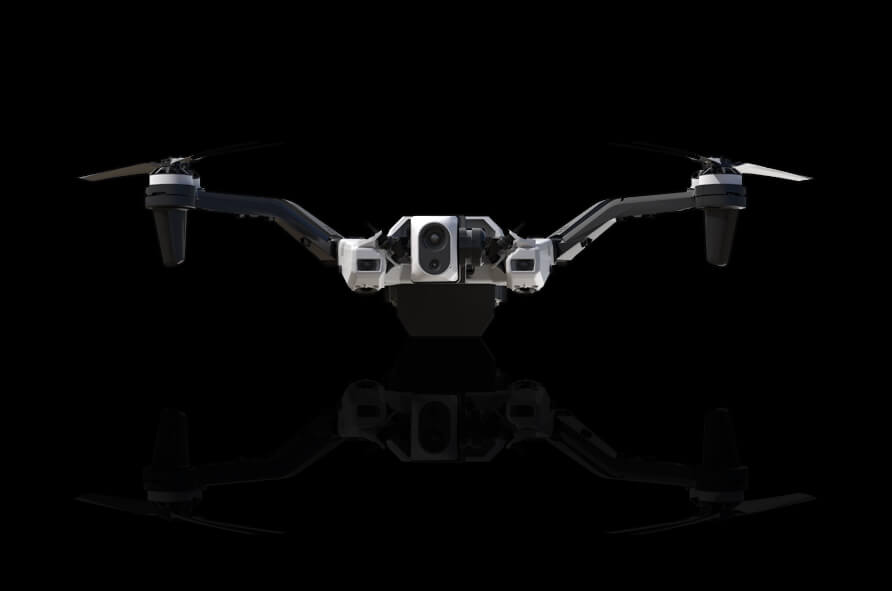
Teal Drones supplies Black Widow, the short-range reconnaissance quadcopter around which much of this story turns. Its modular arms and field-repairable architecture treat damage as a practical possibility. Its Teledyne FLIR payload provides optical and thermal imagery. The advertised capabilities include mapping options, visual navigation, and radio features intended to improve operation in contested environments.
Those capabilities have configurations and conditions attached. Red Cat currently advertises more than 50 minutes of flight time under standard atmospheric pressure. A buyer still has to evaluate the aircraft with the required payload, mission profile, and operating environment. A specification is a useful starting point for a trial.
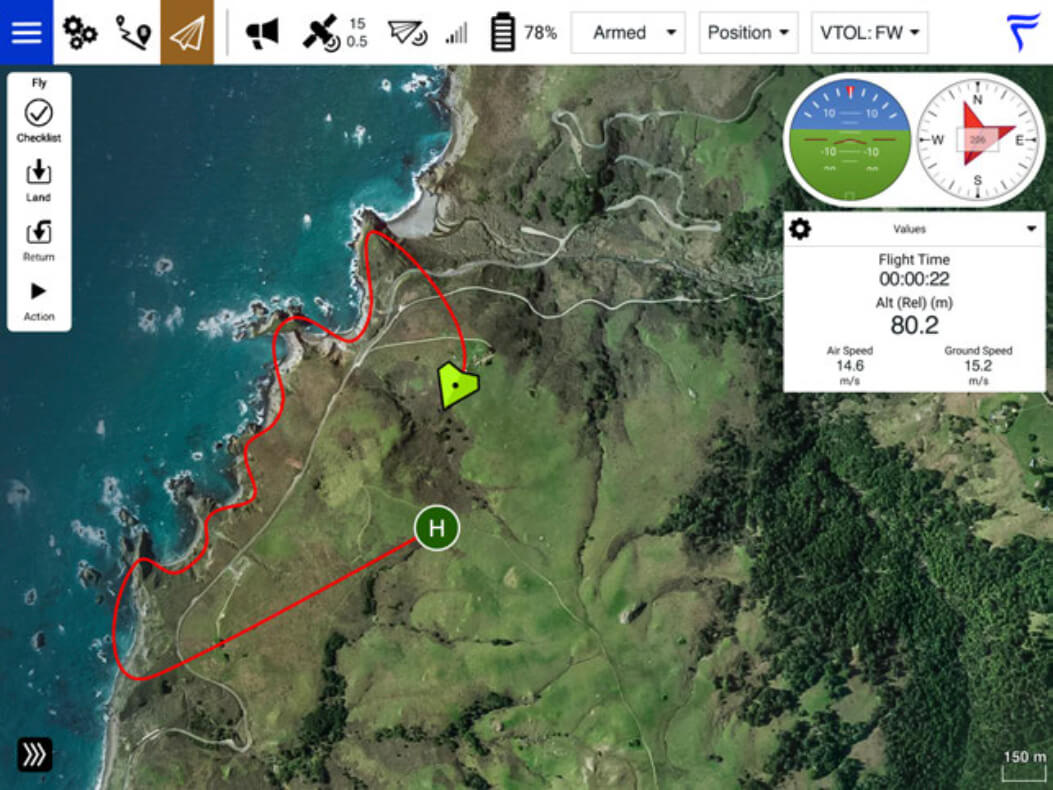
FlightWave’s Edge 130 serves another job. A hybrid fixed-wing VTOL tricopter, it can take off vertically and transition to forward flight. Wings make sense when the task calls for covering ground rather than hovering over one spot. The brochure advertises flights of more than 60 minutes and coverage of more than 1,600 acres; these are manufacturer claims, rather than promises about every sortie.
Short-range ISR
VTOL + fixed wing
Manual flight
FANG F7 adds a seven-inch FPV aircraft marketed for training and tactical operations. The current product page describes full manual control and a recoverable design. Repeated practice is part of its value proposition: operators can develop proficiency without treating every flight as a disposable purchase. Red Cat markets the platform as NDAA compliant, an important procurement distinction for its intended customers.
The expensive interval between selection and shipment
In November 2024, Red Cat announced the Army’s production selection for its Short Range Reconnaissance program. The accompanying briefing offered a revealing design account. “We designed Black Widow to meet the Army’s nearly 100 technical requirements,” Matus said. Soldier feedback, he explained, had been incorporated from the start.
The announced Army acquisition objective was 5,880 systems over five years, subject to change. That was a planning figure. A July 2025 contract for up to 690 Black Widow systems was a more concrete step. Keeping those two numbers separate is essential to understanding this business.
The transition also disturbed the existing revenue stream. Red Cat’s report for the eight-month period ending December 2024 described lower sales as manufacturing shifted from Teal 2 to Black Widow. The first visible strain was in the handover between products: the next aircraft could be strategically more important while the current period’s sales went backward.
Calendar-year figures. Loss shown as a magnitude; these are different accounting measures, not components to subtract.
Red Cat financed expansion through the public market. Its April, June, and September 2025 equity transactions raised approximately $30 million, $46.8 million, and $172.5 million gross, respectively. That money had expenses and dilution attached. It helped finance the effort to turn a product selection into a deliverable stream of systems.
By the second quarter of 2026, revenue was $20.2 million and gross margin was 16.1%. The quarterly net loss was approximately $35.3 million. Sales growth and improving gross margin showed progress in production economics; the company remained far from net profitability. Buying inventory, expanding operations, and paying for development can consume cash long before a customer receives the finished machine.
The Army keeps the competition alive
The tempting version of the story has a winner, a defeated incumbent, and a happily-ever-after purchase order. The Army’s own account is more interesting. It describes Black Widow and Skydio X10D supporting its Transformation in Contact brigades and explicitly endorses continued competition among suppliers.
“Continuous iteration and integration of new technology, multi-vendor awards and continuous competition”Col. Danielle Medaglia, U.S. Army, 2025
Skydio subsequently announced a March 2026 Army order exceeding $52 million for more than 2,500 X10D drones. Red Cat’s selection therefore sits inside an active competitive market. A manufacturer must keep earning its place through capability, price, delivery, and the next round of requirements.
Red Cat also chooses collaboration where it could attempt self-sufficiency. Its Futures Initiative brings specialist robotics and software partners together to integrate and validate technology. Palantir’s visual-navigation work, FLIR’s imaging, and other mission software enlarge what the aircraft can do without requiring Red Cat to invent every component.
For customers, that offers a route to tailoring systems around a mission. For suppliers, it offers a route into a larger platform. The trade-off is integration work: a collection of capable parts still has to behave as one usable machine. The platform is valuable only when those connections survive contact with the operator’s actual task.
Now the factory has a waterfront
Blue Ops takes this approach into uncrewed surface vessels. In August 2026, it announced a partnership with Havoc to integrate collaborative autonomy and command capabilities across its maritime portfolio, including Variant 7. The announced objective is coordinated vessel operation; the agreement describes work to be done.
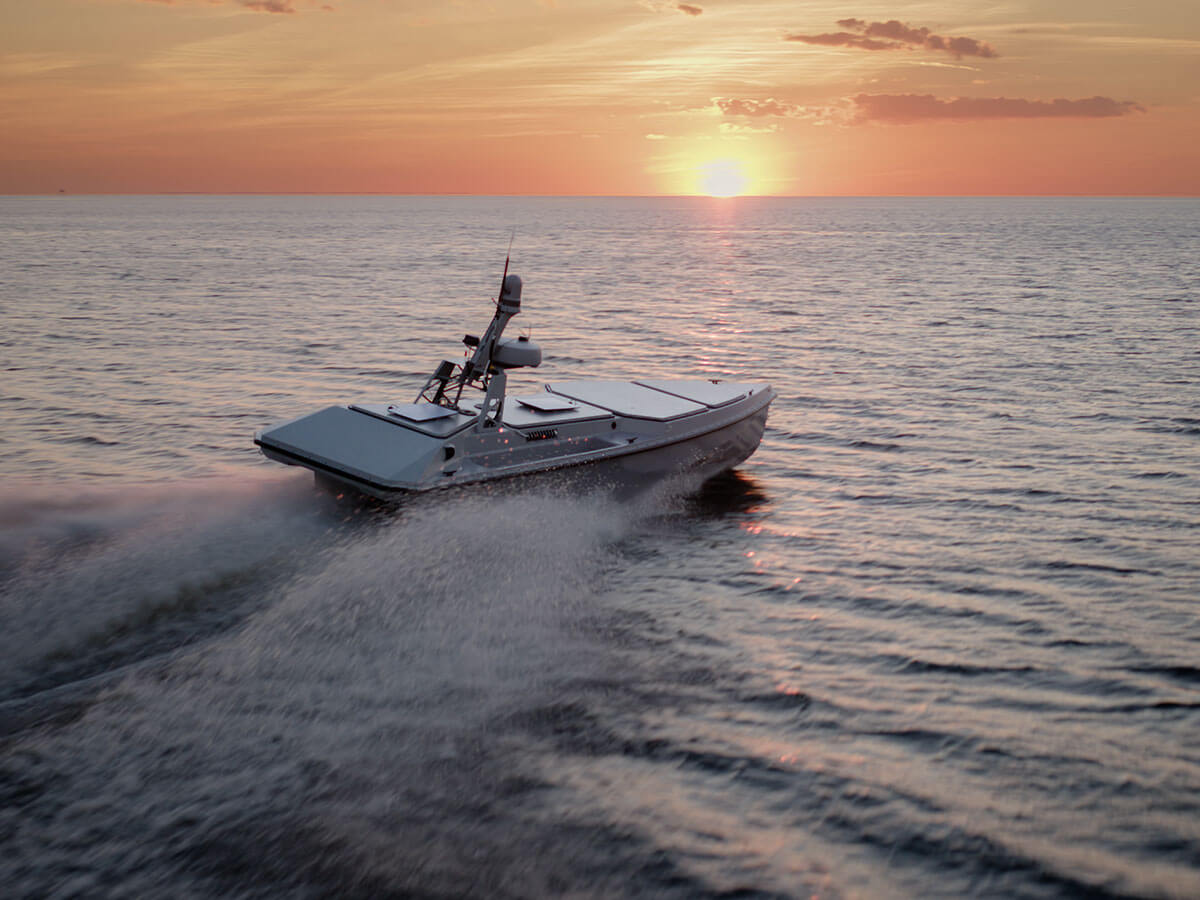
The physical commitment is easier to picture. Blue Ops leased a 155,000-square-foot facility in Valdosta, Georgia, in September 2025. A year later, Red Cat reported a production ramp and plans to invest $30 million and create more than 200 local jobs. Those employment and investment numbers are plans, rather than completed totals.
The lesson other builders can copy begins well before the waterfront: choose a customer closely enough to understand the inconvenience, design around it, and make room for specialist partners. Red Cat’s shared battery and repairable aircraft explain that lesson better than an expansive slogan about autonomy.
The approach depends on buyers who value those attributes enough to fund them, sustained procurement, and a factory able to deliver at workable margins. It becomes much harder when orders slip, mission requirements change, or integration and production costs outrun the price. Red Cat has found an important customer. Its continuing test is to build the business that customer needs.