A conference room can be exquisitely equipped and utterly useless. Put a good camera above the screen, arrange the microphones, polish the table. Then send it an invitation from a platform it cannot join. The meeting begins somewhere else. The equipment waits politely, like a guest who has arrived at the wrong wedding.
Lifesize has spent more than two decades working on versions of this problem. First, it made distant people easier to see. Then it moved the machinery of their meetings into the cloud. Today, one of its selling points is helping its room systems join calls on Microsoft Teams, Zoom, Google Meet and Cisco Webex. A company that once sold its own vision of the meeting now helps customers enter somebody else’s.
- Lifesize combines cloud meetings with dedicated conference room hardware.
- Its customers need distributed teams, guests and physical rooms to work together.
- Enghouse bought substantially all its assets in 2023 after a Chapter 11 filing.
- Its current gateway strategy lets existing rooms follow the meeting invitation.
The first bet was on the picture
Craig Malloy and Michael Kenoyer founded the Austin business in 2003. Its initial name, KMV Technologies, sounded less like an invitation to converse than a label on a filing cabinet. By 2005, LifeSize had introduced an HD room endpoint. The proposition was easy to grasp: if video meetings were going to replace some travel, the people on the screen ought to look like people worth talking to.
There was a substantial market for that proposition. When Logitech announced its agreement to buy LifeSize in November 2009, it put the cash price at $405 million and described more than 9,000 customers across 80 countries. The buyers included large companies, smaller businesses and public organizations in healthcare, education and government. Logitech intended to keep the operation in Austin as a separate division.
The expertise lived in several places at once: optics, audio, video compression, network behavior and the small decisions that make a room usable. Those remain connected problems. A clear image does little good when the microphone makes everyone sound as though they are speaking from a drawer.
The expensive box loses its job
The original business also sold dedicated infrastructure for customers’ data centers. In a Mixergy interview, Malloy recalled equipment purchases that could run to $100,000 or $200,000 or more. That bought a way to operate video communications on the customer’s premises. It also gave the customer equipment to own and manage.
Cloud services changed the calculation. Customers could buy access to a hosted system instead of installing all the underlying machinery themselves. Malloy described this change as the reason the old business needed a transformation. The camera could remain in the room while the infrastructure behind the call moved elsewhere.
Lifesize Cloud arrived in May 2014, connecting rooms with laptops and mobile devices. Its launch pricing began at $25 per user per month on annual plans. This was a different commercial relationship: earn subscription revenue over time, while making the service useful enough for people to keep using it.
“The cloud service deployment model has changed everything.”Craig Malloy, speaking to eWeek in 2016
The internal change was costly. In 2016, Malloy told eWeek that the transition had taken “two years of pain.” Headcount had fallen from 550 to 250 and operating expenses from $142 million to $52 million. The same report put paid cloud customers at more than 3,200. Adoption and retrenchment were happening inside the same story.
Logitech announced the separation in December 2015. Redpoint Ventures, Sutter Hill Ventures and Meritech Capital Partners invested $17.5 million, while Logitech retained a 37.5 percent stake immediately after the investment. Independence gave the cloud business a different ownership arrangement. It did not make the transition free.
HD video endpoints
Cloud meetings across devices
Gateway access to other platforms
What the buyer actually buys
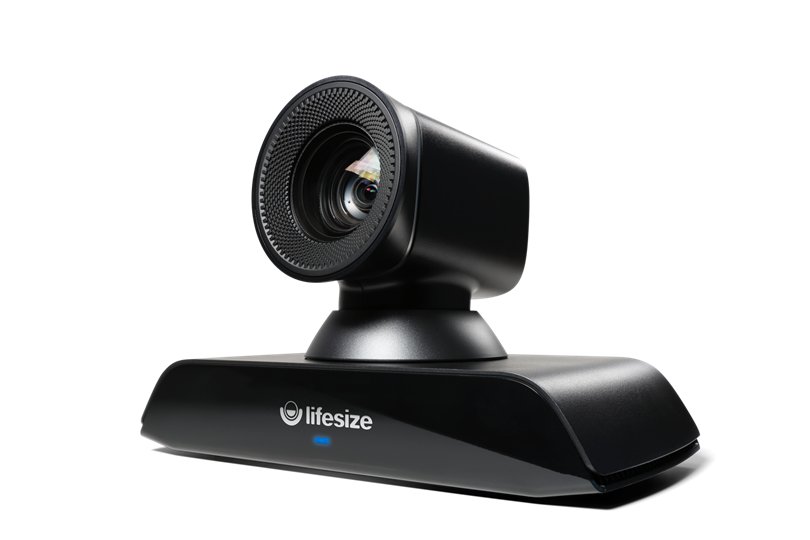
Lifesize’s products are easiest to understand by following a meeting. The Icon system supplies the room’s video equipment. Phone HD gives participants a touchscreen for call control and audio. Lifesize Cloud provides the meeting service across room and personal devices. Record & Share lets an organization capture meetings for later use, where its subscription includes that capability.
Other products address smaller indignities. Lifesize Share is a wireless presentation device. Its appeal is recognizable to anyone who has watched a meeting surrender five minutes to the search for a cable. The company’s support material explains how guests can present without a Lifesize account, provided they are connected to the network.
The revenue model combines hardware with recurring cloud, device software and support services. Device Software Subscription documentation lists updates, centralized device management, support and hardware replacement under applicable terms. That means a procurement decision extends beyond the price of the object on the table.
Icon 700 launch list price, December 2018.
Room deployment and recurring services add to the equipment bill.
Icon 700’s 2018 launch paired a 4K room system with a new global cloud architecture. Resolution gave the company a concrete way to distinguish its offering. But a specification is conditional. The Icon 500 data sheet, for example, lists 6 Mbps for 4K and limits multiway calls to 1080p30. Devices, network conditions and the type of call all affect what arrives on the screen.
A buyer should therefore demo the actual use case: the room, the remote participant, the presentation and the invitation the organization expects to receive. A beautiful demonstration between two compatible systems cannot answer every question about everyday use.
More video did not mean more rooms
In March 2020, Marlin Equity Partners acquired Lifesize and combined it with Serenova. The latter brought cloud contact center software into the business. The combined company reported more than 10,000 customers and a channel ecosystem exceeding 5,000 active resellers, agents and distributors. These were figures for the combination, rather than a count of Lifesize meeting subscribers alone.
The contact center made the proposition broader. An internal team might need a meeting; a service agent might need to handle a customer across voice, email or chat. CxEngage remains the associated omnichannel offering on Enghouse’s Lifesize page. It solves a different operational problem from equipping a boardroom, even when both activities involve communication.
The pandemic exposed an awkward distinction within the video business. People needed remote conversations. They did not necessarily need to buy equipment for an office they could not enter. In the May 2023 acquisition announcement, Lifesize’s restructuring officer Marc Bilbao attributed financial strain to the abrupt loss of demand for in-office conferencing. That is the company’s stated explanation, rather than a complete independent accounting of its difficulties.
Lifesize filed for Chapter 11 in May. On August 1, Enghouse announced that it had completed a court-approved purchase of substantially all the assets for approximately $20.7 million, subject to adjustments. The technology entered a portfolio that already included Vidyo. A comparison with the $405 million Logitech deal is arresting, but the two prices describe different transactions, fourteen years apart. They are not interchangeable valuations.
The invitation gets the deciding vote
Today, Lifesize competes with meeting platforms such as Teams, Zoom, Meet and Webex while also providing a way to join them. Connect Plus Gateway is the practical expression of that position. A customer can preserve a Lifesize room and use it for meetings hosted on several platforms. The equipment’s usefulness can outlast a particular choice of meeting software.
In January 2025, Enghouse announced Call by ID through that gateway. Users enter a meeting ID on their Icon device to join a supported call. The announcement described it as a free upgrade for existing customers with active services. Removing dependence on calendar integration matters for organizations whose scheduling arrangements do not fit the usual assumptions.
The fit is strongest where physical rooms remain useful and participants arrive from different software environments. A small team that works entirely from laptops may have little reason to invest in dedicated room equipment. An organization with demanding data residency rules needs to examine the exact service and deployment. Neither a gateway nor a 4K lens resolves those questions by itself.
There is a lesson here for people who build products. Separate the customer’s task from the machinery that once accomplished it. Lifesize kept its room expertise while changing how meetings were delivered and which platforms those rooms could reach. The copyable practice is to test the handoff: can an ordinary user move from an invitation to a working conversation?
The company’s historical customer success team called itself The Dream Team. Its work, described in a Gainsight case study, included teaching administrators and users how to put the product to use. The nickname was jaunty; the job was necessary. Even an excellent camera cannot persuade someone to stop using the workaround they already know.
A useful meeting room earns its place each time people can walk in, join the right call and get on with it. Lifesize’s current pitch makes room for an unromantic possibility: the right call may belong to a rival. For the people waiting at the table, that is a perfectly respectable outcome.
Take a closer look
Explore Lifesize, product support and the Call by ID announcement.
Follow Lifesize on LinkedIn, X, Facebook and Enghouse Video.
Watch & listen
↗ Lifesize Share: product demonstration↗ Connecting an Icon system to Lifesize Cloud↗ Craig Malloy: the founder interview