For a company that builds blockchains, Parity Technologies has arrived at a wonderfully awkward assignment: make the blockchain less noticeable. After years spent on the machinery behind Polkadot, its engineers are working on the things people encounter first - signing in, publishing an app, sending a message. The question has become whether all that technical ambition can survive contact with an ordinary afternoon.
The shift is explicit. In July 2026, Parity described an emerging application environment that would give developers common services for identity, signing and other recurring chores. Trinity and the forthcoming Polkadot Products Platform sit at the center of that direction. Instead of assembling the same infrastructure for every application, teams would inherit more of it.
That is a substantial assignment for a business whose influence has mostly sat beneath other people’s products. Parity is a private software company, a core contributor to Polkadot and a builder of open-source tools. Polkadot is the network. Web3 Foundation is a separate organization. Keeping those nouns straight makes the company considerably easier to understand.
The Ethereum engineers who wanted more room
Parity began in 2015 as ETHCore. Gavin Wood, an Ethereum co-founder, and Jutta Steiner, formerly Ethereum’s security chief, were among its founders. Wood’s own account names Aeron Buchanan, TJ Saw and Ken Kappler alongside them; Björn Wagner joined as a co-founder the following year. The origin story has a larger cast than the usual two-name shorthand.
The early calling card was Parity Ethereum, a client written in Rust. A blockchain client is the software that lets a computer participate in a network: checking activity and keeping its account of what happened. This was infrastructure for developers and operators, the kind of software whose success often means somebody else gets the attention.
Polkadot gave the team a broader design problem. Rather than force every application into one chain’s rules, it would connect chains with different purposes through shared security and communication. Parity worked with Web3 Foundation on the network’s 2020 launch. Its technical identity increasingly became bound to that architecture.
A toolbox for people who need their own rules
The Polkadot SDK packages much of the practical work. It brings together Substrate and related components used to build blockchains, including FRAME’s reusable runtime modules and Cumulus tooling for connecting a chain to Polkadot. Developers can select existing pieces, change behavior and write the parts that make their project distinctive.
That matters when an application needs control over the rules beneath it. A team can design a custom runtime instead of accepting every constraint of a general-purpose chain. The trade is responsibility: choosing modules does not eliminate testing, operations or the need to understand how those modules interact. A toolbox still expects someone to build the house.
Mythical Games provides a concrete example of the audience. Parity published a Mythos parachain node repository and discussed engineering work around the chain’s Polkadot deployment. The repository includes instructions for compiling the node and running local test networks. This is the company’s expertise in visible form: distributed systems, Rust engineering and the unglamorous work of making a network run.
Its market neighbors include the Cosmos SDK, another route to custom blockchains, and the Ethereum ecosystem, where teams can build contracts or rollups. These are choices about architecture and developer experience. Parity’s pitch through Polkadot combines customization with a common security framework. For a team that only needs a straightforward application, owning more of the stack may be unnecessary work.
Shared network security does not replace an application audit.
The first purchase got smaller
Architecture was only part of the obstacle. Polkadot originally allocated slots through auctions requiring long commitments. For a young team, securing access could become a financing exercise before the product had proved itself. The network’s initial arrangement favored projects prepared to commit to an entire core.
Agile Coretime, which went live on September 19, 2024, changed that arrangement. Access could be bought in bulk or on demand, removing the requirement to win a slot auction. The underlying idea is familiar outside crypto: let people buy the amount of a resource they need, with more flexibility about when they need it.
Parity’s 2024 ecosystem report recorded the first coretime purchase that October at 69 DOT for a core. That is a historical transaction, not a current quote. It illustrates the new mechanism without pretending that every team faces the same bill. Development labor, audits, infrastructure and ongoing operations remain separate costs.
The lesson other infrastructure businesses can copy is to examine the commitment required before a customer learns anything useful. A technically capable system can still have an expensive front door. Smaller purchases make experimentation easier; they cannot supply the demand for the application being built.
Open code, real bills
Parity’s corporate finances belong in a different column from network economics. Its early funding included a reported $750,000 round in April 2016 backed by Blockchain Capital and Fenbushi Capital. In January 2019, the Ethereum Foundation announced a $5 million grant for work including scaling, developer tools, testing and infrastructure improvements.
The grant was structured in tranches, with later payments tied to technical milestones. Parity also undertook Polkadot development commissioned by Web3 Foundation. Together, those arrangements show a business built around funded engineering of shared infrastructure. They do not turn every user of its code into a subscriber, or every DOT transaction into company income.
April 2016
January 2019
That distinction matters when judging scale. Parity describes its work as enabling thousands of developers; its careers page points to more than 600 projects in the Polkadot ecosystem. Those are ecosystem claims, not a count of paying accounts. Open-source adoption can spread far beyond the organization that pays for the next release.
The wallet failures belong in the story
Parity’s reputation also carries a costly earlier chapter. In July 2017, a vulnerability in its multisignature wallet contracts allowed an attacker to take ownership and drain 153,037 ether from three wallets. OpenZeppelin’s analysis put the loss at roughly $30 million at the time. The exposed initialization logic let an outsider change who controlled the money.
November brought a different failure. A user took ownership of a shared wallet library and destroyed it, disabling a component on which other wallets depended. The published postmortem recorded 587 affected wallets holding 513,774.16 ether, plus tokens. Those funds were frozen by the loss of executable functionality. The two incidents should not be collapsed into one hack.
The practical warning is specific. Reusing code can reduce duplication while concentrating risk in a common dependency. Reviewing the front-facing application is insufficient if an overlooked initialization or destruction path can defeat the whole design. For anyone copying Parity’s modular approach, the dependency map deserves as much attention as the feature list.
“I’m a thinker, coder, designer and architect.”
Gavin Wood / October 2022
A company built for deep work had to change
Wood’s 2022 leadership announcement captured the engineering temperament: “I’m a thinker, coder, designer and architect.” He handed the CEO role to Wagner and became Chief Architect, describing a preference for long, uninterrupted stretches of technical work. In July 2026, he confirmed that he had returned as CEO during 2025.
The organization had changed in between. In October 2023, Parity outlined a move toward decentralized ecosystem teams for some go-to-market functions. Bloomberg reported a planned reduction of about 30 percent of staff, roughly 100 jobs, as the company refocused on technology. Decentralization was also an organizational decision with a human cost.
Today its recruiting material describes a remote-first company with people from more than 30 countries and hubs in Berlin, Lisbon, London and Zug. Asynchronous collaboration sits alongside meetups and technical workshops. That arrangement suits specialized engineers scattered across time zones, though shipping a coherent product also requires decisions to converge.

A festival demo, and the work after it
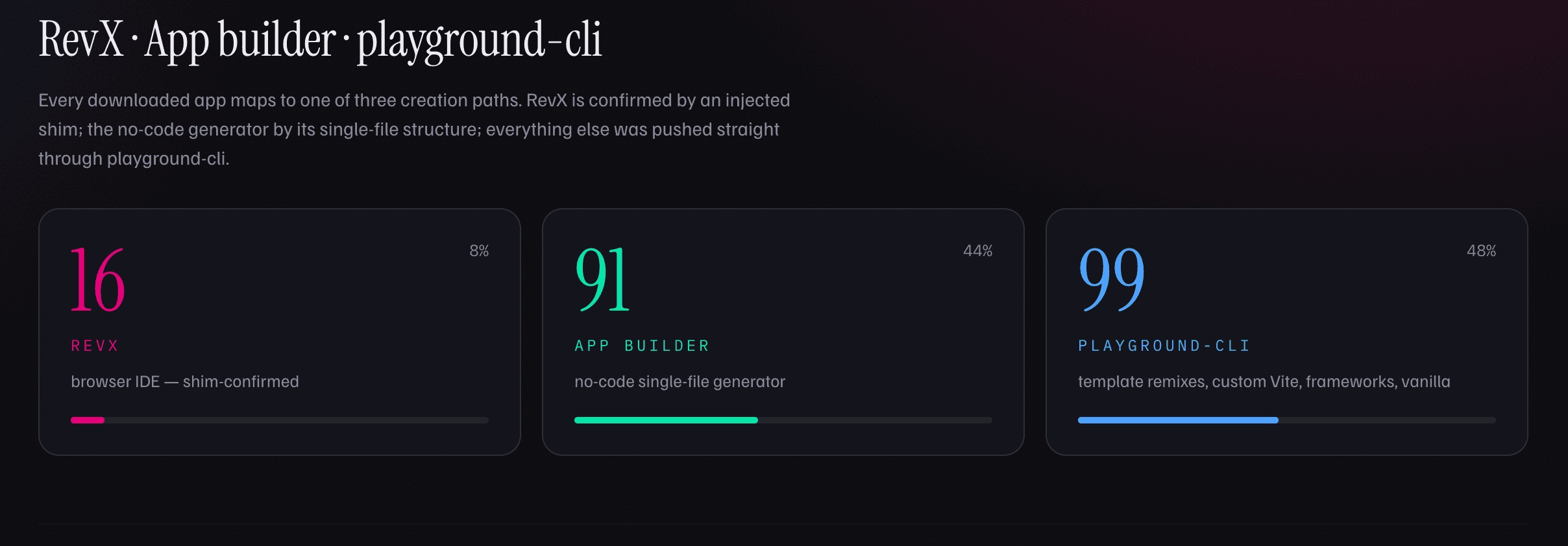
At Web3 Summit 2026, Parity tested its usability argument with Playground. According to its account, 190 people deployed applications over two days. Participants received the resources they needed through a bundled approval flow, rather than being asked to acquire tokens and assemble the infrastructure themselves. Fees were handled in the background.
The reported results included 272 published domains and 49 apps forked from other builders’ code. One much-remixed project grew out of a four-hour Deutsche Bahn delay: a Proof of Delay app. Even the railway’s contribution to developer productivity was, apparently, indirect.
The important boundary is that this was a temporary demonstration network, subsequently wound down. It showed an onboarding approach under event conditions. It did not establish production economics or long-term reliability. For product teams elsewhere, the useful experiment is to bundle the setup, then watch what newcomers manage to build.
More pieces are appearing. An August 2026 explanation detailed Humanity, an experimental system combining social recognition with privacy-preserving proofs to establish that someone is a unique participant. It is designed to answer a narrower question than legal identity. That could help communities resist duplicate participation without demanding a passport.
On September 7, Parity explained Statement Store, also called Celerity, for signed messages passed between nodes off-chain. It could support signaling for communication apps, but delivery is best-effort: encryption, ordering and stronger reliability are application responsibilities. The limits are part of the design, and developers need to choose accordingly.
Wood’s July note put the immediate assignment plainly: “Now the job is to deliver”. He described taking proofs of concept and hardening them into software people could use. Parity has supplied plenty for engineers to inspect. Its next audience will be less interested in inspecting the machinery, and more interested in getting something done before lunch.