Tagged: distributed-systems
25 results
Jon Plax
Jon Plax is a Vice President of Software Engineering (Customer Centric Engineering) at Salesforce, where he has spent the bulk of a 23+ year career building and leading globally distributed engineering teams. Known internally as a technically deep yet empathy-driven leader, he has tackled some of Salesforce's most complex scaling challenges - JVM tuning, database bottlenecks, and multi-continent team coordination. He spent five years in Salesforce's Dublin office, briefly detoured to Bumble, then returned to Salesforce. A photography hobbyist with a consistent 'spaceman1066' handle across the internet, he is married to Talia Bailey Plax, a product marketing leader at Atlassian.
Dylan Cui
Dylan Cui is a co-founder of PingCAP, the company behind TiDB - one of the world's most widely adopted open-source distributed SQL databases. A software engineer by trade, Dylan co-built TiDB from scratch starting in 2015 after experiencing firsthand the pain of database scaling at scale while working at Wandoujia. PingCAP has raised over $341 million and TiDB has more than 33,000 GitHub stars, serving thousands of enterprises globally across fintech, gaming, and e-commerce.

Anand Periasamy
Anand Babu 'AB' Periasamy is the Co-Founder and CEO of MinIO, the world's most widely deployed open-source object storage platform with over 2 million Docker pulls per day. A serial entrepreneur from Tamil Nadu, India, he previously co-founded Gluster Inc. — the distributed file system company acquired by Red Hat for $136 million in 2011. With MinIO, he built a Kubernetes-native, Amazon S3-compatible storage engine that became foundational infrastructure for AI, machine learning, and data-lake workloads. In January 2022, MinIO closed a $103M Series B at a $1 billion valuation, cementing its unicorn status with backing from Intel Capital, SoftBank Vision Fund 2, Dell Technologies Capital, General Catalyst, and Nexus Venture Partners.

Ankur Goyal
Ankur Goyal is the Founder & CEO of Braintrust, a San Francisco-based AI evaluation and observability platform that helps engineering teams ship reliable AI products. Previously VP of Engineering at SingleStore (MemSQL) and founder of Impira (acquired by Figma in 2022), Goyal brings over a decade of distributed systems and ML infrastructure experience to the challenge of making AI applications production-ready. Braintrust has raised $121M in total funding, including an $80M Series B at an $800M valuation in February 2026, backed by ICONIQ Capital, Andreessen Horowitz, and a roster of elite angels including Greg Brockman and Elad Gil.

Hitoshi Harada
Hitoshi Harada is the Co-Founder, CTO, and CPO of Alpaca Markets - the fintech unicorn building what he calls the 'Global Financial OS.' A Keio University-trained computer scientist who rewrote parts of PostgreSQL (Window Functions, PL/v8), Harada spent years building distributed databases at Greenplum before co-founding Alpaca in 2015 with Yoshi Yokokawa. The company, named after an alpaca they spotted on a Silicon Valley billionaire's estate, has grown to command 94% of the global tokenized US equities market, serve 300+ financial institutions across 40+ countries, and reach unicorn status at $1.15B valuation with a $150M Series D in January 2026.
Max Liu
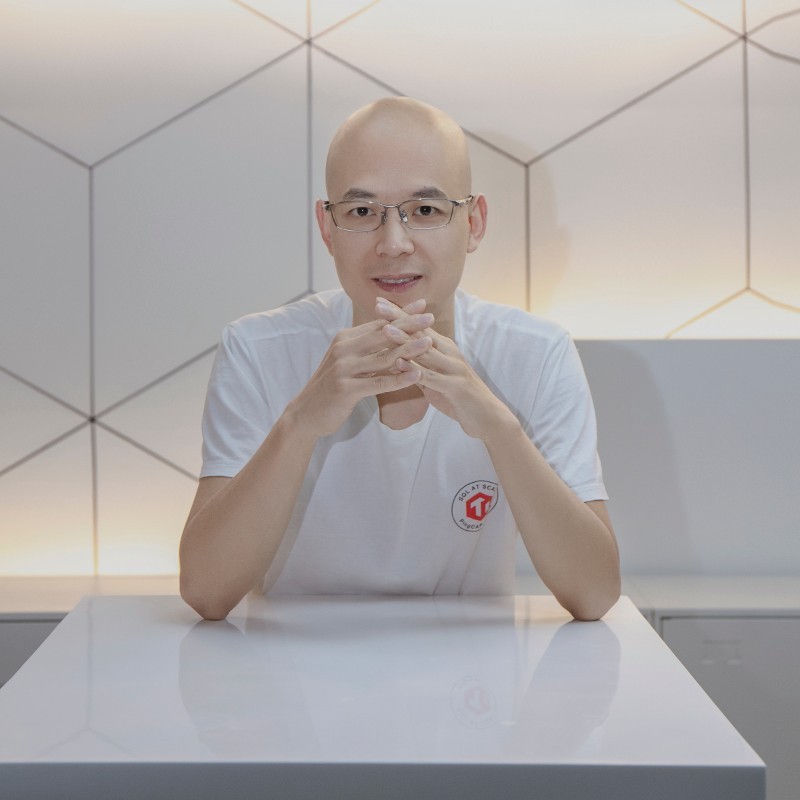
Max Liu (刘奇) is co-founder and CEO of PingCAP, the company behind TiDB - an open-source distributed SQL database designed for hybrid transactional and analytical processing (HTAP). He co-founded PingCAP in 2015 after stints at JD.com and Wandou Labs, solving the database scaling crisis at hyperscale. Under his leadership, PingCAP raised $341.6M in total funding including a $270M Series D, and TiDB now serves customers including Pinterest, Plaid, Bolt, and Atlassian. In 2025, Liu was named one of The Top 50 Software CEOs of 2024 by The Software Report.

Vadim Ogievetsky
Vadim Ogievetsky is the Co-Founder and Chief Experience Officer of Imply, the commercial company behind Apache Druid - the real-time analytics database powering data infrastructure at Netflix, Salesforce, Reddit, and 150+ enterprises. One of the original four co-authors of Apache Druid (launched 2011), he also co-created D3.js at Stanford's Visualization Group - the JavaScript charting library that became the foundation of modern data visualization on the web. Before Imply, he was UI Lead at Metamarkets (acquired by Snap). He built Plywood and Pivot, open-source tools for querying and exploring Druid data, and created KoalasToTheMax, a beloved interactive D3 visualization. Imply raised $215M total and reached unicorn status with a $100M Series D in May 2022.

Florian Leibert
Florian Leibert is a German-born software engineer turned venture capitalist who co-founded 468 Capital, a Berlin-based VC firm managing $1.3 billion across 100+ technology companies. Before VC, he co-founded Mesosphere (later D2iQ), which raised $252M and built the infrastructure layer for companies like Apple, Netflix, and SAP - and before that, he was the engineer at Twitter who helped slay the Fail Whale by architecting the distributed systems that kept the platform from collapsing under its own weight.

Byung-Gon Chun
Byung-Gon Chun is the CEO and Co-founder of FriendliAI, and a professor of Computer Science and Engineering at Seoul National University currently on leave. A systems researcher turned founder, he is best known for inventing continuous batching - the scheduling technique that became the default standard in every major LLM inference engine, from vLLM to TensorRT-LLM. His lab published the foundational ORCA paper at OSDI 2022, and he then turned that academic insight into FriendliAI, an enterprise AI inference platform that raised $26.7M and supports over 550,000 models from Hugging Face. With a career spanning Intel, Yahoo!, Microsoft, and Facebook, Chun brings rare depth across both research and production AI infrastructure.
Kannan Muthukkaruppan
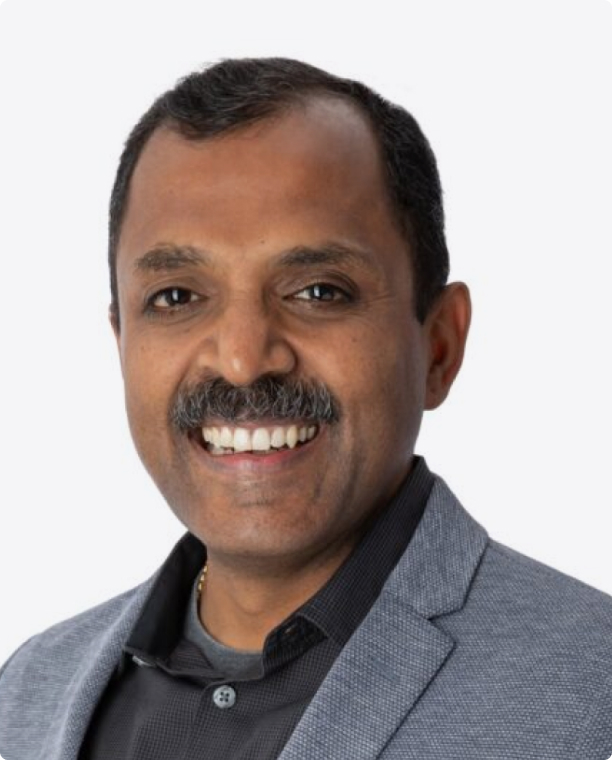
Kannan Muthukkaruppan is the Co-Founder and Co-CEO of Yugabyte, the company behind YugabyteDB — a PostgreSQL-compatible distributed SQL database built for cloud-native applications at global scale. A gold medalist from IIT Madras and UC Berkeley alumnus, Kannan spent 13 years at Oracle (PL/SQL compiler) and Facebook (scaling HBase for billions of users) before co-founding Yugabyte in 2016. Under his technical leadership, Yugabyte raised $298M in funding, achieved unicorn status at a $1.3B valuation, and built one of the most respected open-source distributed databases in the industry.

Ali Yahya
Ali Yahya is a General Partner at Andreessen Horowitz (a16z) where he leads the firm's crypto investing practice. A Stanford computer scientist and former Google Brain TensorFlow developer, he discovered Bitcoin in 2010 during security research and joined a16z in 2017 as its first full-time crypto investor. He has backed landmark bets including Solana and LayerZero, and is known for his deep technical thesis on privacy, zero-knowledge proofs, and the intersection of AI and crypto infrastructure. Off the charts, he runs a personal life operating system called walrOS built on 16 daily tracked habits and a spaced-repetition learning system.

Karthik Srinivasan
Karthik Srinivasan is the CTO of Studio at Forum Ventures, the AI venture studio co-building the next generation of B2B companies from concept to company. With 20+ years of product engineering across Travelocity, Getty Images, and his own startup Pixibo, Karthik brings a rare hybrid of hands-on builder instinct and startup architect thinking to a studio that has already launched 17 companies - helping domain experts turn ideas into fundable businesses at sprint speed without the usual technical debt hangover.

Juan Benet
Juan Benet (born Juan Batiz-Benet) is a Mexican-American computer scientist, founder and CEO of Protocol Labs, and the inventor of IPFS (InterPlanetary File System) and Filecoin. A Stanford-trained distributed systems engineer, he left Yahoo's orbit after a startup acquisition to build open-source protocols that challenge the foundational architecture of the web. His Filecoin ICO raised $257 million in 2017, and the network now holds over 15 EiB of decentralized storage. In 2026 he launched a podcast exploring neurotech and human intelligence augmentation - a signal that the architect of decentralized storage is now thinking about upgrading the human mind itself.

Alex Xu & Sahn Lam
Alex Xu and Sahn Lam are the co-founders of ByteByteGo, the premier technical education platform for system design. Together they built a newsletter with 1M+ subscribers, a YouTube channel with 500K+ subscribers, a GitHub repo with 82K+ stars, and a bestselling book series used by engineers at every major tech company to crack system design interviews. Alex, a CMU grad and former engineer at Twitter, Apple, and Zynga, handles the newsletter, books, and social media. Sahn, a UC Berkeley EECS grad and 25-year veteran of NetApp, Zynga, Ubiquity6, and Discord, leads YouTube content creation. Together they've turned a niche interview-prep subject into a global movement.

Cindy Sridharan
Cindy Sridharan is a distributed systems engineer, O'Reilly author, and influential technical writer based in San Francisco. Known online as @copyconstruct, she wrote the seminal O'Reilly book 'Distributed Systems Observability' and runs the Systems Distributed newsletter on Substack. She is widely respected for her long-form thinking on observability, testing in production, microservices architecture, and engineering culture. She spent years as an engineer at imgix, led the Prometheus user group in San Francisco, and has spoken at major industry conferences including QCon and GOTO. Her Medium essays on monitoring, testing, and systems thinking have shaped how a generation of engineers thinks about building resilient software.

Gregor Hohpe
Gregor Hohpe is a transformation architect, prolific author, and sought-after speaker who has spent decades helping organizations bridge the gap between boardroom strategy and engine-room engineering. Co-author of the canonical 'Enterprise Integration Patterns' (2003), he coined the concept of the 'Architect Elevator' - the idea that great architects must fluently move between executive suites and server racks. A former Google Cloud Technical Director, Singapore Smart Nation Fellow, and Chief Architect at Allianz SE, Hohpe now runs the Architect Elevator platform, writing, teaching, and consulting on IT strategy, cloud, and the art of making everyone else in the room smarter.

Jon Gjengset
Jon Gjengset is a principal engineer at Helsing, Rust systems programming educator, and author of 'Rust for Rustaceans' (No Starch Press). He holds a PhD from MIT CSAIL where he built Noria, a streaming dataflow database system offering up to 20x performance improvements. A prolific live-coder and YouTube educator since 2018, Jon co-founded ReadySet (a $29M-funded database startup), contributed to the Rust ecosystem, and teaches at MIT's Missing Semester. Based in Oslo, Norway, he is one of the most respected voices in the Rust community.

Kelsey Hightower
Kelsey Hightower is one of the most recognized figures in cloud-native computing - a self-taught engineer who rose from sleeping in his car to becoming a Distinguished Engineer (L9) at Google. Co-author of 'Kubernetes: Up and Running' and creator of the legendary 'Kubernetes The Hard Way' tutorial, he spent nearly a decade evangelizing Kubernetes and cloud-native practices before retiring from Google in 2023. Known for his disarming candor, human-first philosophy, and gift for making complex infrastructure accessible, Kelsey now serves as Board Director at Civo and continues to shape the future of platform engineering, AI, and open source sustainability.

Kris Nóva
Kris Nóva (1987-2023) was a principal engineer at GitHub, co-founder of The Nivenly Foundation, author, alpinist, and transgender activist who shaped the cloud-native infrastructure world. Best known for creating kubicorn, the Aurae runtime, and co-authoring Cloud Native Infrastructure with O'Reilly, she lived a life of radical generosity - growing Hachyderm from 700 to 40,000 users, founding the Privilege Escalation Foundation to support gender minorities in STEM, and writing Hacking Capitalism to help marginalized technologists navigate an industry that had once left her unhoused. She died on August 16, 2023, in a climbing accident in Seattle.

Laura Nolan
Laura Nolan is a Principal Engineer at Stanza Systems, a veteran Site Reliability Engineer, and one of tech's most credible voices on autonomous weapons ethics. After five years at Google - where she contributed to the seminal O'Reilly SRE book and resigned over Project Maven - and seven years at Slack as Senior Staff Engineer, she brings deep technical authority to both the reliability engineering world and the global debate over killer robots. Based in rural Ireland, she speaks at SREcon, QCon, and TED stages alike, writes the Responsible Computing newsletter on Substack, and holds seats on the USENIX Board and the SREcon Steering Committee.

Liz Fong-Jones
Liz Fong-Jones is a Technical Fellow at Honeycomb.io, renowned SRE practitioner, co-author of 'Observability Engineering' (O'Reilly), and one of the most influential voices in the observability and platform engineering space. With 18+ years in software engineering spanning Google (11 years) and Honeycomb, she bridges deep technical expertise with fierce advocacy for labor rights, trans inclusion, and workplace equity. She led the Google Walkout Strike Fund in 2018, founded the Solidarity Fund by Coworker, and sits on the OpenTelemetry governance committee - all while speaking at every major SRE and DevOps conference on Earth.

Sam Newman
Sam Newman is an independent consultant, author, and speaker who has spent over 25 years helping organisations navigate the messy realities of distributed systems. Best known for 'Building Microservices' - one of the most widely read technical books of its era - he runs Sam Newman and Associates from London, advising engineering teams worldwide on cloud architecture, microservices, and software resilience. A former ThoughtWorks principal, he is also the host of the Magpie Talk Show podcast and a sought-after conference speaker at events like QCon, NDC, and GOTO.

Theo Schlossnagle
Theo Schlossnagle is a serial entrepreneur, software engineer, and investor who has spent three decades pushing the edges of distributed systems and scalable infrastructure. Founder of OmniTI (1997), Circonus (2010), and General Partner at L42 Ventures, he is a Distinguished Member of the ACM, an IEEE member, co-chair of ACM's Queue Magazine, and the author of 'Scalable Internet Architectures'. Beyond software, he runs a butcher shop in Maryland, maintains a farm retreat in West Virginia, and has left Twitter for greener (and more federated) social pastures.

Dilawar Mahmood
Dilawar Mahmood is a machine learning engineer at ZeroEntropy (YC W25) in San Francisco, best known for four years at Apple where he optimized on-device models for Siri and Spotlight - work he once presented directly to Tim Cook at the Steve Jobs Theater. A Norwegian-educated engineer who left a comfortable career track to attend the Recurse Center and rediscover what programming actually feels like, he builds distributed ML frameworks in his spare time and is on record hating vibe coding.

Yao Fu
Yao Fu (符尧) is an AI researcher at xAI specializing in large language model reasoning, efficient inference, and distributed systems. A PhD graduate of the University of Edinburgh, he previously worked at Google DeepMind on Gemini 3 and Project Astra. With over 5,000 citations and key papers like ServerlessLLM (OSDI '24) and DuoAttention (ICLR '25), Fu bridges systems engineering and ML research. He writes the 'Yao Fu' newsletter on Notion and is known for the Chain-of-Thought Hub benchmark repository, which helped track LLM reasoning progress across the field.