A Long Game in Tokenized Finance
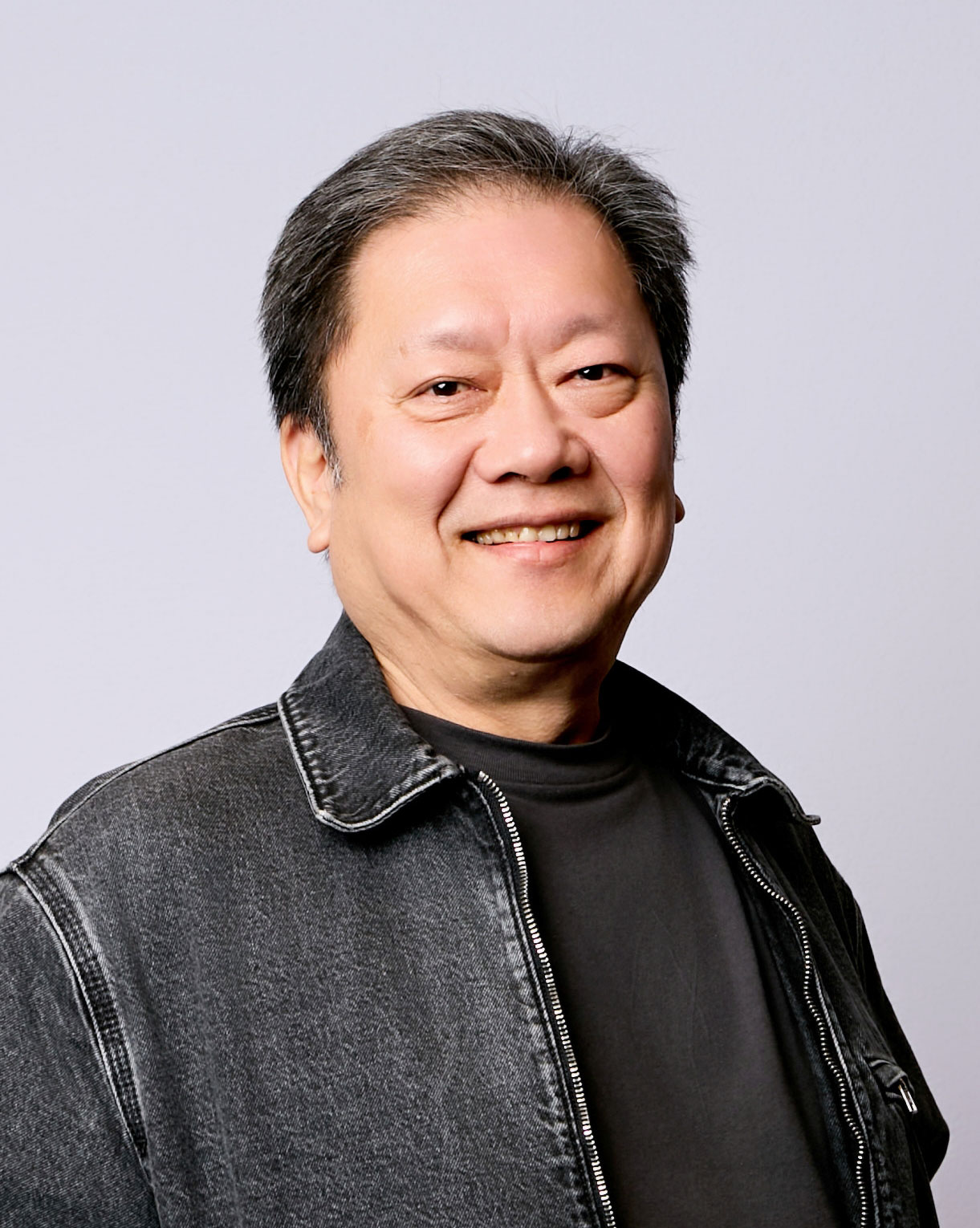
Greg Hauw runs a five-person company out of 1460 Broadway in New York that talks about itself in the same breath as the NYSE and Nasdaq. The ambition sounds outsized until you look at what he is actually building. At Ohanae, Hauw is assembling the machinery that private securities need to move on a blockchain: issuance, digital custody, liquidity, settlement and shareholder services, stitched together inside a regulated broker-dealer. His argument is that the future of the over-the-counter market is not a better token. It is a better set of rails.
That distinction is the center of how he talks about the work. "The industry has spent years discussing tokenization," Hauw said around the company's most recent regulatory milestone. "We believe the larger opportunity is market structure." It is a contrarian read in a sector that spent a decade infatuated with the tokens themselves. Hauw keeps pointing one layer down, to the infrastructure that decides whether a tokenized share can actually be owned, traded and settled without the friction that defines today's OTC plumbing.
In May 2026, that patience produced a concrete result. FINRA authorized Ohanae Securities, the company's registered broker-dealer subsidiary, to expand into the custody, clearing and settlement of crypto asset securities. For a company that had spent years assembling licensing rather than chasing headlines, it read as validation. "Today's authorization represents a defining milestone for our company and validates years of work building the regulatory foundation for a new category of market infrastructure," Hauw said.
The industry has spent years discussing tokenization. We believe the larger opportunity is market structure.
What Ohanae Is Trying to Do
Ohanae describes itself as a Web3 platform for tokenized securities, and the pieces fit together into a single loop. Companies can raise capital through equity crowdfunding, including under Regulation A+, which permits raising up to $75 million in a twelve-month window from both accredited and non-accredited investors. Those securities can be issued as equity tokens, custodied digitally, and traded on an OTC market that does not keep exchange hours. Settlement is designed to be atomic, using Ohanae Coin, which the company pegs one-to-one to the US dollar so that the two legs of a trade can clear at the same moment.
Underneath sits a layer that Hauw has cared about for a long time: identity. Ohanae Identity is a KYC-verified digital identity built on a self-sovereign principle, meaning the holder controls their credentials rather than surrendering them to a central gatekeeper. It is the kind of design choice that connects Ohanae to the rest of Hauw's career, where the recurring theme has been building trust into systems rather than bolting it on afterward.
The Road In
Hauw did not arrive at blockchain as a newcomer. His track record runs back to the late 1990s and reads as a steady progression through security and networking. He was managing director at Connected Computing in the late 1990s, then president of Internet Appliance from 1999 to 2001, a venture-funded startup in Fremont, California that made VPN appliances. From 2001 to 2006 he was president of Mykenae, a venture-backed data privacy security company with operations in Los Gatos and Singapore. Each business circled the same problem from a different angle: how to make digital systems that people can rely on.
He brought a marketing foundation to that engineering-heavy world. Hauw holds an MBA in strategic marketing from the University of Hull in the United Kingdom and a marketing qualification from the Chartered Institute of Marketing. More recently he has added the credentials that matter in his current arena, passing the FINRA Securities Industry Essentials exam along with the Series 82 and Series 24. The Series 24 in particular signals someone preparing to supervise a securities business, not just launch a product.
Tokenized securities require infrastructure purpose-built for the digital era.
The 2018 Turn
The decisive moment for Ohanae came in 2018, when Hauw pivoted the company into an asset tokenization platform built on distributed ledger technology. That meant developing the Ohanae Blockchain, initially on Microsoft Azure, and the self-sovereign identity layer that would sit alongside it. The timing is worth noting. In 2018 much of the crypto world was still riding the initial coin offering wave, where speed and hype often outran compliance. Hauw steered the other way, toward a model that would answer to securities regulators from the start.
That choice has costs. Registering as a broker-dealer, clearing FINRA reviews and building custody infrastructure to a regulated standard is slower and less glamorous than shipping a token and courting a community. Ohanae remains small, with a reported Series B and total funding in the low millions. But the 2026 FINRA authorization is exactly the kind of asset that is hard to buy quickly and hard for a fast-moving competitor to replicate. In a market where trust is the product, being early to the rulebook is its own moat.
The Bet
Hauw's vision places Ohanae as digital-era market infrastructure that unifies issuance, custody, liquidity, settlement and shareholder services within a regulated framework - the same functions that traditional venues split across many intermediaries. Whether a company of Ohanae's size can hold that position is an open question, and Hauw is careful to frame the FINRA authorization as a step rather than a finish line. FINRA membership, as the company notes, is not an endorsement of any security or service.
What is clear is the shape of the wager. For nearly three decades Hauw has built systems meant to make digital trust workable, from VPN boxes to privacy software to a blockchain for securities. Ohanae is the version of that project aimed at capital markets, and he has decided to run it on the regulated side of the line. If tokenized securities become a real market rather than a talking point, the infrastructure underneath will matter more than any single token - and that is precisely where he has spent his years.