BREAKING Jing Wang steers OP Labs as CEO of the Optimism ecosystem OP Stack powers a majority of Ethereum Layer 2 traffic 2022 $150M Series B led by Paradigm & a16z at $1.65B valuation 24 of 52 live rollups built on OP Stack Base, Uniswap, World, Kraken & Sony build on the stack 2026: OP Labs narrows focus to “do fewer things well”  
Profile · Builders of Web3

Jing Wangalso known as Jinglan Wang

The co-founder and CEO of OP Labs, quietly running one of the largest scaling ecosystems on Ethereum - and giving the core technology away for free.

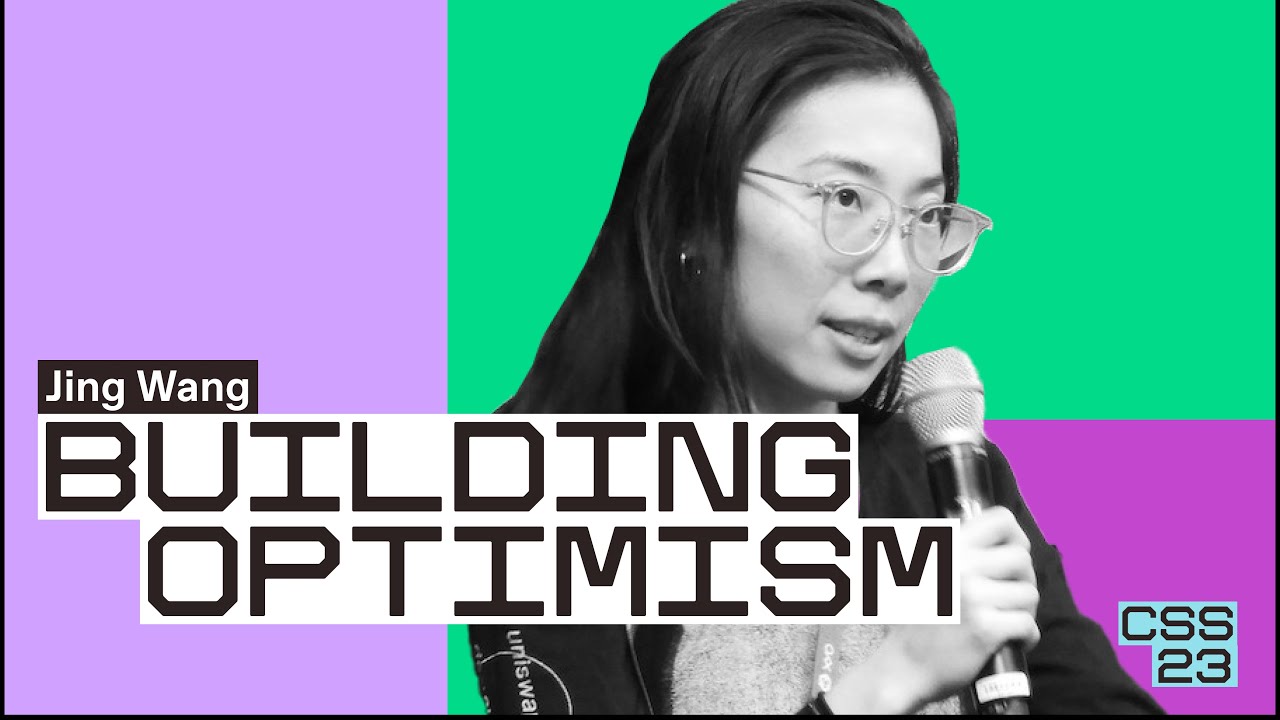
Jing Wang, co-founder and CEO of OP Labs, speaking on stage Source: “Building Optimism” talk, CSS 2023
2019
Co-founded Optimism
$150M
Series B raised
24/52
Live rollups on OP Stack
Open
Source, top to bottom

Jing Wang runs OP Labs, the company that builds and maintains Optimism, from a seat most people in crypto have never seen her occupy loudly. That is by design. While the tokens and the price charts get the attention, Wang has spent years on the less glamorous work: keeping an open-source framework called the OP Stack good enough that other companies choose to build their entire businesses on top of it.

The bet is working. The OP Stack now underpins a majority of Ethereum's Layer 2 activity. Coinbase built its Base chain on it. Uniswap, World, Kraken, and Sony's blockchain efforts all touch the same modular plumbing. Twenty-four of the fifty-two live rollups on Ethereum run the stack Wang's team ships. For a piece of infrastructure that is given away for free, that is an unusual kind of market share.

Optimism's pitch has always been narrower and more honest than the industry's usual promises. Ethereum is slow and expensive at scale. A Layer 2 is a second network that batches transactions, settles them cheaply, and posts proof back to Ethereum. Optimism's version, the “optimistic rollup,” assumes transactions are valid unless someone challenges them. It is a boring-sounding idea that turned out to matter a great deal.

Wang's own framing cuts against crypto's speed obsession. Early scaling work, she has said, chased throughput at all costs and missed the point. Raw speed with no usability is a demo, not a product. That reframe - usability first - is the through-line of everything OP Labs has shipped since.

Scaling at all costs didn't work. You need to address usability.
Jing Wang, CEO of OP Labs
Origins

A one-sentence nudge from Vitalik

Wang did not arrive in crypto through Ethereum. She started in Bitcoin, and grew frustrated with how few women were building in that developer community. The turn came from Vitalik Buterin, Ethereum's creator, who encouraged her to look at Ethereum and introduced her to Karl Floersch at the Ethereum Foundation.

Floersch mentored her on a scaling research project built around Plasma, an early scaling design. That work became Plasma Group, a small nonprofit. When Plasma's limits became clear, the team pivoted to optimistic rollups and, in 2019, co-founded Optimism alongside Floersch, Ben Jones, and Kelvin Fichter.

Her path in was non-linear. She studied art and computer science at Wellesley College before leaving, got involved with the MIT Bitcoin Club, ran the Blockchain Education Network across thousands of students in dozens of countries, did a stint in product at NASDAQ, took a blockchain fellowship with IDEO, and collaborated on Handshake, a decentralized naming system. The common thread was less about any single technology and more about getting more people fluent in it.
  • Wellesley College - studied art and computer science before leaving for crypto full-time.
  • MIT Bitcoin Club - early community involvement that pulled her deeper into the field.
  • Blockchain Education Network - coordinated thousands of students across dozens of countries.
  • Handshake & NASDAQ - decentralized naming and enterprise blockchain product work.
Career Timeline

From research nonprofit to the Superchain

2012 - 2016
Studies art and computer science at Wellesley College; joins the MIT Bitcoin Club.
2017 - 2018
Leads the Blockchain Education Network; product work at NASDAQ, an IDEO blockchain fellowship, and collaboration on Handshake.
2019
Co-founds Plasma Group, then Optimism, with Karl Floersch, Ben Jones, and Kelvin Fichter - pivoting from Plasma to optimistic rollups.
2021
Optimism launches its mainnet as an Ethereum Layer 2 scaling network.
2022
Raises a $150M Series B led by Paradigm and a16z at a $1.65B valuation; the project splits into the Optimism Foundation and OP Labs.
2024
OP Stack becomes the most widely adopted Layer 2 framework; the founding team is nominated for CoinDesk's Most Influential list.
2026
As CEO of OP Labs, Wang oversees a roughly 20% staff reduction, framed as a move to “do fewer things well.”
The Idea That Sets It Apart

Paying builders after the work proves itself

Optimism started as a nonprofit, and the memory of scrounging for funding stuck. The team, Wang has said, vowed to never leave another builder stuck in that position. Out of that came retroactive public goods funding: the idea that it is easier to agree on what was valuable than to predict it, so you reward open-source work after it has proven useful rather than betting on it up front.

That principle now runs through Optimism's governance and grants. It is also a quiet argument about how open ecosystems should sustain themselves - closer to a public library than a walled garden. Giving the OP Stack away for free only makes sense if you believe the ecosystem, not the codebase, is the moat.

The architecture matches the philosophy. Rather than one monolithic system, the OP Stack breaks a blockchain into components - execution, settlement, sequencing, data availability - that can be swapped and customized while staying compatible with each other. That modularity is what lets Base, World, and others run their own chains without leaving the shared network Optimism calls the Superchain.

Vision

The Superchain

A network of interoperable Layer 2 chains sharing security and standards. “Always part of the long-term vision,” Wang says - not a pivot.

Model

Retro funding

Reward public-goods and open-source work after it proves valuable, so builders aren't left begging for grants up front.

In Her Words

On strategy, scale, and staying useful

“A network of Layer 2 chains has always been part of the long-term vision.”

“Institutions need predictable costs, fast execution, and systems that can handle real volume.”

“The OP Stack is here to support the technologies that best meet the needs of our customers.”

“Learn, develop, and evangelize blockchain technology; build strong communities by promoting technological literacy.”

The Person

The pulse of the collective

A habit co-founders notice

Room-reader

Ben Jones recalled that whenever a new person entered the circle, Wang would make a point to include them and ask them a specific question - a habit he said only sharpened as she scaled into leadership.

How her co-founder puts it

The lifeline

“If you have to put the finger on the pulse of the lifeline of the Optimism Collective, it is Jing Wang,” Jones told CoinDesk.

2026 decision

Do fewer things well

When OP Labs cut roughly a fifth of its staff in 2026, Wang framed it as narrowing focus and reducing coordination overhead - not a response to financial trouble.

Notes & Quirks
Watch

Jing Wang, in conversation

YouTube · CSS 2023

Building Optimism

A conversation with the Optimism founder on scaling Ethereum and the road from research to production.

YouTube

The Optimistic Approach to Ethereum Scaling

Jing Wang and Karl Floersch on optimistic rollups and the thinking behind Optimism.