Profile · Fintech · Digital Assets
Chris Yu
The Goldman Sachs trader who found a gap in crypto markets and built the tools to close it.
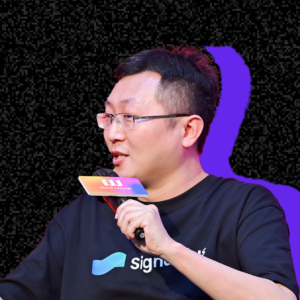
CHRIS YU // CO-FOUNDER & CEO, SIGNALPLUS
The Goldman Sachs trader who found a gap in crypto markets and built the tools to close it.
In the world of crypto trading, most attention goes to the loud instruments - the perpetual contracts, the leverage, the tokens that spike and crash before lunch. Chris Yu was looking at something quieter. Crypto options, the contracts that let traders hedge and structure risk, made up less than half a percent of perpetual-contract volume. In traditional markets, options are enormous. In crypto, they were almost an afterthought.
That single data point became the seed of a company. "Why was the cryptocurrency options market so underdeveloped?" Yu recalled asking. The question was not rhetorical. He had spent years on macro-trading desks at Goldman Sachs and Morgan Stanley, working across FX, FX options, and interest-rate products. He knew what a mature options market looked like, and he knew what was missing in crypto: not demand, but infrastructure.
In 2021, at the peak of a crypto bull market, Yu co-founded SignalPlus in Hong Kong to build that infrastructure. The company describes itself plainly - software, risk systems, and trading tools for digital-asset derivatives. The ambition underneath is larger: to bring the discipline of a Wall Street derivatives desk to a market still figuring out its plumbing.
Why was the cryptocurrency options market so underdeveloped?
The partnership at the center of SignalPlus goes back much further than 2021. Yu met his co-founder, James Shan, in 2007 at a JP Morgan pitch competition at Shanghai Jiao Tong University. As one of their investors later described it, the two bonded over a shared refusal to accept mediocrity. Then they went their separate ways - Shan into mobile internet and enterprise SaaS, Yu into trading - and stayed in touch.
Around 2017, by which point Yu had established himself as a consistent, profitable trader, the two reunited to brainstorm what they might build together. Their first attempts were not in crypto at all. They tried several ventures, including a multi-channel network business that eventually exited through a trade sale. The crypto insight came later, when Yu's trading instincts collided with a market that had grown fast but built slowly.
Illustrative of the trajectory described by SignalPlus and its investors - the crypto options market expanded roughly 3-4x over two years, aided by tooling and exchange collaboration.
SignalPlus launched into a bull market and almost immediately ran into a bear one. When crypto prices collapsed in 2022, most companies in the space contracted, cut, or went quiet. Yu's team did the opposite. With promotion largely pointless in a down market, they poured the time into product and technology instead. The downturn, in effect, became their build phase.
That instinct - optimize for what lasts, not what looks good this quarter - shows up in a story his investors like to tell. In the middle of a fundraising round, Yu decided to upgrade the company's volatility model even though the change dented short-term metrics. It was the sort of decision that can spook investors mid-raise. He made it anyway, on the grounds that a more accurate model was worth more than a better-looking chart. The investors read it as a signal about how he makes decisions.
We empower our users to advance into the next chapter of crypto trading.
The product itself reflects Yu's trading roots. SignalPlus built an advanced trading terminal and a research environment it calls QuantLab, along with automated risk management for exotic, structured products and analytics dashboards aimed at institutional desks. Yu has talked about the goal as something like "autopilots for options trading" - taking strategies that once required a specialist and making them accessible through automation.
Alongside the retail-facing ambition sits a heavily institutional business. SignalPlus has built partnerships with major exchanges including Binance, Bybit, Deribit, and OKX, and its tools are used by leading trading firms. In late 2025 the company was profiled serving names that read like a roll call of institutional crypto: Cumberland, FalconX, Galaxy, and Goldman Sachs. Winning that kind of client is less about a pitch than about infrastructure that keeps working when markets get violent.
Yu is bullish on artificial intelligence, but in a specific, unglamorous way. He has argued that AI's real value in trading is reducing complexity - automating repetitive tasks and stripping friction out of workflows so that advanced strategies become reachable for more people. His framing is about access, not spectacle.
AI will be a major catalyst for mainstream crypto adoption this year by making trading more intuitive, accessible, and cost-efficient.
What runs through everything he says is a preference for robustness over hype. Rather than chasing whatever narrative is trending, Yu has emphasized staying aligned with what users actually need and building infrastructure that can be trusted during volatility. It is a conservative philosophy for a fast market - traditional-finance rigor grafted onto crypto-native speed. Coming from a former FX-options trader, that combination is less a marketing line than a habit of mind.
Why was the cryptocurrency options market so underdeveloped?
We empower our users to advance into the next chapter of crypto trading.