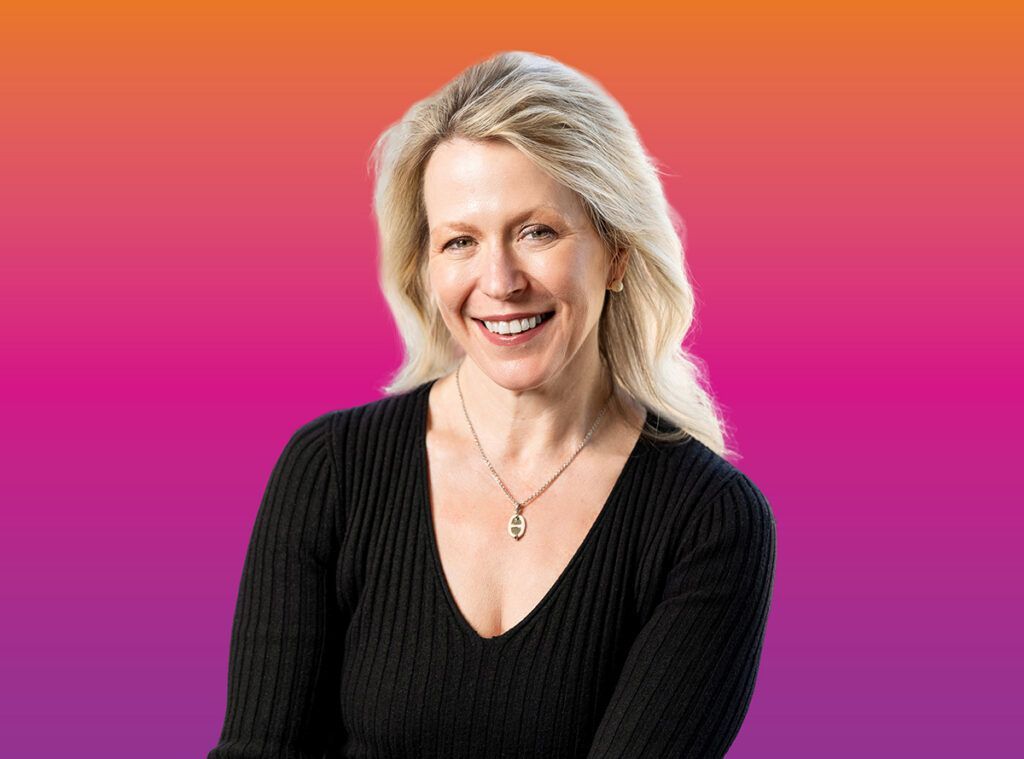
Fnality settles pounds sterling on a distributed ledger, out of an omnibus account at the Bank of England, in something close to real time. Late in 2024 its board handed the top job to a person who spent the previous two years helping run the operational side of U.S. monetary policy. That person is Michelle Neal.
If you want a shorthand for where wholesale payments are going, the shorthand is this hiring decision. Fnality International is a London fintech running the world's first regulated wholesale payment system built on distributed ledger technology. It launched the Sterling Fnality Payment System in December 2023, sitting on top of an omnibus account structure at the Bank of England, backed by a consortium of roughly twenty global institutions. It has raised on the order of $300 million across funding rounds, including a Series C reported at $131.6 million.
Neal took over as Group Chief Executive Officer in early 2025, succeeding Rhomaios Ram, who had led the firm since its formation in May 2019 and stayed on in an advisory capacity around product strategy and regulatory engagement. She had been announced for the role in late 2024, while still Head of the Markets Group at the Federal Reserve Bank of New York.
What she is actually doing
The pitch to the incoming CEO of a firm like Fnality is not glamorous. There is no consumer app to ship. There is instead a live payment system in one currency, a stack of pending regulatory conversations in others, and a shareholder base that includes some of the biggest banks in the world, each with its own house view on tokenization. The mandate, as reported at the time of her appointment, is to extend the sterling rail into U.S. dollar and euro settlement, subject to relevant central bank approvals. Ledger Insights reported at the time of her appointment that dollar and euro solutions were on the roadmap, pending central bank sign-off.
Fnality's model is unusual in a specific way that matters. Rather than issuing a stablecoin, or a bank-liability token, or a synthetic anything, it runs an omnibus account at a central bank and issues digital claims against that account on a distributed ledger. The tokens are cash at the central bank. When a bank sends value across the Fnality rail, the settlement is central bank money moving, in the accounting sense that regulators care about, not a promise from a private entity. That is a legally boring, operationally interesting arrangement, and it is why the sterling launch mattered.
The resume, briefly
Neal holds a BSBA in Finance from the Sawyer School of Management at Suffolk University, cum laude. From there she moved through senior markets seats at Royal Bank of Scotland, Nomura, and Deutsche Bank. In 2015 she was named President of Markets at BNY Mellon; in 2017 she was named CEO of BNY Mellon's Markets business and joined the firm's Executive Committee, with operating responsibility for the global Markets franchise - foreign exchange, fixed income, equities, securities finance, collateral management, segregation, and liquidity services. In June 2019 she joined RBC Capital Markets.
Then, in a step that in hindsight looks like the setup rather than the punchline, she moved to the Federal Reserve Bank of New York as Head of the Markets Group and a member of its Executive Committee. In that job she oversaw open market operations, foreign exchange, and the implementation of monetary policy - the daily plumbing of U.S. dollar liquidity, executed from the trading floor at 33 Liberty Street.
Career arc / where she has sat
The through-line matters. There is a version of the tokenization story where the interesting people all come from crypto. In Fnality's version, the interesting people come from the parts of the traditional financial system where cash and collateral actually change hands - trading desks, custodian markets businesses, and central bank operations. Neal has been in all three.
Why leave the Fed for a fintech
Public-sector executives do not usually leave the New York Fed to run a payments startup. Public-sector executives typically leave the New York Fed for a large asset manager, or a large bank, or a board seat, or a policy think tank. Fnality is none of these things. It is closer to what you would build if you wanted to redesign the plumbing of wholesale cash from scratch, with the reluctant cooperation of the people who currently own the pipes.
Which is presumably why Neal took the job. There are a small number of institutions attempting to move central-bank-adjacent settlement onto distributed infrastructure with real regulatory blessing. Fnality is one of them, and unlike a lot of what gets called blockchain-in-finance, it has a live regulated system in one currency and a large consortium of shareholders who want the model to work.
Timeline
Read of the tape
Fnality sits in the middle of a much larger argument about what tokenization is for. There is the retail argument, about consumers holding tokens on their phones. There is the treasury argument, about corporates parking cash in tokenized money market funds. And there is the wholesale argument, about banks and their institutional clients settling large-value payments in something that behaves like central bank money but does not depend on a batch process that closes at five in the afternoon.
Fnality is squarely in the third bucket. The sales pitch is that securities settlement, foreign exchange, and margin calls could all move to a 24/7 rail without giving up the finality that central-bank money provides. The regulatory pitch is that this happens inside the perimeter, not outside it. And the shareholder pitch is that if a bank is going to keep operating in a world with tokenized assets, it would prefer the settlement leg to run through infrastructure it partly owns.
Neal's background suggests she is fluent in all three arguments. She has run a markets business at a custodian, sat on an executive committee at a central bank, and knows a fair number of the people who need to say yes for Fnality to add a new currency.
Quirks and details
A few things worth noting. Her New York Fed portfolio included the daily implementation of U.S. monetary policy. Her current firm settles wholesale payments in tokenized central-bank money via an omnibus account structure at another central bank. Both of her past two jobs involved sitting somewhere very close to how a currency actually settles at scale. Very few people can say this.
Fnality's team page lists her as Group CEO, using a portrait photograph shot in 2025. She is based in New York while the company is registered in London at 41 Luke Street, EC2A. The firm's UK operating entity is separately led by Angus Fletcher as CEO of Fnality UK, which is standard when a regulated payment system in one jurisdiction is one of several legal entities inside a broader group.
What comes next
The next inflection for Fnality is not sterling. Sterling works. The next inflection is dollars, and after that, euros. Both are pending central bank approvals that no one can force. Neal's job, in the medium term, is to argue the case, run the rail cleanly enough that operational objections fade, and give the shareholder banks a live system they can plug their own tokenization efforts into.
That is a slow-moving job. It is also, if it works, the kind of job that ends up mattering more than most of the crypto news cycle put together, because the plumbing of institutional cash is the thing everything else eventually sits on.
FAQ
Who is Michelle Neal?
Group CEO of Fnality International, the London-based fintech operating a regulated DLT-based wholesale payment system.
What did she do before Fnality?
Head of the Markets Group at the Federal Reserve Bank of New York. Before that, CEO of BNY Mellon Markets, with senior roles at RBC, Deutsche Bank, Nomura and Royal Bank of Scotland earlier in her career.
When did she become CEO of Fnality?
Announced in late 2024; took up the role in early 2025.
Where did she go to school?
BSBA in Finance from the Sawyer School of Management at Suffolk University, cum laude.
What is Fnality?
A fintech operating distributed financial market infrastructure for 24/7 real-time wholesale payments in digital representations of central bank funds. Its Sterling Fnality Payment System launched in December 2023.