The Story
The Investor Who Stopped Watching and Started Fixing
Most venture capitalists stay on their side of the table. Peter Doyle crossed it. After roughly a decade at Accel backing the IT infrastructure and security companies that became the backbone of modern enterprise - PagerDuty, Heptio, Algolia, BrowserStack - he walked away from the fund to build something that hadn't been built yet: a managed IT services company designed from the ground up for the AI era.
The problem wasn't invisible. It was sitting right there in plain sight during every investment meeting. The $200 billion managed service provider industry - over 40,000 independent businesses running corporate IT for the vast majority of U.S. companies - was still operating like it was 2004. Reactive ticketing systems. Armies of technicians triaging alerts manually. The average MSP stitched together 30 to 35 separate software tools just to keep things running. "Managed services still operate much the way they did 20 years ago," Doyle has said, "built around manual coordination and reactive ticketing."
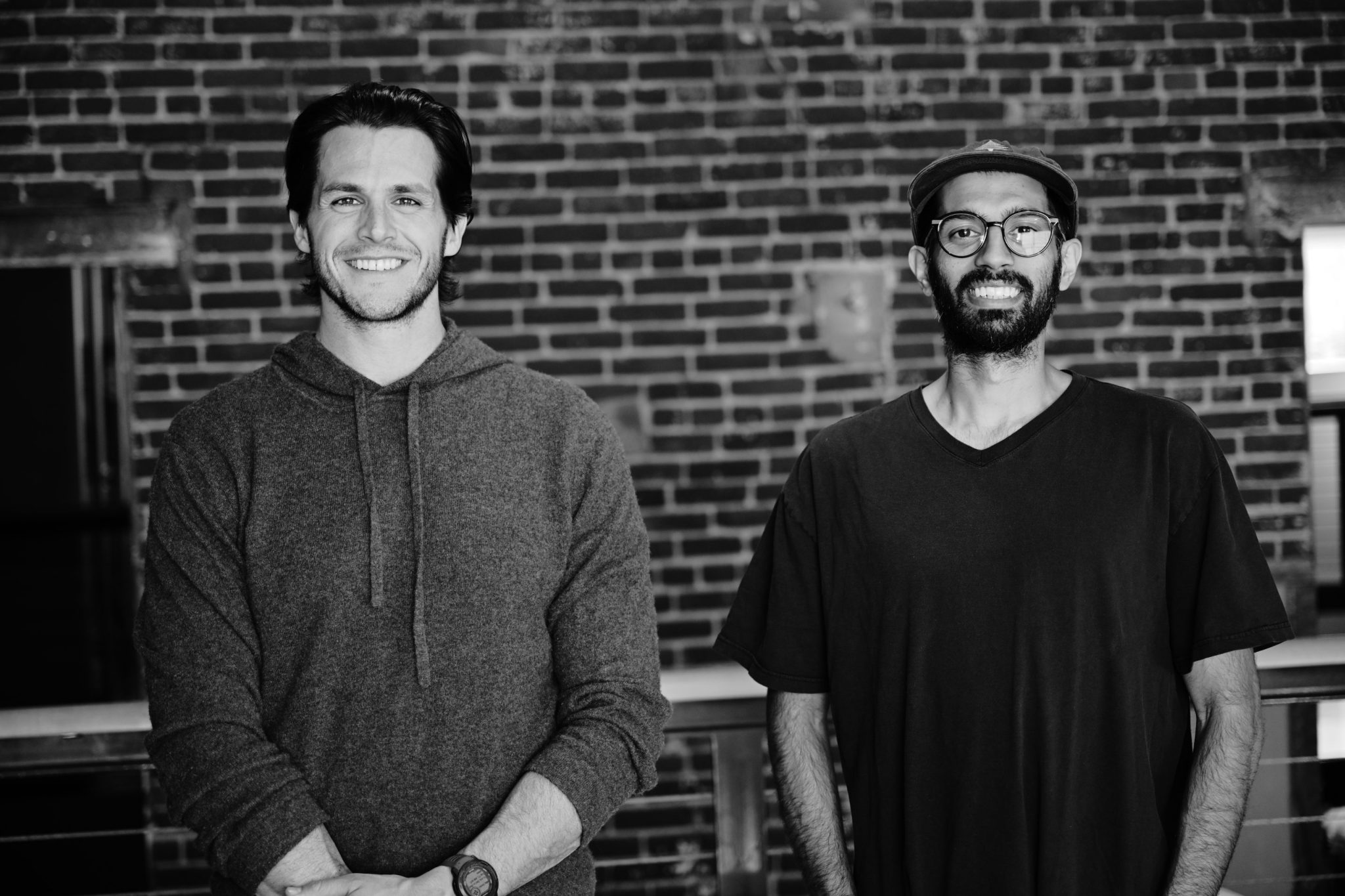
The insight he brought from Accel wasn't just market knowledge - it was the understanding of why the problem had persisted. Pure software products couldn't fix it. The managed services industry isn't a software problem; it's an operations problem. Doyle and Treeline co-founder Hussain Kader - a fellow Stanford alumnus whom Andreessen Horowitz investor Joe Schmidt described as the other half of "the dream pairing" - set out to build something different: not a tool that MSPs could buy, but a new operating model that made the old tools irrelevant.
Within the first 10 days, we realized that wouldn't work. We actually needed to fundamentally change how this industry operates.
- Peter Doyle, CEO & Co-Founder, Treeline
That pivot happened fast. Within ten days of launching Treeline, Doyle recognized that simply building better software and selling it to existing MSPs wouldn't move the needle. The model itself had to change. Treeline's answer: flip the entire architecture. Instead of starting with technicians and bolting on automation as an afterthought, start with a unified AI and software layer at the center - and bring human technicians in where judgment actually matters.
The results are concrete. Treeline's platform now handles 98% of customer IT support requests through AI tooling. Employee onboarding - a perennial headache that typically ate 20 minutes of IT overhead per new hire - now takes 2 minutes. Ticket error rates are down 95%. And in March 2026, Andreessen Horowitz led a $25 million Series A to help Treeline scale what it calls the "modern IT operating system."
Doyle is careful about the narrative around AI and jobs. "I'm not saying that we should replace technicians. We should empower them." That framing - AI as amplifier rather than replacement - runs through everything Treeline builds. Technicians remain in the loop for complex judgment calls; the AI handles the repetitive, the routine, the stuff that never needed a human in the first place but was landing on their desks anyway.
The education trail that leads to this moment is worth noting: Doyle took Computer Science and Physics at Stanford - the analytical foundation for understanding what these systems actually do at a technical level - then added an MBA from Harvard Business School. It's an unusual combination for a startup CEO in a space often populated by pure engineers or pure operators. It gives him a rare double fluency: he can read the architecture and read the market with equal precision.
The timing is deliberate. Doyle has been watching this particular market for years from the Accel perch. He knows exactly how far it lags - he puts the gap at a decade, minimum. And he knows that "pure play software" sold into the MSP category has consistently underperformed expectations. The category doesn't need another tool. It needs a new operating model. That's what Treeline is building - and what a16z decided was worth $25 million to find out.