Breaking
Superhuman acquired by Grammarly, July 2025 - combined entity: 40M+ daily users, $700M+ ARR Vohra's PMF article: most-shared piece in First Round Review history Todd & Rahul Capital: $50M+ deployed across 120+ portfolio companies Paid $175,000 for superhuman.com domain name Rapportive sold to LinkedIn, 2012 - saved with only 2 weeks of runway Created RuneScape's 'Monkey Madness I' quest, age 21 - still one of the game's greatest Superhuman acquired by Grammarly, July 2025 - combined entity: 40M+ daily users, $700M+ ARR Vohra's PMF article: most-shared piece in First Round Review history Todd & Rahul Capital: $50M+ deployed across 120+ portfolio companies Paid $175,000 for superhuman.com domain name Rapportive sold to LinkedIn, 2012 - saved with only 2 weeks of runway Created RuneScape's 'Monkey Madness I' quest, age 21 - still one of the game's greatest
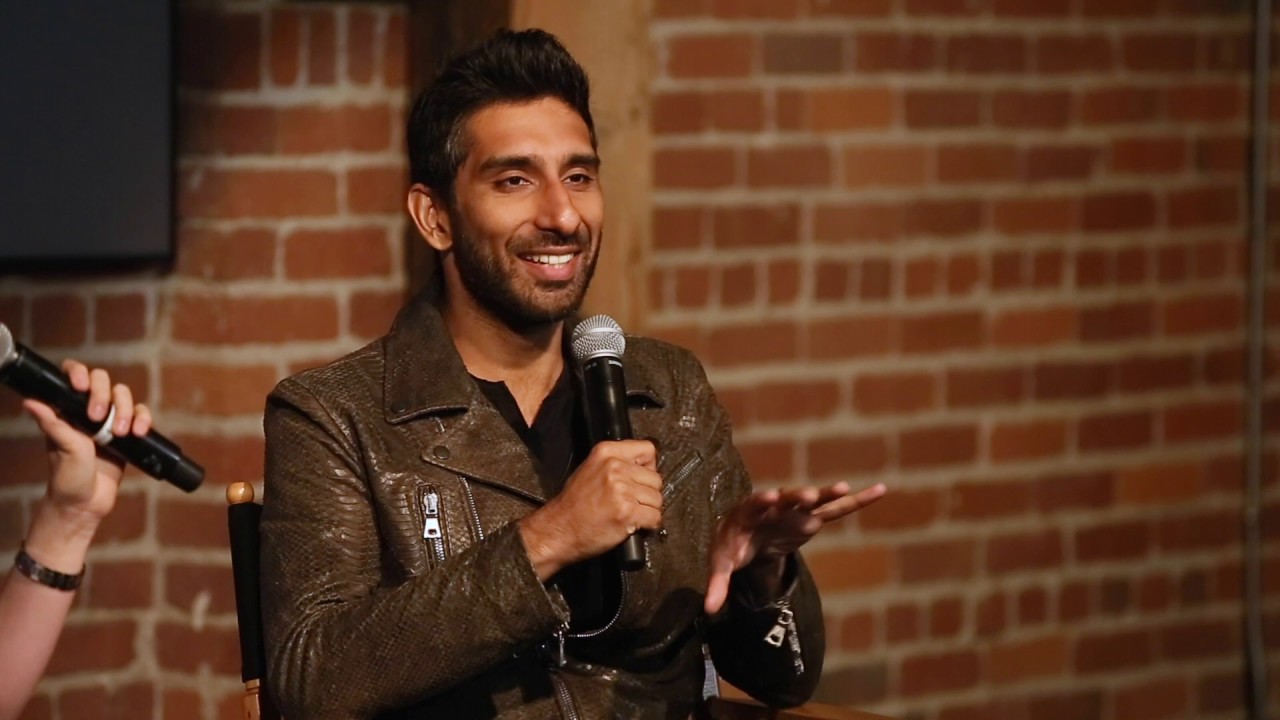
Rahul Vohra at VivaTech 2025
Photo: Xavier Ferrand / VivaTech 2025
Founder & Operator & Investor

Rahul
Vohra

The man who turned your inbox into a video game - and sold the controller to Grammarly for nine figures.

Superhuman Rapportive Y Combinator a16z Cambridge RuneScape
$700M+
Combined ARR post-acq.
120+
Angel investments
40%
The magic PMF number

He once wrote a RuneScape quest so convoluted in its object-oriented architecture that a senior Jagex developer publicly complained about it a decade later. The quest - Monkey Madness I - became one of the most beloved in the game's history. The developer's confusion was the wrong metric. The players' obsession was the right one. Rahul Vohra has been making that distinction his career ever since.

Today, Vohra runs Superhuman Mail inside Grammarly, the writing-assistance giant that acquired his email startup in July 2025. The combined entity - rebranded as "Superhuman" - has 40 million daily active users and pulls in over $700 million in annual revenue. For a product that costs $30 a month to access your inbox, that number is either a punchline or proof that Vohra was right about everything.

He was probably right about everything.

Vohra built Superhuman on a single contrarian bet: that email, the world's most used productivity tool, was also the world's most emotionally neglected one. While rivals competed on features - threading, labels, snooze - he competed on feel. Speed wasn't a spec. It was philosophy. Every millisecond of latency, he argued, creates anxiety. Every keyboard shortcut, mastered, creates joy. He built the product like a video game, because he had once actually built a video game.

Before Superhuman, before Rapportive, before the $118 million in venture funding and the Cambridge Computer Science degree, there was a 21-year-old intern at Jagex writing quest scripts for RuneScape. In the summer of 2004, Rahul Vohra designed Ape Atoll, populated it with monkeys, and sent millions of players on an adventure that is still considered a classic. His code was apparently impenetrable. The quest was magnificent. Same guy. Same instinct. Build the experience first, worry about the architecture never.

"When you make a game, you don't worry about what users want or need. You obsess over how they feel. That fundamental shift - from features to emotions - is what most software gets wrong."

- Rahul Vohra
01

The Library Kid Who Coded Alone

Both of Rahul Vohra's parents are doctors. He grew up in Birmingham, England, spending long stretches in libraries while they finished work. At eight years old, he had a computer. By the time he applied to Cambridge, he had already completed something like 10,000 hours of programming. Not as a prodigy narrative, but simply as the thing a child does when left alone with a machine and no one to tell him to stop.

He studied Computer Science at Cambridge, became President of Cambridge University Entrepreneurs, and then enrolled in a Machine Learning PhD. He dropped out after roughly 18 months. Not from failure - the academic work was fine. But research, he concluded, was not the same as building. He wanted to make things people actually used. The distinction seems obvious in retrospect. At the time, walking away from a Cambridge PhD was a real decision.

Between the PhD dropout and Rapportive, Vohra attempted somewhere between six and seven startups. None landed. One of them, Mojo, a platform for organizations to crowdsource ideas, had its technology acquired by Cancer Research UK - a consolation prize that technically counts as an exit but felt more like a graceful failure. He kept building.

The Rapportive Years

In 2010, Vohra co-founded Rapportive with Martin Kleppmann and Sam Stokes. The premise was clean: when you open an email from someone in Gmail, a sidebar appears showing their LinkedIn profile, Twitter feed, and recent activity. No switching tabs. No Googling names. The person materializes, contextually, inside your inbox.

Vohra built the initial working prototype in roughly six weeks. They got into Y Combinator - via Skype, which was an exception to the in-person interview rule, suggesting the idea was compelling enough to bend the process. Rapportive became the first Gmail plugin to scale to millions of users, which attracted LinkedIn's attention.

The acquisition story is the part Vohra tells with the most relish. LinkedIn agreed to buy them, then tried to back out. With only weeks of runway remaining, Vohra ran a deliberate campaign of drip-feeding product updates and monetization evidence to the LinkedIn deal team - engineering just enough forward momentum to keep the acquisition alive. He closed the deal with approximately two weeks of money left. The price was reported at around $15 million. He joined LinkedIn afterward as head of email integrations, learned the scale of professional email, and left two years later to build Superhuman.
🎮

The Quest Designer

In summer 2004, 21-year-old Vohra interned at Jagex and created RuneScape's "Monkey Madness I" - still considered one of the game's finest quests. His object-oriented code in a non-OOP scripting language was later described by senior developer Mod Ash as "remarkably hard to follow." The quest was magnificent regardless. Players still run it twenty years later.

60
min / day of Transcendental Meditation

Structured Silence

Vohra practices Transcendental Meditation for 30 minutes every morning and 30 minutes every afternoon. He credits it with boosting focus, creative range, and what he describes as "expressiveness" - his ability to articulate ideas clearly under pressure.

02

The 40% That Changed How Startups Think

In 2018, Vohra published an essay in First Round Review titled "How Superhuman Built an Engine to Find Product-Market Fit." It became the most-shared article in the publication's history, and it introduced a framework that has since become standard practice across the startup world: PMF as a measurable, optimizable metric.

The idea started with a question Sean Ellis had been asking for years: "How would you feel if you could no longer use this product?" The answer options were: Very Disappointed, Somewhat Disappointed, Not Disappointed. Ellis's observation was that if more than 40% of your users would be "very disappointed" to lose the product, you have product-market fit. Below that threshold, you're still searching.

Vohra took this further. He didn't just use the 40% number as a binary check - he built it into a continuous optimization loop. Survey users quarterly. Segment the responses. Find who the "very disappointed" users are. Study them obsessively. Double down on what they love. Stop trying to convert the "not disappointed" users - they are, in his formulation, a lost cause. Focus instead on moving the "somewhat disappointed" users into the "very disappointed" camp by addressing their specific objections.

When Superhuman first ran this survey in early 2017, their PMF score was 22% - well below the threshold. They identified that their core "very disappointed" user was a high-output professional who sent enormous volumes of email and cared intensely about speed. They restructured the entire roadmap around that person. A year later: 41%. Then 58%.

The framework sounds obvious when you say it aloud. Most good frameworks do. The insight wasn't the 40% number itself - it was the willingness to treat "who exactly loves this" as more valuable than "how many sort-of like it." Most founders optimize for breadth. Vohra optimized for depth of love.

Superhuman's PMF Journey
% of users who'd be "very disappointed" to lose the product
Early 2017
40% threshold
22%
Late 2017
41%
2018-19
58%

"Politely disregard those who would not be disappointed without your product. They are so far from loving you that they are essentially a lost cause."

- Rahul Vohra, First Round Review
03

Software That Plays Like a Game

The PMF framework got Vohra's intellectual reputation established. The game design framework is where his product instincts get genuinely strange and interesting. He spent three years building Superhuman before launch, and a significant chunk of that time was spent studying game design theory - not to make Superhuman "gamified" in the badges-and-leaderboards sense, but to understand why games are the category of software that consistently makes people feel things.

His conclusion, published with a16z in 2020, was that games achieve emotional resonance through a specific set of principles that most productivity software ignores entirely. The first is the distinction between "Goals" and "Toys": a toy is something you interact with for the pleasure of interaction itself; a goal gives that interaction direction and stakes. Great games balance both. Most enterprise software is all goals, no toys.

He translated seven game design principles into roughly thirteen discrete product decisions at Superhuman. Speed wasn't just a performance metric - it was a flow state enabler. Keyboard shortcuts weren't accessibility features - they were the controls of the game, and mastering them was the skill ceiling. The onboarding wasn't documentation - it was the tutorial level, designed to give you early wins before the difficulty ramped up.

1
Goals vs. Toys

Give users direction (goals) but also delight in pure interaction (toys). Most software is all goals - utilitarian, joyless.

2
Flow State

Speed eliminates friction that breaks concentration. Every millisecond of latency is a tap on the shoulder pulling you out of flow.

3
Controls as Craft

Keyboard shortcuts are the game's controls. Mastering them is a skill that compounds. Users who master them don't leave.

4
Tutorial Design

Onboarding is the tutorial level. Design for early wins. The first hour determines if a player comes back for a hundred more.

5
Emotion Over Features

Ask not "what does the user need?" but "how do we want the user to feel?" Needs are table stakes. Feelings are retention.

6
World-Building

Even a productivity tool has an aesthetic world. Typography, color, motion - these aren't decoration, they're the setting of the game.

04

The Exit: Grammarly, Rebrand, and the Bigger Game

Breaking - July 2025

Grammarly Acquires Superhuman.
Then Becomes Superhuman.

In October 2025, three months after completing the acquisition, Grammarly rebranded the entire company as "Superhuman" - a signal that the acquired product had more brand equity than the acquirer. Combined entity: 40M+ daily active users, $700M+ ARR. Vohra now leads Superhuman Mail as a division, reporting to Grammarly CEO Shishir Mehrotra.

40M+
Daily Active Users
$700M+
Combined ARR
$36.5M
Superhuman ARR at exit
>90%
Annual retention

The acquisition followed a period of real momentum. Superhuman had grown 2x in 2024 versus 2023, hit $36.5 million in ARR with 70,000 paying users, and maintained annual revenue retention above 120% - meaning existing customers were expanding, not just staying. These are the metrics that make an acquirer comfortable.

The terms were not disclosed. Estimates place the deal value between $300 million and $500 million - a range wide enough to be unhelpful, but with a floor that represents a meaningful multiple on the $118 million Vohra raised over Superhuman's lifetime. For an email client that charges $30 a month for a category most people assume should be free, that's an unusual ending.

Vohra's current project inside the combined entity is more ambitious than anything Superhuman attempted independently: an "AI-native productivity suite" that combines Superhuman Mail, Coda (the document and collaboration tool), Grammarly's writing assistance, and a proactive AI companion called Superhuman Go. The pitch is that email, writing, and document creation are all the same activity at different levels of abstraction, and that a single AI layer can run underneath all of them.

Whether that works is a different question from whether Vohra is the right person to attempt it. He spent ten years making email feel like the most important software on your computer. The case for him now is that someone who cares that much about craft, at that scale, might be able to do the same thing for the entire surface area of knowledge work.

05

The Career Arc

2004
RuneScape's Monkey Madness I

21-year-old Cambridge intern at Jagex. Creates one of RuneScape's most iconic quests in a single summer. Designs Ape Atoll. Gets cited in game wiki twenty years later.

2005
Cambridge BA, PhD Dropout

Graduates with BA in Computer Science. Starts Machine Learning PhD. Drops out after ~18 months. Decides to build products, not research them.

2007
Mojo - First Startup

Co-founds Mojo, an idea-crowdsourcing platform. Technology acquired by Cancer Research UK. One of six or seven early startup attempts that didn't scale.

2010
Rapportive Founded

Co-founds Rapportive with Martin Kleppmann and Sam Stokes. Builds MVP solo in six weeks. Gets into Y Combinator via Skype interview exception.

2012
LinkedIn Acquisition (~$15M)

Sells Rapportive to LinkedIn - first Gmail plugin to reach millions of users. Nearly loses the deal. Closes with two weeks of runway. Joins LinkedIn as head of email integrations.

2014
Superhuman Founded

Leaves LinkedIn. Founds Superhuman in October with Conrad Irwin and Vivek Sodera. Raises $800K. Pays $175K for superhuman.com domain. Runs 700+ customer interviews in year one.

2017
Private Beta Launch

After 3 years of building, Superhuman launches private beta. PMF score: 22%. Identifies the target user: high-output professionals obsessed with speed. Restructures entire roadmap.

2018
The PMF Article

Publishes "How Superhuman Built an Engine to Find Product-Market Fit" in First Round Review. Becomes the publication's most-shared article ever. PMF score hits 41%.

2019
$33M Series B from a16z

Raises at $260M valuation. Navigates tracking pixel privacy controversy. PMF score reaches 58%. Publishes game design principles.

2021
$825M Peak Valuation

Total funding reaches $118M. Valuation hits $825M. Superhuman becomes the defining cult productivity tool of its era.

2025
Grammarly Acquisition

July 2025: Grammarly acquires Superhuman. October: Grammarly rebrands as "Superhuman." Combined entity: 40M+ DAUs, $700M+ ARR. Vohra leads Superhuman Mail division.

06

The Portfolio Builder

Todd & Rahul Capital
Co-founded with Todd Goldberg, the fund writes checks of $300K-$500K into early-stage companies. The investment thesis tilts toward product-led growth, developer tools, and anything that bets on making professionals more effective - which is to say, the same companies Vohra would have been excited to compete with, had he not invested in them first.
$50M+
Total Deployed
120+
Portfolio Companies
$300K
Min Check Size
$500K
Max Check Size

Portfolio Highlights

Supabase Mercury Hightouch Writer Hex Ashby WorkOS Farcaster Clearbit Descript Eight Sleep ClassDojo Circle Wander Zip Placer NexHealth EasyPost AngelList Scratchpad Seam
"If 40% of your users would be very disappointed without your product, you've hit PMF. Below that threshold, you're still searching."
First Round Review
"Spend half your time doubling down on what users already love and the other half on addressing what's holding others back."
First Round Review - Product-Market Fit Engine
"Making money is so important not because it lets you buy things, but because it grants you an unusual degree of patience."
The Room Podcast
"We start with a philosophy different from most of Silicon Valley. Rather than focus on features users need, we focus on how software makes a user feel."
Various interviews
07

The Details That Make Him Specific

Fact 01

He paid $175,000 for the domain name superhuman.com before building a single production feature. At the time, Superhuman had raised $800K total. The domain was 22% of the entire seed round.

Fact 02

Vohra tested fifteen different fonts before choosing Superhuman's typography. He spent six months on typography alone. His argument: how text renders on screen determines how the brain processes speed. Font choice is product strategy.

Fact 03

At peak scale, Superhuman employed 20 full-time "onboarding specialists" who personally walked every new user through the product in one-on-one sessions. This was not scalable. Vohra did it anyway because he believed the personal touch converted regular users into evangelists.

Fact 04

His initial fundraising pitch for Superhuman was essentially a single slide: a screenshot of Gmail with everything he found wrong circled in red. He raised $750K off that one image. The entire pitch was the problem, not the solution.

Fact 05

He runs one Dungeons & Dragons campaign as Dungeon Master and plays in a second one as a player. He treats the two roles as distinct cognitive exercises: DM as product designer (building the world), player as user (navigating it).

Fact 06

GQ magazine described him as "a slender English gentleman of Indian extraction who's 50% hair and 50% brain." He has since had a haircut. The brain-to-hair ratio is unconfirmed.

Fact 07

There is an AI clone of Rahul Vohra at delphi.ai/rahulvohra. He endorsed it. Whether the AI also meditates twice daily is not documented.

Fact 08

Vohra conducted over 700 customer interviews during Superhuman's first year of development, before writing a single line of production code. He spent three full years building before the private beta launched in 2017.

08

The Frameworks He Left Behind

📈

The PMF Engine

The "40% very disappointed" survey framework for measuring and optimizing product-market fit. Published 2018. Now standard practice across the startup world. Most-shared First Round Review article ever.

🎮

Game Design, Not Gamification

Seven game design principles applied to software product development. Published with a16z in 2020. The core shift: stop asking what users need and start asking how they should feel.

Speed as Philosophy

Every millisecond of latency creates anxiety. Speed isn't a performance metric - it's a form of respect for the user's attention. Superhuman's 100ms response time target was an emotional decision, not a technical one.

🎓

The Narrow ICP

"Politely disregard" users who wouldn't be disappointed losing your product. Build for the people who love you, not the people who tolerate you. Counterintuitive and correct.

🎓

The Fundraising Drip

During acquisition processes, engineer momentum. Drip-feed product updates and revenue evidence to keep buyers engaged. Scarcity is constructed, not found. Close on urgency, not desperation.

👥

Superhuman Onboarding

Treat user onboarding as a game tutorial: design for early wins, progressive skill development, and the sense that mastery is achievable and worth pursuing. Don't just show features - create competence.

09

Find Him Online

Share this profile 𝕏 Twitter in LinkedIn f Facebook