candidate-sourcing
(25)
Wellfound puts the salary before the small talk
The former AngelList Talent built a marketplace around people who want startup jobs. Now it sells three ways to reach them, from a free listing to a recruiter who handles the introductions.

Qualified Recruiter sells the team behind the hire
A Pune-born recruiting business pairs offshore sourcing with U.S. account management. Its wager: a dedicated recruiter becomes more useful when the training, tools, and quality checks arrive with them.

Relode bets the next hire is someone you already know
A healthcare recruiter built on paid introductions has grown into a hands-on staffing partner. Its most useful lesson: a bigger candidate list means little if nobody can turn it into a hire.
Metaview wants your recruiters to stop doing the paperwork
The interview notetaker has become a recruiting platform with $110 million in backing. Its wager: the conversation you were too busy typing to hear can teach the rest of the hiring process what to do.
Broadbean made one job ad travel. Now its name is coming back.
The recruitment software company turned repeated job posting into a business Veritone bought for $52 million. Its next assignment: bring distribution, advertising budgets and hiring data under one familiar name.
TraqCheck checked the résumé. Now it wants to find the person.
After building a business in background checks, TraqCheck is moving into AI recruitment. Its $8 million Series A backs a bet that employers will buy the work, not just another dashboard.
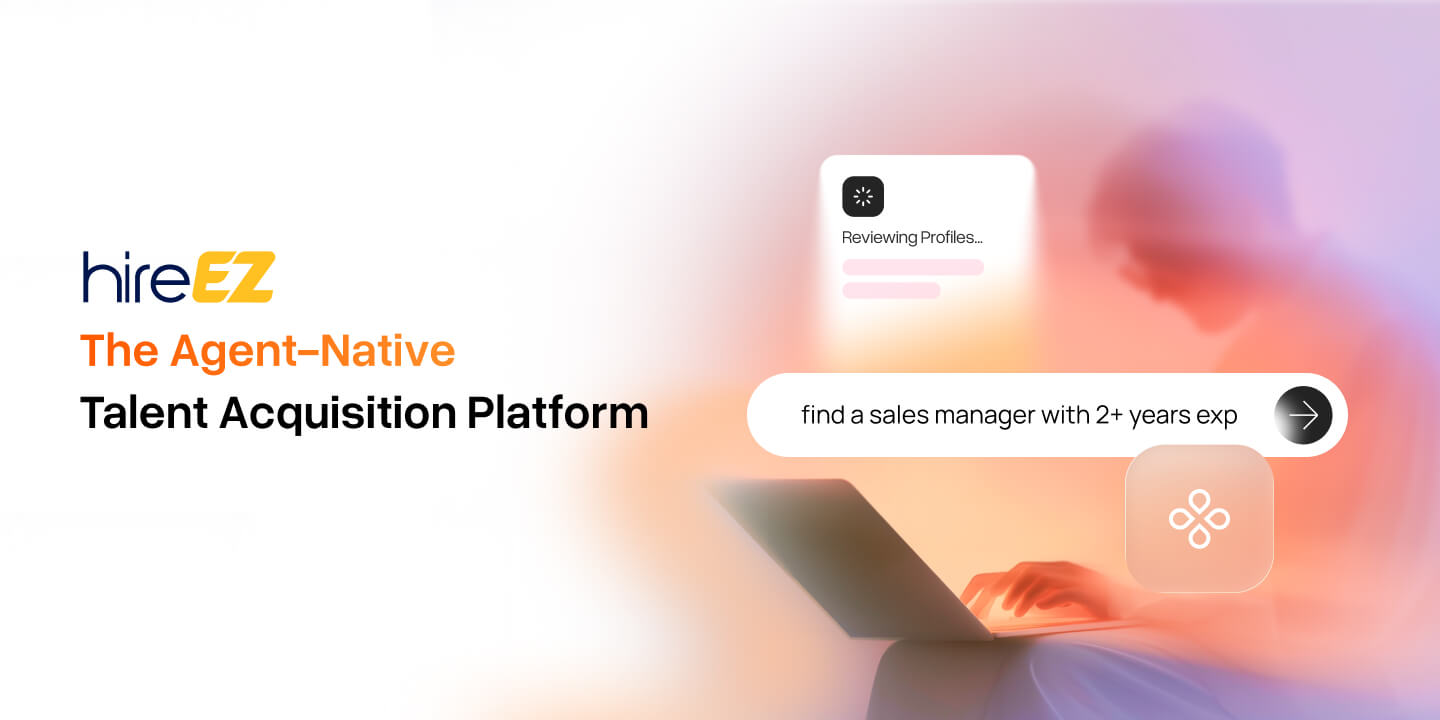
hireEZ Wants the Recruiting Busywork
The former Hiretual has grown from a clever sourcing engine into an agent-native control room for hiring. It can search a billion-plus profiles and keep the funnel moving, but buyers should make it prove the match quality, contact data, and consolidation math on their own hardest roles.
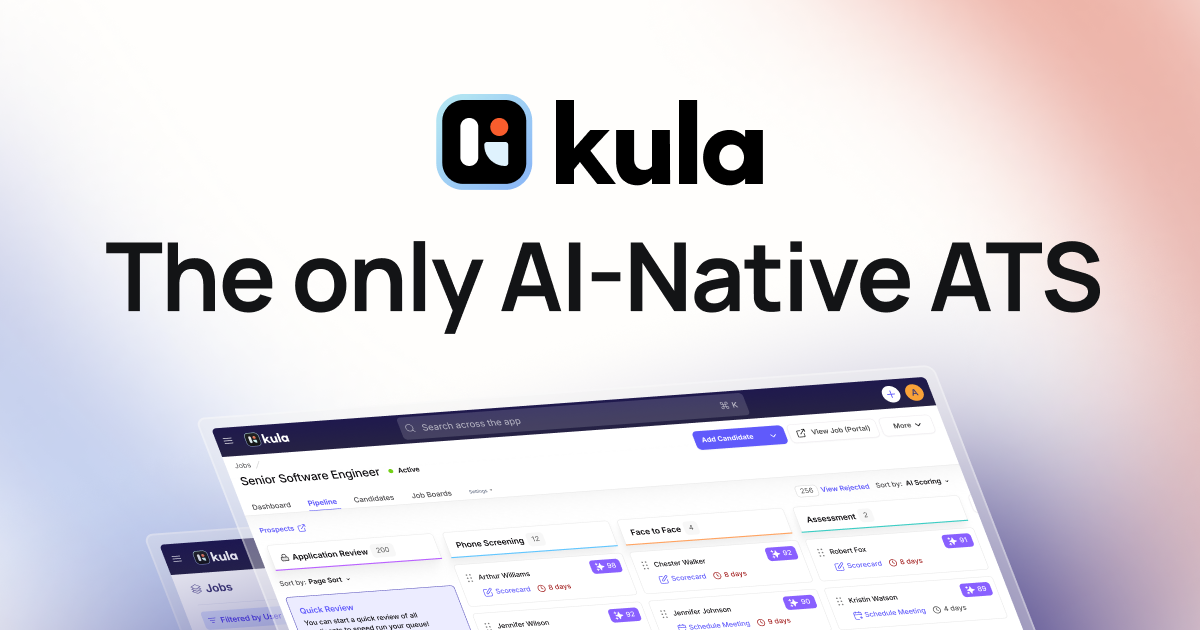
Kula Wants to Fire Your Recruiting Franken-stack
The recruiter who helped Freshworks grow from 87 to 913 employees got tired of doing the busywork by hand. His answer is one colorful ATS that sources, scores, schedules, takes notes, and still expects a human to make the call.

Tezi Hired an AI Recruiter - Then Headway Hired Tezi
Max could source, screen, email and schedule while the humans did the persuading. It was a sharp idea with a short shelf life: Headway acquired Tezi's team in March 2026, and the recruiting product shut down weeks later.

Manatal Puts the Hiring Mess on One Board
Manatal is the affordable ATS that wants your spreadsheet, inbox, job boards, and candidate notes in one calm place. The price is friendly; the buying decision depends on how much reporting, automation, and AI your team actually needs.
SeekOut Raised $188 Million to Fix Recruiting. Then Recruiting Broke.
The Bellevue startup turned a failed messaging idea into a recruiting unicorn. After the hiring boom vanished, it cut deep and rebuilt around AI agents, human judgment, and a much cheaper door in.
Reflik Turned Recruiting’s Messy Middle Into a Marketplace - Here’s the Playbook
Hiring teams do not need another pile of résumés, and independent recruiters do not need another cold call. Reflik built the switchboard between them - then learned that software works better when a human concierge keeps the signal clean.

Crelate Wants to Turn the Recruiting Database Into a Living Network
The Idaho software company spent years making the applicant-tracking system more flexible. Now it is betting that recruiters need a database that searches, refreshes and suggests - without taking the relationship out of their hands.

Contrario
Contrario is a San Francisco AI recruiting company that pairs specialized human recruiters with AI agents to source, screen, and deliver vetted candidates to startups within days. Founded in 2025 by Stanford dropouts Arya Marwaha and Aditya Sood, it operates as a hybrid between a traditional agency and recruiting software, using AI talent scorecards and graph-based matching while automating scheduling and follow-ups. The company reached roughly $6M in annualized revenue and paid over $1M to recruiters within six months of operating, and raised a $2.3M seed led by Nexus Venture Partners.

Weekday
Weekday is a YC-backed (W21) AI recruiting platform that runs automated outbound sourcing campaigns to help technology companies hire software engineers. It pairs a database of 250M+ people across the US and India with AI-written outreach and managed multi-channel follow-ups (email, WhatsApp, phone), delivering interested, pre-vetted candidates ready to interview. Founded in 2021 by Amit Singh, Anubhav Malik and Chetan Dalal, the company started with a crowdsourced referral model and evolved into a full AI sourcing engine.
Fetcher
Fetcher is a New York-based AI recruiting platform that automates the top of the hiring funnel - finding, verifying, and reaching out to qualified candidates so talent acquisition teams can spend their time interviewing instead of searching. It pairs machine learning against a database of roughly 500 million professional profiles with human sourcers who quality-check every batch, then delivers vetted candidates and automated, personalized outreach directly into recruiters' inboxes and applicant tracking systems.

Visage
Visage is a candidate sourcing platform that pairs a global crowdsourcing community of thousands of expert sourcers with AI to deliver pre-screened, qualified passive candidates directly into an employer's applicant tracking system. Founded in 2016 and headquartered in San Francisco, it serves large enterprise recruiting teams at companies like IBM, Siemens and Nielsen, aiming to cut the time and cost of filling hard-to-fill and high-volume roles.

Joss Leufrancois
Joss Leufrancois is the co-founder and CEO of Visage, an AI-and-human recruitment platform that crowdsources qualified, ready-to-interview candidates for large employers. A French-born entrepreneur who learned recruiting across London, Dubai, and the US, he previously co-founded and ran the recruitment agency Aldelia before selling it, then launched Visage in Dubai in 2015-2016. Today he runs the fully remote company from a ranch near Austin, Texas, blending a global sourcer network with data science to build candidate pipelines in 24-48 hours for clients that have included Tesla, Adecco, GoDaddy, and Virgin.
Fountain
Fountain is a San Francisco-based software company that builds an AI-native hiring and workforce-management platform for the frontline - the hourly, deskless, high-turnover workers who staff restaurants, warehouses, retail floors, delivery fleets, hospitals and factories. Founded in 2014, its platform sources, screens, hires, onboards and schedules workers at high volume, and it has moved aggressively toward autonomous 'agentic' AI with products like Frontline OS and its orchestrator agent Cue. Fountain says it helps more than 500 employers hire well over a million frontline workers a year, and counts brands such as Chipotle, Stitch Fix, GoPuff and Just Eat Takeaway among its customers.

LANDED
LANDED is a New York- and San Francisco-based startup that builds generative-AI hiring software for high-volume, frontline employers - the restaurants, retailers, and hospitality chains that hire hourly workers by the thousands. Its platform automates the tedious parts of hiring - sourcing, resume reading, screening, text-message engagement, and interview scheduling - using proprietary AI models trained on data from more than two million hourly workers. Founded in 2019 by Vivian Wang and backed by Y Combinator, Javelin Venture Partners, Lightspeed, and others, LANDED serves 500+ brands including Five Guys, Cava, Panera, and Salt & Straw.
SupportFinity
SupportFinity is a San Francisco AI-native recruitment platform that replaces the tangle of separate sourcing, ATS, and assessment tools with one system. It searches a database of roughly 2.1-2.4 billion candidate profiles, auto-generates job descriptions, screens and assesses candidates with proprietary AI agents, benchmarks salaries across 180 countries, and offers a recruitment-as-a-service network of 2,000+ recruiters. The company says it cuts time-to-hire and cost by up to 90% and serves 700+ companies worldwide.

Fahad Jalal
Fahad Jalal is the founder and CEO of QLU.ai, a San Francisco AI platform that lets executive recruiters describe an ideal hire in plain English and surface qualified candidates in seconds rather than months. A Stanford computer scientist with a Wharton MBA, he scaled a business unit at Mentor Graphics from zero to $100M ARR in two years and has exited multiple startups to Fortune 100 companies. At QLU.ai he is building tools that automate prospect research and outreach while insisting human judgment stays at the center of hiring.

Moe Nada
Moe Nada is the CEO and cofounder of SupportFinity, a San Francisco AI-native recruitment automation platform that sources across more than 2.1 billion profiles and runs the full hiring lifecycle through proprietary AI agents. A UC Berkeley MBA with roughly two decades across HP, HPE, IBM and OpenText, he moved from software engineering into product, implementation and customer success before betting that the resume-screening grind belongs to machines and judgment belongs to people.

Findem
Findem is an AI-powered talent intelligence platform built on a proprietary Talent Data Cloud that enriches candidate profiles with 3D data (people, company, time). It automates sourcing, CRM, analytics and executive search for enterprise talent teams, with customers including RingCentral, Nutanix, and Intuitive Surgical.
talent.io
talent.io was a European recruitment marketplace that flipped traditional headhunting: pre-screened software engineers and tech freelancers were surfaced to companies, who then applied to candidates. Founded in Paris in 2015 by Amit Aharoni, Jonathan Azoulay and Nicolas Meunier, it scaled to ten European cities and 2,000+ employer clients before being acquired by Davidson Consulting out of judicial reorganization in March 2025.