Matt Tant had a problem with the arithmetic. Working in recruiting, he had used his Vanderbilt connections to fill vacancies and generated more than $140,000 for the agency, according to a 2018 RecruitingDaily account. His share was about $14,000 or less. The people he knew had produced something valuable. The arrangement seemed remarkably good at paying everybody else.
Tant wrote a business plan with a wonderfully immodest working title: “eBay meets recruiting.” It spent time in a drawer. Years later, the rise of businesses such as Airbnb encouraged him to revisit it. If a spare room could become an income-producing asset, perhaps knowing the right nurse could, too.
- The idea: pay people for useful candidate introductions.
- The business today: managed healthcare staffing, from physicians to allied health.
- The technology: sourcing, candidate matching and referral operations.
- The lesson: prepare the network early, then make hiring decisions promptly.
01The introduction was worth money
Relode’s original proposition made the ordinary act of recommending a colleague commercially interesting. An employer needed someone. An individual knew someone. The platform connected them, and a successful referral earned a reward. Expertise could live outside an agency office; the introduction could come from the professional community itself.
Tant’s collaborator was Joe Christopher, a Vanderbilt-trained electrical engineer and former HealthStream executive. The two had already co-founded healthcare technology staffing firm HCTech in 2010. Tant brought staffing and sales experience; Christopher brought software architecture. Relode’s company profile dates its founding to 2014, while contemporary accounts place the marketplace launch in 2015.
At a Vanderbilt lecture in November 2018, the founders described their partnership as “Better together.” The university reported more than 200 clients and 40,000 independent agents. Those are historical figures, but they show the scale of the early experiment: recruiting reach could grow through a community of connections rather than only through an agency payroll.
“Relode is a full-service healthcare staffing partner.”
Relode’s current description of itself
02A marketplace grows a service business
That sentence is a useful place to pause. Early Relode coverage asked why the middleman needed to exist. Today the company offers to manage the search. The public pitch has moved toward relationships, accountability and delivery. The change suggests a practical distinction: finding an introduction and completing a healthcare placement are different jobs.
Even in 2018, Nashville Medical News described account managers qualifying and coordinating candidates. Employers could track candidates and communicate through a dashboard. The human work was present from the beginning. The marketplace supplied reach; somebody still had to make the introduction useful.
Today’s service menu includes permanent physician searches, locum tenens coverage, nursing and allied health recruitment, advanced practice providers, telehealth and rural staffing. Its customers include hospitals, health systems, behavioral health facilities, rehab and detox centers, long-term care providers and specialty clinics. A 2023 company blog named Cerner, Encompass Health and Optum among organizations using its approach.
The current process starts with a consultative intake covering the organization’s culture, goals and urgency. Relode then activates its recruiting network and manages candidate presentation through placement. For a hiring team, the proposition is extra reach with someone responsible for moving the search along.
Its current team page names Jamie Thomas as chief executive and Bart Richert as chief revenue officer. Stated values include integrity, collaboration, inclusion and professional growth. These are the company’s declarations; the clearest expression of its operating philosophy is the insistence that a search deserves sustained attention.


03The candidate you filed away
Relode’s technology story takes a second route through an unglamorous recruiting asset: the old applicant database. A person considered for one vacancy may fit another. Their record survives; the conversation often does not.
In September 2024, Relode launched XR for staffing firms. The announced features included AI-assisted matching of previously sourced candidates to openings, automated referral programs, tracking and payment of referral incentives, and analytics. The commercial idea was to extract more useful activity from an existing talent pool without adding recruiter headcount.
XR’s launch materials also described turning hired candidates into referral participants. A placement could lead to a fresh introduction. That creates a potentially useful loop, provided people respond and the opportunities fit. A stored résumé is evidence of a past interaction, not a promise of present interest.
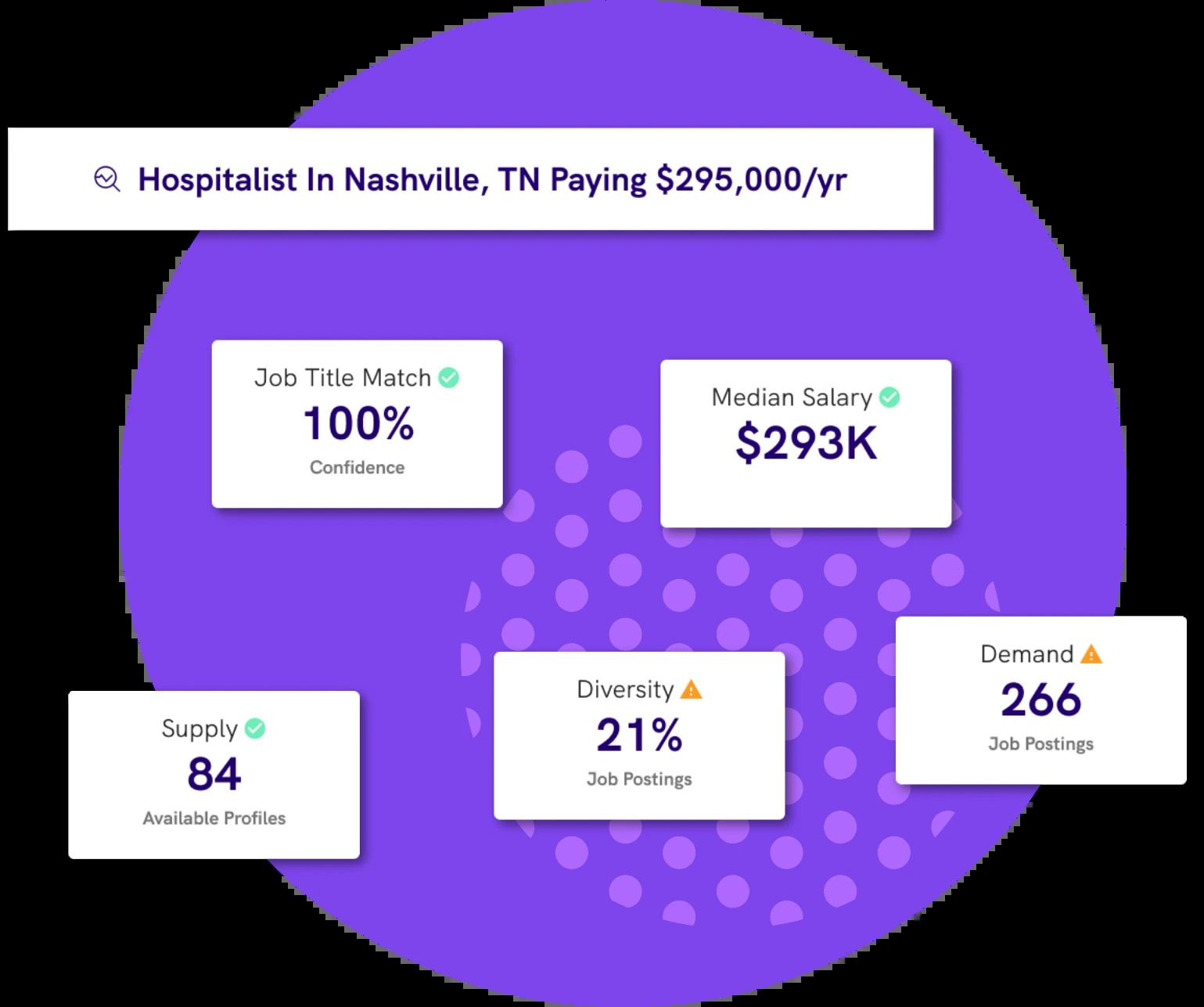
Relode also advertises job-profile comparisons and candidate feedback. The attraction is straightforward: a recruiter can compare an opening with the market and learn where the funnel is losing people. More data becomes useful when it changes the offer, the outreach or the next decision.
04Eleven hires. Seven days. A ready bench.
In a May 2026 company case study, Relode reported making 11 hires in seven days for an unnamed digital health client. The account identifies three ingredients: a nationwide candidate network already assembled, matching informed by state licensure, and daily candidate submissions, interviews and decisions.
One company-reported case, published May 2026. A specific result, not a standard hiring-time promise.
The mechanics are more instructive than the number. Relode says it activated existing relationships instead of starting the search from scratch. It checked where candidates were licensed before presenting them. The client kept pace with daily decisions.
Each ingredient addresses a separate delay: discovering candidates, establishing eligibility and securing an answer. The case’s account of speed depends on all three. Copying the approach means building a relevant bench ahead of demand and making the employer’s decision process ready to use it.
A facility with a slow approval cycle could buy the same sourcing help and still struggle to hire. That is an inference from the described workflow, and a useful one: part of the recruitment timetable belongs to the customer.
05Follow the money, then read the conditions
Relode serves employers through recruiting and staffing engagements. Its earlier materials also described subscription sourcing. Referral participants earn rewards attached to particular jobs; software and service packaging have evolved over time.
One closed public urgent-care physician listing in Aiken, South Carolina, makes the incentive mechanics unusually visible. It advertised $25 for a submitted referral, $100 for an interview and an estimated $5,075 hire reward: $5,200 in total. The listing tied the hire reward to actual salary and specified a 90-day payment installment. Rewards were subject to change.
Those amounts describe that listing’s referral incentives. An employer’s procurement decision requires its own proposal: which services are included, how payment works, what qualifies as a successful placement and what happens if the match does not last. A reward figure alone cannot answer those questions.
The company has also used outside capital. Heritage Group and Frist Cressey Ventures backed strategic growth financing in 2017. Vanderbilt later described a $12 million Series A. A December 2024 SEC filing recorded $300,000 sold in debt and related securities, with first sale on November 26. Those disclosures describe different moments and instruments, rather than a tidy price tag for building the business.
06Fix the job before widening the search
Relode operates in a crowded market. AMN Healthcare offers nursing, allied health, physician and advanced practice staffing, workforce planning and technology. Aya offers overlapping healthcare staffing options. Internal recruiters and job boards are alternatives, too. Relode’s distributed network is a reason to consider it; buyers still need to assess results for their own role and market.
The company’s recent writing offers a more interesting distinction than a race to produce the longest candidate list. An April 2026 post argues that searches can go wrong before sourcing begins, when responsibilities are unclear, compensation misses the market or expectations are overloaded. A June post makes a related argument: AI can accelerate work while leaving those problems intact.
There is a useful discipline here for anyone hiring, with or without Relode. Define the actual job. Compare compensation with the market. Agree who can make the decision. Maintain candidate relationships before a vacancy turns urgent. Then measure the search by what happens after an introduction.
That also sets the conditions for the model. A network helps when it reaches relevant, willing professionals. Matching helps when the role requirements are accurate. Managed recruiting helps when the employer can act on the candidates it receives. None of those mechanisms makes an unattractive offer attractive by itself.
Tant’s early complaint concerned who got paid for knowing somebody. Relode’s present pitch concerns what an organization does with that knowledge. Between the introduction and the first day of work lies the less photogenic business of defining, checking, listening and deciding. It is where a clever recruiting idea earns its keep.