workforce-planning
(25)
One Model wants to end the argument over whose spreadsheet is right
Before HR can predict who will leave, it has to agree on who works there. One Model built its business on that awkward little problem - and is now taking it into the age of enterprise AI.
Draup knows a job title can hide a thousand jobs.
Inside the intelligence company that pulls work apart, task by task, to help enterprises decide whom to hire, what to teach and where to sell.

iMocha wants to know what your job title is hiding
A beauty company’s 75-person pilot became a 9,000-person skills rollout. Behind it is iMocha’s bet that the most useful thing about an employee is what they can actually do.
PeopleFluent and the art of making complexity behave
A bank wanted to retire its spreadsheets without unsettling its staff. PeopleFluent’s answer reveals the quiet appeal of configurable HR software: keep the familiar work, lose the administrative chase.
Relode bets the next hire is someone you already know
A healthcare recruiter built on paid introductions has grown into a hands-on staffing partner. Its most useful lesson: a bigger candidate list means little if nobody can turn it into a hire.
The Spreadsheet That Couldn’t Keep Up With the Company
ChartHop began with a deceptively simple complaint: the org chart was out of date before anyone finished drawing it. The company now sells a live model of the workforce - and a way for HR and Finance to make plans from the same numbers.

The Contractor Was Hiding in Plain Sight
Utmost noticed that modern companies knew what every contractor cost, yet often could not say who those people were. Its fix was a new front door for work - and a worker-shaped hole in the old VMS market.
Dayshape wants to put your staffing plan on the money
The Edinburgh software company connects who does the work with what the work earns. Its customers reveal why the hard part of AI scheduling is often getting people to change their habits.

Beamery wants you to rethink the job before you fill it
The London software company made its name helping recruiters build relationships. Now it is breaking jobs into tasks to help employers decide what to hire, teach or automate.
Orgvue lets you rehearse the reorganization
Before a company moves people, it needs to understand the work. Orgvue turns workforce data into costed scenarios - and gives HR and finance a common picture to argue over.

The HR Software Company That Won a Customer Back From Oracle
Pilat spent decades making HR software bend to the customer. One enterprise tried the opposite, saw the compromises coming, and brought Pilat back.
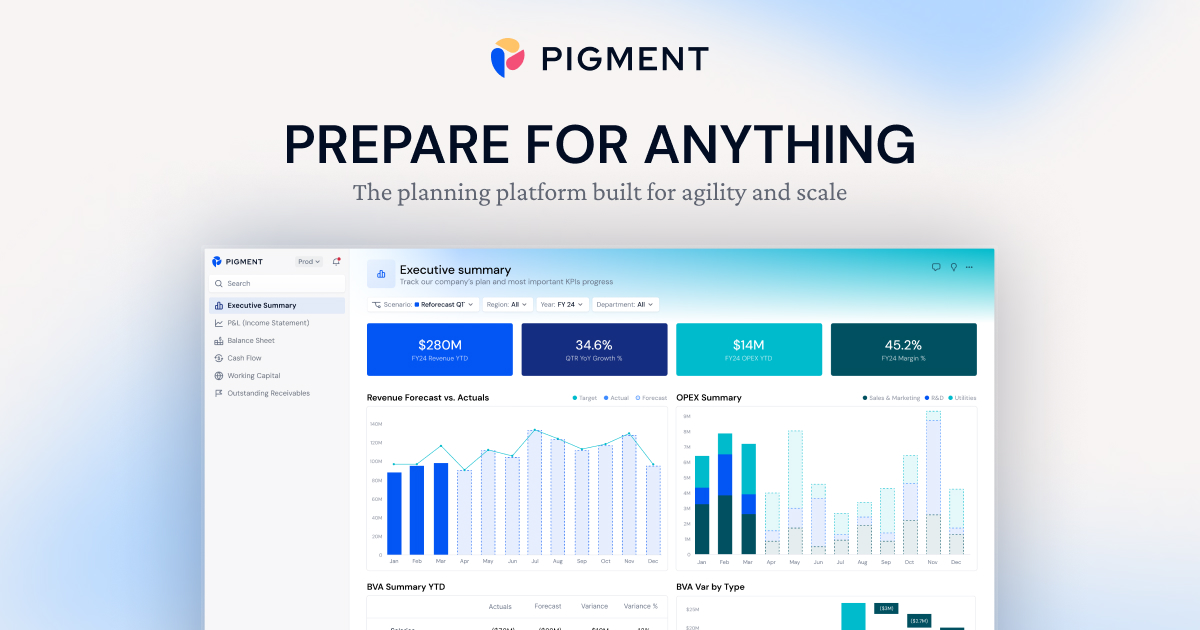
Pigment Turns the Annual Plan Into a Living Argument
Pigment gives serious planning teams a shared model, live scenarios, and AI agents that can do more than decorate a dashboard. The trade is equally serious: this is flexible enterprise machinery, not a Friday-afternoon spreadsheet replacement.
Nobody Agrees What a Skill Is. Lightcast Built the Dictionary for 6,000 Organizations.
The Idaho-born data company translates the unruly language of work into 34,000 skills, 1,800-plus occupations and decisions about what to teach, whom to hire and where to invest. Its real product is not a dashboard. It is agreement.
Eightfold AI Fired Its Working Product - Then Built a $2.1 Billion Talent Machine
The HR software company’s useful mistake was abandoning the thing customers wanted. Its return to skills-first matching - and a move upmarket - offers a sharper lesson than another AI success story.
SeekOut Raised $188 Million to Fix Recruiting. Then Recruiting Broke.
The Bellevue startup turned a failed messaging idea into a recruiting unicorn. After the hiring boom vanished, it cut deep and rebuilt around AI agents, human judgment, and a much cheaper door in.

Float or Resource Guru? Decide What a Promise Looks Like
Float helps teams model how much work fits across a project timeline. Resource Guru turns availability into calendar commitments - and its newer flexible bookings make the choice more nuanced than the usual forecast-versus-booking shorthand.
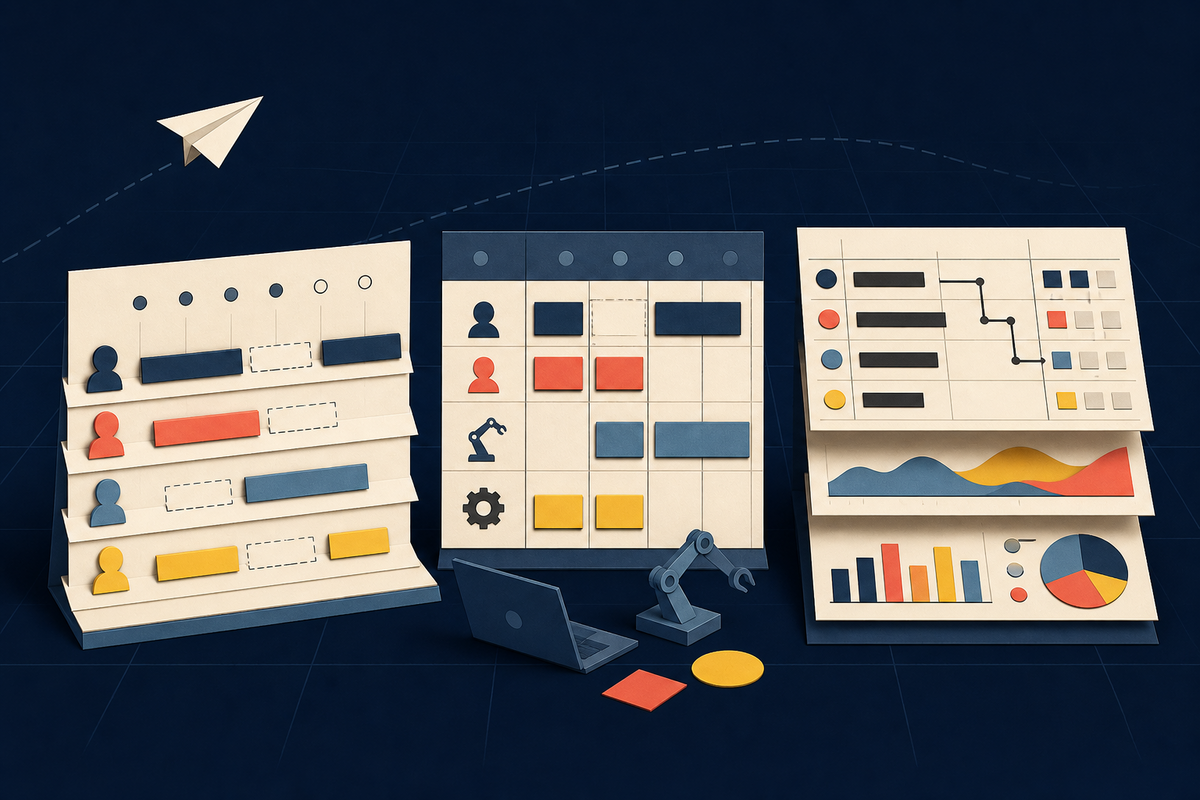
Float, Resource Guru or Smartsheet? Pick Your Planning Layer
The right resource planner depends less on the feature list than on where you want work to live. Float forecasts capacity beside your task system, Resource Guru runs the booking desk, and Smartsheet can become the work system itself.
Korn Ferry
Korn Ferry began with one phone, one assistant and a Rolodex. Now the $2.9 billion firm wants its data, consultants and software inside every consequential decision a company makes about people.
Intelmatix
Intelmatix is a deep-tech enterprise AI company founded by MIT-trained technologists that builds EDIX, an Enterprise Decision Intelligence Platform designed to act as a 'digital brain' for organizations. Using context-aware AI agents, knowledge graphs and generative AI, EDIX lets companies sense, learn, decide and act across functions like demand forecasting, inventory, workforce planning and site selection - without needing an in-house data science team. Headquartered in Riyadh with offices in London and Boston, Intelmatix focuses on the MENA region, training on local context data that global platforms overlook. It raised a $20M Series A in 2024 - the region's largest AI Series A of its kind - and in 2025 became the first Saudi and MENA AI company named a World Economic Forum Technology Pioneer.
Gloat
Gloat is an enterprise HR-technology company that pioneered the internal talent marketplace: an AI platform that maps a company's people by their skills rather than their job titles, then matches them to internal roles, projects, gigs and mentorships. Founded in 2015 in Tel Aviv (originally as Workey) by Ben Reuveni, Amichai Schreiber and Danny Shteinberg, Gloat now runs on a proprietary Workforce Graph and has expanded into skills intelligence and agentic HR tools used by global enterprises such as Mastercard, Unilever, Novartis, Spotify and HSBC. It has raised roughly $190 million, including a $90M Series D led by Generation Investment Management.

Spire.AI
Spire.AI is an enterprise AI company whose full-stack SaaS platform is powered by a single, domain-intelligent Generative Skills AI engine. Built on a live knowledge graph with more than 14 million skill-adjacency edges, it helps large organizations acquire, deploy, reskill, mobilize and retain talent in a skills-first way. Founded in 2007 by Saurabh Jain and Shweta Jain and headquartered in Bengaluru, India, the company has evolved its research into OpenKnowra, a context-intelligence layer that pairs enterprise understanding with autonomous execution.

Censia
Censia is a San Francisco-based talent intelligence company that uses AI to turn billions of workforce data points into skills-based profiles of employees and candidates. Its platform enriches HR systems - most notably Workday - so enterprises can see hidden internal talent, plan their workforce around skills rather than job titles, and make faster, fairer hiring and mobility decisions. Founded in 2017 and led by CEO Joanna Riley, Censia sells to large enterprises and pitches itself on ethical, bias-aware AI applied to talent data.
Skillcentrix
Skillcentrix is a Boston-based consultancy and Workday services partner focused exclusively on helping Workday customers build skills-centric talent strategies. Founded in 2022, it advises, deploys, innovates and manages HR technology across the talent lifecycle - planning, acquisition, development, mobilization and retention - for enterprises modernizing their workforce.
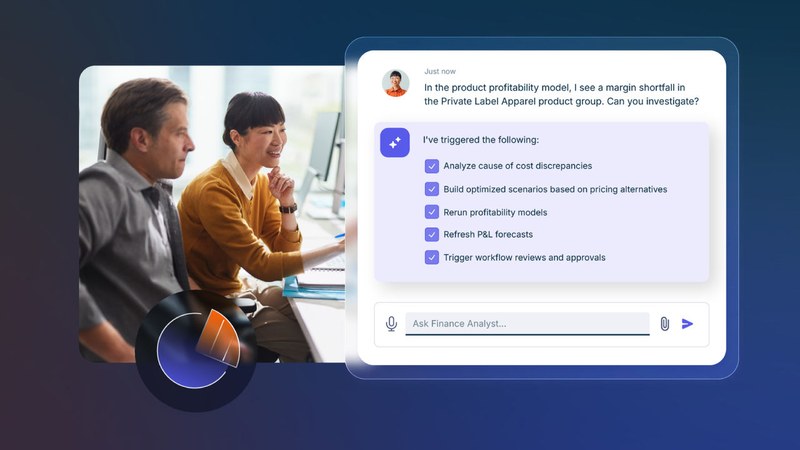
Anaplan
Anaplan is a cloud platform for connected enterprise planning. It lets finance, supply chain, sales, and HR teams model the same business in real time, on a single multidimensional engine called Hyperblock, instead of fighting over disconnected spreadsheets. Founded in 2006 in a barn in Yorkshire, England, the company now serves more than 2,400 customers worldwide - including roughly half the Fortune 50 - and is privately held by Thoma Bravo after a $10.7 billion take-private in 2022.

Findem
Findem is an AI-powered talent intelligence platform built on a proprietary Talent Data Cloud that enriches candidate profiles with 3D data (people, company, time). It automates sourcing, CRM, analytics and executive search for enterprise talent teams, with customers including RingCentral, Nutanix, and Intuitive Surgical.