Eightfold AI’s first product worked. That was the problem. In late 2016, a tiny team built software that searched an employer’s existing pile of candidates, inferred what people could learn next and matched them to open jobs. Coding began around September. By November or early December, someone was paying. Five or six customers signed within roughly two months. Then an investor offered the sort of advice that sounds sophisticated enough to be dangerous: perhaps the early buyers were backing founder Ashutosh Garg, not the product.
So Eightfold stopped selling it.
For most of 2017, the company pushed a different model - a marketplace between employers and recruiting agencies, paid on successful hires. More than 100 customers signed, but the model generated only about $250,000 to $500,000. Employers did not enjoy writing agency checks, and they kept asking Eightfold to do the thing it had already built: help screen and rediscover candidates they possessed. In December 2017, the subscription product returned. By January 2018, the marketplace was dead.
“I don’t want to work with agencies, but can you just help me with my own hiring?”The customer request that pulled Eightfold back
That reversal is the cleanest way to understand Eightfold. The company does not sell a magical robot recruiter. It sells a layer of intelligence for organizations that already have too many applicants, employees, systems and skills to understand with keywords and org charts. The original insight survived. The packaging did not.

The company started in healthcare. HR objected.
Garg left Bloomreach, the company he had co-founded, in 2016 with no finished Eightfold idea. He wanted work closer to people’s lives than improving marketing traffic. He explored education and healthcare, eventually sketching a second-opinion service that would connect seriously ill patients with trusted hospital networks. Large employers are major buyers of health benefits, so he spoke to HR leaders at companies including Adobe and Google. Their response changed the subject: healthcare mattered, but talent was the larger operational headache.
The useful move was not a brainstorm. It was letting prospective buyers rewrite the question. Garg’s shorthand is 80 percent conviction and 20 percent openness. Employment remained the durable problem; the product could change. He and Kacholia raised about $5 million and hired an initial team of four or five. The first version did one narrow job: ingest open requisitions and a candidate database, then surface people whose history and learning capacity suggested a fit.
The shortest honest history of product-market fit
The next correction was customer size. Bay Area startups were easy to reach through the founders’ networks, but their databases were too small. Rediscovery becomes valuable when an employer has years of applicants, a sprawling workforce and enough open roles for hidden matches to matter. Eightfold moved toward large enterprises outside Silicon Valley. American Express arrived around 2018 or 2019. Revenue, Garg later recalled, went from roughly $1 million to $3 million to $12 million in successive years.
A résumé tells you what happened. Eightfold bets on what comes next.
Most HR databases are filing cabinets with search bars. A recruiter asks for a title or keyword; the system retrieves people who already look like the request. Eightfold’s pitch is that careers are trajectories, not static documents. Its models infer adjacent skills, compare paths and rank who may succeed in a role even when the wording does not line up. By April 2026, the company said its talent engine had been trained on 1.6 billion career trajectories and 1.6 million skills.
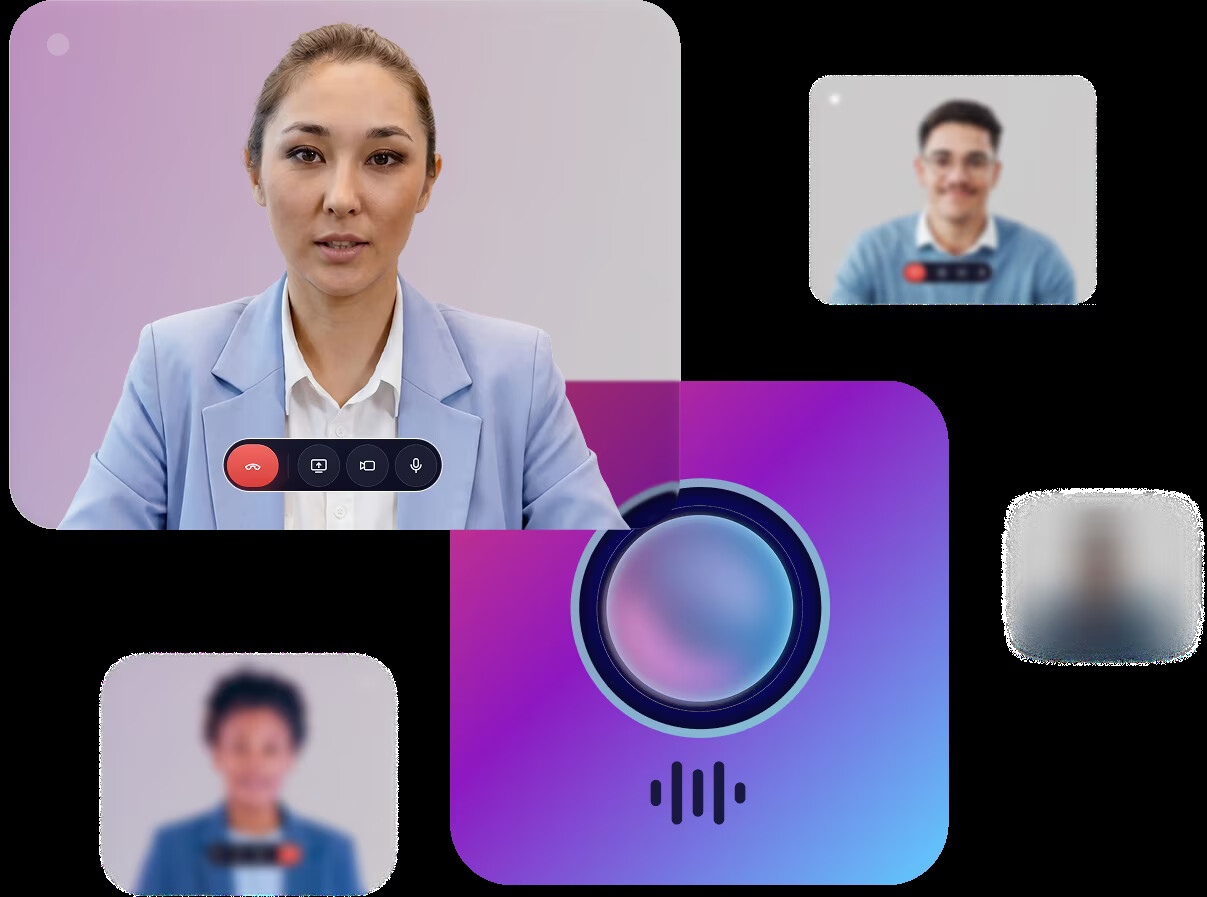
That engine now supports a wide shelf. Talent Acquisition covers rediscovery, sourcing, screening, scheduling and selection. Talent Management recommends internal jobs, projects, mentors and learning. Workforce Exchange gives governments and employment programs a job-and-training marketplace. Resource Management staffs projects. Newer Talent Agents include an AI Interviewer available around the clock in more than 22 languages, an Interview Companion for human-led conversations and a Candidate Agent designed to replace the application-and-silence routine with a dialogue.
The business model is custom-priced enterprise SaaS. Eightfold does not publish a menu. It usually sits above or alongside systems of record such as Workday, SAP SuccessFactors and Oracle rather than demanding that a company rip them out. That positioning creates a productive tension: those suites are partners, distribution channels and potential competitors. Specialists such as Phenom, Beamery, Gloat and SeekOut attack adjacent parts of the same budget.
The distinctions are practical. SeekOut is commonly bought for sourcing; Beamery grew around talent relationships and pipelines; Gloat is associated with internal talent marketplaces; Phenom spans candidate and employee experiences. Eightfold wants the common intelligence underneath external hiring and internal movement. That can reduce the absurdity of recruiting a stranger for a role an employee could fill, or buying separate tools that describe the same person differently. It also means the purchase is heavier than adding a recruiter plug-in. Data has to be connected, job and skill language reconciled, managers persuaded to consider nontraditional candidates, and recommendations monitored after launch.
What did it cost Eightfold to discover this market? The initial wager was roughly $5 million, plus most of a year spent on the agency model it later closed. What will it cost a customer? The company does not say publicly. A credible buying case therefore starts with the employer’s own baseline: agency fees, recruiter hours, time-to-fill, regrettable attrition and the share of jobs filled internally. Without those numbers, “talent intelligence” is an attractive noun looking for a budget.
The outcome is not “AI.” It is a shorter queue.
The proof Eightfold offers is operational. Automotive supplier Forvia reports a 3.5-fold increase in visitor-to-applicant conversion, 30 percent sourcing-productivity gains and more than €100,000 saved over two years on virtual fairs, events and campaigns. Industrial group Fortive reports double recruiter efficiency, a 45 percent improvement in internal fill rate and a 30 percent lift in speed for internal hiring. These are company-published customer cases, not neutral experiments, but they reveal the buying logic: fewer wasted recruiter hours, more reuse of known candidates and employees, and less external hiring where internal movement will do.
What customers say moved
Bars are editorially normalized for comparison. Figures are customer-reported outcomes published by Eightfold, not a controlled benchmark.
The product also carries a risk its own success magnifies. A bad ranking system used by one recruiter is a nuisance. A bad ranking system deployed across a multinational is policy. Eightfold says its software supports decisions but does not make them, and points to ISO/IEC 42001 certification, FedRAMP Moderate authorization and third-party bias audits. Those controls are not decorative compliance trophies. When software ranks who deserves an interview or an internal opportunity, governance is part of the product.

The playbook is copyable. The data advantage is not.
Founders can copy the process without copying the product. Charge for the first pilot. Constrain version one until it answers a single expensive question. Bring investors into customer discovery so conviction forms alongside evidence. Treat a pivot as reversible. Watch for buyers asking to repurchase the thing you retired. Then choose customers whose operating conditions make the product stronger.
The last point is the least glamorous and the most useful. Eightfold did not merely improve its sales pitch in 2018; it found buyers with enough historical talent data for the software to matter. A 100-person startup may need an ATS and a good recruiter. A 100,000-person enterprise can lose qualified candidates and employees inside its own databases every day. Eightfold fits the second problem.
It fits when
An organization has thousands of workers or applicants, fragmented HR systems, repeated hiring, internal-mobility goals and people who can govern models and integrations.
It strains when
The employer is small, historical data is thin, the need is only lightweight sourcing, implementation capacity is scarce or leaders want automation without human accountability.
Eightfold has raised roughly $400 million, including a $125 million Series D in 2020 and a $220 million SoftBank-led Series E in 2021. That last round set the $2.1 billion valuation still attached to the company. Since then, it has expanded partnerships with SAP, Salesforce and Oracle and pushed from recommending talent toward agents that take part in the workflow.
The strategic question is whether Eightfold can keep that expansion coherent. A great intelligence layer can make every HR application smarter. A swollen suite can become another system people work around. The company’s own history supplies the standard: follow the stubborn customer problem, and be willing to fire the product - or revive it - when the evidence changes.