A résumé has always been a piece of optimistic nonfiction. The candidate chooses the plot, edits out the dull chapters and gives every achievement a flattering light. For decades, hiring teams tolerated this because there was no inexpensive way to watch thousands of people do the actual job. Glider AI was founded in 2020 on the bet that there finally was.
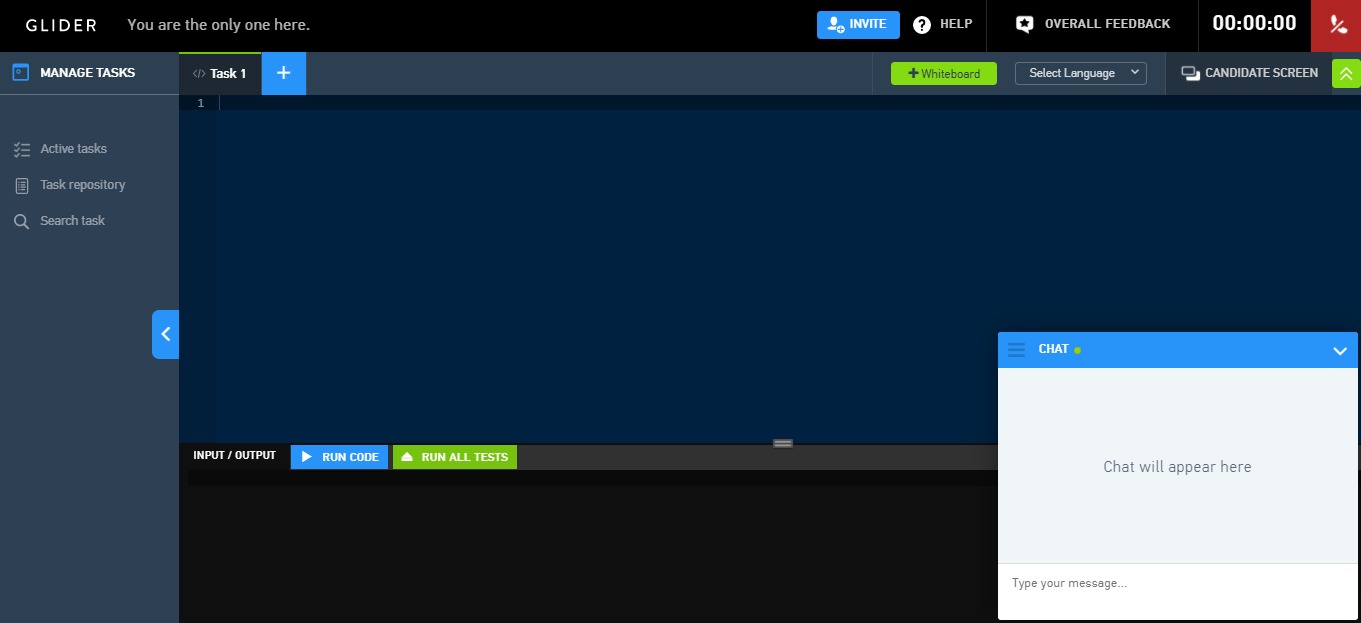
The Redwood City company gives employers a controlled place to see candidates code, solve functional problems, answer structured questions and work through job-like scenarios. Around that core it has assembled automated outreach, phone screening, live and one-way video interviews, identity verification, AI proctoring and practice-based employee learning. Its customers are not only technology recruiters. They include enterprise HR teams, staffing firms, managed-service providers and systems integrators hiring across technical, customer-service, finance, aviation, healthcare and other roles.
This is a crowded neighborhood. HackerRank, CodeSignal and Codility own plenty of mindshare in developer testing; TestGorilla and Mercer Mettl cover broad assessment libraries; HireVue is a familiar name in video interviewing. Glider's wager is that an enterprise does not want another isolated test. It wants a chain of evidence running from first contact to final interview, with fewer gaps for bias, impersonation or a magically eloquent résumé to slip through.
Hiring measured activity, not proof
Founder and CEO Satish Kumar came to the problem from assessment software. He previously co-founded Edulastic, an education platform, after an earlier engineering career at Oracle. The family resemblance matters: both classrooms and hiring departments need to distinguish a memorized answer from durable capability. Kumar's stated mission for Glider was to make hiring fair and opportunity accessible, particularly for people whose skills are stronger than their credentials.

The first thing to fail was not a Glider product. It was the industry's favorite shortcut. Degrees, brand-name employers and keyword-rich résumés made screening faster, but did not consistently show whether a person could perform a specific task on day one. Manual interviews added another noisy signal: different interviewers asked different questions, tired panels rushed feedback, and confident candidates could outperform competent ones.
Glider's early answer was straightforward. Build realistic assessments for technical and non-technical work, score everyone against a common rubric and show employers the work product. By 2023, the company said its library held more than 250,000 questions, 35-plus interactive question types and 500-plus competencies. Employers could also model their own technology stacks and functional roles instead of settling for a generic aptitude quiz.
“Companies realize employee skills are central to their business strategy, not just hiring.”Satish Kumar, Glider AIThe second problem
Then the applicant became impossible to verify
Remote hiring made those assessments useful at enormous scale. It also broke the old assumption that the person taking a test, appearing in an interview and arriving for work would necessarily be the same person. Glider added location and device checks, government-ID comparison, duplicate detection, code-plagiarism analysis, screen and webcam monitoring, and reviewable audit trails. Its newer Real Candidate 360 packaging organizes the idea neatly: identity, integrity and capability.
Generative AI tightened the screw. A candidate can now produce a polished application in seconds, whisper a prompt to a second device or lean on an invisible coding assistant. Glider's response was not simply to ban the technology. Its 2025 AI Assistant lets candidates use AI inside technical assessments, then records how they prompt, question, debug and apply the advice. The final code still matters, but so does judgment. That is a more credible simulation of modern engineering than pretending nobody opens a copilot after joining.
The proof stack / more confidence at each layer
This product progression answers what changed the company's mind. Customers did not merely need a better exam. They needed confidence across a leaky sequence: Is the person interested? Are they who they claim to be? Can they do the work? Can they explain it? Can they keep learning after they are hired? Glider followed those adjacent questions into conversational phone screens, AI-guided interviews, fully autonomous interviews and role-play training.
The machine interviewerA consistent conversation, with an uneasy tradeoff
Agentic AI Interviews, launched in May 2025, is the most legible expression of the strategy. The system conducts a two-way interview in multiple languages, asks follow-up questions, runs role-specific tasks, answers a candidate's questions and produces a transcript and skills report. For a retailer screening thousands of customer-care applicants, or a staffing company racing to validate scarce technical contractors, that removes a genuine bandwidth constraint.
It also puts Glider in the middle of a live argument about automated hiring. Standardized questions can reduce one interviewer's improvisational bias, but consistency is not the same as fairness. A flawed job description becomes a flawed interview at machine speed. Proctoring can deter fraud, but candidates may reasonably dislike granting camera, microphone and screen access. And even Glider's own material argues that AI is best at high-volume, pattern-based tasks, not culture, leadership potential, trust or ambiguity.
The useful line is therefore operational: let software collect and structure evidence; let accountable humans make consequential decisions. Glider says its AI is recruiter-centric, and that qualifier must carry real weight. If an employer treats a score or automated summary as a verdict, the tool has not removed bias. It has merely given the bias a dashboard.
“Hiring breaks down when the signals used to evaluate candidates lack verifiable data.”Satish Kumar, Glider AIThe money
What it costs - and who should pay
Glider does not publish dollar prices. Public product listings describe free trials, subscription levels based on users and volume, fixed packages and pay-as-you-go options. That means the real cost arrives after a sales conversation, integration scoping and a decision about how much assessment, interviewing and proctoring the buyer needs. For enterprise software, this is ordinary. For a ten-person startup hiring two engineers, it is a hint that a narrower tool or a disciplined manual work sample may be cheaper.
The company raised a $10 million Series A in March 2023 from Primera Capital and other industry leaders. It used the financing thesis to expand in both permanent and contingent hiring, develop proprietary technology and grow its global team. In November 2025, Glider partnered with Findem, whose data engine discovers and ranks talent. Glider supplied the validation layer: assessment, interview and identity proof.
On March 19, 2026, Findem announced its acquisition of Glider. The terms were undisclosed, and Glider joined Findem's product suite under its existing brand. The strategic logic is cleaner than most HR-tech combinations. Findem finds people; Glider tests the claims. Together they promise “hire-ready” candidates before a hiring manager becomes involved. Findem also announced outcome-aligned pricing tied to hires - a meaningful shift from charging for software activity to charging closer to the result.
What a smaller company can steal for almost nothing
- Write down the three tasks that predict success in the first 90 days.
- Give every finalist one short, paid simulation of the most important task.
- Score the work against the same rubric before discussing personality or pedigree.
- Ask the candidate to explain one decision, one tradeoff and one mistake.
- Keep the evidence and revisit it after 90 days. Improve the test when it predicts badly.
Where the system works - and where it does not
Glider fits best where hiring is frequent, expensive or exposed to fraud; where job performance can be represented through observable tasks; and where multiple recruiters or suppliers need a shared quality standard. Large staffing programs, technical contracting, high-volume service roles and regulated enterprises can justify the integration and governance work. Connections to SAP SuccessFactors, Workday, Bullhorn, Greenhouse, iCIMS, JobDiva and other HR systems reinforce that enterprise position.
The role cannot be reduced to a fair simulation, candidate volume is tiny, the company lacks a validated rubric, or decision-makers plan to treat automated output as unquestionable truth. More instrumentation will not repair a confused definition of good work.
It also will not work well when trust runs only one way. Employers need to explain what is recorded, why identity checks are proportionate and how candidates can request accommodations or human review. A test that feels like an ambush may filter out exactly the careful, privacy-conscious people a company wants. The candidate experience is part of the evidence too.
Glider's most interesting achievement is not that it automated an interview. Plenty of vendors can produce a synthetic voice and a scorecard. It is that the company kept returning to the same product question as the market changed: what would count as better proof? First the answer was a work sample. Then it was a verified test taker. Then a consistent conversation. Now it includes the ability to collaborate with AI without surrendering judgment.
That coherence helps explain the Findem deal. Recruiting has spent years buying more workflow. The combined pitch is that employers should buy a result - a person whose interest, identity and ability have been checked before the expensive humans enter the room. Whether that produces better hires will be proven later, on the job. Appropriately enough, Glider has built a company around refusing to confuse the application with the evidence.