Recruiting software has a peculiar talent for creating work in the name of organizing it. A candidate begins in a sourcing tool, wanders into an outreach sequencer, reaches the applicant tracker, borrows a calendar, attends a recorded interview, and finally becomes a row in somebody's spreadsheet. Every handoff is another place for context to go missing. Kula's pitch is refreshingly concrete: put the whole trip in one system.
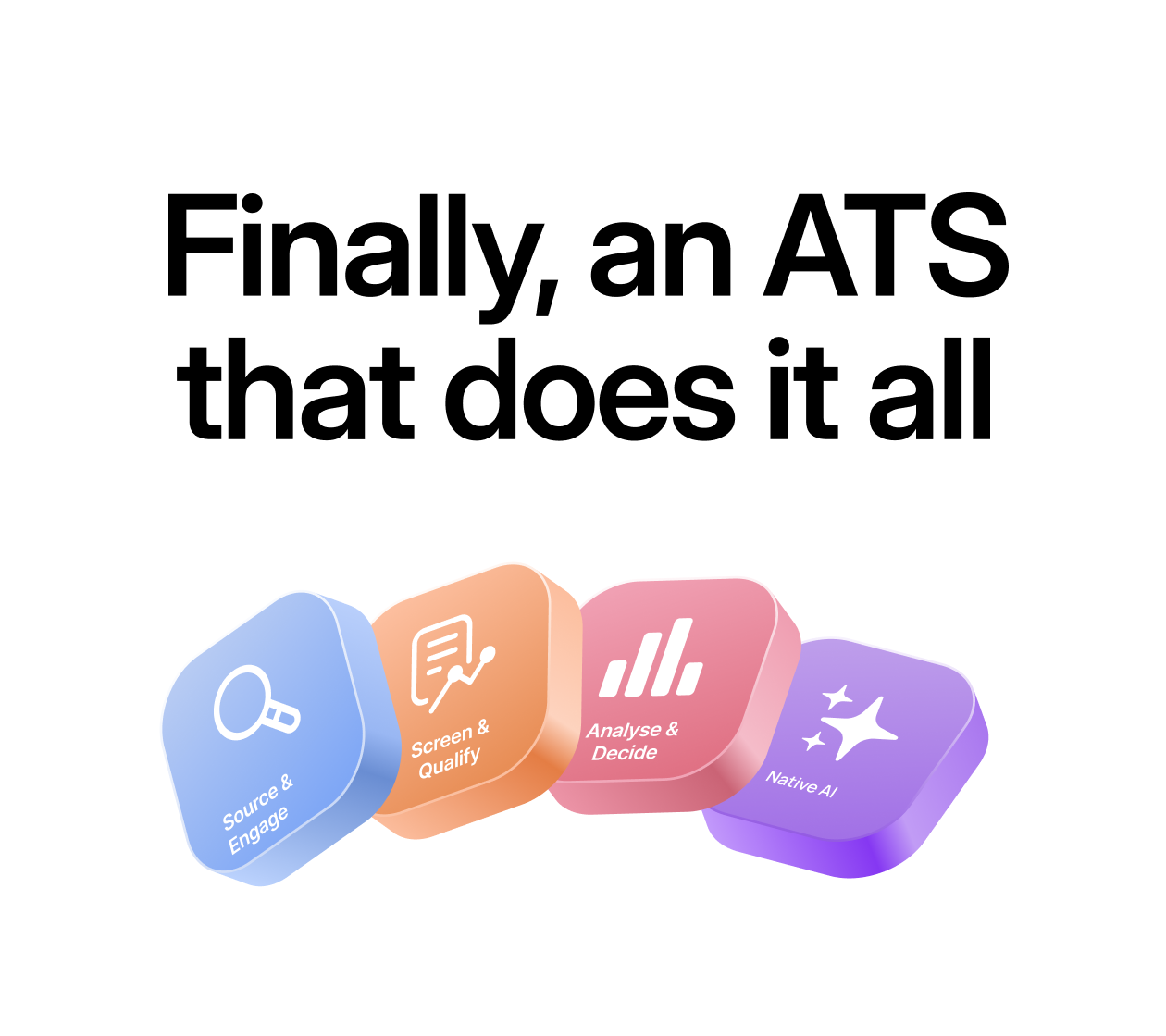
That makes Kula most interesting for a lean talent team whose browser looks like air-traffic control. It is a cloud-based applicant tracking system with sourcing, a talent CRM, multi-channel outreach, screening, scheduling, interview notes, scorecards, offers, analytics, referrals, automations, and more than 100 integrations. AI sits across those jobs, scoring applications, drafting messages, summarizing calls, and answering questions about the pipeline.
If you already love your ATS and each specialist tool around it, the argument is weaker. A dedicated interview-intelligence product may go deeper. A large enterprise may need reporting and governance that have been polished through years of edge cases. Kula is the sharper proposition when consolidation itself is the job: fewer contracts, fewer syncs, and fewer afternoons spent wondering which system owns the truth.
Born from a recruiter's least favorite chores
Co-founder and CEO Achuthanand Ravi did not arrive at hiring through the usual HR door. He began as a software engineer at Microsoft, moved into recruiting, then worked at Practo, Freshworks, Uber, and Stripe. At Freshworks, he says he helped the company grow from 87 to 913 people. At Stripe, leadership recruiting exposed the mismatch that became Kula: he enjoyed finding and winning candidates, but the operational grind kept eating the day.
He wanted the recruiting equivalent of the automation sales and marketing teams already had: cold email, follow-ups, multi-channel engagement, and a usable memory of every prospect. Unable to find it in a recruiter's shape, he started Kula in 2021 with engineers Sathappan Muthupalaniappan and Suman Kumar Dey. The name comes from a Sanskrit word the company translates as community. Its early referral feature, Circles, tried to make that literal by surfacing employees' first-degree connections for warm introductions.
The founding biographies explain some of the product's bias toward workflow. Sathappan was Freshworks' third engineer and later an engineering leader at Grab. Suman worked on infrastructure at Freshworks and Grab, then served as an architect at Salesforce. The trio raised $2.7 million in pre-seed funding in early 2022, followed by a $12 million seed round co-led by Sequoia Capital India and Square Peg that August. Kula reported more than 1,200 brands on its waitlist before launch.
The point solution that swallowed the stack
Kula first came to market around sourcing, outreach, and referrals. Its 2022 Product Hunt debut finished first for the day. In August 2023, a broader public launch added Kula AI for candidate research and personalized messages; that release also finished first for the day and fourth for the week. Then came the consequential turn. In September 2024, Kula launched a full hiring platform, moving from the top of the funnel into applicant tracking, screening, scheduling, interview feedback, and analytics.
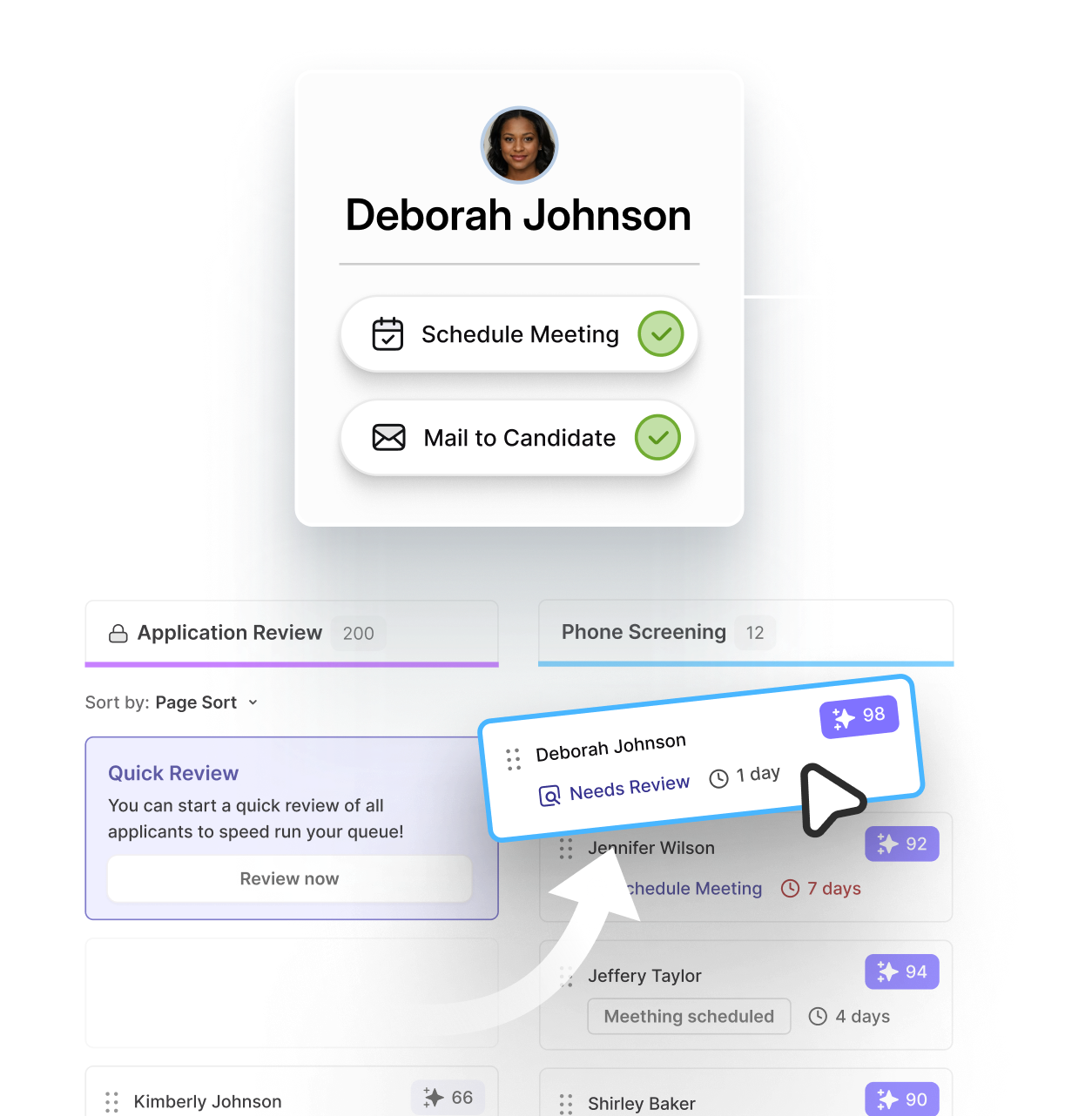
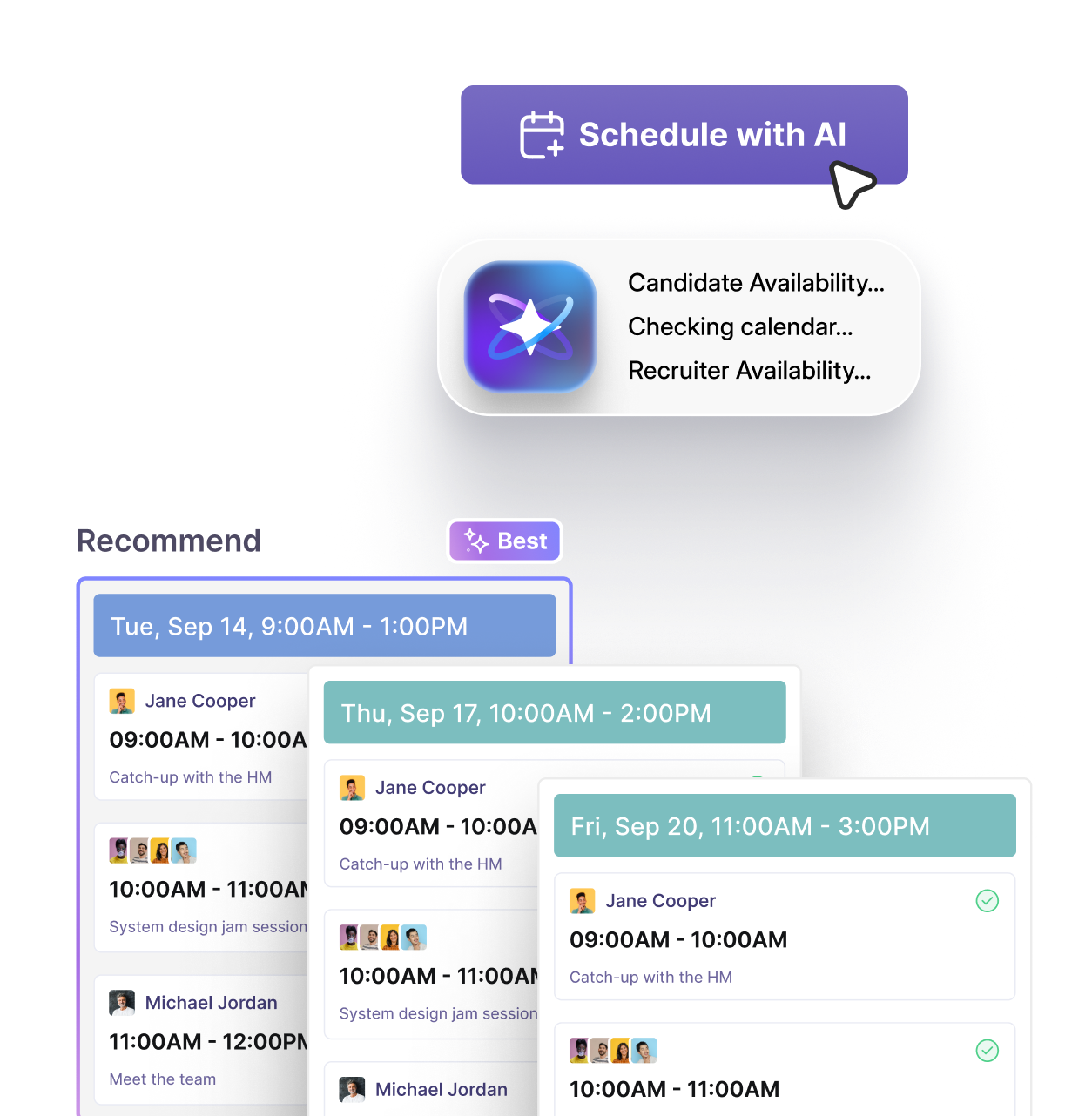
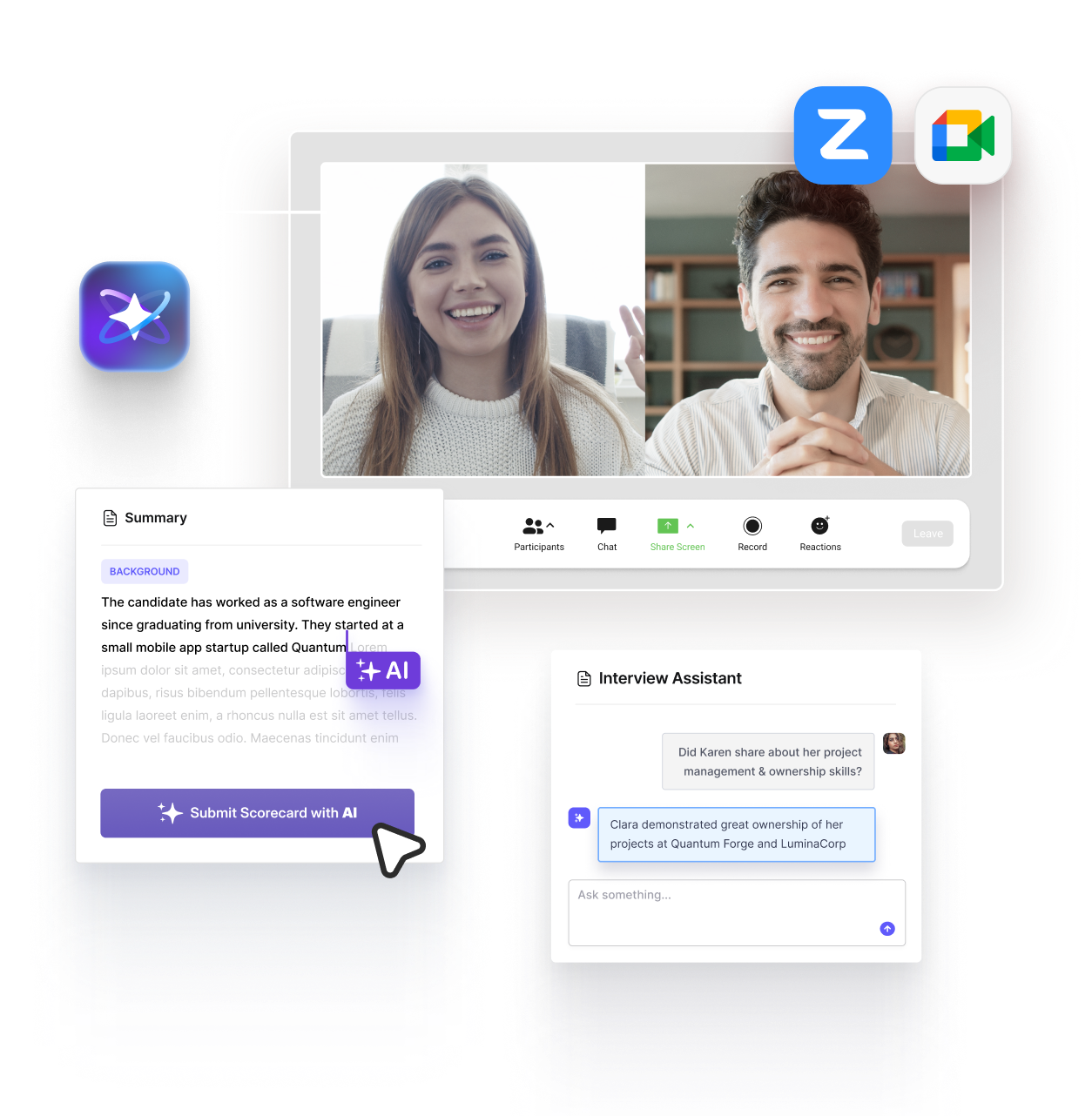
The result feels less like a chatbot taped to an old database and more like automation threaded through the recruiting record. Resume scoring ranks applicants against job-specific criteria and shows its reasoning. Scheduling checks calendars and offers self-service links. The notetaker records and summarizes interviews, then helps populate structured scorecards inside the candidate profile. Conversational analytics lets a recruiter ask about pipeline health or source performance without beginning in Excel.
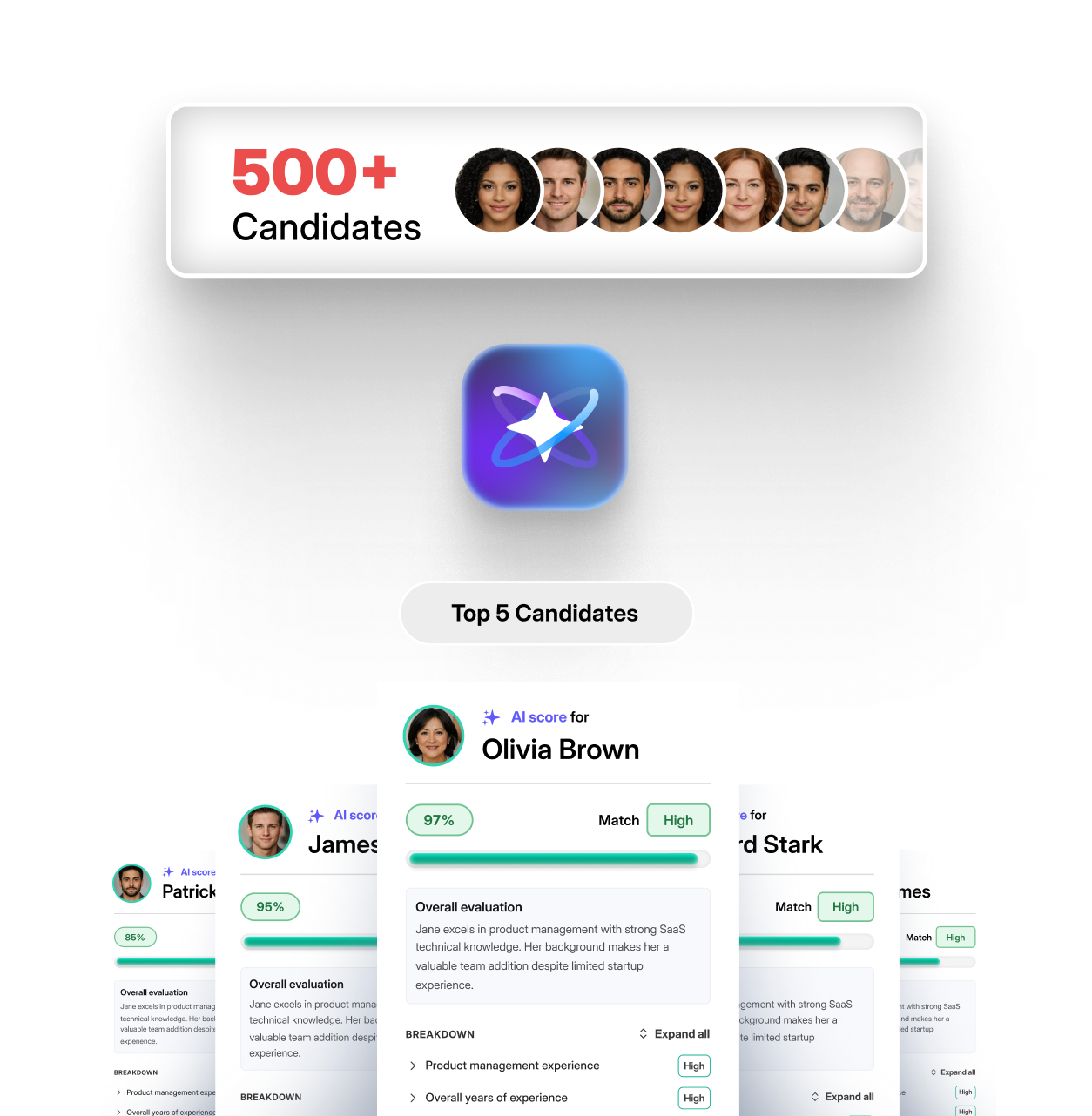
Kula's best feature is not any single AI trick. It is keeping the trick, its evidence, and the recruiter's next action attached to the same candidate.
That distinction matters. Recruitment AI becomes dangerous when a clean number hides a messy judgment. Kula says its scoring is configurable and its fairness controls are audited by Warden AI. Its newer Fraud Detector checks identity, device, IP, contact, location, and behavior signals, but returns a reasoned verdict rather than rejecting somebody automatically. Applicants are meant to be told that fraud checks are running. Those are sensible boundaries, although every buyer should still review the configuration, consent language, retention rules, audit results, and local employment law with qualified counsel.
What customers notice after the demo glow
The review pattern is unusually coherent. Recruiters like the clean interface, customizable workflows, scoring, notetaker, and close implementation support. A February 2026 G2 reviewer praised Kula's AI scoring, conversational agent, notetaker, and hands-on guidance through setup. A director of talent called the interface intuitive for occasional hiring-manager users and said migration was quicker and lighter than expected. A solo recruiter described automated scoring as useful first-pass triage on high-volume roles.
The complaints are equally instructive. Reviewers mention occasional bugs, pages that load slowly, uneven syncing, a learning curve around interview plans, and reporting or filtering that can feel young. One reviewer wanted the simple ability to cap daily interviews. The same reviewer warned that a highly optimized résumé can earn a persuasive score without matching real-world ability. Kula's team gets credit for responding to feedback, but responsiveness is not the same as a mature feature already being there.
Independent analyst SelectSoftware Reviews reaches a similar conclusion: Kula is compelling when a team wants interview intelligence built into a replacement ATS, but dedicated products such as Metaview or BrightHire offer deeper coaching and interview analytics. On Reddit, a recruiter comparing Kula with Ashby and Gem liked the prospect of more attention and customization from a smaller vendor, while commenters advised asking for references from customers who migrated from the same legacy ATS. That is excellent buying advice.
The price is simple until you ask the next question
Kula prices annually by company headcount, not by recruiter seat, and says every core feature includes unlimited AI, data enrichment, integrations, implementation, and support. When checked in September 2026, its public selector displayed $5,120 per year for the selected small-company tier and custom pricing at the upper end. The company claims customers commonly cut recruiting software costs by consolidating separate ATS, scheduling, and note-taking products. Treat the savings numbers as vendor-reported, then run your own arithmetic.
There is one wrinkle worth circling in orange. Kula's pricing page says every feature is included, while an August 2026 support article describes Fraud Detector, Scoring Agent, and Coordinator states that can read “Unlock with Add-on.” That may reflect a distinction between core AI features and newer autonomous “AI Teammates,” or a documentation-plan mismatch. Either way, ask for a line-by-line entitlement sheet. Pricing clarity lives in the signed order form, not the headline.
| Buying situation | Kula's angle | Question to press |
|---|---|---|
| Greenhouse or Lever plus add-ons | Replace several contracts with one record and workflow | Will every historical field, scorecard, consent record, and report migrate? |
| Ashby shortlist | Recruiter-led design, native sourcing, notes, scheduling, and AI | Which custom reports and permissions work today, not on the roadmap? |
| Gem or sourcing-first stack | Carry outreach activity directly into the ATS | Can current sequences, enrichment rules, and reply history come across? |
| Metaview or BrightHire user | Interview notes and scorecards live inside the candidate record | What coaching, quality, and cross-interview analysis would you give up? |
For builders, the ATS has doors
Kula also exposes a REST API with JSON responses, webhooks for real-time events, and an MCP server distributed as @kula-ai/mcp-server. The MCP documentation lists 74 tools covering jobs, candidates, applications, interviews, users, templates, requisitions, scorecards, and webhook administration. With a Kula API key, compatible clients such as Claude Desktop, Cursor, or Claude Code can search the ATS and operate workflows through natural language.
This is promising for talent-operations teams that need their process to be specific. It is also real access to sensitive employment data. Before connecting an assistant, inventory exactly which tools it can call, restrict keys, separate test and production work, rotate secrets, review logs, and decide which actions always need a person. “It can move a candidate” and “we should let it move a candidate” belong in different meetings.
The YesPress verdict
- Buy the demo if you run a lean recruiting team, want a new ATS anyway, and can retire several point tools at once.
- Test hard if reporting, complex interview loops, permissions, or high-volume scheduling are central to your operation.
- Wait or compare if your current ATS is stable and you only need a deeper specialist for sourcing or interview coaching.
Make Kula audition for the job
Do not spend the demo admiring a tidy sample pipeline. Bring the role that always breaks your process. Ask Kula to schedule the panel with three time zones, preserve a candidate's accommodations, enforce the awkward permission rule, rebuild the board report, and explain why its scoring model ranked two real anonymized résumés differently. Then ask a hiring manager who dislikes ATS software to complete a scorecard without coaching.
Request references from customers of similar size who left your current system, and speak with both recruiters and hiring managers. Confirm implementation ownership, migration validation, support response times, data export, model governance, add-ons, annual increases, and what happens at renewal. Kula's consolidation story is attractive precisely because switching the system of record is consequential. Make the company prove the dull parts. The dull parts are where software becomes infrastructure.
Kula's public positioning and workflows focus on in-house talent teams. An agency should verify client portals, placements, billing, and multi-client separation rather than assume an ATS covers agency operations.
No. It prioritizes, summarizes, and flags. Recruiters set criteria and make decisions; the Fraud Detector specifically says it does not auto-reject.
No public free plan is listed. An independent review reports a trial after a demo. Ask Kula what data and integrations are included in a proof of concept.
Not access to AI in isolation. It is the attempt to keep sourcing, applicant tracking, scheduling, interview intelligence, and analytics native to one data model.
Very large or heavily regulated organizations, teams satisfied with a best-of-breed stack, and buyers who need deep bespoke reporting should validate their edge cases carefully.