At Riviera Partners, an executive search firm, the problem was almost embarrassingly ordinary. Recruiters had conversations. Then they wrote things down. Except they used different tools, followed different routines and took different amounts of time to put those notes into the firm’s system. The search could stall between hearing something useful and making it useful to somebody else. A business built around finding people had acquired a small bureaucracy around remembering them.
- The starting point: interview notes that let the interviewer pay attention.
- The expansion: agents for sourcing, outreach, application review and screening, sharing the role’s context.
- The scale: Metaview reports 7,000+ customer companies and $110 million raised.
- The buyer’s question: which recurring task improves enough to justify the subscription?
Metaview entered Riviera through a recruiter using it on status calls. It spread to the 80-person recruiting team, and then to candidate intakes, client pitches, kickoffs and debriefs. The firm’s published case study reports more than six hours saved per recruiter per week. The change began with an unremarkable act: producing a usable account of a conversation without requiring its participants to become stenographers.
The expensive art of half-listening
A hiring interview asks a person to do several things at once. Listen closely. Judge the evidence. Think of the next question. Keep a record precise enough for colleagues who were elsewhere. The last task competes with the others. A keyboard is a very efficient way of looking busy while missing a hesitation that deserved a follow-up.
Metaview’s original practical appeal was to relieve that competition. Its notetaker captures recruiting conversations and turns them into structured, customizable notes. Teams can use the material to fill scorecards and prepare follow-ups. An applicant tracking system, or ATS, remains the place where the hiring process is organized; Metaview connects the conversation to that process.
That distinction explains its recruiting specialization. A transcript preserves words. A recruiter needs evidence about a role: relevant experience, constraints, motivations and unanswered questions. Metaview builds around those tasks, including intake meetings and debriefs as well as interviews. Its customers include internal talent teams, hiring managers and search firms. The company’s current customer roster ranges from Deel and Replit to larger employers such as Affirm.
The product nobody quite needed
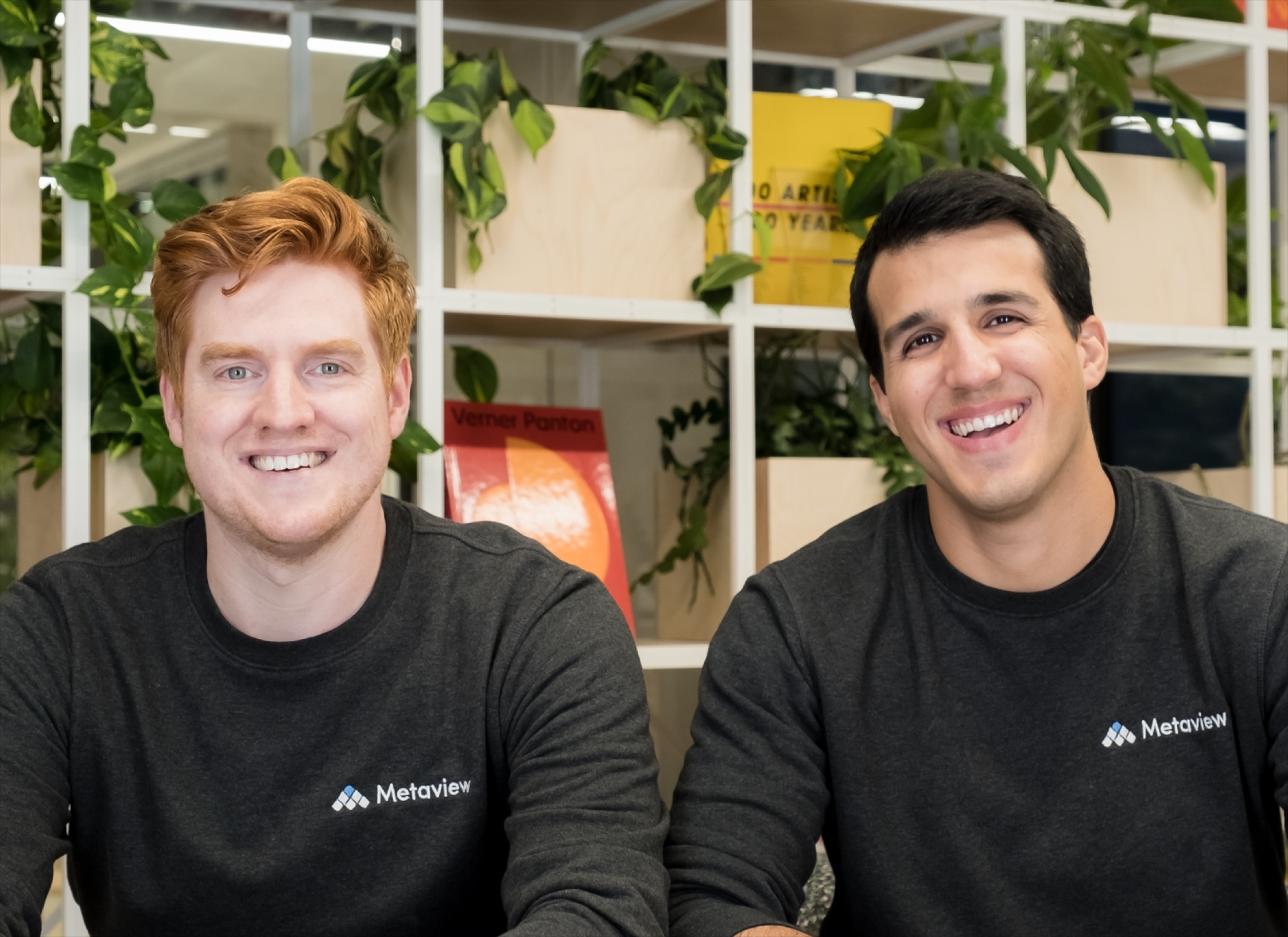
Siadhal Magos and Shahriar Tajbakhsh founded Metaview in 2018 after working at Uber and Palantir, respectively. They had experienced the odd imbalance of modern hiring: considerable attention to building teams, rather less visibility into the conversations on which hiring decisions rested. They set out to capture that missing information.
The diagnosis preceded the useful remedy. In a March 2024 account, Magos said the earlier technology could not turn the captured data into applications that solved a sufficiently painful problem. It is a refreshingly severe assessment for a founder to publish.
“We hadn’t managed to make something people needed.”Siadhal Magos, March 2024
Then language models changed the economics of extracting meaning from a conversation. Magos identifies the arrival of GPT-3.5 in late 2022 as the turning point. Metaview pivoted toward AI-first products. By March 2024, the company reported customer count growing twentyfold year on year. An interesting repository of interview data had become a tool that could finish a chore.
The distinction is worth stealing. People may admire a dashboard and postpone opening it indefinitely. They notice a task that disappears from the end of every call. Metaview’s early history suggests that usefulness can depend on how close a product gets to an irritating, repeated action.
An interview becomes a brief
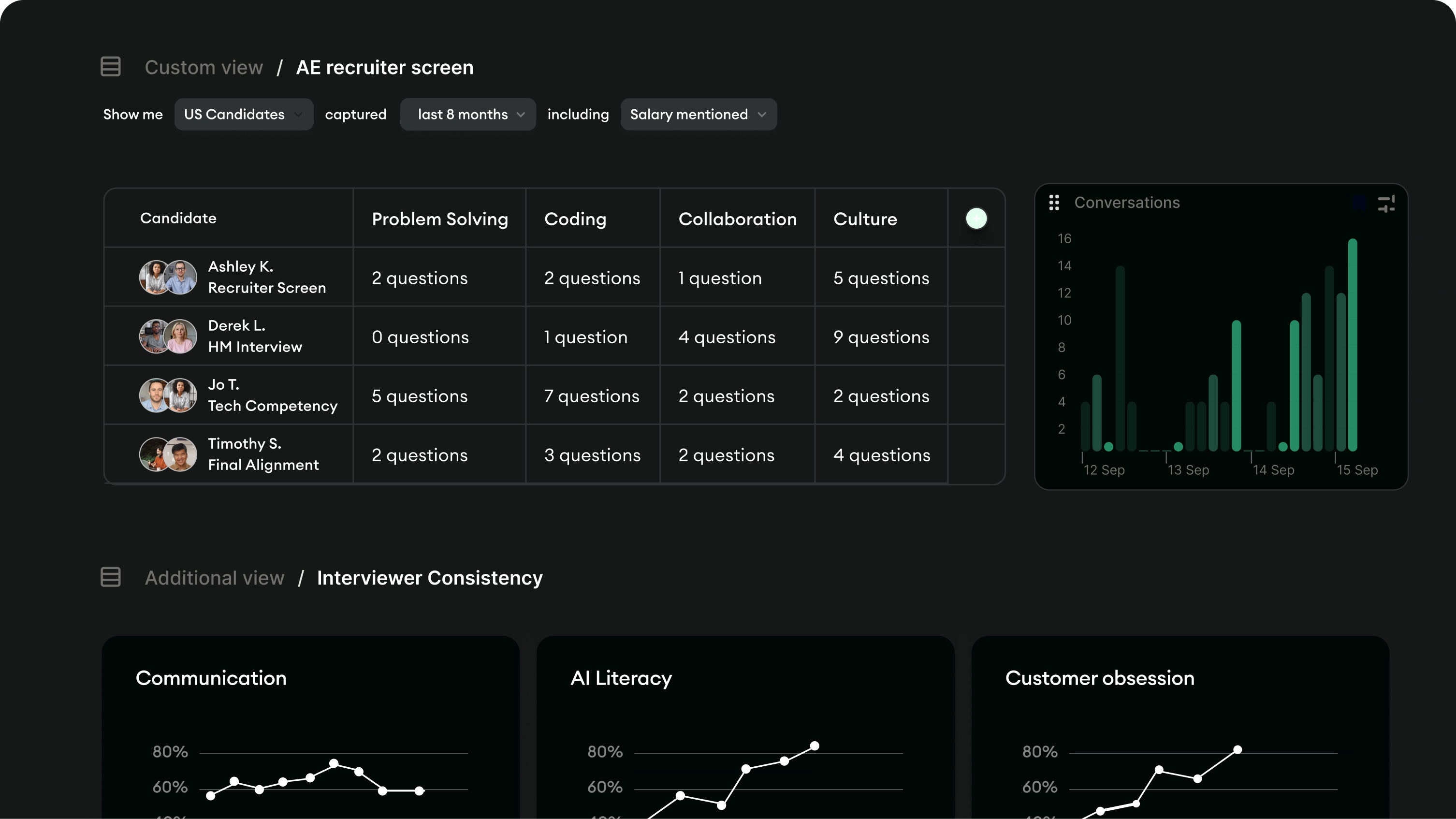
The current platform extends that logic beyond note-taking. AI Sourcing finds candidates from a brief. Application Review examines inbound applications against requirements. Outreach supports personalized messages and follow-up. Job Posts drafts descriptions from intake context. Reports helps teams examine what their interviews and recruiting processes reveal. The website also promotes an AI screening agent, while the latest funding announcement describes further development of that capability.
- 01BriefAgree what the role needs.
- 02Search + reviewAgents work against that brief.
- 03InterviewCapture evidence and feedback.
- 04DecidePeople review the recommendation.
Feedback updates the candidate profile for the next search.
The connecting idea is a shared account of what the team wants. Metaview calls this an Ideal Candidate Profile. It can incorporate job requirements and hiring feedback; the team can inspect, edit and override it. A sourcing tool should therefore receive the context already gathered in an intake call, rather than require somebody to type the manager’s wishes all over again.
Its new outbound coworker, fillmore, takes on candidate research, outreach, follow-up and booking screening calls. This brings Metaview into a broader market. BrightHire overlaps in interview intelligence and screening. General meeting assistants such as Otter can capture conversations. LinkedIn Recruiter addresses sourcing. Ashby organizes recruiting as an ATS and broader suite, and also integrates with Metaview. Buyers are comparing several overlapping jobs, rather than a neat row of identical products.
Six hours is a rather useful unit
Customer reports put some flesh on the administrative argument. Hudson RPO introduced Metaview on a high-volume project before making it part of daily recruiting work. Its published case study estimates eight to ten hours saved per recruiter each week, including time previously spent writing up calls.
Vendor-published customer estimates. Bars use a 10-hour scale; results are separate examples, not a controlled comparison.
Lemonade’s experience points toward the platform’s expansion. The insurer initially wanted better notes so interviewers could stay present. It subsequently used sourcing and reporting alongside its Ashby integration. In a July 2026 case study, recruiting director Fiona Keane reported a 60% reduction in LinkedIn costs. The team also described using market information before opening a search, helping managers understand the available talent pool.
These are accounts from customers in Metaview’s own case studies, rather than universal savings promises. Their practical pattern is still useful: start with a visible bottleneck, establish a shared way of capturing information and see whether that information improves the next step. A pilot can measure how quickly feedback reaches a manager as well as how long the write-up takes.
The price of getting the time back
Metaview sells subscriptions to businesses. Its published sourcing plans, checked in October 2026, offer the first 100 profiles free. Pro costs $100 per user per month for 200 profiles a month; Max costs $300 for unlimited profiles. Enterprise sourcing and the complete agent platform carry custom pricing. Those sourcing figures describe a specific product, and a buyer assembling several agents needs a quote for that combination.
The company’s own expenditure is easier to see in its financing history. A $6 million seed round in 2021 preceded a $7 million Series A led by Plural in 2024. GV led a $35 million Series B in June 2025, when Metaview reported more than 3,000 customers. On September 30, 2026, Insight Partners led a $60 million Series C. The reported total reached $110 million.
Seedcamp’s account of the latest round emphasizes its backing of the founders since 2018. Metaview now says more than 7,000 companies use the product. The new money supports a wider agent platform, team expansion and a New York office alongside London and San Francisco. The recruiting tool has acquired a substantial recruiting assignment of its own.
A bot still needs a sensible brief
Metaview’s stated operating principles include velocity, transparency, hospitality and ownership through to an outcome. The careers page gives transparency an amusingly literal form: SlackBook, a public selection of bookmarked internal messages. The company also runs the 10x Recruiting community, with conversations and training around using AI in hiring.
For a customer, the useful discipline is less theatrical. Decide who may see a recording, agree how consent will be handled and define what evidence belongs in the scorecard. Metaview publishes privacy information and offers enterprise controls. Its privacy policy distinguishes its role in an employer’s recorded interviews from its handling of sourcing information; those are different data relationships.
There are also ordinary limits. A vague role brief gives an agent little to follow. An unavailable recording cannot become useful interview notes. A polished summary still needs checking against the underlying conversation, especially when it informs a hiring decision. Faster processing cannot resolve a disagreement about what the job actually requires.
The sensible thing to copy is small enough to begin tomorrow: choose one recurring hiring chore, give it a clear template and measure whether the resulting evidence reaches the next person sooner. Expand from there. Metaview’s story began with information getting stuck after a conversation. Its larger ambition depends on keeping that information useful as it moves.
Open the tools. Hear the people.
Explore the platform, inspect the price list, or listen to the people explaining the work.