BrightHire is for the recruiter who has ended a promising interview with six tabs open, three half-sentences in a notebook and no memory of whether the candidate answered the second half of the question. It is also for the talent leader who suspects interviews are wildly inconsistent but has only vibes and late scorecards to prove it. BrightHire records the conversation, transcribes it, drafts structured notes, connects evidence to the hiring system and turns a collection of calls into something a team can inspect.
The short verdict: this is serious hiring infrastructure, not a cute meeting bot. It makes the most sense for a talent team with enough interviews to create real operational drag, an established applicant tracking system and the appetite to govern sensitive recordings. A company making ten hires a year will struggle to justify the ceremony. A distributed recruiting organization living in Greenhouse, Workday, Ashby or Lever may wonder why the interview was ever allowed to remain a black box.
Mid-market and enterprise talent teams, high-volume recruiters, recruiting operations leaders, and hiring organizations that want standardized interviews, faster feedback and coachable evidence. Small teams chasing only transcription should compare a general meeting assistant first.
The useful trick is attention
A conventional interview asks one person to listen, think, build rapport, watch the clock and produce defensible notes at the same time. Something usually gives. BrightHire removes much of the typing. Its AI Notes can be customized for different interview types; highlights jump to the relevant moment; scorecard content can flow into the ATS. A hiring manager can listen now and inspect the wording later.
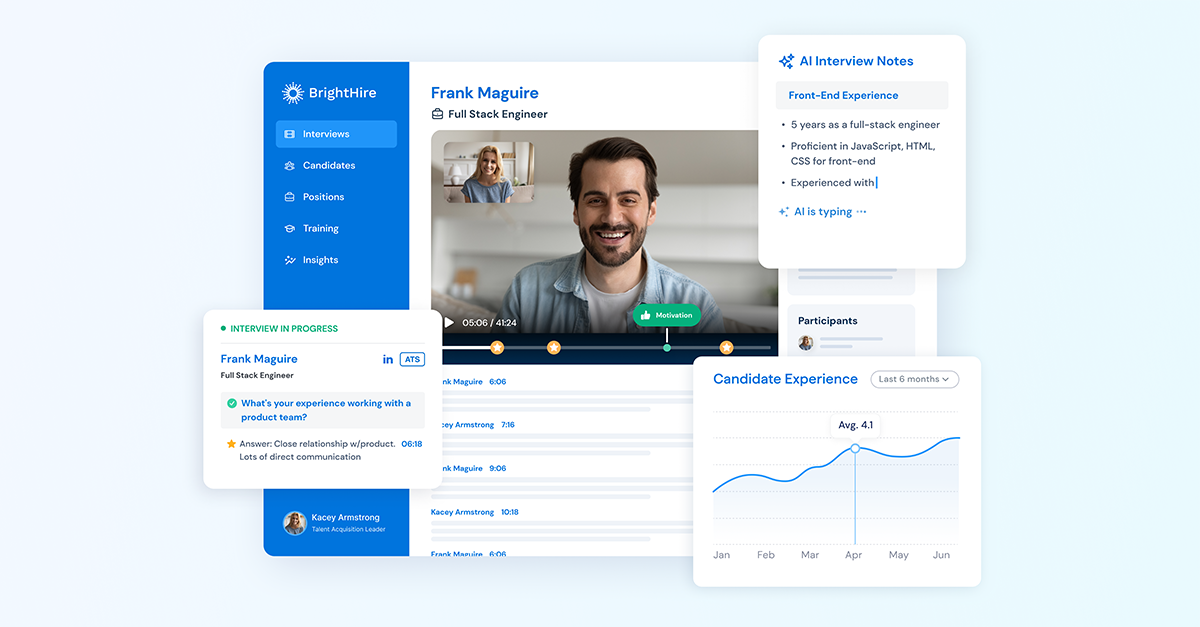
That focus benefit is the product’s easiest sell. On G2, reviewers repeatedly praise note-taking and engagement; the current listing shows 4.7 out of 5 across 124 reviews, while also flagging occasional transcription inaccuracy, bugs and UI complaints. One concise review says BrightHire delivers “quality interview notes faster.” A recruiter discussion on Reddit supplies the necessary counterweight: some users complain that summaries can sound too positive or miss pieces of the conversation. AI notes are a first draft with timestamps, not minutes handed down from a marble bench.
The product is strongest when it gives humans better evidence. It gets weaker the moment the summary is treated as the evidence.YesPress field note
From recorder to hiring operating system
BrightHire began in 2019 with a clean observation from childhood friends Ben Sesser and Teddy Chestnut: companies call hiring crucial, then run interviews with pen, memory and improvisation. Chestnut had spent more than six years at LinkedIn and grew up with two HR professionals for parents. Sesser had watched people decisions shape scaling technology companies. They raised $36 million, including a $20.5 million Series B led by 01 Advisors in 2021. Zoom’s Apps Fund participated.
Four years later the investor became the owner. Zoom announced the deal in November 2025 and completed the acquisition on December 1 for roughly $98 million in cash. BrightHire remains a standalone product and brand, works without a Zoom license, and still supports Google Meet and Microsoft Teams. The logic is not subtle: millions of job interviews already happen inside video calls, and Zoom wanted a recruiting workflow attached to those conversations.
Those are company-reported aggregate results, not a promise to every buyer. The more durable proof is scope. By June 2026, BrightHire said it had captured more than four million interviews across three million candidates. Named customers include LinkedIn, SoFi, Canva, HubSpot, Duolingo, Zapier, HCA Healthcare and Gartner. This is enough data and usage to move the conversation past novelty, though not past scrutiny.
What happens before, during and after hello
Before an interview, a copilot can help build a job description, interview plan and question set. Calendar-based assignment can attach the correct guide automatically. During live calls, interviewers get structure while BrightHire captures the conversation. Afterward come transcripts, configurable notes, clips, one-click scorecards and an Ask Assistant for questions such as whether compensation or a particular competency came up.
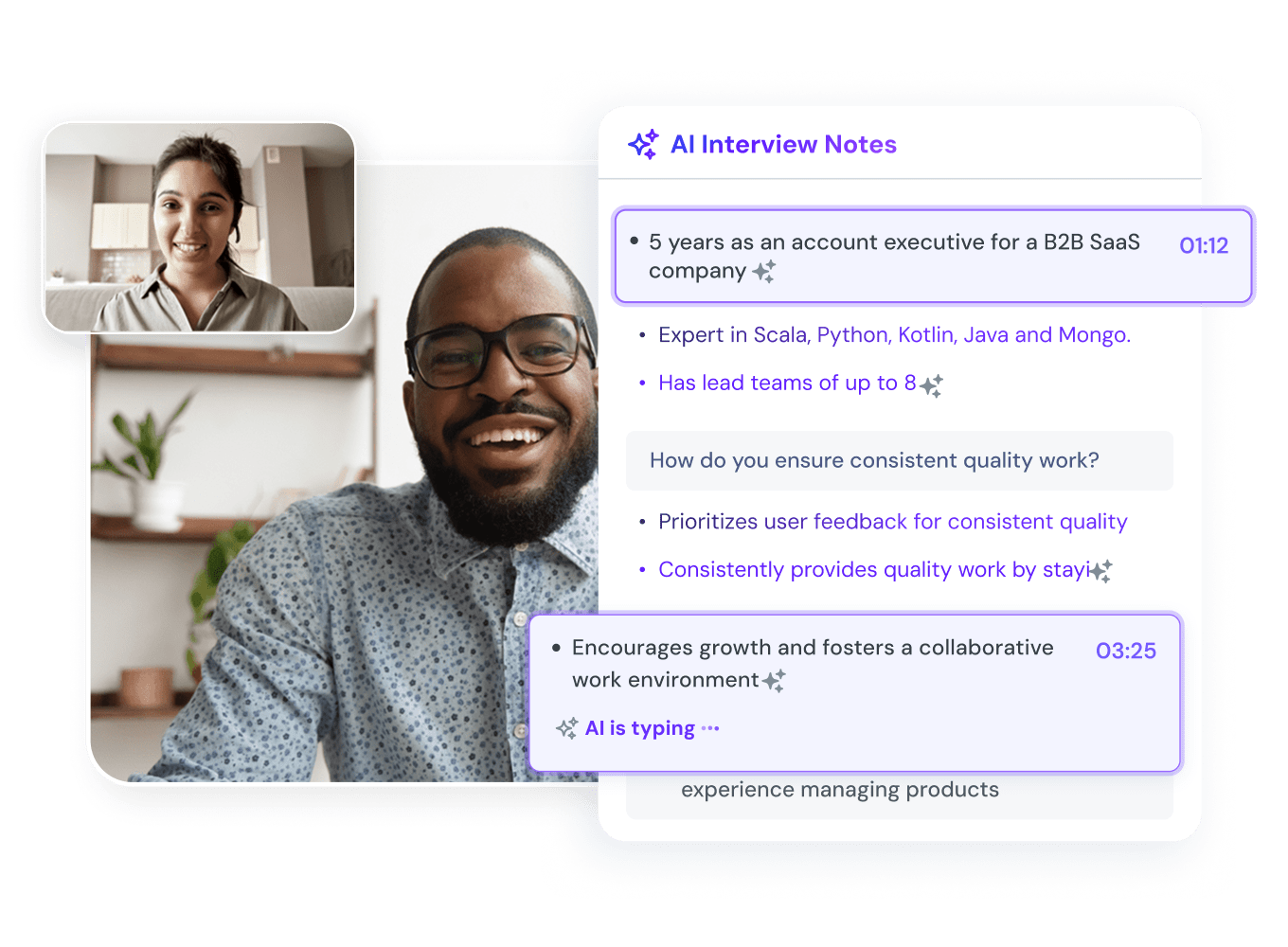
At the management layer, Interview Insights can track on-time starts, agenda setting, talk-to-listen ratio, question coverage and whether candidates had room to ask their own questions. Insights Explorer lets authorized users query many interviews in plain language and returns answers linked to source conversations. BrightHire also offers an MCP connection, using OAuth and existing permissions, so teams can ask questions from ChatGPT, Claude, Cursor and other compatible clients. There is also REST API access and export for teams that prefer their own reporting.
Screen is the bigger bet
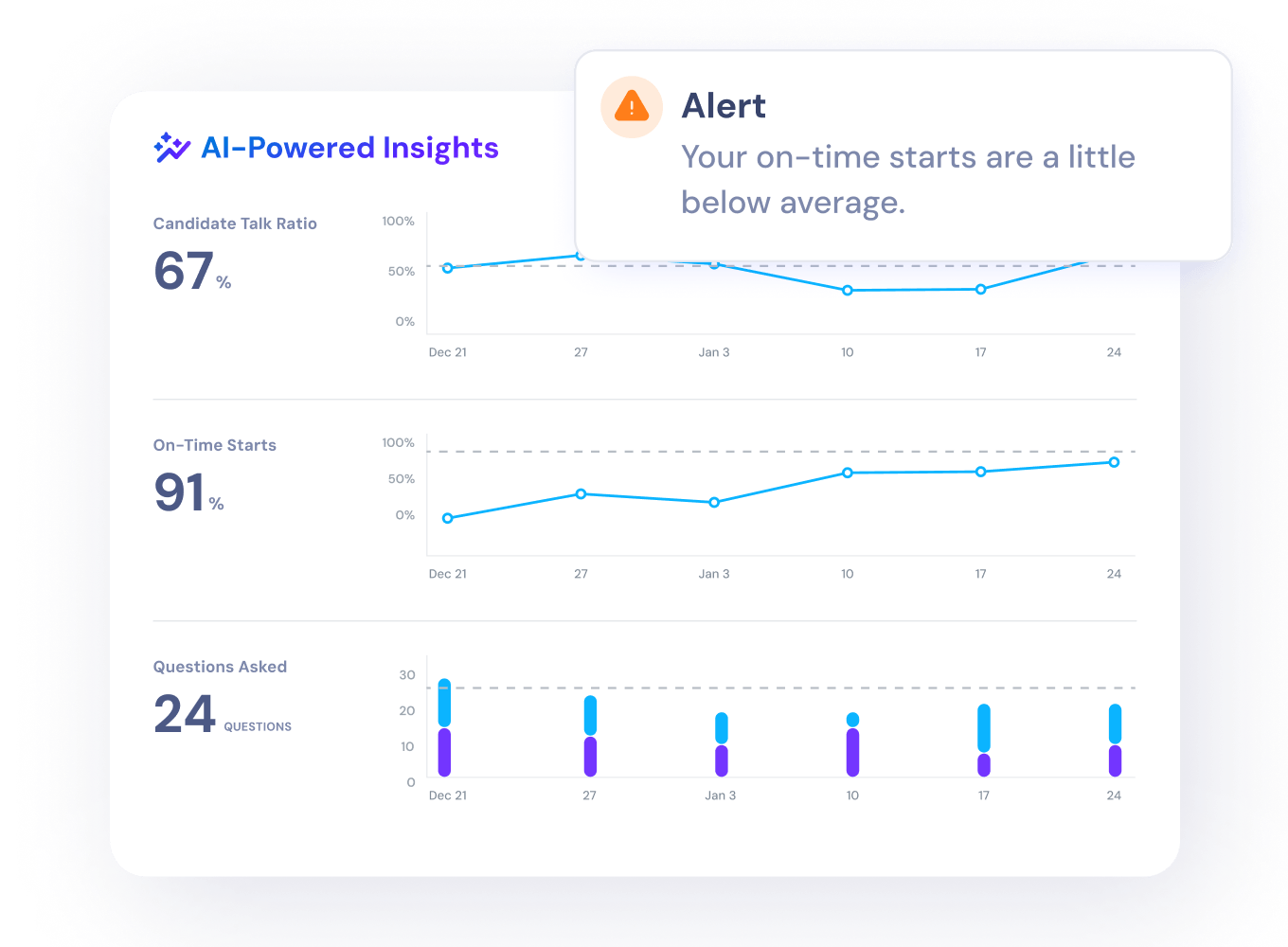
BrightHire Screen, launched in November 2025, changes the category. Rather than observing a human-led interview, a configurable AI agent conducts the first round asynchronously by voice or video. Recruiters choose the questions, tone, messaging and scoring rubric. The system can generate follow-ups, then place summaries, transcripts and rubric-based scores beside the later live interviews.
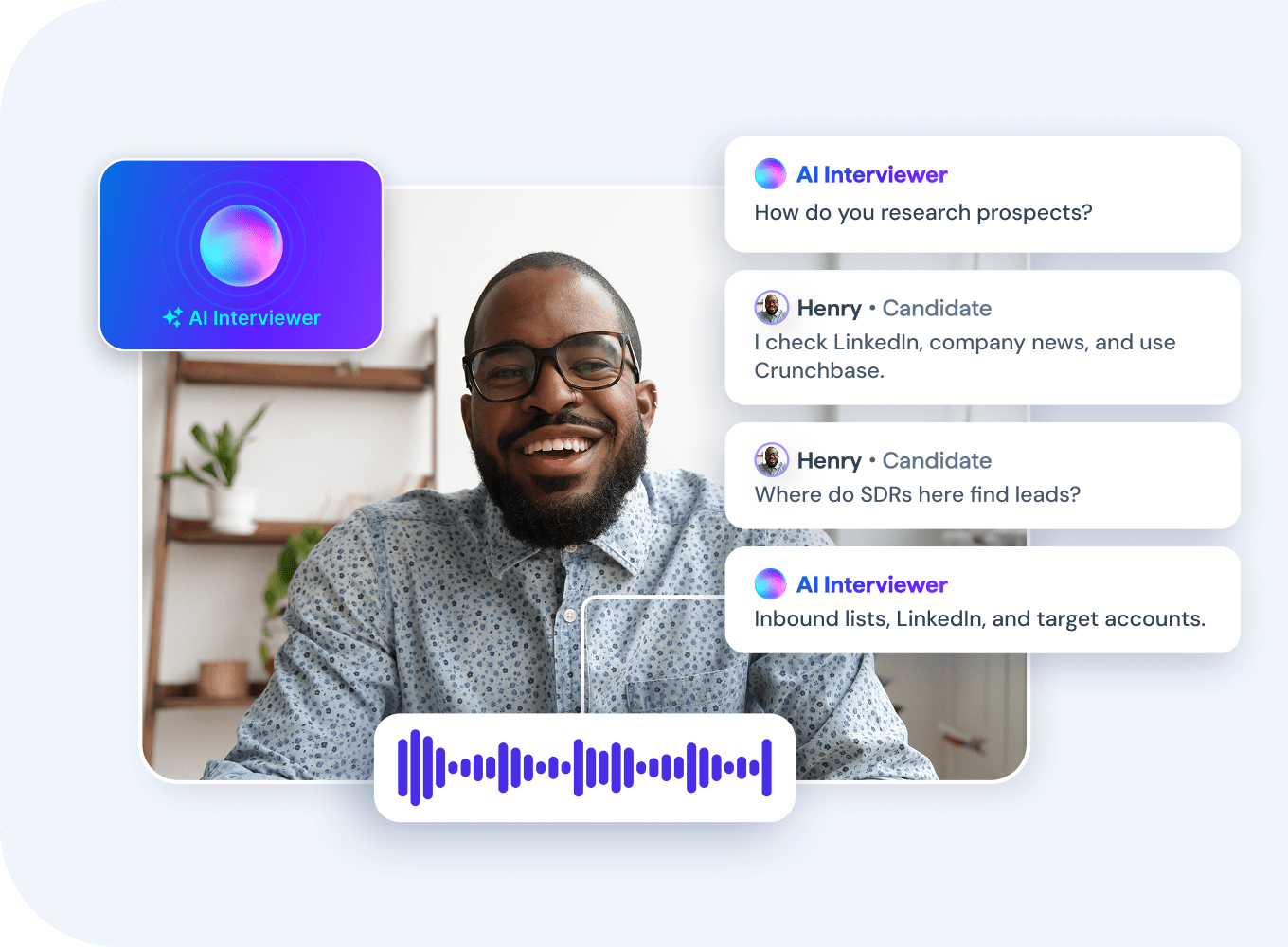
For a one-person recruiting team, the capacity gain is obvious. Steer reported 110 Screen interviews in two months, more than 35 recruiter hours saved, seven hires and a 4.3 out of 5 candidate-experience score. Its hiring-manager pass-through rate was 80 percent, 45 percent higher than interviews not run on Screen. It is one customer story, and the comparison is not a randomized trial, but it explains the purchase better than a feature list: more applicants got a conversation without adding more recruiter calendar.
The candidate in the other chair
Recording is where a smooth recruiter workflow meets a human boundary. Candidates on Reddit routinely ask whether opting out will quietly hurt them. Some appreciate an interviewer who is looking at them instead of a laptop keyboard. Others dislike creating a durable file containing their face, voice and answers, or fear that declining consent will be interpreted as difficult behavior. Both reactions are reasonable.
BrightHire offers candidate notice, consent and opt-out controls, customizable retention, role-based access, and says it is SOC 2 Type II certified and compliant with GDPR and CCPA. It says customer data is not used to train third-party models and candidate video is not evaluated by AI. Employers still own the relationship. A thoughtful rollout should explain what is recorded, why, who can view it, how long it remains, how to opt out and what the substitute process looks like. “Click here if uncomfortable” is technically a choice; a no-penalty alternative stated plainly is trust.
Better attention, consistent notes, faster scorecards, searchable evidence, easier handoffs and interview coaching at scale.
Ambiguous consent, over-trusted summaries, long retention, broad replay access and anxiety about refusing the recording.
The newest integrity feature sharpens that responsibility. In August 2026, BrightHire made Candidate Fraud Detection available across its packages. It can surface evidence-linked signals involving impersonation, AI-assisted answers, deepfakes, multiple devices, manipulated identities and network or location anomalies. Zoom interviews can add signals from Zoom’s own models and session data; Teams and Meet receive detection too. BrightHire is explicit that a flag is not a verdict and never automatically rejects anyone. Buyers should preserve that distinction in policy, training and appeals.
The buyer’s comparison
| Need | Start with | What to test |
|---|---|---|
| Recruiting-specific interview intelligence | BrightHire, Metaview, Employ AI Interview Companion, Screenloop | ATS depth, notes accuracy, scorecard mapping, consent flow |
| Enterprise video assessment and screening | BrightHire Screen, HireVue | Candidate experience, rubric control, auditability, accessibility |
| Basic notes on a lean budget | Otter.ai, Fireflies.ai, existing meeting suite | Recruiting context, permissions, retention, ATS workflow |
| Interview data inside a broader recruiting platform | Metaview and suite vendors | Whether breadth beats BrightHire’s interview specialization |
BrightHire publishes no dollar price. The Interview Intelligence platform comes in Recruiter, Teams and Enterprise tiers; Screen is sold alone or bundled. That means a demo and quote, followed by the less glamorous work of calculating interviewer hours saved, scorecard completion, candidate drop-off and admin time. Ask for a pilot that includes skeptical hiring managers and candidates who opt out. Test accented speech, role jargon, weak connections, phone calls and long panel interviews. Compare the AI notes against a human set without telling reviewers which is which.
Integration depth is the other hinge. BrightHire lists Greenhouse, Ashby, Workday, iCIMS, Rippling, Lever, SmartRecruiters, Gem, Jobvite and many more, plus Zoom, Meet, Teams, calendars and identity providers. A logo grid is not an implementation. Make the vendor show your exact loop: schedule, consent, record, map the guide, fill the scorecard, restrict access, delete the data. The winning demo ends in your ATS, not on a lovely dashboard nobody opens.
The verdict
BrightHire’s appeal is not that AI can judge a person. Its best work is more modest and more useful: it helps people pay attention, preserves what was said, and makes an inconsistent company habit visible enough to improve. Screen extends that idea into capacity, allowing more applicants to speak before a recruiter spends an hour. Insights turns the archive into a management tool. The Zoom acquisition gives the product resources, distribution and deeper meeting signals without, so far, closing it to other platforms.
Buy it when interview volume hurts, hiring consistency matters and your team will verify the output. Skip it when you only need a transcript, lack an ATS workflow, or cannot explain recording to a candidate without reaching for legal fog. The responsible BrightHire customer treats consent as part of candidate experience and AI notes as editable evidence. Do that, and the product gives the interview a memory without asking the humans to surrender theirs.
Keep digging
- BrightHire website, pricing and packages, and integration directory
- BrightHire on LinkedIn and the company blog
- BrightHire’s Zoom announcement and Zoom’s acquisition filing
- Security and compliance, Interview Insights, and BrightHire Screen
- G2 reviews and a candidate-and-interviewer discussion on Reddit