Romi Gubes taught a machine to listen for the people we can't watch
She left a comfortable engineering career to answer one question: how do you keep the people you love safe when you aren't there? The answer became Sensi.AI - and a new category called care intelligence.
Most founders go looking for a market. Romi Gubes went looking for the people no market was serving - older adults living at home, alone for most of the day, unable to say whether the care they were getting was any good. She built a company to listen for them. Not with cameras. With sound.
Before any of that, she had the kind of resume that usually leads somewhere quieter. A degree in software engineering from Ben-Gurion University of the Negev. Time in the Israeli Air Force. A decade of engineering roles at companies most people have heard of - a developer and integration engineer at Cisco, a backend developer at Dell EMC, then a senior developer at Vonage's R&D innovation center, where she led the mobile team. She was good at building things. She just didn't have anything she wanted to spend a decade fighting for.
Then life handed her a reason. At her young daughter's daycare, she discovered a problem serious enough that she pulled her out the same day. She was one of the lucky parents - she caught it. What stayed with her was the math on the other side of that luck: for every parent who notices something wrong, how many never do? The people most at risk are the ones who can't tell you what's happening to them.
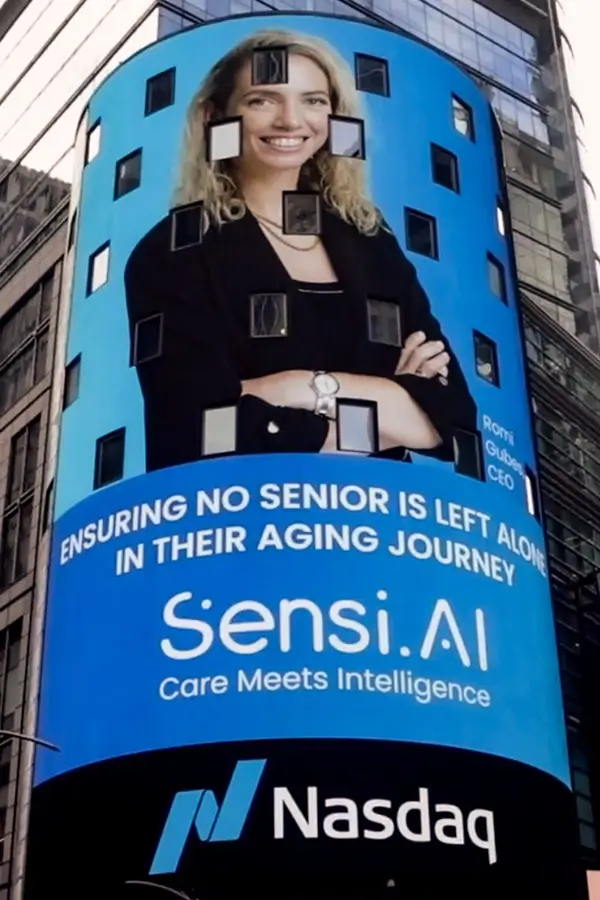
That question pointed her toward a population she hadn't planned to build for: seniors. In 2019 she co-founded Sensi.AI and became its CEO. The premise was almost stubbornly simple - no senior should have to face aging alone, and nobody should have to guess whether the care being delivered inside a home is actually good.
Section 01The problem was never the caregiver
Home care, as Gubes describes it, had been operating reactively for decades. A caregiver arrives, does their best during the visit, and leaves. Between visits there is silence - and in that silence, no information at all. The system waited for emergencies instead of preventing them.
Her insight was to reframe what was broken. The headlines say the industry has a caregiver shortage. Gubes argues the deeper issue is the absence of continuous intelligence. Even the most devoted caregiver, she has said, is effectively working blind - no real-time picture of what a senior needs in the hours nobody is in the room.
So Sensi built a different kind of sensor. Instead of watching, it listens. Small plug-and-play pods turn ambient audio in a home into what the company calls care intelligence. The system learns a personalized baseline for each senior, then flags anomalies against it - and it does so without asking a ninety-year-old to wear a device, press a button, or charge anything.
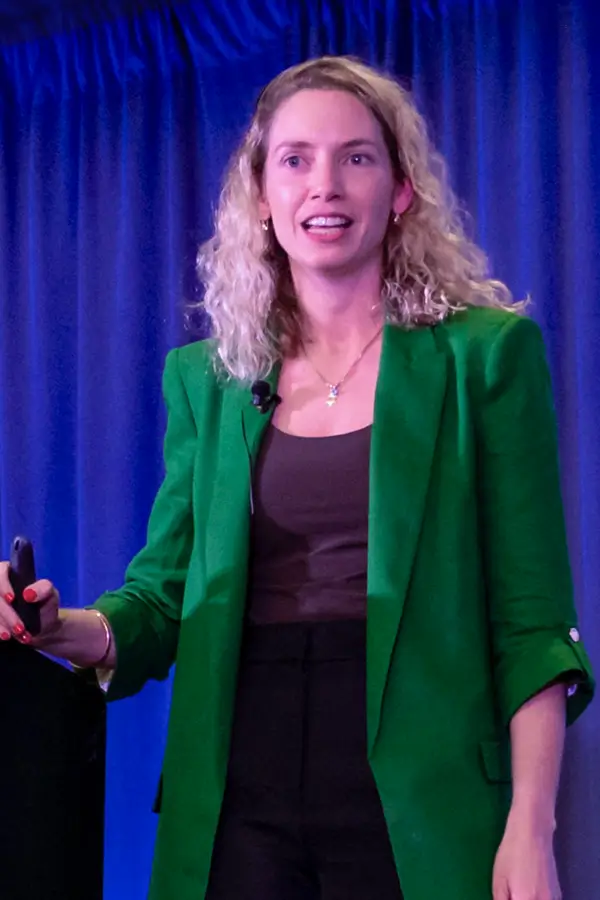
What can it hear? By the company's own account, the AI identifies more than 100 types of critical signals - early indicators of illness, cognitive change, and emergency events like a fall. The point isn't the number. The point is timing: catching the thing that would otherwise become a 2 a.m. hospital visit while it is still small enough to handle at home.
Section 02The pivot nobody frames on the wall
Sensi did not arrive fully formed. It started as a consumer product - sold directly to families - before Gubes reworked the model into B2B2C, reaching seniors through the home care agencies that already served them. She has talked openly about the unglamorous work behind that call: reading user reviews, running lean proof-of-concepts, and letting evidence rather than ego decide where product-market fit actually lived.
It worked. Today Sensi runs across hundreds of thousands of homes and, by the company's figures, is used by roughly 80% of major US home care networks. Revenue grew 400% in a single year. In October 2025 the company raised a $45 million Series C led by Qumra Capital, with Zeev Ventures, Insight Partners, Entrée Capital, Flint Capital and Jibe Ventures joining - pushing total funding past $98 million.
The money, she has said, is meant to fund product innovation and go-to-market expansion as Sensi evolves from a single care agent into something larger - what the company now describes as an AI operating system for senior care.
Section 03An AI company that keeps saying "humans"
For someone selling artificial intelligence, Gubes is unusually careful about where she puts the credit. She frames the technology as a door-opener, not a replacement - the part that finally makes the invisible hours visible, so a human can act on what they now know.
That posture shows up in how she talks about the category itself. She is blunt about the amount of hype swirling around AI in healthcare, and she draws a line between products that generate noise and products that generate action.
Ask her for the single most useful thing she learned as a founder and the answer is not a growth tactic. It is to trust her intuition - the same instinct that noticed something wrong at a daycare and refused to let it go. It started the company; she credits it with steering the company still.
Section 04From the Air Force to Austin
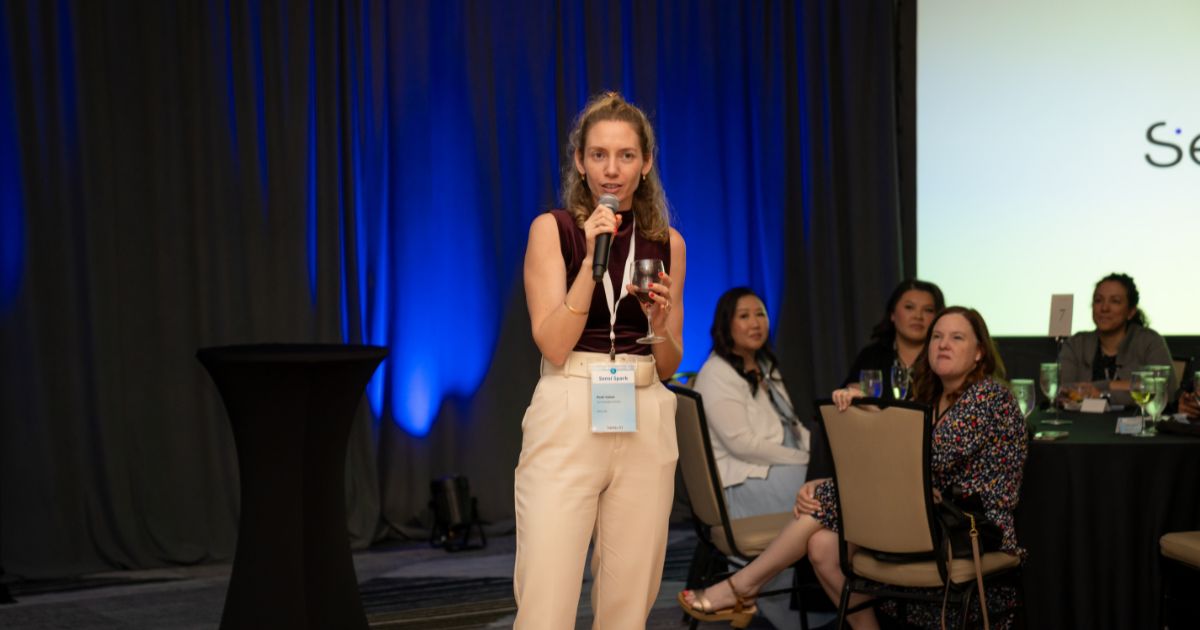
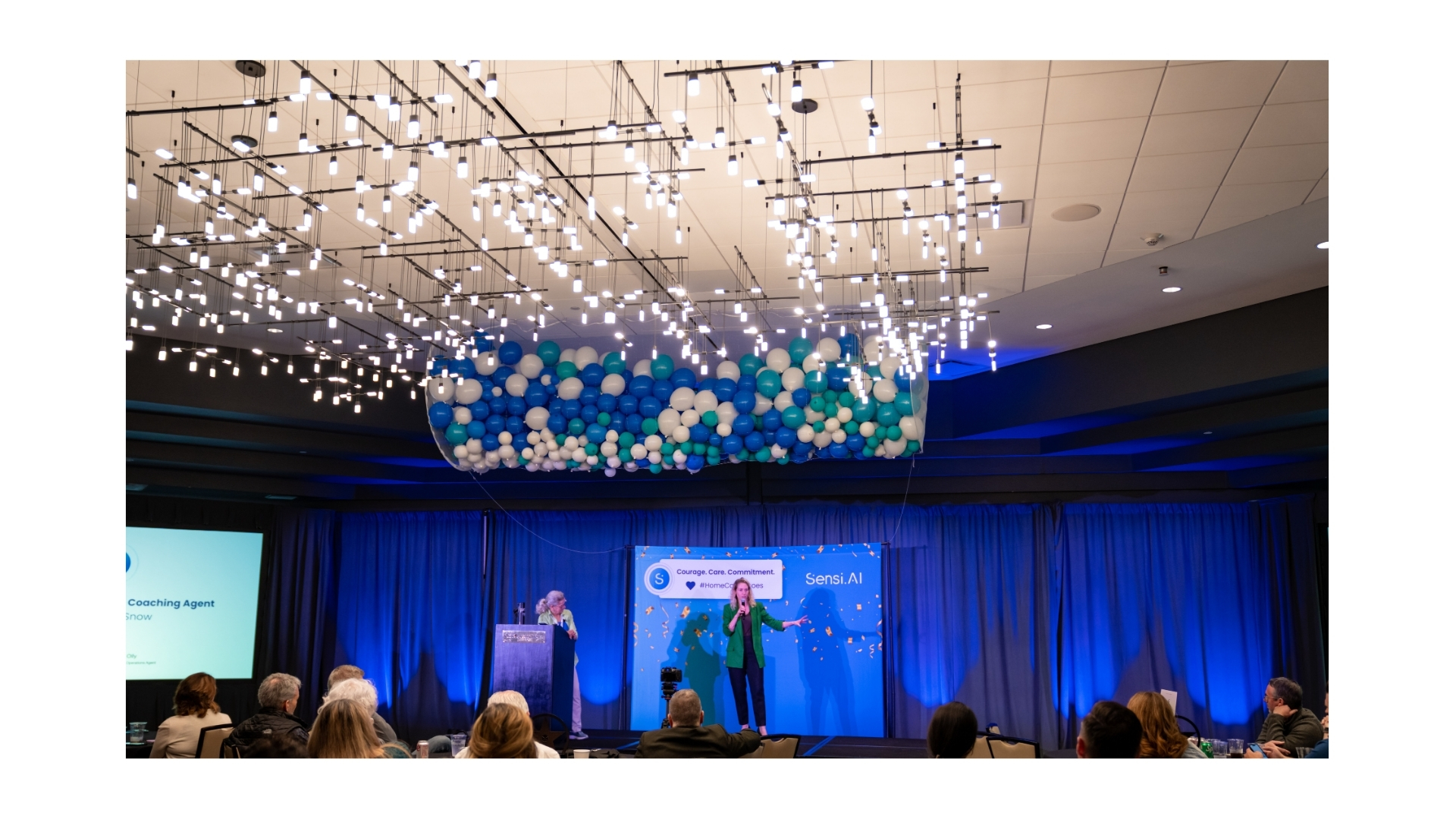
Gubes runs Sensi from Austin, Texas, a long way from the engineering cubicles where she started. The through-line from Cisco to CEO is less about the specific companies and more about the toolkit: over a decade of managerial, product, and R&D experience, applied to a problem that most technologists never bother to look at.
She also spends time outside the company on the same theme that runs through it - people who need a hand up. She mentors girls from underserved backgrounds through Technovation and is part of WMN, a community for women building tech companies. The pattern is consistent: find the people the system overlooks, then hand them a tool.
The market she is building into is not going to shrink. More older adults want to age at home than the current care workforce can possibly cover in person. Gubes' bet is that the gap gets closed not by finding more hands, but by giving the hands that exist something they have never had - a continuous, honest read on how the people in their care are actually doing.
It is a strikingly plain ambition for an AI company in 2026. No promise to replace the caregiver, no talk of the machine taking over. Just a quieter idea: that the people we love shouldn't have to depend on someone happening to be in the room at the right moment. Something should be listening for them, all the time, and it should tell a human when it hears something worth knowing.