The operator who wants great financial advice to reach the people who make money
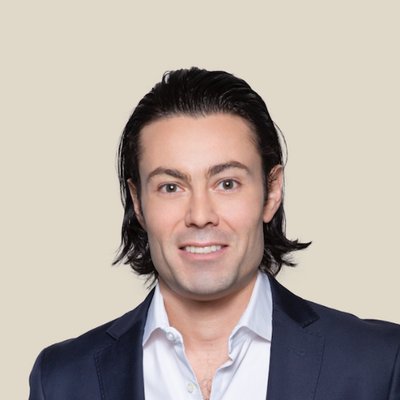
David Snider runs Harness, a New York company built on a plain observation: the people generating new wealth in tech - founders, early employees, investors sitting on equity - rarely have anyone good to call when a grant vests or an exit lands. The best tax, legal, and financial advisers exist. They just tend to sit behind minimums that keep them out of reach until well after the decisions that matter have already been made.
Harness is his answer. The platform gives clients a single place to see their financial picture and pairs them with a curated network of tax, financial, and legal advisers, backed by proprietary technology. The pitch is less about beating the market and more about access: taking the kind of bespoke guidance once reserved for the ultra-wealthy and making it feel intuitive, even routine, for a much wider group of people.
That framing comes from experience rather than theory. Snider has spent his career on the inside of finance - as an investor moving billions at Bain Capital, as the finance chief who helped build a unicorn, and, before any of it, as a college senior with a tape recorder and a book to write.
"The book was a Trojan horse - a way to sit across from the people who actually move money."
— David Snider, on writing Money MakersA career measured in rounds, valuations and pages
He interviewed the industry before he joined it
Long before the titles, Snider was a Duke undergraduate studying public policy - not finance - who decided the fastest way to understand how money worked was to ask the people running it. He started writing Money Makers: Inside the New World of Finance and Business as a senior, using the project, in his words, as a Trojan horse to land conversations he otherwise had no business getting.
The result, published by Macmillan and co-authored with Chris Howard, walked readers through investment banking, private equity, venture capital, hedge funds, and consulting through the voices of people at the top: JPMorgan's Jamie Dimon, Carlyle co-founder David Rubenstein, and Google's Shona Brown among them. It was a map of an industry drawn by someone who had not yet worked in it - and would spend the next two decades living inside it.
"The goal with Harness is to unlock financial opportunity - the kind of advice that used to be reserved for the ultra-wealthy."
— David SniderThe path to Harness
Publishes Money Makers with Macmillan, a finance primer built from interviews with leaders like Jamie Dimon and David Rubenstein.
Works as an investor in private equity, completing more than $2 billion in investments and contributing to the NYSE IPO of Sensata.
Serves as COO and CFO, helping scale the real estate technology company from pre-launch to a $1.8 billion valuation and raising every round from Series A through E.
Incubates the company as an executive-in-residence at Bain Capital Ventures and founds Harness to rethink how people access tax and financial advice.
Harness continues to build out its adviser marketplace and tax platform, with a Series A round reported in March 2024.
Investor, then operator
The Bain years
As a private equity investor he completed more than $2 billion in deals and worked on taking Sensata Technologies public on the New York Stock Exchange - a front-row seat to how capital gets allocated at scale.
The Compass years
As COO and CFO he raised all of the company's capital from Series A to Series E and helped grow it into a $1.8 billion business, learning what fundraising and operating look like from the founder's side of the table.
The founder turn
He incubated Harness while an executive-in-residence at Bain Capital Ventures, converting his own experience with equity and taxes into the company's founding premise.
The Harness thesis
Liquidity events look like a finish line but are really a starting gun. Harness is built for the decisions that begin the day after the windfall arrives.
The problem Harness is built around
Equity is a strange kind of wealth. It arrives on paper, gets taxed in ways few people anticipate, and forces decisions - exercise now or later, sell or hold, plan the estate or defer it - that carry consequences most first-time recipients never see coming. Harness positions itself at exactly that gap between having assets and knowing what to do with them.
Illustrative comparison based on Harness's stated mission, not measured figures.